After four grueling years of stagnant growth, razor-thin margins, and relentless overcapacity, the American trucking industry is finally emerging from the "great freight recession." While the term "recession" has been applied liberally to the sector since 2020, industry analysts and executives now agree that the market is undergoing a fundamental structural correction. This transition—marked by a long-overdue reduction in supply and a subtle but firming rise in demand—signals a healthier, more balanced landscape for the year ahead.
The Anatomy of the Correction: Why Capacity Had to Break
For years, the trucking industry was defined by a massive supply bubble, particularly within the truckload (TL) sector. During the height of the pandemic, a surge of small, one-to-five-truck operators flooded the market, driven by high demand and the availability of Covid-era financial support.
"The word ‘recession’ gets thrown around a lot," explains Jason Seidl, managing director at TD Cowen. "But freight was not always terrible. There was simply too much capacity, and that was the persistent, overwhelming issue that led to poor pricing and performance. It was a supply-side issue, and that capacity is still coming out."
The "culling" of this excess capacity was primarily driven by the brutal reality of basic economics. As stimulus funds dried up and operating costs—fuel, maintenance, and insurance—continued to climb, smaller operators could no longer sustain the rock-bottom rates they had accepted just to keep their wheels turning. By failing to achieve profitability, these operators were forced to exit the market.
This exodus has been accelerated by regulatory tightening, including federal and state-level crackdowns on fraudulent commercial driver license (CDL) schools and stricter enforcement of licensing requirements for non-domiciled drivers. While these regulations acted as a disruptor, analysts agree they were a secondary factor compared to the sheer exhaustion of capital among marginal carriers.
Chronology of the Shift
The transition from a "loose" market to a tightening environment did not happen overnight. The following timeline tracks the industry’s arduous path toward equilibrium:
- 2020–2021 (The Bubble): Massive influx of owner-operators and small fleets enters the market to capitalize on record-high spot rates fueled by e-commerce demand.
- 2022 (The Turning Point): Consumer spending habits shift, and the supply of trucks begins to vastly outstrip demand. Spot rates begin a sustained decline.
- 2023 (The Shakeout): Smaller carriers exhaust their cash reserves. Many begin to shutter operations as the cost of insurance and maintenance exceeds revenue.
- Mid-2024 (The Floor): Capacity exits reach a tipping point. Tender rejection rates begin to climb, signaling that shippers can no longer demand rock-bottom prices.
- Late 2024–2025 (The Rebalancing): Manufacturing shows signs of a rebound, and truckload rates begin to firm significantly. The market shifts from a carrier-distress model to a disciplined capacity model.
Supporting Data: The Indicators of Recovery
The shift is not merely anecdotal; it is reflected in the hard data tracked by industry authorities. The July Purchasing Managers’ Index (PMI), published by the Institute for Supply Management (ISM), hit 55.6, marking seven consecutive months of growth. This represents the highest monthly tally since May 2022. Crucially, the index reflects gains in production, new orders, and employment—the latter of which returned to expansion territory for the first time in nearly three years.
Avery Vise, vice president of trucking at FTR Transportation Intelligence, notes that spot rates in the truckload sector have surged 35% to 36% this year. "The spot market has likely fully reset," Vise observes. "It is no longer a refuge for shippers who want a better deal. The market is not loose anymore, so carriers are demanding more for a load and rejecting more of those that don’t meet their needs."
Furthermore, FTR forecasts suggest that contract rates, which traditionally lag behind the spot market by six to eight months, are poised to rise by approximately 10% this year, with an additional 10% increase projected for 2026. This trajectory suggests a sustained, multi-year recovery in pricing power for carriers.
Official Responses: Industry Leaders Pivot to Growth
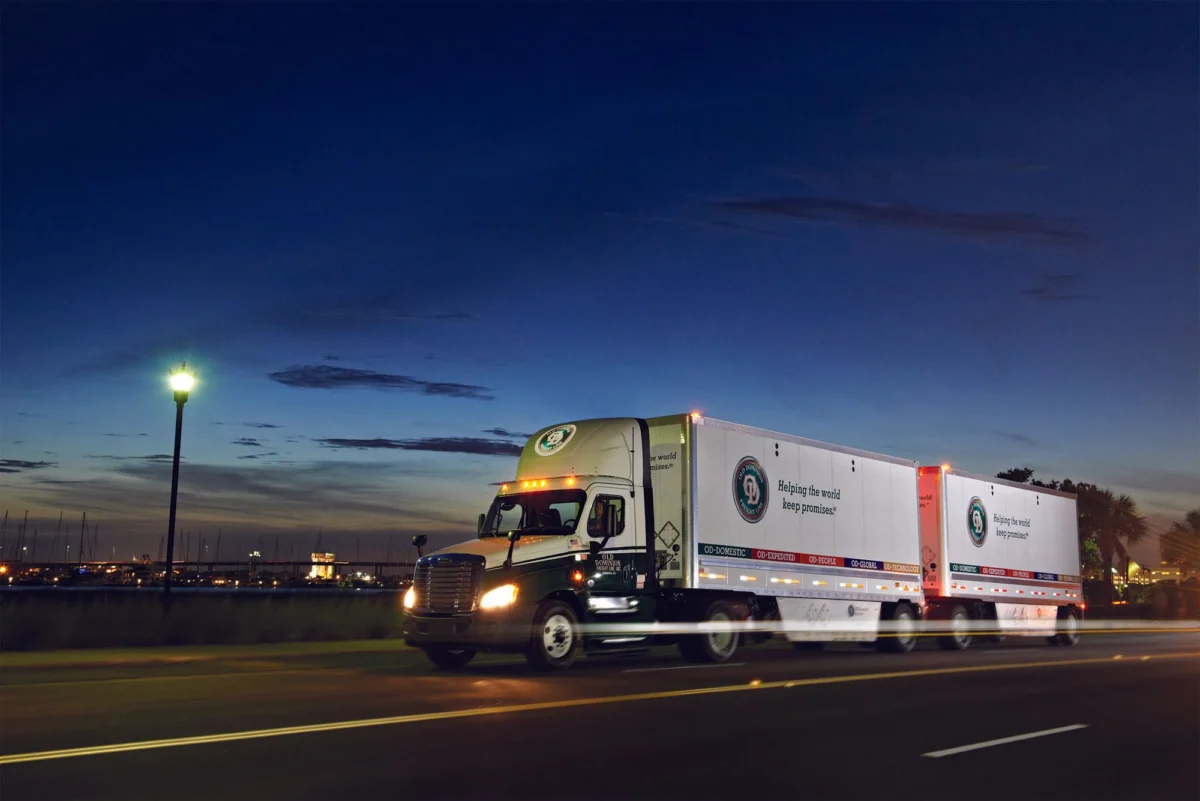
The Less-Than-Truckload (LTL) sector has been particularly adept at navigating this cycle. Greg Plemmons, COO of Old Dominion Freight Line (ODFL), describes the current state as a "supply-driven rebound." As truckload carriers—who previously took on heavier LTL freight to cover their own overhead—have exited the market or retreated to their core services, that volume is shifting back to dedicated LTL networks.
To capitalize on this, ODFL has increased its 2026 capital expenditure (CapEx) plan from $265 million to $380 million, investing in property and accelerating equipment purchases. Similarly, Estes Express Lines has been "doubling down" on capacity. President and COO Webb Estes reports that the company recently acquired 600 new tractors equipped with advanced safety technology and is on track to add another 700+ by year-end. "We bought faster than we thought we would need this year, kind of a double dip," Estes noted, emphasizing that the carrier has successfully maintained a driver turnover rate of less than 10%.
XPO has seen similar success. Ali Faghri, chief strategy officer, points to a 4% year-over-year increase in tonnage this past June. "The retail sector has modestly outperformed, but we’re beginning to see the industrial markets pick up steam, particularly manufacturing," Faghri said. XPO has spent the downcycle investing in infrastructure, adding 30% more trailers and 20% more tractors since 2021 to ensure they are "shovel-ready" for the current upturn.
Implications for the Future: A New Era for Shippers
For the retail and manufacturing sectors, the era of "cheap, abundant capacity" is effectively over. Jess Dankert, vice president of supply chain at the Retail Industry Leaders Association (RILA), notes that retailers are shifting their focus away from transactional rate-chasing and toward "shipper of choice" strategies.
"The industry will equalize as market forces come into play," Dankert explains. "Retailers are very concerned about how to keep trucking costs manageable, while meeting needs for timely and flexible trucking resources." The implication for businesses is clear: long-term success will require moving toward strategic, committed partnerships. Collaborative planning—reducing empty miles, optimizing backhauls, and utilizing technology for better transportation execution—is no longer just a "nice-to-have" but a requirement for controlling the total cost of service.
Furthermore, the "fear factor" regarding the driver pool remains a wild card. Some brokers report that immigrant drivers are increasingly avoiding certain geographic regions due to concerns over immigration enforcement, which may create localized capacity shortages in the coming months.
Conclusion: Toward a Healthier Ecosystem
The freight industry is entering a more balanced state where demand is slowly climbing while capacity remains constrained. As Frank Granieri, chief commercial officer at A. Duie Pyle, suggests, the next 12 months could see a "meaningfully healthier" environment.
The "freight recession" was a painful, necessary cleansing of a bloated system. By shedding the excess capacity that defined the pandemic years, the industry has paved the way for a more stable, predictable, and ultimately more efficient supply chain. For carriers, the focus has shifted from mere survival to growth and strategic investment. For shippers, the new reality requires a sophisticated, partnership-oriented approach to logistics. The market has corrected itself, and for those who have weathered the storm, the horizon looks significantly brighter.
About the Author