In the landscape of modern commerce, a profound shift is underway. For decades, the gold standard of brand building has been the “Lovemark”—a concept popularized by Kevin Roberts at Saatchi & Saatchi, which posits that the most successful brands are those that transcend mere functional utility to earn both deep human love and unwavering respect. However, as artificial intelligence transitions from a creative tool to an active participant in the marketplace, the foundational logic of branding is facing an existential re-examination.
Thomas Marzano’s recent manifesto, Brand Constitutions: The Legible-Lovable Standard for Building Equity in an Agentic Economy, has ignited a critical debate. It suggests that in an age where intelligent agents (AI) mediate discovery and decision-making, brands must now satisfy two distinct audiences: the human heart and the machine algorithm.
The Evolution of the Lovemark in an Agentic World
The original Lovemark philosophy was born in a world of autonomous human choice. In that era, the "love-respect axis" was the ultimate scorecard. Respect was the rational foundation—performance, reliability, and reputation—while love provided the emotional, often irrational, bond that made a brand irreplaceable.
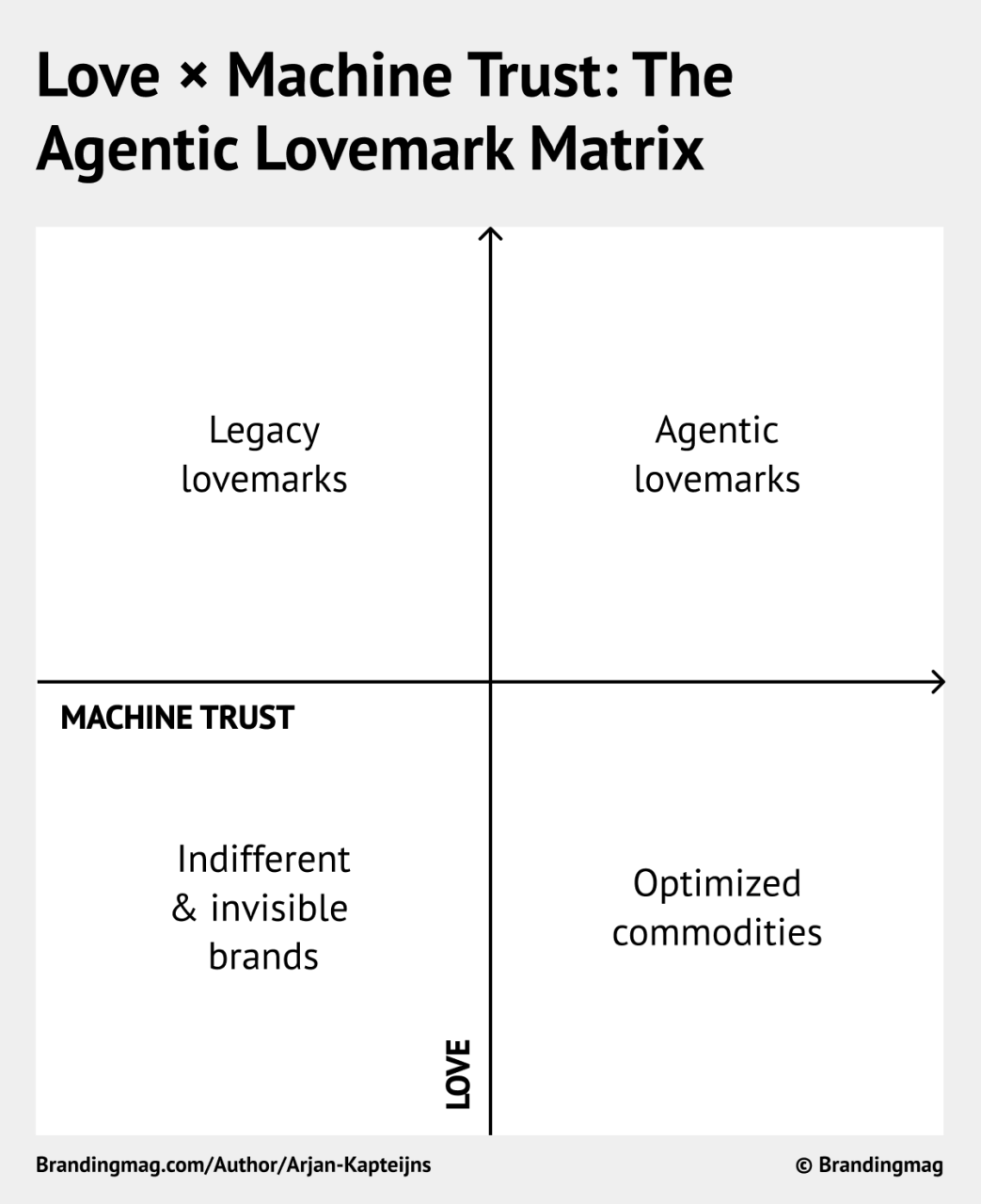
In the current "Agentic Age," the decision-making process is no longer purely human. AI agents are increasingly collapsing the consumer journey, filtering options, and predicting preferences before a human even considers a purchase. This shift necessitates a structural update to the Lovemarks model: while "Love" remains a uniquely human, emotional dimension, "Respect" must now evolve into "Machine Trust."
The Dual Audience Challenge
Brands today are navigating a bifurcated reality. If you speak only to humans, you risk being loved but never found by the agents that curate modern discovery. If you speak only to machines, you might gain visibility but lack the emotional resonance required to win the actual, final choice. The challenge for contemporary marketers is not to choose between these two logics, but to synthesize them into a single, cohesive brand ambition.
Chronology: From Functional Brands to Agentic Entities
The trajectory of brand building can be viewed as a three-stage evolution:
- The Brand Era (Functional Focus): Brands were defined by their utility, price, and basic performance. Trust was built through advertising reach and consistent product delivery.
- The Lovemark Era (Emotional Focus): Led by the work of Kevin Roberts, brands shifted to prioritize "loyalty beyond reason." Emotional connection, myth, and intimacy became the differentiators, moving branding away from commoditization.
- The Agentic Era (Systemic Focus): We are now entering a phase where emotional resonance must be paired with structural legibility. The "Brand Constitution" has become the necessary tool to ensure that a brand’s soul is not lost in the translation to machine-interpretable data.
Supporting Data and the New Operating Logic
Research from institutions like McKinsey & Company highlights the "Agentic Commerce Opportunity," noting that GenAI is rapidly compressing the marketing funnel. As content becomes commoditized, the ability for a system to "verify" a brand becomes paramount.
Machine trust is not about replacing human sentiment; it is about providing the data structures that allow an AI to validate a brand’s worth. Systems evaluate brands based on:
- Structural Clarity: Is the brand’s metadata, provenance, and behavioral history consistent?
- Pattern Recognition: Do the brand’s actions across touchpoints create a stable, predictable rhythm?
- Engagement Signals: Does the brand demonstrate recurring human preference that the agent can interpret as a high-confidence recommendation?
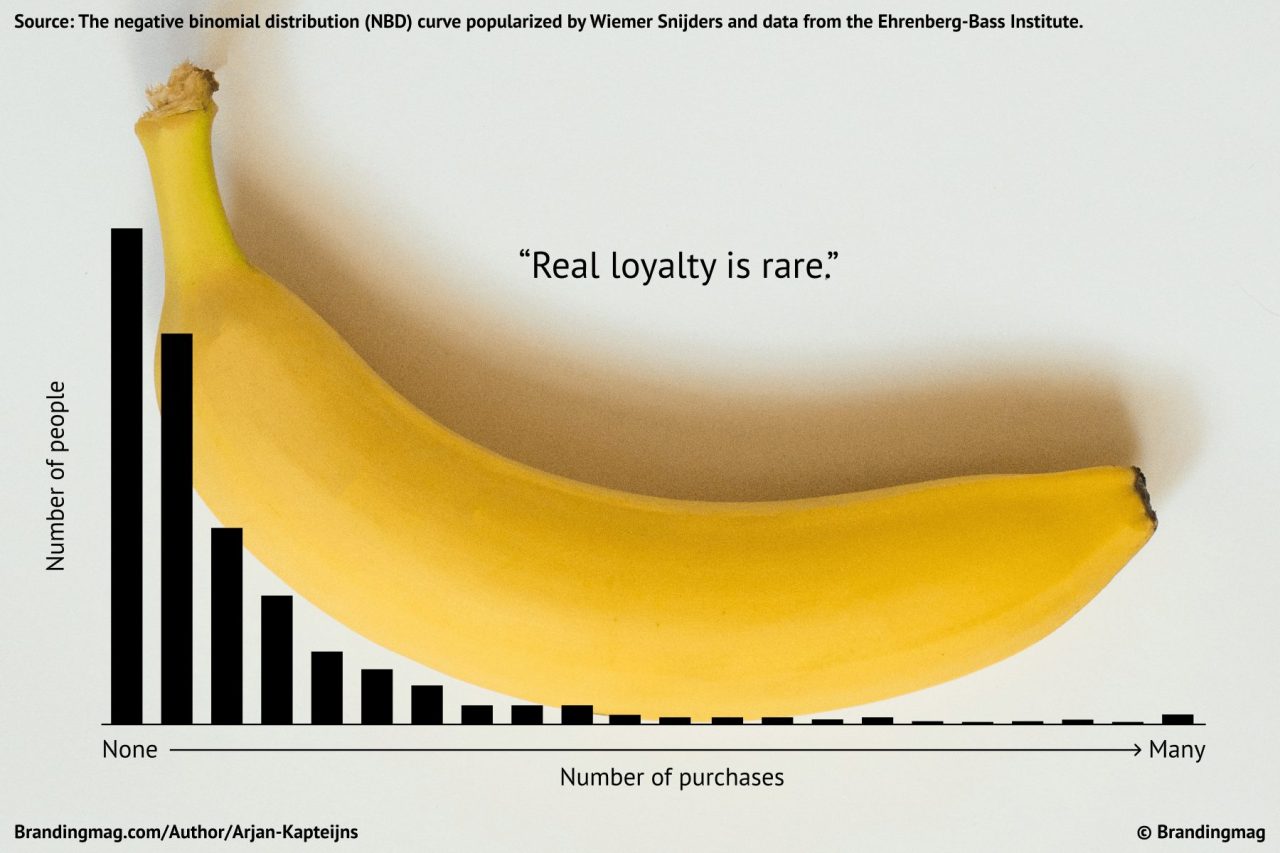
The shift from the "Banana Principle"—which suggests that loyalty is a statistical by-product of availability—to a model where AI reinforces human preferences, is significant. In an agentic environment, the randomness of consumer switching decreases. Once an agent learns a user’s preference for a specific "Lovemark," it effectively locks in that loyalty, making the brand’s presence a self-reinforcing loop.
Official Perspectives: The Reconciliation of Soul and System
Experts argue that the fear currently permeating the creative industry—that AI will "hollow out" the soul of brands—is based on a misunderstanding of the technology’s role.
Aad Kuijper, a prominent creative voice, has argued that "soul" cannot be automated. Authentic creative work requires lived experience—the failures, risks, and human tensions that an algorithm simply cannot replicate. The consensus among strategic leaders is that AI should not be the creator, but the clarifier.
The "Brand Constitution," as envisioned by Marzano, serves as the bridge. It codifies the brand’s purpose, myth, and tone in a way that provides a blueprint for both human creative teams and machine learning models. By establishing a clear "Organizing Idea"—such as Nike’s focus on human potential or Apple’s focus on simplicity—a brand ensures that its behavioral patterns remain consistent, regardless of the medium through which they are expressed.
Implications for Future Brand Strategy
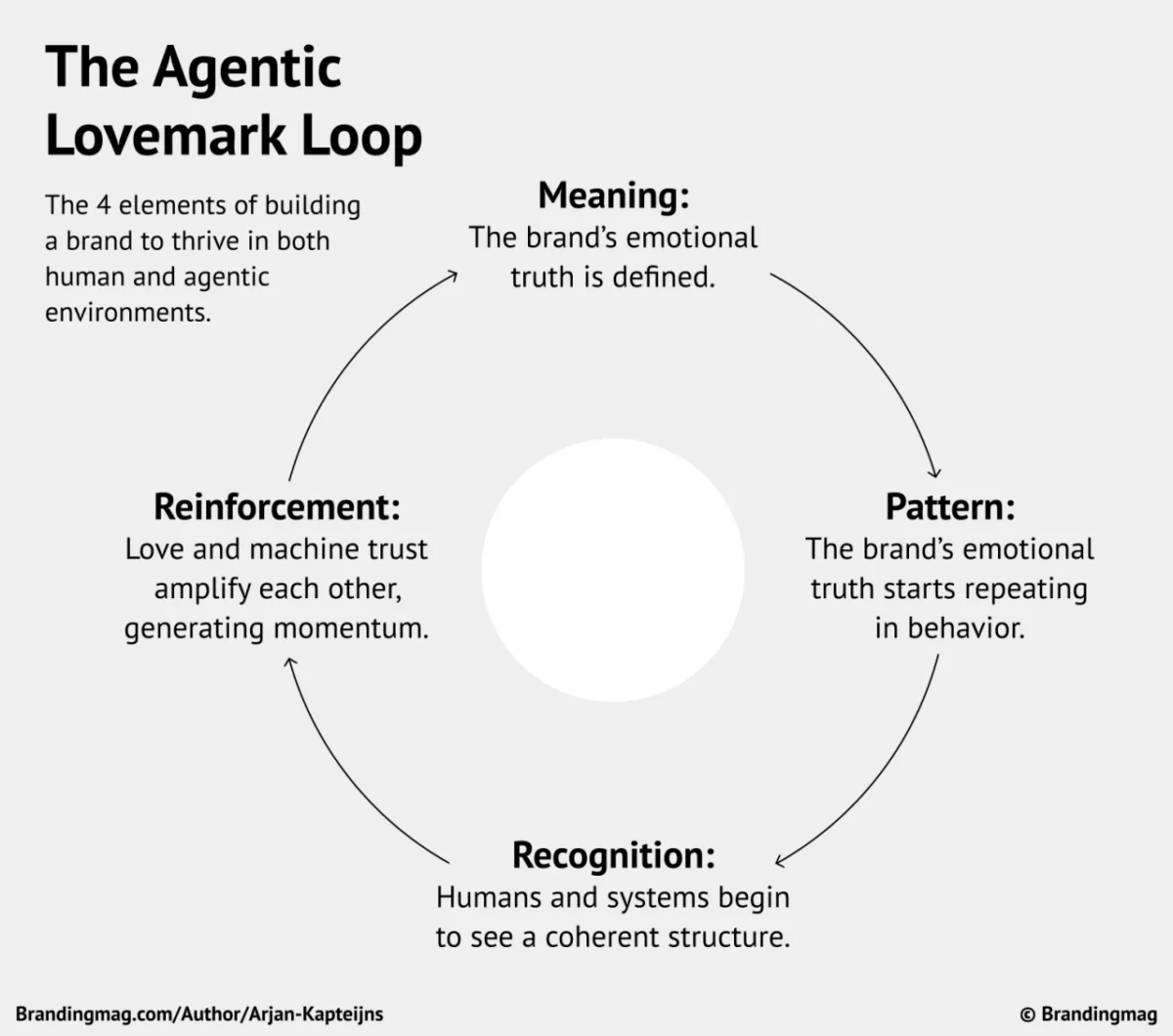
To survive and thrive in this new environment, brands must adopt a strategy centered on the "Agentic Lovemark Loop." This loop functions in four stages:
- Meaning (The Emotional Core): The brand starts with a timeless human need. This is the "soul" of the brand, which must be sharp enough to resonate with people.
- Pattern (The Behavioral Signature): The organizing idea is translated into consistent actions—service, design, and interaction—that create a clear, observable rhythm.
- Recognition (The Machine Interface): The patterns created by the brand become visible to AI agents. The system recognizes the brand not because it "feels" the love, but because it detects the stable, high-value behavioral traces of that love.
- Reinforcement (The Flywheel): As agents prioritize the brand, it gains more human exposure, leading to more human interactions, which in turn strengthens the data patterns, creating a cycle of visibility and loyalty.
The Role of the Organizing Idea
The organizing idea is no longer just a marketing slogan; it is the "operating principle." In the Agentic Age, it serves as the unifying logic that prevents brand fragmentation. Without it, the "always-on" engines of modern digital platforms can easily dilute a brand’s identity. With it, the organizing idea acts as a compass, ensuring that every automated interaction, every AI-driven recommendation, and every human touchpoint pulls in the same direction.
Conclusion: The New Gold Standard
The transition to an Agentic Lovemark is not a departure from the history of branding, but its necessary evolution. The brands that will define the next generation of commerce will be those that master the art of being "legible to machines and lovable to humans."
In this future, "legibility" is the mechanism that ensures a brand is included in the shortlist, while "love" is the reason it is chosen from that list. This balance prevents the commoditization of the brand experience and ensures that as we move deeper into a machine-mediated world, the human element of branding remains the most powerful competitive advantage.
Ultimately, the Agentic Lovemark is a brand with a soul and a system. It is a testament to the idea that while technology may change the way we shop, discover, and interact, the fundamental human desire for meaning, connection, and emotional resonance remains the constant. For marketers, the mandate is clear: build for the heart, code for the system, and let the loop of reinforcement drive the next era of brand equity.
About the Author