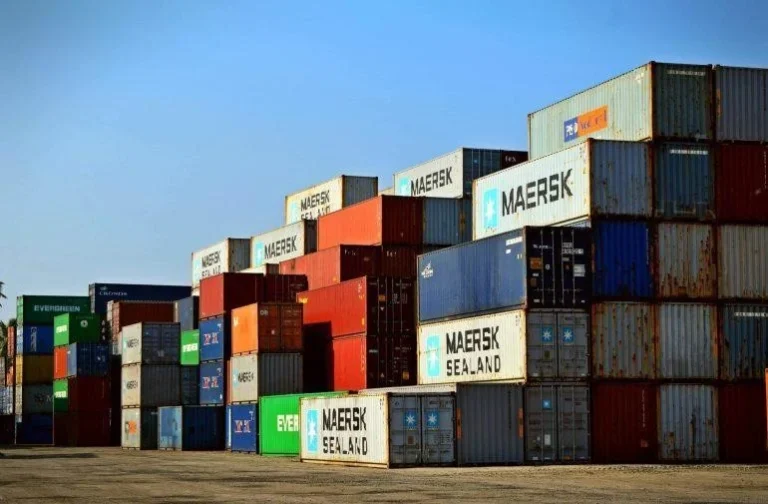
The maritime industry, the silent engine of global trade, is facing a moment of reckoning. While focus has long remained on the massive carbon footprint of transoceanic voyages, new data is shifting the spotlight to a critical, often overlooked frontier: the port. According to pioneering research from the UCL Shipping and Oceans Research Group, a staggering 10% of all international shipping emissions occur within port areas. This finding not only highlights a significant environmental challenge but also identifies a low-hanging fruit for the transition to a net-zero maritime future.
As the International Maritime Organization (IMO) intensifies its negotiations on the Net Zero Framework (NZF), the ability to pinpoint where emissions occur—and who is responsible—has become paramount. The launch of the "Shipping GHG Emissions Explorer" provides the transparency needed to move from vague climate commitments to actionable, technology-driven solutions.
The Core Findings: Unmasking the Port-Bound Carbon Footprint
The 10% figure represents a paradigm shift in how we view vessel emissions. Traditionally, the maritime sector has been viewed through the lens of "open water" operations, where massive container ships and bulk carriers burn heavy fuel oil to traverse the oceans. However, the data reveals that the phases of idling, maneuvering, and berthing contribute significantly to the 575 million tonnes of CO2e emitted by international shipping annually.
The research suggests that the "port phase" is not just a rounding error; it is a substantial contributor to local air pollution and global warming. Because these emissions occur in proximity to coastal populations and urban centers, their impact is twofold: they contribute to the global climate crisis while simultaneously degrading the air quality of the very communities that host global trade hubs.
The solution, according to the research team, lies in the maturation of electrification technologies. "Cold ironing"—the process of connecting ships to shore-based power while berthed—emerges as a primary remedy. By allowing vessels to turn off their auxiliary diesel engines, ports can effectively eliminate the emissions associated with idling. Furthermore, for short-sea shipping—vessels operating on regional routes—the transition to battery-electric propulsion is no longer a futuristic concept but a viable, scalable technological reality.
Chronology of a Data-Driven Shift
To understand how we reached this point, it is essential to examine the evolution of maritime emission tracking.
- Pre-2020: Maritime emissions were often calculated using fuel sales data, which provided a high-level overview but failed to account for the granularity of specific voyages, port stays, or vessel types.
- The Big Data Revolution: The widespread adoption of Automatic Identification System (AIS) tracking allowed researchers to move beyond fuel sales and into actual vessel movement patterns.
- 2023-2024: The UCL Shipping and Oceans Research Group synthesized a massive dataset covering 1.2 million voyages by over 43,000 unique vessels. This culminated in the development of the "Shipping GHG Emissions Explorer."
- Mid-2024: The release of the findings regarding the 10% in-port emissions threshold, providing the evidentiary basis for upcoming IMO negotiations.
- September 2024 (Forthcoming): A planned update to the tool will integrate state-level seaborne trade volumes and economic impact modeling, offering a comprehensive view of how proposed IMO NZF amendments will affect national economies.
Supporting Data: Mapping the Invisible Impact
The Shipping GHG Emissions Explorer is more than an academic exercise; it is an interactive tool designed to empower policymakers. By mapping 575 million tonnes of CO2e across 43,000 vessels, the tool allows IMO delegations to view the carbon intensity of their specific maritime trade routes.
The Vulnerability of Island Nations
One of the most striking revelations of the dataset concerns the disproportionate impact on small island nations. Yoseph Ismail, a Research Assistant at the UCL group, noted that among countries with the highest in-port emissions, 7 out of 10 in Latin America/Caribbean and 8 out of 10 in East Asia Pacific are small island nations.
In these regions, in-port emissions frequently exceed 20%—double the global average. This is a cruel irony: nations that contribute the least to global industrial emissions are often the ones most exposed to the negative externalities of the global shipping industry. For these countries, port electrification is not just a climate goal; it is a matter of public health and economic survival.
Breaking Down the Phases
The tool categorizes emissions into "in-port" and "in-voyage" phases. This granularity allows stakeholders to distinguish between:
- Maneuvering: Energy-intensive navigation within port limits.
- Idling/Berthing: The use of auxiliary engines for onboard power needs, which is the primary target for cold ironing.
- Transit: The primary propulsion phase where alternative fuels like ammonia, hydrogen, or methanol are currently being tested for long-term decarbonization.
Official Responses and Expert Perspectives
The academic community and policy analysts are hailing the tool as a bridge between data science and diplomatic negotiation.
James Stewart, a Research Fellow at the UCL Shipping and Oceans Research Group, acknowledges that while AIS-based big data is not without its imperfections, it has fundamentally transformed our understanding of maritime energy demands. "The tool allows users to explore aggregate data directly on the platform and encourages validation with complementary datasets," Stewart noted. By democratizing access to this information, the researchers hope to reduce the "information asymmetry" that often stalls IMO negotiations, where some delegations may lack the resources to conduct their own independent climate impact assessments.
The industry response has been one of cautious optimism. Maritime associations recognize that while the cost of retrofitting ports for shore power is high, the regulatory pressure from the IMO—coupled with the increasing demand for "green corridors"—makes the investment inevitable. The focus is now shifting from "if" these technologies should be deployed to "how" they can be financed in developing maritime hubs.
Implications: The Road to the IMO Net Zero Framework
The implications of this research for the upcoming IMO negotiations are profound. As the organization works to finalize its Net Zero Framework, the 10% port-emissions statistic provides a concrete target for international policy.
1. The Necessity of Port-Ship Synergy
The data underscores that ports cannot be treated as passive bystanders in the decarbonization process. Port authorities must evolve into "energy hubs" capable of providing clean, renewable electricity to berthed vessels. This necessitates a massive upgrade in national electrical grids, particularly in developing coastal nations that lack the infrastructure to support large-scale shore-power connections.
2. Economic Impacts and Trade Policy
The forthcoming September update to the Explorer tool is intended to address the economic anxieties of member states. By modeling the potential impacts of IMO amendments on trade volumes, the tool aims to ensure that decarbonization does not come at the cost of global economic development. For many nations, maritime trade is the lifeblood of their GDP; understanding how regulatory shifts might affect shipping costs is essential to achieving a "just transition."
3. Incentivizing Short-Sea Electrification
The research provides a clear mandate for the rapid development of battery-electric short-sea vessels. Because these ships operate on shorter, more predictable routes, they are the ideal candidates for early-stage electrification. By replacing diesel-powered ferries and regional cargo ships with battery-electric alternatives, nations can drastically reduce the 10% in-port footprint without waiting for the breakthrough of deep-sea green fuels like liquid hydrogen.
4. Corporate Accountability and Scope 3 Emissions
As noted by the broader industry shift toward Scope 3 emissions reporting, companies are under increasing pressure to account for the emissions generated throughout their supply chains. Port-based emissions are a significant part of the logistics chain. As firms pursue "green supply chain" labels, port operators that offer electrified, zero-emission berthing services will likely gain a competitive advantage, attracting environmentally conscious shipping lines.
Conclusion: A Turning Point for Maritime Policy
The discovery that 10% of international shipping emissions occur within port areas is more than a statistic; it is a catalyst for change. It demystifies the complex web of global logistics and directs attention toward tangible solutions—cold ironing, battery-electric propulsion, and port infrastructure upgrades—that are already within our grasp.
As the IMO convenes to shape the future of global maritime governance, the Shipping GHG Emissions Explorer provides the objective, empirical foundation required to make informed, equitable decisions. The transition to net-zero shipping will not happen on the open ocean alone; it will be won in the world’s ports, where the technology exists to turn the tide against climate change, one berth at a time. The path forward is clear: integrate data-driven transparency, prioritize investment in port-side electrification, and ensure that the economic benefits of a cleaner maritime industry are shared by all, especially the vulnerable island nations currently bearing the heaviest burden.
About the Author