Introduction: A Strategic Milestone for Global Trade
The Port of Los Angeles, the busiest container gateway in the Western Hemisphere, has solidified its long-term operational future by finalizing a historic 30-year lease agreement with Yusen Terminals LLC (YTI). This sweeping agreement, which extends the terminal operator’s tenure through 2056, represents more than just a real estate transaction; it is a fundamental pillar of the Port’s strategy to modernize its infrastructure, enhance supply chain reliability, and aggressively pursue a zero-emission future.
As global trade continues to face volatile shifts and the pressure to decarbonize intensifies, this partnership between the Port and the Ocean Network Express (ONE)-owned subsidiary provides the stability necessary for massive capital expenditure. The deal is anchored by a commitment from YTI to inject an additional $200 million into terminal infrastructure, specifically targeting the deployment of advanced, zero-emission cargo-handling equipment.
Main Facts: The Anatomy of the Deal
The lease agreement, formally ratified by the Los Angeles Board of Harbor Commissioners, covers 232 acres of prime maritime real estate. Situated at Berths 212-224 along the East Basin Channel, just north of the iconic Vincent Thomas Bridge, the Yusen Terminal has been a critical node in the Southern California logistics network for over three decades.
Key Highlights of the Agreement:
- Duration: A 30-year commitment, securing operations through 2056.
- Capital Commitment: A $200 million investment earmarked for sustainable technology and infrastructure upgrades.
- Ownership: YTI remains under the umbrella of Ocean Network Express (ONE), one of the world’s leading container shipping lines, ensuring a direct link between the terminal and global shipping capacity.
- Operational Scope: The terminal provides comprehensive stevedoring, terminal operations, and specialized cargo-handling services, functioning as a vital link for trans-Pacific commerce.
Chronology: A Legacy of Maritime Excellence
The relationship between the Port of Los Angeles and Yusen Terminals is rooted in a history of evolution and adaptation.
- 1991: Yusen Terminals commences operations at the Port of Los Angeles. At the time, the facility was designed to handle the burgeoning volume of containerized goods entering the U.S. market from Japan and other Pacific Rim nations.
- Early 2000s: The terminal undergoes significant technological and capacity upgrades to accommodate the arrival of "Post-Panamax" vessels, marking the beginning of a long-term growth trajectory.
- 2017: The establishment of Ocean Network Express (ONE) through the integration of the container shipping businesses of Kawasaki Kisen Kaisha, Mitsui O.S.K. Lines, and Nippon Yusen Kaisha marks a new chapter in ownership and operational oversight for YTI.
- 2020-2024: The terminal navigates the unprecedented supply chain disruptions caused by the global pandemic. During this period, the importance of operational stability and digital integration becomes clear, leading to the discussions that eventually formed the basis of this 30-year lease.
- August 2026: The official announcement of the 30-year lease extension confirms the commitment of both the Port and YTI to a decarbonized, high-efficiency future.
Supporting Data: The Push for Zero-Emissions
The $200 million investment mentioned in the lease is not an abstract figure; it is part of a deliberate transition toward a "Clean Air Action Plan" (CAAP) that the Port of Los Angeles has been championing. YTI has already established itself as a frontrunner in terminal electrification.
Current and Future Equipment Portfolio:
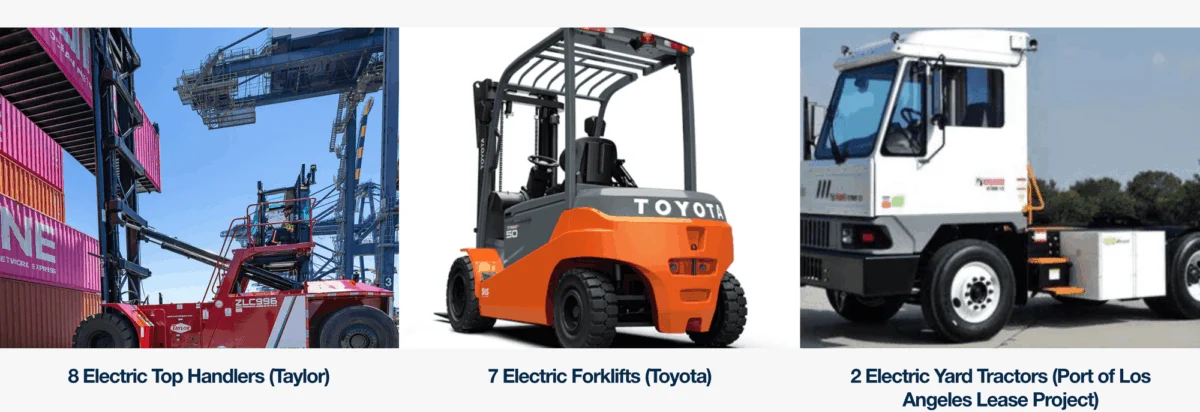
- Electric Top Handlers: The facility has been systematically replacing diesel-powered units with battery-electric models to reduce noise and particulate matter.
- Hydrogen Fuel-Cell Integration: YTI has been a testing ground for hydrogen technology, particularly for heavy-duty drayage equipment that moves containers from the ship-to-shore cranes to the stacking areas.
- Yard Tractors: The terminal is actively transitioning its fleet of "terminal tractors"—the workhorses of any port—to fully electric versions, supported by advanced charging infrastructure installed on-site.
- Operational Efficiency: Beyond just hardware, the investment includes software upgrades for terminal operating systems (TOS) that optimize container movement, reducing idle time for trucks and equipment, which indirectly lowers the carbon footprint of every box handled.
The environmental impact of this transition is significant. By eliminating diesel exhaust from the cargo-handling process, YTI is drastically reducing its contribution to regional nitrogen oxide (NOx) and sulfur oxide (SOx) emissions, aligning with the broader Port of Los Angeles goal to reach zero-emission terminal operations by 2030.
Official Responses: A Shared Vision
The leadership involved in the deal emphasized the importance of long-term certainty in an era of global uncertainty.
Alan McCorkle, President and CEO of Yusen Terminals:
"We’re proud of the operation we’ve built at the Port of Los Angeles and excited about what lies ahead. This agreement gives us the long-term certainty to continue investing in our terminal, our people, and new technology while providing the reliable service our customers expect. We look forward to building on our partnership with the Port for decades to come."

Port of Los Angeles Executive Leadership:
The Harbor Commission underscored that the lease extension is a win-win for both the business community and the residents of the San Pedro/Wilmington area. By securing a major operator for three decades, the Port protects the tax base and job security of the local workforce while ensuring that the terminal remains a state-of-the-art facility that does not lag behind competitors in automation and environmental performance.
Implications: What This Means for the Global Supply Chain
The significance of this 30-year lease extends far beyond the local docks of Los Angeles.
1. Market Stability
For shippers and cargo owners, the primary concern in recent years has been "chokepoints." A 30-year lease provides a "guarantee of service." Knowing that YTI will be there through 2056 allows international logistics firms to commit their own capital to infrastructure and routes that utilize this terminal, knowing the terminal operator isn’t going anywhere.
2. Setting a Global Standard
As the Port of Los Angeles continues to set the bar for environmental compliance, the Yusen Terminals lease acts as a template for other ports worldwide. It demonstrates that terminal operators can balance profitability with sustainability. The $200 million investment signals to the global maritime industry that "green" is not just a regulatory hurdle—it is a competitive advantage.
3. Economic Impact
The terminal supports thousands of direct and indirect jobs. The long-term nature of this agreement provides a sense of job security for the longshore workers and administrative staff who power the terminal. Furthermore, the investment in new technology creates a secondary market for specialized engineering, maintenance, and technical training in the Los Angeles area.
4. Technological Convergence
The deal accelerates the integration of AI-powered logistics. As the terminal modernizes, it will likely incorporate more advanced data analytics to predict container flows and reduce the congestion that historically plagues the Southern California supply chain. This move toward a "smarter" terminal is essential for managing the increasingly complex, just-in-time nature of modern retail and manufacturing.
Conclusion: A Future-Proofed Gateway
The approval of the 30-year lease between the Port of Los Angeles and Yusen Terminals is a transformative event for the maritime industry. It bridges the gap between the legacy of the 20th-century shipping boom and the technological, environmental requirements of the 21st century.
By securing the future of Berths 212-224, the Port of Los Angeles has ensured that it will remain a cornerstone of global trade for another generation. As the $200 million investment begins to manifest in the form of new electric infrastructure, hydrogen-powered equipment, and modernized terminal systems, the Port is proving that it is not merely reacting to the future—it is building it. For the stakeholders, the message is clear: the Port of Los Angeles is open for business, committed to the environment, and prepared for the next 30 years of global commerce.
About the Author