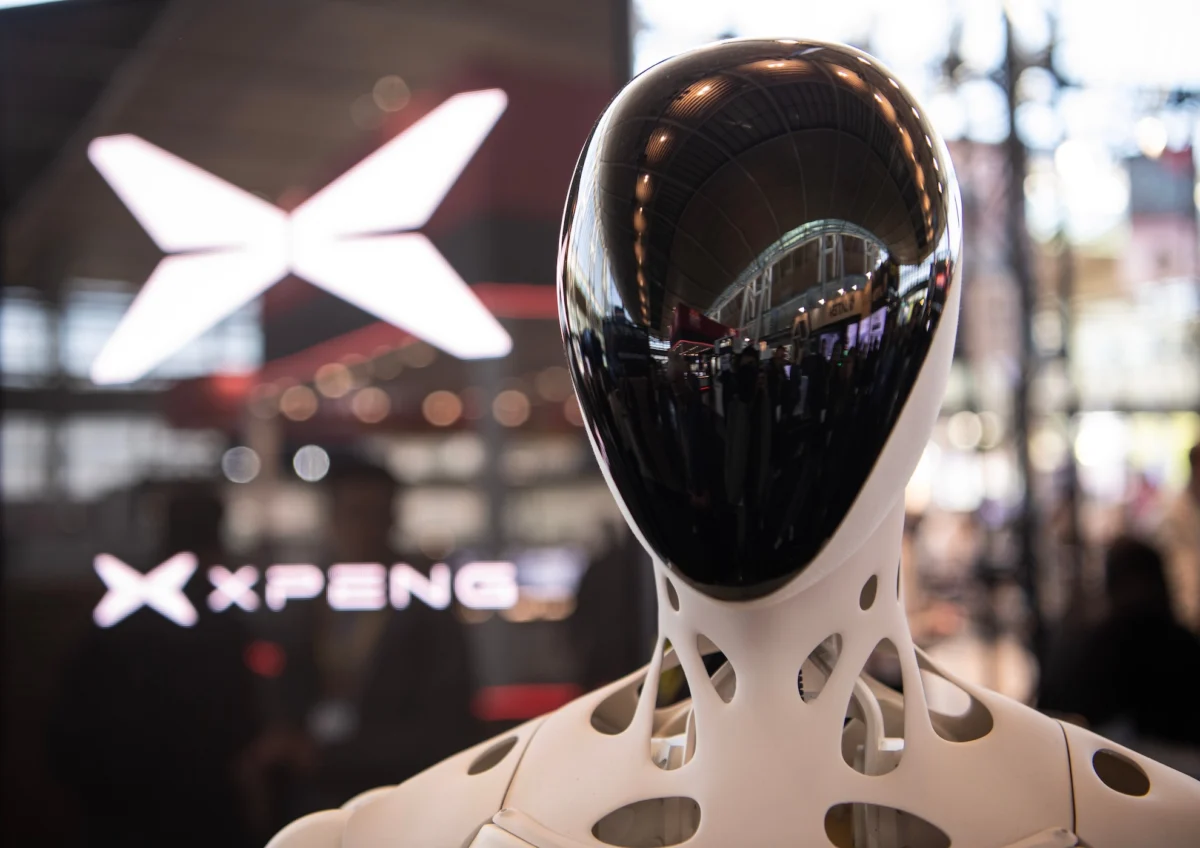
The dream of the humanoid robot—a machine capable of navigating the messy, unpredictable world designed for humans—has long been the stuff of science fiction. For years, the industry was defined by high-concept prototypes and viral marketing videos, with Boston Dynamics’ Atlas and Tesla’s Optimus serving as the primary avatars for this futuristic ambition. However, the narrative has shifted from spectacle to substance. We are no longer asking if these robots can walk; we are asking how quickly they can be deployed to the factory floor to offset shrinking labor pools and razor-thin manufacturing margins.
Today, a new gold rush is underway, and it is being led by a surprising cohort: the world’s major automotive manufacturers. As the global automotive industry faces stagnant growth and intense competition, companies are pivoting toward "embodied AI"—the marriage of large language model (LLM) intelligence with physical mobility.
The Pivot to Embodied AI: A New Industrial Frontier
Behind the hype lies a fundamental breakthrough in machine learning. Researchers have discovered that the same architectural techniques used to train large language models—the technology powering tools like ChatGPT—can be applied to robotics. By treating physical movements, sensory inputs, and task-based goals as "tokens," AI models can now learn to perform complex sequences of actions through observation and simulation, rather than rigid, line-by-line programming.
This technical maturation has signaled to the market that humanoid robots are finally ready to graduate from laboratories to assembly lines. Consequently, capital is flooding into the sector. Nowhere is this more apparent than in China, where the domestic automotive sector is rapidly diversifying its portfolio, moving beyond electric vehicles (EVs) and into the multibillion-dollar robotics space.
Chronology of the Humanoid Surge
The current momentum is the result of a rapid acceleration in investment and technical development over the last 24 months.
- Early 2025: Startups like Apptronik and Figure gain significant traction, demonstrating robots that can interact with real-world objects with human-like dexterity. Rivian signals its intent to enter the space by spinning off "Mind Robotics."
- Late 2025: The realization dawns on legacy automakers that hardware manufacturing—a core competency of car companies—is the primary bottleneck for scaling robotics.
- January 2026: Mobileye, a leader in autonomous driving, acquires the humanoid startup Mentee Robotics for $900 million, signaling the integration of automotive-grade perception tech into humanoid frames.
- August 2026: A wave of activity hits China. AiMOGA, the robotics arm of Chery, announces plans for an IPO. Simultaneously, BYD unveils "Xiao Di," a humanoid robot designed for factory-floor logistics.
- Late August 2026: Xpeng’s robotics division secures a staggering $900 million in a single funding round, valuing the unit at over $6.3 billion. This remains the largest single-round private financing in China’s embodied AI history.
Supporting Data: The Economics of the Machine
The financial commitment from industry titans is perhaps the most significant indicator of the shift. Xpeng’s recent $900 million funding round, led by IDG Capital with support from tech giants Alibaba and Tencent, underscores the scale of the ambition. Notably, Xpeng’s founder, He Xiaopeng, and co-president Brian Gu, personally contributed $100 million to the round, a move that suggests deep-seated confidence in the future of the firm’s flagship robot, "Iron."
The logic driving these investments is starkly economic. In the automotive world, profit margins on electric vehicles are tightening as the market reaches a saturation point in several key regions. As Michael Dunne, CEO of Dunne Insights, observes, "He [Xiaopeng] sees razor-thin profit in cars on the near horizon. Robots look much more promising."
The manufacturing advantage held by these companies cannot be overstated. Automakers possess the supply chains, the precision engineering capabilities, and the massive internal testing grounds required to iterate on robotics at scale. While a software startup might struggle to source reliable actuators or high-torque motors, an automaker can tap into its existing automotive supply chain to drive down the cost-per-unit of a humanoid robot.
Official Responses and Strategic Perspectives
Industry leaders are increasingly vocal about the necessity of this transition. For Hyundai, the path to commercial deployment is mapped out clearly. The company is currently opening a "Robot Metaplant Application Center" in the United States, specifically designed to train Boston Dynamics’ Atlas robots in complex physical tasks. Through a strategic partnership with Google’s DeepMind, Hyundai is accelerating the "brain" development of its robots, aiming to integrate them into their Georgia factory facility by 2028.
"They have all the hardware to get the job done," says Dunne. "The question is if they can catch Tesla on the AI side of the equation."
Tesla, for its part, remains the benchmark. By leveraging its vast fleet of autonomous vehicles to collect real-world visual data, Tesla has created a training dataset for Optimus that is arguably the most robust in the world. The pressure is now on these newer entrants—Xpeng, BYD, and others—to develop proprietary AI models that can match the agility and real-time decision-making of Tesla’s systems.
Implications: The Future of the Factory Floor
The rise of the humanoid robot implies a fundamental restructuring of global labor and production.
1. The Death of the "Static" Factory
Traditional factories are built for static automation—robotic arms that repeat the same task millions of times. Humanoid robots represent "flexible automation." They can be programmed to switch tasks—from picking and packing to assembly or quality control—simply by downloading new software. This adaptability could allow automakers to reconfigure production lines in days rather than months.
2. The Labor Gap
As developed nations face aging populations and shrinking labor forces, the humanoid robot is increasingly viewed not as a replacement for human workers, but as a necessary supplement. By offloading dangerous, repetitive, or physically grueling tasks to machines, manufacturers hope to improve safety and maintain output in an era of labor scarcity.
3. The "Automotive-First" Advantage
The convergence of the EV and robotics industries is no coincidence. The technologies required for a car to drive itself—lidar, computer vision, sensor fusion, and rapid decision-making—are the exact same technologies required for a robot to navigate a warehouse. Automakers who have spent billions perfecting "autonomous driving" are finding that the jump to "autonomous walking" is significantly shorter than expected.
Conclusion: A Race to Scale
The competition is no longer about who can build the most impressive video demonstration. It is a race to commercial scale. Companies like Xpeng, Hyundai, and the various Chinese players are betting that the first entity to achieve reliable, cost-effective humanoid deployment in a live manufacturing environment will essentially own the infrastructure of the next century.
While Tesla maintains a lead in AI integration and data acquisition, the sheer manufacturing might of the global automotive sector ensures that the humanoid revolution will be, at its heart, an industrial one. As we look toward 2030, the factory floor will likely become a hybrid landscape—a place where human intuition meets the tireless, scalable precision of the humanoid machine. The hype is settling, the capital is committed, and the robots are finally walking off the screen and into the real world.
About the Author