MAIN FACTS
In a strategic recalibration of its global operations, technology giant Lenovo has significantly expanded its manufacturing footprint over the past two years, championing a "global local" strategy designed to fortify its supply chain against mounting geopolitical risks and tariff complexities. This proactive approach aims to enhance resilience and agility in an increasingly volatile world, a move articulated by Benjamin Massie, Lenovo’s Vice President of Global Supply Chain for Servers and Storage.
At the heart of this expansion are two pivotal investments: a new manufacturing facility in Riyadh, Saudi Arabia, intended to serve the burgeoning Middle East and Africa (MEA) market, and a substantial doubling of capacity at its existing plant in Whitsett, North Carolina, to meet escalating server demand in North America. While the Riyadh facility commenced PC production in December, its full operational launch, including server manufacturing, has been pushed to the fall, a delay attributed to regional geopolitical tensions.
These strategic geographical expansions underscore Lenovo’s deep commitment to regionalized production. However, even with these robust measures, the company faces an industry-wide challenge: an unprecedented surge in demand for artificial intelligence (AI) hardware, particularly memory and advanced semiconductors. This AI boom has led to significantly lengthened product delivery times and a substantial backlog in Lenovo’s server business, echoing similar struggles reported by industry rivals. To navigate these headwinds, Lenovo has ramped up inventory levels and deployed its advanced AI-powered supply chain platform, iChain, to gain real-time visibility and control over its extensive supplier network.
CHRONOLOGY
The evolution of global supply chains has been a dynamic narrative, shifting from a singular focus on cost efficiency to a multi-faceted strategy prioritizing resilience and proximity. Benjamin Massie notes that the trend towards supply chain regionalization has been observable for the past five to seven years, initially driven by rising labor costs in traditional manufacturing hubs and a desire for closer proximity to end markets. However, this shift has dramatically accelerated over the last two years, propelled by a confluence of factors including trade disputes, fluctuating tariffs, and heightened geopolitical instability.
Lenovo’s "global local" strategy is a direct response to these evolving market dynamics. The company has made substantial investments over the past 24 months to realize this vision. A key milestone was the groundbreaking for the Riyadh facility, announced earlier, with the intent to establish a robust presence in the MEA region. The plant began manufacturing personal computers (PCs) in December of the previous year, marking its initial operational phase. However, the comprehensive launch, which will include the production of servers—a critical component of the AI infrastructure—has been rescheduled from its original summer target to the fall. This adjustment, as indicated by Massie, is a consequence of the broader geopolitical climate, specifically regional tensions that have impacted logistics and timelines.
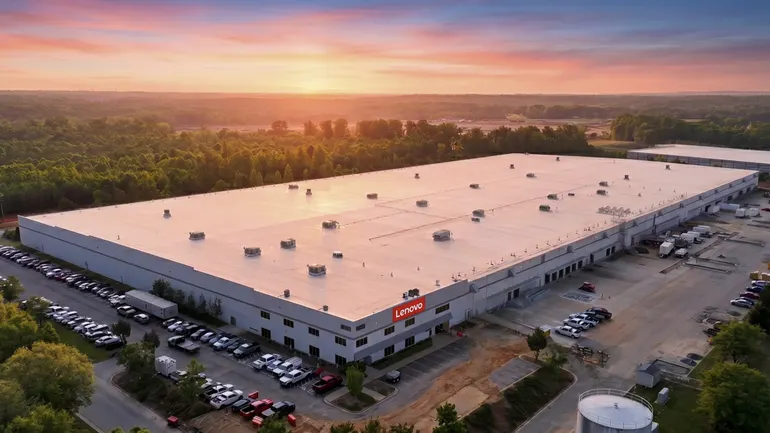
Concurrently, Lenovo has bolstered its North American manufacturing capabilities with a significant expansion in Whitsett, North Carolina. This strategic move, completed recently, effectively doubled the plant’s capacity, positioning it to address the rapidly increasing demand for servers within the United States. This dual-pronged approach, establishing new capacity in emerging markets while enhancing existing facilities in established ones, illustrates the practical implementation of Lenovo’s "global local" philosophy, allowing for greater adaptability to regional market needs and regulatory environments.
Massie emphasizes that while many companies have tentatively "put a toe" into the waters of localization, Lenovo has decisively "gone all into this global local model," demonstrating a profound commitment to diversifying its manufacturing base. This commitment reflects a recognition that a globally distributed, yet regionally focused, manufacturing network is not merely an advantage but a necessity for long-term stability and competitive edge in the current global economic landscape. The acceleration of this strategy over the past two years underscores a proactive stance in anticipating and mitigating future disruptions, moving beyond reactive measures to embed resilience into the very fabric of its operational design.
SUPPORTING DATA
Lenovo’s strategic investments in Riyadh and Whitsett are more than just facility expansions; they represent carefully calculated moves to solidify its global manufacturing architecture. The Riyadh facility, a cornerstone of Lenovo’s expansion into the Middle East and Africa, is designed to be a comprehensive hub. Located within a sprawling 11-building, 2.15 million-square-foot campus, it is a collaborative venture with ALAT, a Saudi public investment fund. This partnership is critical, not only providing capital but also aligning Lenovo with local strategic initiatives, potentially opening doors to deeper market penetration and regional governmental contracts. The plant’s dual capacity for both PCs and servers ensures it can cater to a broad spectrum of demand within the MEA market, from consumer electronics to enterprise-grade data center infrastructure. The delay in its full server production launch due to regional geopolitical challenges, though regrettable, highlights the very risks Lenovo’s "global local" strategy aims to mitigate by providing alternative production nodes.
In North America, the 890,000-square-foot expansion of the Whitsett, North Carolina plant is a direct response to the escalating demand for server infrastructure, particularly fueled by the AI boom. This significant increase in capacity allows Lenovo to more effectively serve the crucial US market, reducing reliance on potentially distant or geopolitically sensitive supply routes. The ability to manufacture closer to the point of consumption offers numerous advantages, including reduced transportation costs, shorter lead times, and greater flexibility in responding to market fluctuations or unforeseen disruptions. This localized approach also positions Lenovo favorably in an environment where domestic production is increasingly valued, potentially leading to government incentives and preferential procurement policies.
The inherent benefits of this regionalized manufacturing strategy extend beyond mere operational efficiency. Massie elaborates that regional facilities provide Lenovo with crucial flexibility, enabling the company to "pivot between the different nodes we have around the world to be able to adjust for the different geopolitical rules and tariffs." This agility is a powerful hedge against the unpredictability of international trade relations, allowing Lenovo to reroute production or adjust supply chains to avoid punitive tariffs or navigate complex regulatory landscapes. Furthermore, Lenovo’s strategy is bolstered by its partnerships with original design manufacturers (ODMs), which offer additional layers of production flexibility and scalability, ensuring that manufacturing capacity can be rapidly adjusted in response to demand shifts.
However, even with this robust strategic framework, the unprecedented demand for AI-related components presents a formidable challenge. The current "arms race" in AI development has placed immense pressure on the global supply chain for high-performance memory, advanced semiconductors, and graphics processing units (GPUs). These specialized components, critical for powering AI data centers, are experiencing severe scarcity. This has directly translated into significantly lengthened product delivery times for Lenovo’s server business. The situation is not unique to Lenovo; rivals such as Dell Technologies and Hewlett-Packard Enterprise have also publicly reported similar delays, underscoring the systemic nature of the component crunch. A recent report by TrendForce, a leading market intelligence firm, estimates that lead times for some critical server components are now stretching to nearly a year, a stark indicator of the supply-demand imbalance.
This component shortage has led to a "very large" backlog of orders in Lenovo’s server division. The company’s artificial intelligence server pipeline alone grew to a staggering $54 billion last quarter, representing an astonishing 157% quarter-over-quarter increase. This exponential growth illustrates the sheer scale of the demand wave, which Massie describes as "growing rather than shrinking or even stabilizing." The implication is clear: the current demand cycle is not a temporary blip but a sustained, accelerating trend that will continue to test the limits of global manufacturing capabilities.
To counter these pressures, Lenovo has implemented several proactive measures. A significant strategy involves increasing inventory levels, particularly for critical components. While holding more inventory can be costly in terms of warehousing and potential obsolescence, it is deemed a necessary evil to buffer against supply chain shocks and ensure a more consistent flow of products to customers. Complementing this physical inventory management is Lenovo’s sophisticated AI-powered supply chain platform, iChain. This innovative platform provides real-time visibility and predictive analytics across Lenovo’s entire supply ecosystem, monitoring product availability at first-, second-, and even third-tier suppliers. By leveraging AI, iChain can proactively identify potential bottlenecks, predict future shortages, and recommend optimal sourcing and production adjustments, thereby enhancing the overall responsiveness and resilience of Lenovo’s global supply chain. This technological edge is crucial in a market where lead times can make or break customer relationships.
OFFICIAL RESPONSES
Benjamin Massie, as the architect of Lenovo’s global supply chain strategy for servers and storage, offers invaluable insights into the company’s rationale and operational realities. His statements consistently underscore a proactive and adaptive philosophy in navigating an increasingly complex global trade environment.
Massie articulates the core benefit of Lenovo’s "global local" strategy with clarity: "We’ve been able to pivot between the different nodes we have around the world to be able to adjust for the different geopolitical rules and tariffs." This statement highlights the strategic agility that regionalized manufacturing confers, allowing Lenovo to bypass trade barriers, optimize logistics, and maintain competitive pricing regardless of shifting international policies. It’s a testament to a system designed not just for efficiency but for adaptability in the face of external pressures. He also emphasizes that the company’s partnerships with original design manufacturers (ODMs) are not merely for capacity but for "additional production flexibility," ensuring that Lenovo can scale up or down swiftly in response to market signals without the sole burden of capital expenditure.
Regarding the broader industry trend, Massie acknowledges that supply chain regionalization has been a recognized imperative for "five to seven years," but he stresses the significant acceleration of this shift "over the last couple of years to bolster local production amid tariffs." This acceleration indicates a reactive necessity, but Lenovo’s response has been distinct. While other companies "have put a toe" into localization, Massie proudly asserts that Lenovo has "gone all into this global local model." This distinction positions Lenovo as a leader in supply chain transformation, suggesting a deeper commitment and more comprehensive integration of regional hubs into its overarching operational framework compared to its peers.
However, the conversation inevitably shifts to the challenges posed by the current AI boom. Massie is candid about the impact on supply: "We’re not getting enough supply to meet the overall market demand." This straightforward admission underscores the severity of the component crunch, particularly for specialized memory and semiconductors essential for AI data centers. In response, Lenovo has had to implement strategic measures, including "differentiated our own lead times again based on where we want to have our strategic plays." This implies a nuanced approach to customer fulfillment, where strategic relationships and long-term commitments are prioritized. Massie elaborates on this, stating, "So customers that are long-term customers and plan with us – our lead times are a little shorter." This strategy not only manages expectations but also incentivizes customer loyalty and collaborative forecasting, which are crucial in times of scarcity.
Massie also provides a vivid analogy for the current market dynamics surrounding AI demand. Describing the exponential growth and persistent scarcity, he notes, "This demand cycle that’s out there right now just seems to be growing rather than shrinking or even stabilizing." He concludes with a powerful metaphor: "There seems to be an arms race a little bit, and we’re seeing that in our backlog, in our pipeline." This "arms race" analogy perfectly encapsulates the intense competition among technology companies to acquire the necessary hardware to build out AI capabilities, driving demand to unprecedented levels and creating a sustained pressure cooker environment for the global supply chain. His official responses collectively paint a picture of a company that is strategically positioned, technologically adept, yet realistically grappling with the extraordinary demands of a rapidly evolving technological landscape.
IMPLICATIONS
Lenovo’s aggressive pursuit of a "global local" manufacturing strategy and its agile response to the AI-driven component crunch carry profound implications for the company, the wider technology industry, and the future of global trade.
For Lenovo, this strategy positions the company for enhanced resilience and competitive advantage in an era defined by volatility. By diversifying its manufacturing base, Lenovo significantly reduces its exposure to single-point-of-failure risks, whether from geopolitical disputes, natural disasters, or localized labor issues. The investments in Riyadh and Whitsett are not merely about increasing capacity; they are about embedding flexibility and responsiveness directly into its supply chain architecture. This adaptability will be crucial in mitigating the impact of future trade conflicts, ensuring more stable product availability, and potentially reducing reliance on long, vulnerable shipping routes. This proactive stance could translate into more consistent market share, stronger customer relationships built on reliability, and a more predictable financial performance, especially when compared to competitors who may be slower to adapt.
The broader technology industry is likely to observe and potentially emulate Lenovo’s deep commitment to regionalization. The trend, which Massie notes has accelerated, is set to redefine global manufacturing maps. Companies across sectors may increasingly invest in multiple smaller, localized facilities rather than a few mega-factories, leading to a more distributed global production network. This shift could have significant economic implications for regions receiving these investments, fostering local job creation, technology transfer, and the development of ancillary industries. For instance, the partnership with ALAT in Saudi Arabia signals a broader trend of technology companies aligning with national development agendas, unlocking new markets and investment opportunities.
Furthermore, the "AI arms race" highlighted by Massie underscores a sustained and perhaps permanent strain on the supply chains for advanced semiconductors and memory. The implications are far-reaching:
- Innovation Imperative: Chip manufacturers will face immense pressure to rapidly innovate and scale production of specialized AI components like High Bandwidth Memory (HBM) and advanced GPUs. This could drive significant R&D investments and potentially lead to new fabrication technologies and capacities.
- Strategic Sourcing: Companies will continue to prioritize strategic relationships with key suppliers, potentially offering long-term contracts and even pre-payments to secure allocation of scarce components. The concept of "differentiated lead times" for long-term customers, as practiced by Lenovo, could become an industry standard.
- Vertical Integration: Some tech giants might consider greater vertical integration, investing directly in chip foundries or partnering closely with them to gain more control over their component supply.
- Sustainability Considerations: While not explicitly mentioned in the original text, localized production inherently reduces the geographical distance goods travel, potentially leading to lower transportation-related carbon emissions. As ESG (Environmental, Social, and Governance) factors gain prominence, the sustainability aspect of regionalized supply chains could become an added benefit and a competitive differentiator.
Finally, Lenovo’s reliance on its AI-powered iChain platform highlights a critical future direction for supply chain management. In an era of increasing complexity and unpredictability, human-managed supply chains are proving insufficient. AI and machine learning will become indispensable tools for real-time monitoring, predictive analytics, demand forecasting, and dynamic routing. This technological integration will not only enhance efficiency and resilience but also provide the granular visibility needed to navigate future disruptions, from sudden geopolitical shifts to unexpected surges in demand for novel technologies. The lessons learned from the current AI boom and the ongoing geopolitical fragmentation are clear: adaptability, technological sophistication, and a strategically distributed manufacturing base are no longer optional but fundamental pillars for sustained success in the global technology landscape.
About the Author