The American trucking industry is facing a potential paradigm shift in liability law, as two of its most powerful trade organizations—the American Trucking Associations (ATA) and the Truckload Carriers of America (TCA)—have launched a formal bid for an en banc rehearing before the U.S. Court of Appeals for the Fifth Circuit.
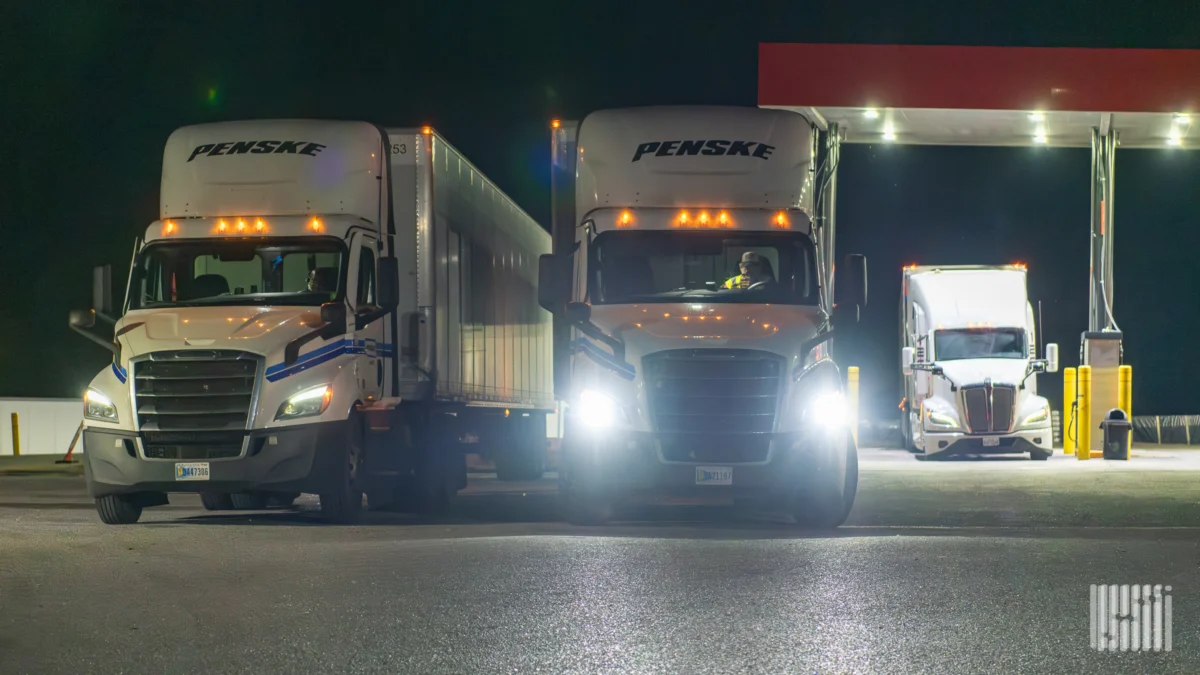
At the center of this legal firestorm is a complex litigation case involving the Penske network of companies. Industry stakeholders view the recent appellate ruling as an existential threat to the established business model of capacity sharing and subcontracting, prompting the two trade groups to intervene through the specialized legal counsel of the Scopelitis law firm. The groups argue that the court’s interpretation of “statutory employment liability” risks upending decades of regulatory precedent and could fundamentally restructure how freight is moved across the United States.
The Genesis of the Litigation: Crane v. Liberty Lane
To understand the gravity of the ATA and TCA’s intervention, one must look at the convoluted supply chain history of the case known as Crane v. Liberty Lane. The case stems from a tragic December 2018 collision in Bee County, Texas, which resulted in the death of Lyndon Dean Meyer.
The incident involved a multi-layered transportation chain:
- Adient: A manufacturer of automotive seating that required the movement of its goods.
- Penske Logistics: Contracted by Adient to manage the transport.
- Penske Transportation Management (PTM): A brokerage affiliate that facilitated the hiring of a carrier.
- Liberty Lane: A carrier contracted by PTM to move the freight.
- OK Trans: An entity to which Liberty Lane “double-brokered” the load without the knowledge or consent of Penske Logistics or PTM.
- Satnam Singh Lehal: The driver of the OK Trans vehicle that struck the victim’s truck.
Following the accident, the legal fallout saw numerous defendants and plaintiffs enter a protracted battle. Initially, lower courts granted summary judgment in favor of Penske Logistics and PTM, shielding them from liability under the protections typically afforded by the Federal Aviation Administration Authorization Act (F4A). However, that success was short-lived.
Chronology of Legal Reversals
The trajectory of Crane v. Liberty Lane has been marked by dramatic reversals, reflecting the evolving landscape of trucking law.
- Initial District Court Rulings: In the early stages of litigation, lower courts held that Penske Logistics and its brokerage affiliate, PTM, were not liable for the actions of a driver several layers removed from their direct control. The courts relied on a standard interpretation of F4A, which historically protected brokers and carriers from certain types of vicarious liability.
- The Supreme Court’s Intervention: In May 2023, the U.S. Supreme Court’s decision in Montgomery v. Caribe Transport II fundamentally altered the legal landscape. The Court ruled against brokers regarding F4A protections, effectively narrowing the immunity previously enjoyed by these entities.
- The Fifth Circuit’s August 4 Decision: Applying the Montgomery precedent, the Fifth Circuit panel overturned the lower court’s summary judgment in favor of PTM. More controversially, the panel also reversed the finding for Penske Logistics, asserting that the company held “statutory employment liability” for the accident.
- The Current Appeal: Following the remand of the case to the U.S. District Court for the Southern District of Texas, the ATA and TCA filed a joint amicus brief requesting an en banc hearing—a rare procedure where the entire bench of the Fifth Circuit reviews the panel’s decision.
Dissecting the "Statutory Employment Liability" Doctrine
The core of the industry’s alarm lies in the Fifth Circuit’s reasoning regarding Penske’s alleged status as a "statutory employer." The appellate court concluded that “Penske’s assumption of control and responsibility of the vehicle made Penske Lehal’s statutory employer, regardless of whether Penske and Liberty Lane complied with the formal regulatory requirements.”
The ATA and TCA contend that this ruling represents a radical departure from established law. The brief filed by the trade groups notes, “Since the earliest days of trucking, a motor carrier was liable for accidents caused by its employee drivers.” However, they argue the Fifth Circuit has stretched this concept to an untenable degree. Under the court’s current interpretation, an upstream carrier could be held liable for the actions of a driver working for a completely separate, authorized carrier—a chain of liability that extends even to subcontractors the upstream entity never knew existed.
The Conflict with Federal Leasing Regulations (FLR)
The crux of the trade groups’ argument is that the Fifth Circuit’s decision conflicts with the Federal Leasing Regulations (FLR). The brief asserts that the FLRs were never intended to govern relationships where an authorized motor carrier provides delivery services under its own authority.
“The Fifth Circuit imposed statutory employment liability on Penske Logistics under the FLRs for an accident caused by an employee driver for a separate, authorized carrier, which Penske Logistics knew nothing about,” the brief states. According to the ATA and TCA, the FLRs were designed specifically to regulate situations where a carrier leases equipment from a non-authorized entity to operate under the carrier’s own authority. By applying these rules to a situation involving two authorized carriers, the court has effectively misapplied the regulations to an industry standard of subcontracting.
Industry Implications: A System at Risk
The implications of the Fifth Circuit’s decision, if left to stand, are described by industry insiders as potentially catastrophic. The ATA and TCA are not merely defending Penske; they are defending the right of motor carriers to supplement capacity through other authorized carriers.
The "Chilling Effect" on Capacity
The trucking industry relies heavily on the ability of carriers to turn to one another to meet fluctuating shipping demands. If a carrier is legally deemed the “statutory employer” of any driver in the chain—even those employed by a downstream, authorized carrier—the risk profile of subcontracting would skyrocket. The trade groups warn that this “judicially-created liability regime” will force insurance companies to hike premiums significantly, leading to higher costs for shippers and consumers alike.
The Upending of the Business Model
Perhaps most troubling to the industry is the implication that the entire sector has been in technical violation of the FLRs for decades. If the court’s logic prevails, the industry would be forced to abandon its current subcontracting workflows in favor of a rigid, legally burdensome structure that does not currently exist.
“The panel’s decision will chill that option, constrict the safe and timely flow of freight and increase costs as insurers account for a new, judicially-created liability regime,” the amicus brief warns.
The Path Forward
The en banc request underscores the intensity of the struggle. The ATA and TCA are asking the Fifth Circuit to acknowledge that while safety and accountability are paramount, the current ruling creates a standard that is both logically disconnected from the reality of supply chain operations and legally inconsistent with the intended scope of Federal Leasing Regulations.
As the case returns to the Southern District of Texas, the legal community and logistics executives are watching closely. The outcome of the en banc request will determine whether the Fifth Circuit will provide clarity on the limits of vicarious liability or whether it will allow a precedent to stand that could fundamentally rewrite the rules of the road for the North American trucking industry. For now, carriers are left in a state of legal uncertainty, waiting to see if the judiciary will move to preserve the flexible, capacity-driven model that has long served as the backbone of the U.S. economy.
About the Author