In a significant shift aimed at curbing the proliferation of deceptive digital personas, Instagram announced this Monday a comprehensive update to its labeling requirements for AI-generated content. As generative artificial intelligence continues to blur the lines between human creators and synthetic constructs, the Meta-owned platform is moving to enforce transparency, warning that accounts featuring AI-generated people without clear disclosure will face significant penalties, including reduced visibility and restricted reach.
This policy adjustment marks a critical juncture for social media governance, reflecting growing public concern over the "uncanny valley" effect, where users increasingly find themselves interacting with influencers, wellness gurus, and community figures who, in reality, do not exist.
Main Facts: The New "AI-Generated Profile" Standard
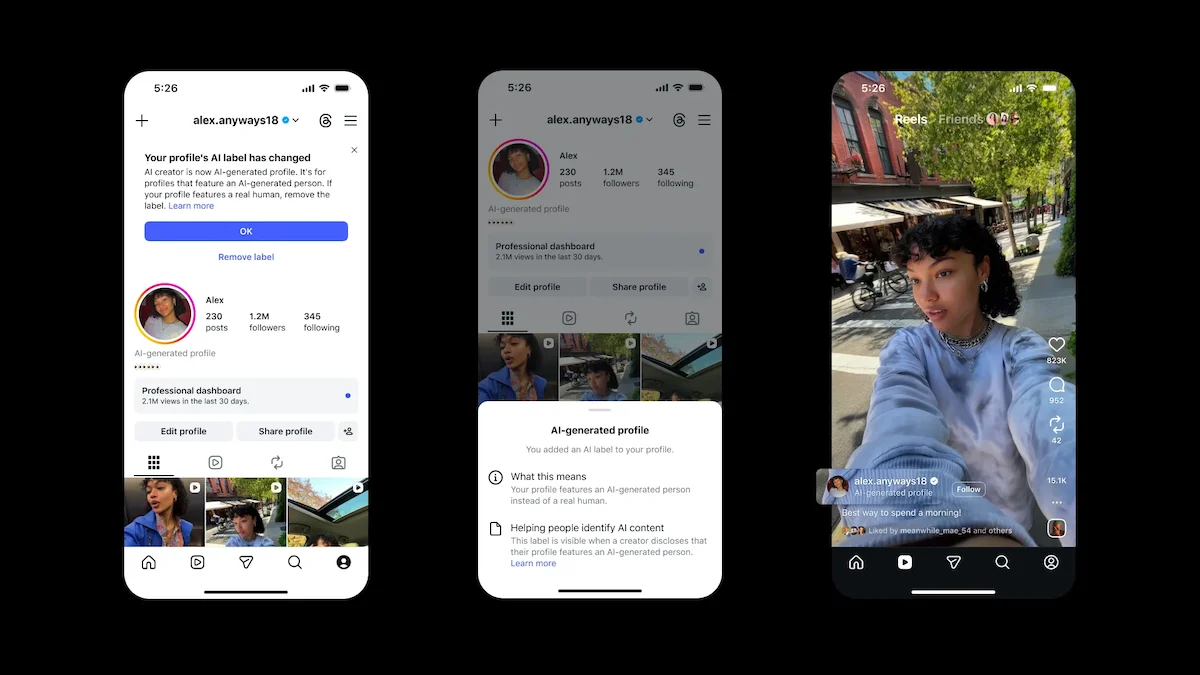
At the core of this policy shift is the rebranding of the existing "AI creator" tag. Moving forward, the platform will implement the "AI-generated profile" label. This update is designed to remove ambiguity: the label is intended to explicitly signal to users that the primary subject of the profile—the "face" of the account—was either entirely created by or substantially altered through generative AI technology.
Instagram has clarified that this policy is targeted. It is not a blanket mandate for every instance of machine learning application. Creators who utilize AI to polish captions, generate aesthetic backgrounds, edit existing photos for color grading, or create non-human graphics are exempt from the label. The focus remains squarely on the impersonation of human beings.
The enforcement mechanism is twofold:
- The Transparency Incentive: Creators who correctly apply the "AI-generated profile" label will not face penalties simply for the nature of their content.
- The Reach Penalty: Accounts that attempt to mask their synthetic nature will be subject to algorithmic demotion. By limiting the reach of these "faceless" or "deceptive" profiles, Instagram hopes to neutralize the advantage currently enjoyed by bot networks and automated influence campaigns.
A Chronology of Escalating AI Integration
The rise of the "AI influencer" has been a rapid and often contentious phenomenon. Over the past 18 months, the platform has struggled to balance creative expression with user safety.
- Early 2024: The emergence of specialized AI influencers begins to proliferate, with accounts garnering thousands of followers through hyper-realistic portraiture.
- Mid-2024: Investigative reporting by outlets such as Wired uncovers sophisticated bot networks, including those promoting the gay dating app "Goose." This investigation revealed how two dozen AI-generated personas were used to conduct direct-message outreach to unsuspecting users, effectively "catfishing" them into app sign-ups.
- July 2026: The New York Times reports on a surge of "health-tech" misinformation, where hundreds of AI-generated doctors and wellness personalities were found peddling unverified supplements and making dangerous medical claims.
- Late July 2026: Meta faces a firestorm of backlash following the introduction of an AI image generator that utilized public user photos to train models without explicit opt-in consent. Meta promptly retracted the feature.
- August 2026: The current policy update arrives as a direct response to this mounting pressure to provide users with tools to identify synthetic actors.
Supporting Data and the "Influencer" Problem
The necessity for this policy is underscored by the high volume of automated traffic on modern social networks. Industry analysts have noted that the "AI Influencer" market is not merely a hobbyist endeavor; it is an economic force.
Data suggests that these personas are being deployed as low-cost alternatives to human brand ambassadors. However, the lack of transparency has led to a degradation of trust. When a user engages with a persona, they form a parasocial relationship. Discovering that the "person" behind that connection is a collection of neural network weights often results in a feeling of betrayal.
Instagram’s internal research, cited in their announcement, confirms this sentiment. "As generative AI becomes a bigger part of how people create, we’ve heard that people don’t like seeing a profile that seems human, only to find out later that the person featured is AI-generated," the company stated. "They want to know when a profile features an AI-generated person."
Official Responses and Corporate Strategy
The decision to tighten controls is also a defensive measure for Meta. The company has been under intense regulatory scrutiny, not just for AI, but for its impact on younger demographics.

Last week, Meta reached an $18 billion settlement with a coalition of U.S. states regarding allegations of social media-induced harm to children and teenagers. As part of this sweeping legal resolution, the company has agreed to implement a mandatory two-hour daily usage limit for minors, "Night Mode" blocks, and the muting of notifications during school hours.
By proactively addressing the "AI-influencer" issue, Meta is likely attempting to signal to regulators that it is capable of self-governance. However, skeptics argue that these labels are merely a "band-aid" solution. Critics point out that if the algorithmic reach penalty is not severe enough, large-scale bot farms will simply treat the label as a "cost of doing business," continuing to influence public opinion and consumer behavior while merely checking a box.
Implications for the Future of Social Media
The implications of this move are far-reaching for digital marketing, cybersecurity, and consumer protection.
The Erosion of "Influencer" Credibility
If an account is labeled "AI-generated," it loses the inherent trust that comes with a human face. This may lead to a bifurcation of the influencer economy: "Verified Human" influencers may become a premium tier of marketing, while AI influencers are relegated to entertainment or experimental categories.
The Regulatory Landscape
This policy is likely the first of many. Legislators in the EU and the United States are currently debating the "AI Act" and similar frameworks that would mandate the labeling of all AI-generated media. Instagram’s move preempts these laws, allowing the company to set the industry standard rather than having a rigid, potentially ill-suited, regulatory framework imposed upon it.
Cybersecurity Risks
One of the most pressing concerns remains the use of AI in social engineering. While Instagram’s new policy targets "profiles," the threat of AI-generated content being used for phishing, political manipulation, and romance scams remains high. By requiring disclosure, Instagram is shifting the burden of verification onto the user. The success of this policy will depend entirely on how prominent and "un-skippable" these labels are.
Conclusion: A Delicate Balance
Instagram’s mandate is a tacit admission that the "wild west" era of generative AI on social media is drawing to a close. By forcing disclosure, the platform is attempting to reclaim the integrity of the user experience.
However, the efficacy of this policy remains to be seen. The challenge for Meta will be to maintain an enforcement system that is both accurate and scalable. If the platform fails to catch those who try to circumvent the rules, the label will become meaningless. Conversely, if the system is too aggressive, it risks stifling legitimate creative expression from digital artists who use AI as a tool for storytelling.
For now, users should prepare to see more labels in their feeds. Whether this leads to a more transparent, honest social media ecosystem or simply creates a new layer of "fine print" in an increasingly artificial digital landscape remains the defining question of the next phase of the AI era. As we navigate this, the responsibility increasingly shifts to the consumer: to be more discerning, more skeptical, and more aware of the synthetic nature of the faces we scroll past every day.
About the Author