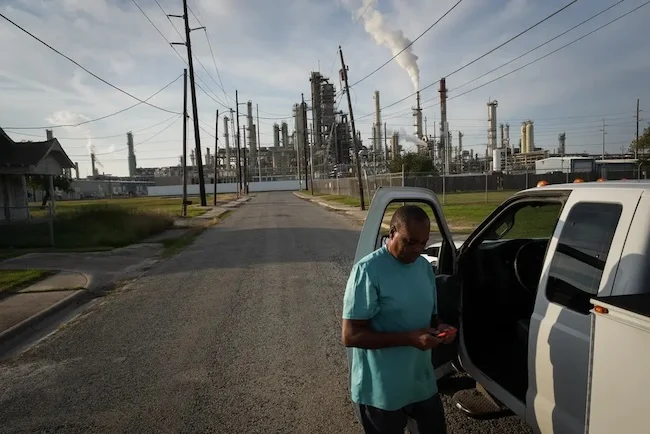
In the shadow of the petrochemical giants lining the lower Mississippi River, the air is thick with more than just humidity. For the residents of Louisiana’s “Cancer Alley,” a stretch of industrial corridor between New Orleans and Baton Rouge, the atmosphere is a constant, tangible threat. For a fleeting moment in the spring of 2024, that threat seemed to be receding. Tish Taylor and her father, Robert, stood in the halls of power, witnessing EPA Administrator Michael Regan sign the "HON rule"—a set of stringent regulations designed to curb toxic emissions from hundreds of petrochemical plants.
Today, that promise has been systematically dismantled. Following the inauguration of President Donald Trump for his second term, the regulatory framework meant to protect these communities has been effectively neutralized, leaving residents feeling abandoned by the very agency tasked with their safety.
The Rise and Fall of the HON Rule
The Hazardous Organic National Emission Standards for Hazardous Air Pollutants, commonly known as the HON rule, was intended to be the crown jewel of the Biden administration’s environmental legacy. It targeted the "classic bad guys" of industrial chemistry: ethylene oxide, benzene, vinyl chloride, 1,3-butadiene, chloroprene, and ethylene dichloride. These are not merely industrial byproducts; they are known carcinogens linked to leukemia, lymphoma, liver cancer, and severe reproductive harm.
For decades, these pollutants were subject to lax oversight compared to vehicle emissions. The HON rule was designed to change that by forcing plants to upgrade to modern pollution-control technology and, crucially, to install fenceline air monitors. These monitors would provide real-time data on toxic releases, mandating repairs if levels exceeded safe thresholds.
However, the political pendulum swung sharply in 2025. Within months of taking office, the Trump administration began a sweeping effort to rescind, revise, or reconsider all nine of the Biden-era air toxics rules. The HON rule, which covered roughly 220 major petrochemical facilities nationwide, was targeted first.
Chronology of a Regulatory Rollback
- April 2024: The EPA finalizes the HON rule, promising to slash toxic air pollution by 6,200 tons annually and reduce cancer risks in surrounding communities by up to 96 percent.
- January 2025: President Trump begins his second term, signaling a pivot toward deregulation under the guise of "national security" and "economic competitiveness."
- July 2025: The administration issues the first wave of two-year exemptions to more than 50 petrochemical facilities, citing a provision in the Clean Air Act that had previously been considered dormant.
- October 2025: A coalition of environmental justice groups, including the Concerned Citizens of St. James, files a lawsuit in the U.S. District Court for the District of Columbia, challenging the legality of the exemptions.
- July 2026: The administration grants an additional 20 temporary exemptions, signaling that the rule is effectively in a state of suspended animation.
- Fall 2026: The EPA confirms plans to propose a formal rewrite of the regulation, all but guaranteeing a permanent weakening of environmental standards.
The Pretext of National Security
The Trump administration’s justification for these exemptions relies on a novel interpretation of the Clean Air Act. By claiming that the HON rule imposes "substantial burdens" on manufacturers, the administration argues that these exemptions are necessary to maintain a "robust domestic chemical industry." Proclamations from the White House assert that these plants are vital to national security and supply chain resilience.
Critics, however, point to a glaring lack of evidence. Annie Fox, a staff attorney at the Clean Air Council, argues that the law requires specific, research-backed justifications for such exemptions—not mere assertions of economic necessity. "These are supposed to be rare exceptions that are well-grounded in research and facts," Fox stated. "What we are seeing is a pretext to relieve polluters from their obligation to comply while the administration works to dismantle the regulation entirely."
Data and Disparity: The Cost of Exposure
The human cost of these regulatory shifts is most visible in St. John the Baptist Parish, where the Taylors reside. The region suffers from some of the highest cancer risks in the United States—nearly 50 times the national average. The demographic reality is equally stark; the populations most exposed to these emissions are disproportionately Black and lower-income.
Dr. Tracey Woodruff, a professor of epidemiology at Stanford University and a former EPA toxicologist, notes that the science regarding these chemicals has been settled for years. "We’ve known about their toxicity for decades," Woodruff said. "They should have been more highly regulated a long time ago."

The impact of the HON rule was not just localized. While 60 percent of the affected facilities are in Texas and Louisiana, the regulation reached into Alabama, Illinois, Kentucky, Ohio, Tennessee, and West Virginia. By rolling back these standards, the administration is not just impacting a single region; it is setting a precedent that allows large-scale emitters to bypass the cumulative health costs imposed on local populations.
Official Responses and Industrial Pressure
The American Chemistry Council (ACC), the primary trade lobby for the industry, has championed the rollbacks, labeling the original HON rule "overly stringent" and "technologically unfeasible." The ACC maintains that the EPA exceeded its statutory authority in the 2024 final rule, arguing that the compliance timelines were unrealistic.
Conversely, the EPA, under its current leadership, defends the rollbacks as a necessary balance. "The EPA aims to protect American industry and supply chains, while still minimizing Americans’ unnecessary exposure to hazardous air pollutants," an agency spokesperson stated via email.
This sentiment is echoed in the administration’s approach to the Risk Management Program (RMP). The RMP, which empowered workers to halt dangerous operations and forced facilities to disclose accident data, is also being dismantled. The administration claims that the RMP was "too costly and burdensome," arguing that facility operators are in the best position to assess and mitigate their own risks—a "self-regulation" model that industry critics call a recipe for catastrophe.
Implications: The Shadow of Bhopal
The removal of public data tools, which previously allowed residents to track accident histories and emergency plans for nearby chemical plants, has left communities in the dark. Shiv Srivastava, policy director at the Houston-based Fenceline Watch, warns that the lack of transparency is a precursor to disaster.
"It makes us extremely, extremely vulnerable to having a massive, catastrophic disaster on the scale of something like what happened in Bhopal," Srivastava said, referring to the 1984 gas leak in India that killed thousands. For communities living within earshot of constant, undocumented industrial flaring, the threat is not abstract—it is a daily reality.
The broader implication of this pivot is a fundamental shift in the EPA’s mission. With former industry lobbyists holding key roles within the agency, the focus has moved away from the "precautionary principle"—which emphasizes safety in the face of scientific uncertainty—toward an "industry-first" model. As Dr. Woodruff noted, this directly contradicts the administration’s own rhetoric regarding health. "This is exactly the opposite of what this administration claimed they wanted to do in terms of ‘Make America Healthy Again.’"
A Vow to Resist
Despite the setbacks, the movement that spurred the 2024 regulation remains active. Sharon Lavigne, founder of RISE St. James, keeps the pen used to sign the now-suspended HON rule as a reminder of what was won and what can be regained. For residents of Cancer Alley, the legal battle in D.C. is just one front in a much longer war.
"When he gets out of office," Lavigne said, referring to the current administration, "we’re gonna fix it back." For now, however, the air in Louisiana remains heavy, and the plants continue to operate under a shield of regulatory exemption, leaving the residents of the corridor to wait for a day when their health is once again valued above the output of the chemical refineries.
About the Author