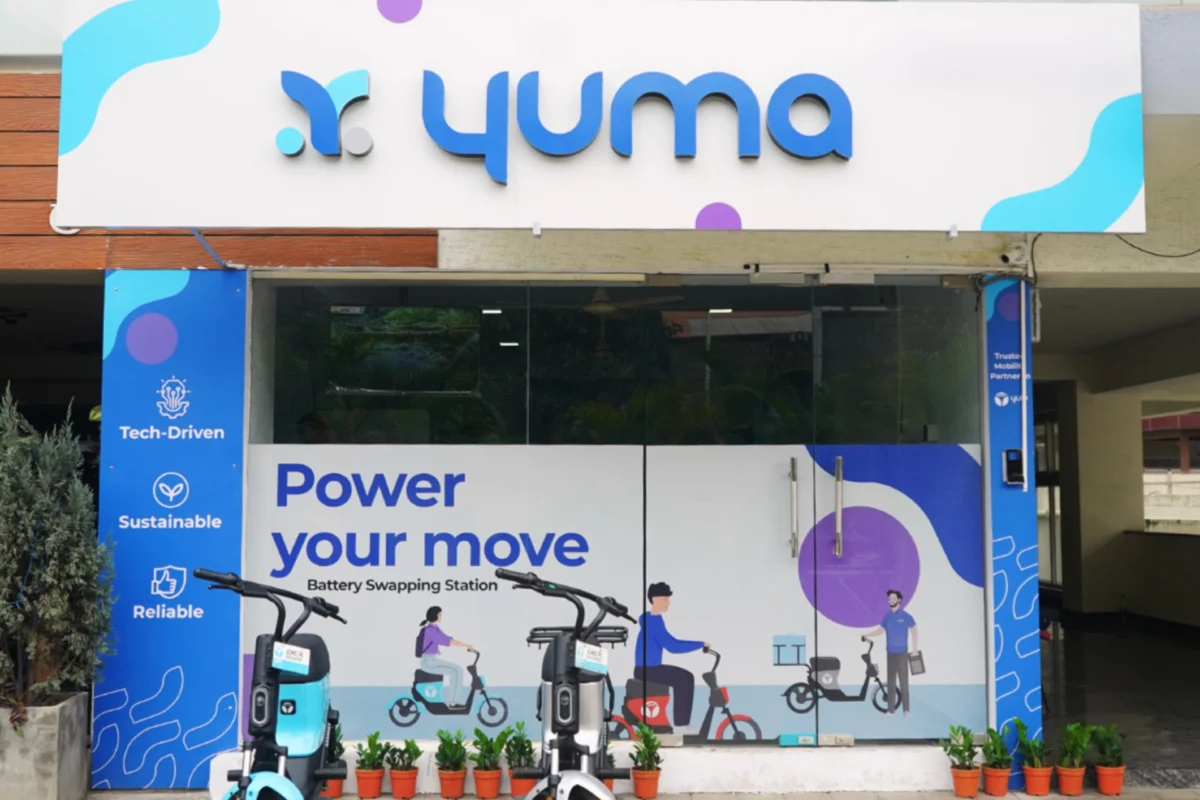
While the global automotive industry has experienced a lukewarm reception to battery-swapping technology—often citing infrastructure costs and standardization hurdles—Canadian auto parts titan Magna International has identified a different reality in India. In a market dominated by millions of two- and three-wheelers and a hyper-active delivery economy, the "swap-and-go" model is not just a niche alternative; it is rapidly becoming an operational necessity.
Confirming its commitment to this vision, Magna International has announced an additional $35 million investment in Yuma Energy, a Bengaluru-based battery-swapping network. This move further cements Magna’s influence over the venture, increasing its stake beyond the 51% majority it secured at the joint venture’s inception in 2023.
The Evolution of Yuma Energy: A Chronology
The genesis of Yuma Energy is deeply intertwined with the broader electrification of Indian urban mobility.
- September 2022: Magna International marks its entry into the Indian micromobility sector by announcing a $77 million capital commitment. This included $25 million directly into Yulu, India’s leading shared electric mobility provider, and $52 million into a newly conceptualized battery-swapping joint venture.
- Early 2023: Yuma Energy formally spins out of Yulu, establishing itself as an independent entity focused on AI-powered battery charging and swapping infrastructure. The goal was clear: create a standardized energy backbone for the growing fleet of electric two-wheelers.
- March 2026: Yuma concludes the fiscal year with a revenue milestone of approximately ₹1 billion (roughly $10.5 million). By this time, the network has successfully facilitated over 60 million battery swaps.
- August 2026: Parent company Yulu secures $93 million in a funding round, fueled by the rapid expansion of quick-commerce platforms that rely heavily on electric e-bikes for last-mile delivery.
- Current Date: Magna announces its follow-on $35 million investment, signaling confidence in Yuma’s path to profitability and its role as the critical infrastructure layer for India’s gig economy.
Betting on the Gig Economy’s "Uptime"
The core economic thesis behind Magna’s investment is simple: for a delivery rider, time is money. In a conventional charging scenario, a gig worker must pause for hours to replenish a depleted battery. In a dense, high-demand market like India, this is a non-starter.
"With Indian gig workers’ high runtime on a daily basis, an EV makes absolute sense in terms of total cost of ownership," says Muthu Subramanian, Managing Director of Yuma Energy. "Uptime is the single most important metric for these riders."
Yuma’s infrastructure allows a rider to exchange a depleted battery for a fully charged one in under two minutes. Compared to fast-charging solutions, which can take 20 to 30 minutes and require significant real estate and grid power, swapping is vastly superior for high-frequency, high-mileage users.
However, Subramanian acknowledges the burden of this model. "It is a capital-intensive business," he admits. "The unit economics only play out at scale. You have to build the infrastructure ahead of the demand to ensure that whenever a rider needs a swap, the energy is available."
Supporting Data and Financial Performance
Yuma’s operational footprint has expanded significantly since its 2023 launch. Currently, the company operates:
- Network Scale: Over 400 active swapping stations.
- Infrastructure: More than 2,500 individual charging units.
- Fleet Penetration: Approximately 100,000 batteries currently deployed across India.
- Revenue Growth: Hitting the ₹1 billion annual revenue mark as of March 2026.
While the firm is not yet profitable, the trajectory is promising. Subramanian notes that several of the company’s older stations have already achieved EBITDA-positive status. Yuma is now targeting a company-wide EBITDA break-even point within the next two quarters.
The strategy for achieving this break-even is twofold: scaling the infrastructure to capture more volume and diversifying the customer base. While Yulu remains the primary user of the network, non-Yulu swaps have grown to represent 15% to 20% of the total volume. Yuma has now integrated its battery technology with more than 10 vehicle platforms, including models from Kinetic Green, Motovolt, BGauss, and Quantum Energy, serving over five distinct commercial fleets. The company aims to grow its non-Yulu revenue contribution to 25% within the next two years.
The Tech Edge: Vertical Integration
What sets Yuma apart from competitors is its vertical integration. Many network operators act as middle-men, purchasing batteries and chargers from third-party OEMs. Yuma, conversely, maintains control over the entire hardware stack.
The company designs and manufactures its own battery packs at its facility in Chennai and produces its charging units in Bengaluru. By controlling both the chemistry of the pack and the software that governs the charging station, Yuma can optimize the life cycle of its assets and ensure safety—a critical concern given the environmental conditions in India. This proprietary "AI-powered" network allows Yuma to predict demand patterns, manage grid load, and maintain higher uptime for its users.
Implications and Future Expansion
The $35 million injection from Magna will primarily be directed toward aggressive physical expansion. Over the next 12 to 18 months, Yuma intends to double its fleet of batteries and extend its reach into new urban centers. While currently operating in 18 cities—including major hubs like Bengaluru, Hyderabad, Mumbai, and Delhi—Yuma has set its sights on Chennai and Pune for the immediate future.
Beyond India, the long-term roadmap is ambitious. Subramanian points to Southeast Asia (specifically Vietnam and Thailand) and parts of Africa as the next frontiers. These regions share similar demographic and economic characteristics with India, particularly the heavy reliance on two-wheelers for personal and commercial transit. While formal entry into these markets is not yet under discussion, the scalability of Yuma’s model makes it a high-potential export for Magna’s mobility portfolio.
Conclusion: A Shift in Global EV Strategy
Magna International’s continued investment in Yuma Energy serves as a case study for how global automotive suppliers can successfully pivot to local market realities. By recognizing that the "one-size-fits-all" approach to EV adoption does not apply to emerging markets, Magna has positioned itself at the center of the Indian mobility transformation.
For the Indian gig worker, the partnership between Magna and Yuma is more than just a corporate investment—it is an infrastructure lifeline. As the country moves toward its ambitious carbon-neutral goals, the ability to transition the massive two- and three-wheeler segments to electric power depends entirely on the reliability, speed, and affordability of the energy supply. With the backing of a global giant and a rapidly maturing network, Yuma Energy is moving closer to making that transition an everyday reality.
About the Author