Technology has historically been a tool we operate; today, it is an environment we inhabit. As Artificial Intelligence transitions from a transactional utility into an immersive, conversational, and autonomous force, the relationship between consumer and brand is undergoing a seismic shift. We are no longer merely clicking buttons on a screen; we are engaging with "agentic" systems that interpret, create, and adapt in real-time.
In this new "Agentic Economy," the traditional playbooks of branding—once reliant on static archetypes and carefully curated campaigns—are proving insufficient. To survive, brands must evolve into "Agentic Lovemarks," capable of maintaining deep, human-like emotional connections even when those connections are mediated by algorithms. Enter the PRISM model: a sophisticated, data-driven framework designed to translate brand identity into a digital soul that AI can finally understand.
The Evolution of Emotional Persuasion
Since the early 20th century, the bedrock of marketing has been emotional psychology. From early advertising that leveraged simple desires to the sophisticated brand-building strategies of the late 1990s, the goal remained consistent: foster a deep, psychological bond that drives long-term loyalty.
The introduction of the 12-brand archetype model by Margaret Mark and Carol Pearson 25 years ago was a watershed moment. It gave marketers a rational, tangible guide to navigate the irrational behavior of consumers. By assigning human-like traits to brands—whether it be the "Hero," the "Outlaw," or the "Caregiver"—companies could craft a consistent personality that resonated with human psychology.
However, the rapid rise of AI has exposed the limitations of this model. While archetypes are excellent for human-to-human communication, they are too interpretive for machines. If an AI is instructed to act as a "Hero," it lacks the specific, nuanced behavioral instructions required to remain consistent across millions of unique, one-on-one conversational touchpoints. Relying on simple archetypes in an AI-driven landscape is akin to asking an AI to generate a brand logo without a style guide: the output will be inconsistent, fragmented, and ultimately, devoid of a singular "brand soul."
Chronology of the Shift: From Transactional to Conversational
To understand the necessity of the PRISM model, one must look at the trajectory of digital interaction:
- 1990s–2010 (The Transactional Era): Brands utilized static websites. Interaction was defined by clicking and scrolling. Brand identity was visual and static.
- 2010–2022 (The Social/Personalized Era): The rise of social media shifted interaction toward engagement. Brands began to "talk," but that talk was managed by human community managers.
- 2023–Present (The Agentic Era): AI-driven LLMs (Large Language Models) have taken over the dialogue. The interaction is now autonomous. The brand is no longer just a logo; it is a conversation partner.
This shift has created a critical challenge for CMOs: how do you maintain a brand’s unique personality when that personality is being synthesized by an AI on the fly?

The Legible-Lovable Law: Bridging Tech and Emotion
Thomas Marzano, a visionary in brand strategy and former executive at Philips and ASML, has championed a concept that bridges the gap between human emotion and machine logic: the Legible-Lovable Law.
In the agentic economy, a brand must satisfy two criteria:
- Legibility: The brand must be structurally defined so that an AI can "read" and parse it. Without this, the AI cannot prioritize or represent the brand accurately.
- Lovability: The brand must remain emotionally resonant for the human user.
If a brand is only "lovable" but not "legible," it will be ignored by AI agents because it lacks the data-readiness required to be recommended. If it is only "legible" but not "lovable," it will be accurate but sterile, failing to drive the emotional connection that characterizes a true Lovemark.
The PRISM Model: A Framework for Digital Personality
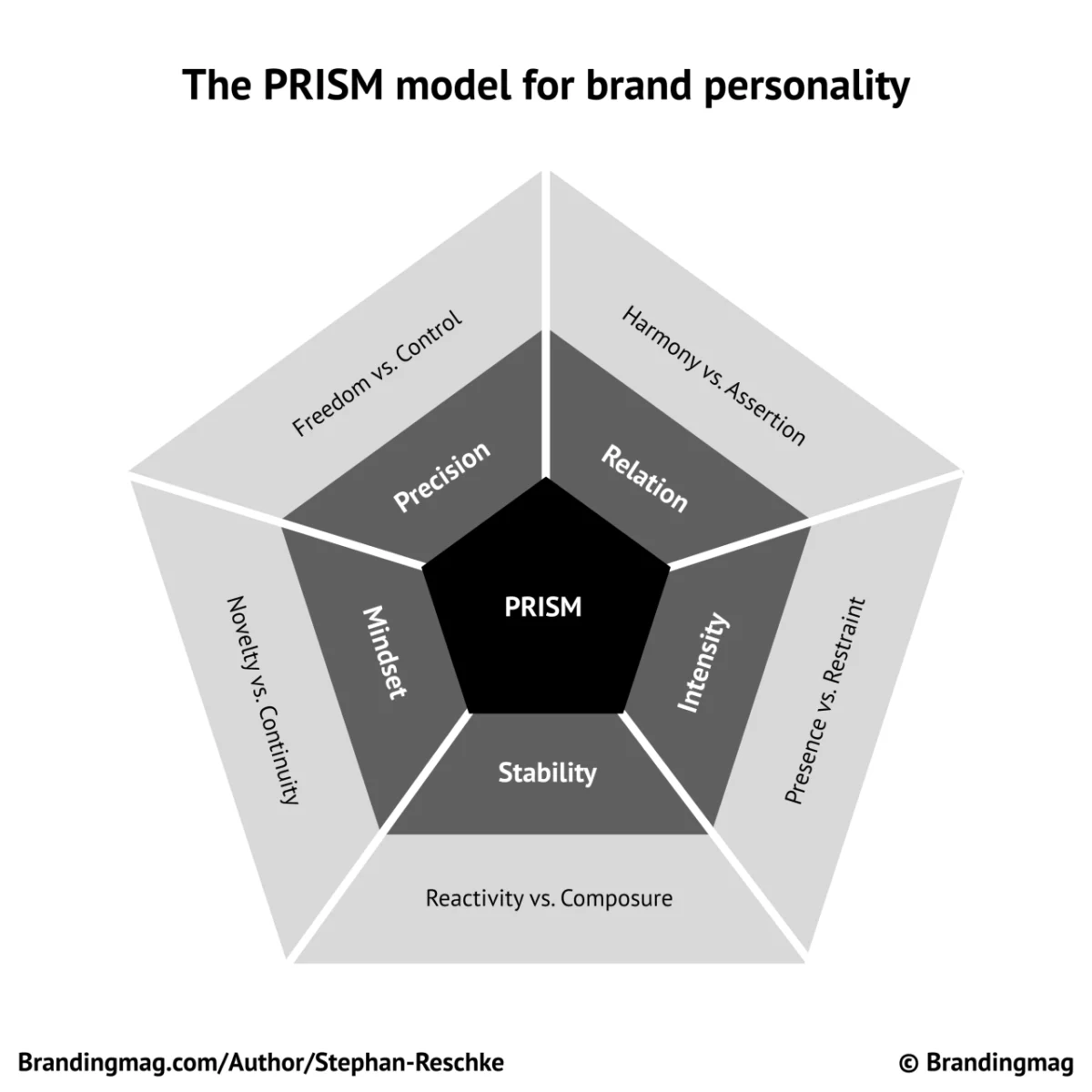
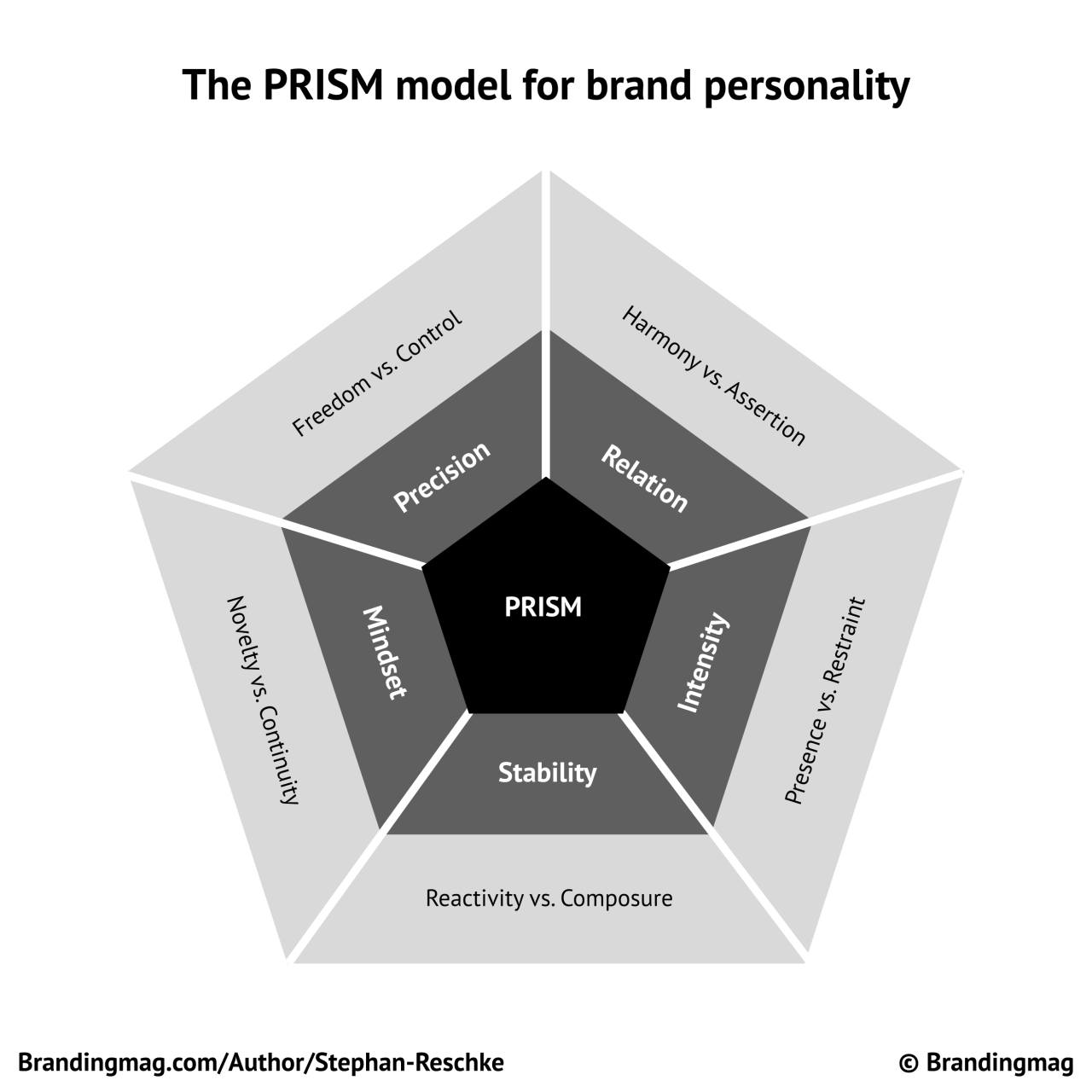
The PRISM model represents a departure from the "all-encompassing" nature of archetypes, moving toward a granular, five-domain framework rooted in the "Big Five" (OCEAN) psychology model. It provides the technical scaffolding necessary for AI to render a brand’s personality with precision.
The Five Domains of PRISM
The model breaks down brand identity into five distinct domains, each containing six defining characteristics:
- Openness: Measures the brand’s intellectual curiosity, creativity, and willingness to explore new concepts.
- Conscientiousness: Defines the brand’s reliability, focus, and organizational standards.
- Extraversion: Dictates the brand’s energy, social presence, and assertiveness.
- Agreeableness: Reflects the brand’s empathy, compassion, and cooperative nature.
- Neuroticism (Emotional Stability): Determines how the brand reacts to stress, complexity, or negative consumer feedback.
By evaluating these domains on a sliding scale, a brand can define its personality with mathematical precision. This is not a "one-size-fits-all" archetype; it is a bespoke, data-driven "digital DNA" that can be ingested by an LLM as a system prompt.
Implications for Modern Marketing: Language as the Touchpoint
As our interaction with technology shifts from visual-heavy to voice-driven, language has become the primary battleground for brand equity. LLMs do not "read" advertising campaigns in the traditional sense; they process context, tone, and vocabulary.
The Death of the PDF Brand Manual
The traditional brand manual—a 50-page PDF sitting on a server—is becoming obsolete. In the agentic economy, the brand manual must exist as executable code. When the PRISM model is implemented, it informs the "Digital Soul" of the brand.
The benefits are threefold:
- Predictability: The AI maintains a consistent tone and vocabulary, regardless of the prompt.
- Contextual Intelligence: The AI can adjust its personality based on the specific consumer it is speaking to, while staying within the "guardrails" of the PRISM framework.
- Operational Efficiency: Because the brand identity is machine-readable, integration into new AI platforms or virtual assistants becomes seamless.
Strategic Implementation: Moving Toward the Experience Engine
The ultimate goal of adopting the PRISM model is to fuel what Marzano calls the "Experience Engine." This is a vision of a future where every consumer interaction is a bespoke, real-time, on-demand experience.
When a consumer asks their digital agent, "Which brand should I choose for my home renovation?", the agent does not just search for a keyword. It evaluates the brand’s "Digital Soul"—its defined conscientiousness, agreeableness, and tone—against the user’s specific emotional needs at that moment.
Conclusion: Embracing the Uncertainty
The future of branding is undeniably complex, and for many marketers, it is a source of profound anxiety. However, this anxiety is often the result of clinging to legacy models that were designed for a world of static screens.
The PRISM model is not just another branding tool; it is a bridge. It allows brands to step into an uncertain, agentic future with confidence, knowing they have a framework that is as intelligent as the machines they are interacting with. By defining a brand’s personality through the lens of psychology and operationalizing it through data, companies can ensure that they remain relevant, resonant, and—most importantly—loved, even in a world governed by silicon.
The conversation has already begun. The brands that succeed will be those that stop treating AI as a separate channel and start treating it as the primary vessel for their identity. It is time to dive in, iterate, and build the digital souls that will define the next century of commerce.
About the Author