In the professional world of sustainability, a curious paradox has emerged. At a time when digital connectivity is ubiquitous and corporate travel budgets are under intense scrutiny for both financial and environmental reasons, the demand for face-to-face gatherings is not just persisting—it is exploding. From the sprawling, chaotic venues of the United Nations Climate Change Conferences (COP) to the high-level boardrooms of Climate Week NYC, the "conference-industrial complex" of the green sector is undergoing a fundamental transformation.
A recent deep dive into this phenomenon, featured on the "Two Steps Forward" podcast hosted by Joel Makower and Solitaire Townsend, suggests that the traditional "business case" for these events—centered on content, keynotes, and slide decks—is being replaced by a much more human, albeit "soft," metric: the power of the intangible connection.
Main Facts: The New Hierarchy of Event Value
For decades, the primary justification for attending a professional conference was the dissemination of information. Attendees paid thousands of dollars to sit in darkened ballrooms and watch experts present data on stage. However, a landmark study—the 2026 Experience Design Report by Encore and Boldpush—has confirmed what many in the industry have long suspected: the hierarchy of value has flipped.
According to the report, peer-to-peer connection is now ranked as the top driver of event value by attendees, far outstripping the appeal of celebrity keynotes or exclusive content. This shift indicates that in an era of information overload, the "what" of a conference is becoming secondary to the "who."
The "Intimacy at Scale" Framework
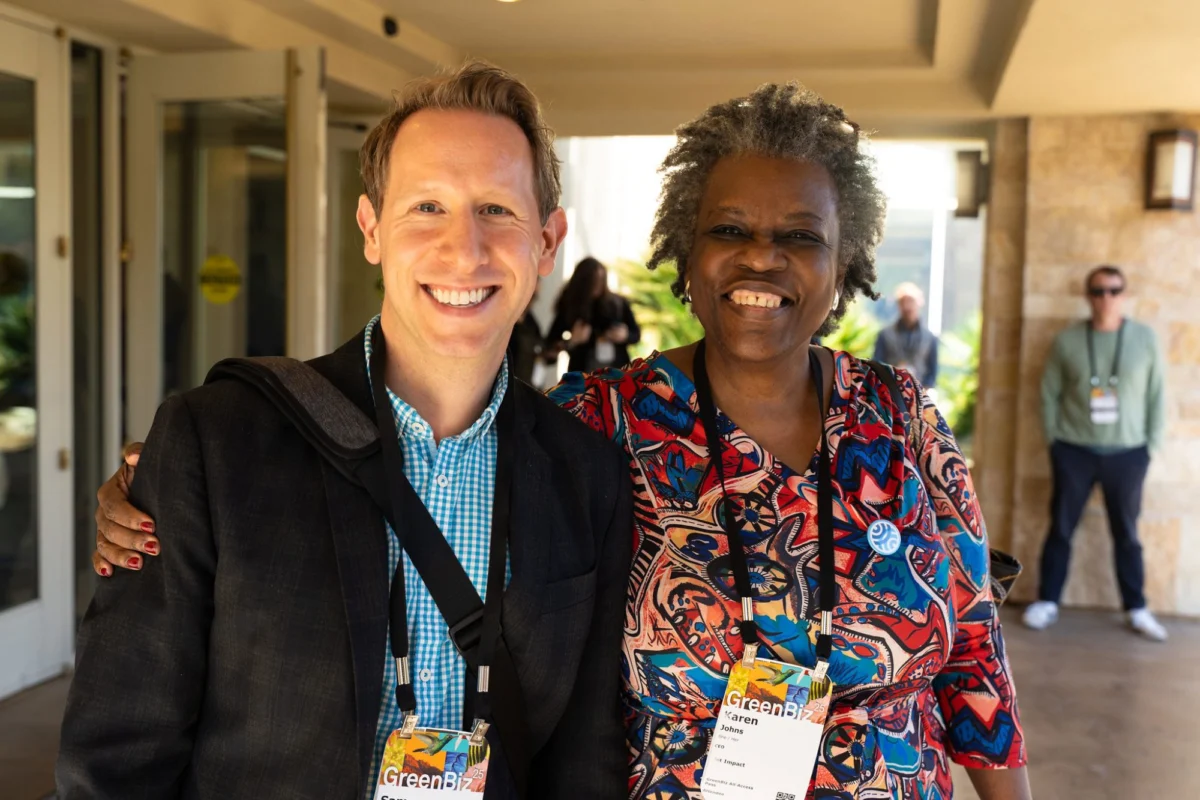
Trellis, a leading platform in the sustainability space, has coined the term "intimacy at scale" to describe the modern goal of event design. This philosophy suggests that the primary role of an event organizer is no longer to curate a perfect curriculum, but to create the "conditions for collisions." These serendipitous encounters—the three-minute conversation in a coffee line or the shared frustration of navigating a massive venue—are often where the most significant business deals are struck and where the most innovative climate solutions are born.
The True Cost of Participation
While the benefits are becoming more intangible, the costs remain stubbornly concrete. For a sustainability professional, the price of attendance includes:
- Financial Capital: Rising registration fees, inflated hotel rates during "Climate Weeks," and international airfare.
- Environmental Capital: The carbon footprint of long-haul flights, often a point of personal and professional cognitive dissonance for climate advocates.
- Human Capital: Jet lag, weeks spent away from family, and the "inbox debt" that accumulates while one is networking on the ground.
Chronology: From Niche Gatherings to Global Megaliths
The landscape of sustainability events has shifted dramatically over the last three decades, evolving through three distinct eras.
The Era of Specialization (1990s – 2010s)
In the early days, the calendar was anchored by a few pillar events. Organizations like BSR (Business for Social Responsibility), Ceres, and Sustainable Brands held annual meetings that served as the primary gathering points for a relatively small community of corporate social responsibility (CSR) pioneers. These were predictable, domestic, and focused on defining what "sustainability" actually meant in a corporate context.
The Era of Fragmentation and Expansion (2010s – 2020)
As the climate crisis moved from a peripheral concern to a core business risk, the market became crowded. Major media outlets like Bloomberg, The Wall Street Journal, and Fortune launched their own sustainability verticals and flagship events. Simultaneously, the geography began to shift. No longer confined to London, New York, or San Francisco, major programming began to take root in India, Southeast Asia, and Latin America, reflecting the global nature of supply chains and climate impacts.
The Era of Concentration (2021 – Present)
Post-pandemic, the calendar has experienced a strange "compression." Rather than a steady stream of monthly events, the industry now gravitates toward massive, concentrated "Super-Weeks." The UN COP summits and Climate Week NYC have become gravity wells, pulling in thousands of peripheral "fringe" events. This has created a "more places, less time" dynamic, where professionals must navigate an exhausting gauntlet of activity in a single week, making the mining of those "intangible nuggets" of connection both more vital and more difficult.
Supporting Data: The Metrics of Human Connection
The shift toward participatory formats is backed by emerging data in behavioral science and event management. The Encore/Boldpush report highlights four key findings that are reshaping how budgets are allocated:
- Participatory Dominance: Formats that require active participation (workshops, roundtables, and facilitated networking) consistently outperform passive panels in attendee satisfaction scores.
- Trust as a Currency: Face-to-face interaction remains the most effective way to build trust between stakeholders who may have competing interests, such as NGOs and multinational corporations.
- The "Serendipity Factor": Data suggests that high-value business outcomes are more likely to result from informal "hallway tracks" than from formal Q&A sessions following a presentation.
- Geographic Growth: While North American and European attendance remains stable, the fastest-growing segments for sustainability events are in the Global South. Programming in India and Asia is expanding at a double-digit rate, necessitating a new logistical approach for global firms.
The Carbon Paradox
Data from the travel industry shows that business travel in the sustainability sector creates a unique challenge. While the goal is to reduce emissions, the "Carbon Return on Investment" (CROI) of a face-to-face meeting—where a single agreement might lead to the decarbonization of a global supply chain—is often used to justify the flight. However, as companies set stricter Scope 3 emission targets, the pressure to prove the "tangible" value of these "intangible" connections is mounting.
Official Responses and Expert Perspectives
On the "Two Steps Forward" podcast, Solitaire Townsend, co-founder of Futerra, and Joel Makower, chairman of Trellis, explored the emotional and psychological drivers behind the conference circuit.
Solitaire Townsend on the "Energy in the Room":
Townsend argues that the "soft" benefits—community and energy—are actually the bedrock of resilience for climate professionals. "Sustainability work is grueling and often discouraging," she noted. "The community aspect isn’t just a nice-to-have; it’s the fuel that allows people to go back to their desks and continue the fight for another six months."
Joel Makower on the Evolution of Trellis Events:
Makower acknowledged that even as a veteran event producer, the realization that the "programming" is often secondary to the "people" was a humbling insight. "We’ve learned that building great programming is obviously important, but creating the conditions for collisions and letting attendees find ‘their people’ is what keeps them coming back," Makower stated.
Industry Sentiment on the COP Process:
Voices within the international climate negotiations often point to the logistical nightmares of events like COP30 or the upcoming COP31 in Antalya, Turkey. Reports of "insane logistics," difficulty accessing basic necessities like food and water, and even safety concerns (such as the fire at last year’s venue) are common. Yet, the consensus among officials is that the "intangibles"—forming an alliance with a stranger from a different continent while waiting in a security line—are the only way to break diplomatic deadlocks.
Implications: The Future of the Green Gathering
As we look toward the 2025–2026 event seasons, several implications for the industry emerge:
1. The Death of the "Manel" and the Passive Panel
The traditional format of four people behind a draped table talking at an audience is increasingly viewed as a poor investment. We can expect a surge in "un-conference" styles, where the distinction between "speaker" and "audience" is blurred, and the value is derived from collective problem-solving.
2. Regionalization vs. Globalization
To solve the carbon paradox, the industry may see a shift toward "hub-and-spoke" models. Instead of everyone flying to a single global location, regional summits in Asia, Africa, and the Americas may be linked digitally, reserving long-haul travel only for the most critical "trust-building" missions.
3. The Professionalization of Networking
If connection is the primary product, event organizers will need to become more sophisticated in how they facilitate it. This includes the use of AI-driven matchmaking apps, "curated dinners," and architectural designs that intentionally funnel people into shared spaces.
4. The "Reality Check" Function
In an increasingly polarized world, conferences serve as a vital reality check. For a Chief Sustainability Officer, hearing the unvarnished challenges of a peer in a different industry provides a level of "intellectual honesty" that is rarely found in polished corporate sustainability reports or LinkedIn feeds.
Conclusion
The business case for sustainability conferences is no longer found in the binders of notes taken during a keynote. It is found in the enduring relationships, the shared alliances, and the renewed sense of purpose that attendees carry home. While the costs—in time, money, and carbon—are higher than ever, the value of the "intangible" has proven to be the most resilient asset in the climate professional’s toolkit. As the calendar for COP31 and beyond takes shape, the industry must continue to balance the hard costs of the journey with the soft power of the destination.
About the Author