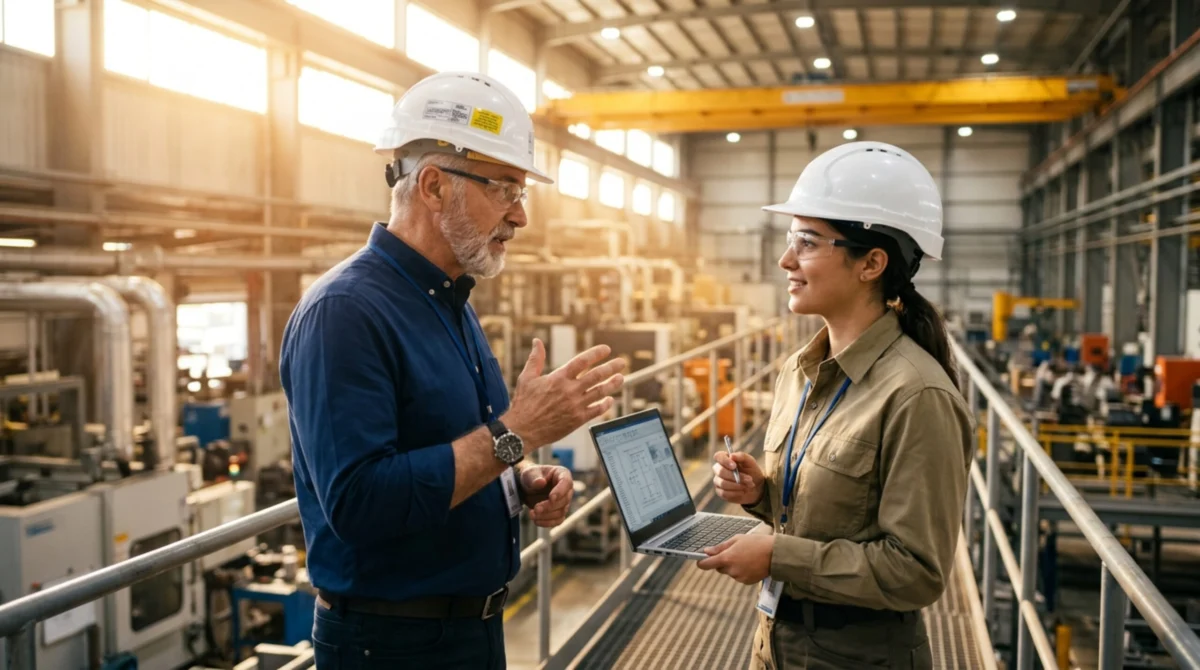
In the landscape of modern manufacturing, the spotlight is frequently dominated by the rapid evolution of Industry 4.0—the rise of artificial intelligence, the integration of autonomous robotics, and the promise of the Industrial Internet of Things (IIoT). Yet, beneath the veneer of high-tech machinery and automated processes, a quiet, existential crisis is unfolding: the loss of institutional memory. As the "Great Retirement" of the baby boomer generation accelerates, the manufacturing sector faces the urgent necessity of robust succession planning, not merely as a human resources function, but as a critical operational mandate.
The Evolution of the Industrial Landscape
For nearly two decades, the manufacturing sector has undergone a metamorphosis. From the traditional, manual-heavy factory floor to the data-driven, interconnected facilities of today, the tools of the trade have evolved at breakneck speed.
Reflecting on 19 years of service to Plant Engineering, one observes a clear trajectory: the industry has moved from reactive maintenance toward predictive analytics, and from siloed departments to integrated, cross-functional ecosystems. This evolution has expanded the mission of the plant engineer from a technician to a strategist. However, as the tools become more sophisticated, the value of the human element—the "tribal knowledge" that keeps operations running during a system failure—has become paradoxically more important, not less.
Chronology of a Skills Crisis
The current challenge is the culmination of decades of workforce trends.
- The Mid-2000s: The manufacturing industry began to see the early warning signs of an aging workforce. At this time, the focus was largely on technical training for new machinery, often overlooking the retirement cliff that loomed ahead.
- The 2010s: As the recovery from the 2008 financial crisis stabilized, companies focused on lean manufacturing and cost-cutting, often reducing the layers of management and mentorship that allowed for natural knowledge transfer.
- The COVID-19 Era (2020–2022): The pandemic accelerated retirement rates, as many experienced workers opted for early exit, taking decades of undocumented procedural knowledge with them.
- Present Day: Industry is now at a breaking point where the "brain drain" threatens not only productivity but the safety and reliability of complex industrial systems.
Supporting Data: The Cost of Stagnation
The risks of failing to address succession planning are quantifiable. According to recent industrial human capital reports, the average cost of replacing a highly skilled manufacturing worker can range from 150% to 200% of their annual salary when accounting for lost productivity, recruitment, and the steep learning curve of complex machinery.
Furthermore, studies on industrial downtime suggest that approximately 40% of unplanned maintenance events are exacerbated by a lack of access to historical system information. When the "go-to" person for a legacy piece of equipment retires without a formal handover, the Mean Time to Repair (MTTR) can spike by as much as 300%. These numbers illustrate a sobering reality: institutional knowledge is a high-value asset, and like any other asset, its depreciation—or loss—is a direct hit to the bottom line.
Strategic Framework: Defining Critical Roles
Effective succession planning is not about replacing a person; it is about sustaining a function. Organizations must begin by identifying their "Single Points of Failure."
The Knowledge Audit
Companies should initiate a systematic audit to identify:
- Critical Positions: Which roles, if vacated, would cause an immediate, catastrophic halt in production?
- Specialized Knowledge Holders: Who are the individuals who understand the "quirks" of the facility? Often, these are the employees who know why a system was modified in 1998 or which specific vibration pattern precedes a failure.
- Process Dependency: Which tasks are currently documented only in the mind of a single operator or engineer?
Operational Implications: Beyond the HR Suite
Succession planning must move out of the HR department and onto the plant floor. It should be treated with the same rigor as safety audits or production scheduling.
Mentorship as a Production Strategy
Mentorship should be formalized, not left to chance. This involves creating structured "shadowing" periods where emerging leaders work alongside seasoned veterans. This must be an intentional part of the workday, not an afterthought. When a veteran engineer is tasked with teaching, they should be given the time and resources—such as video documentation tools, digital logbooks, or collaborative software—to capture their expertise.
Cross-Training and Redundancy
Intentional cross-training is the best insurance policy against unexpected turnover. By ensuring that at least two or three individuals are capable of performing critical maintenance or operational tasks, a facility builds in a layer of resilience that protects it from the "bus factor"—the risk that one person’s departure could paralyze the entire operation.
Cultural Transformation: Valuing Knowledge Sharing
Perhaps the most difficult barrier to effective succession planning is cultural. In many industrial environments, knowledge is perceived as power. Employees may fear that by documenting their processes or training their successors, they are making themselves obsolete.
Leadership must reframe this narrative. A culture of knowledge sharing should be incentivized. When an employee is recognized and rewarded for mentoring and for codifying their procedures, it transforms the retirement process from an exit into a legacy. The goal is to create an environment where the organization’s resilience is viewed as the collective success of every employee.
Integrating Technology and Talent
While the future of manufacturing is undeniably digitized, the human component remains the primary driver of success. Digital tools—such as Augmented Reality (AR) for maintenance, Knowledge Management Systems (KMS), and AI-driven predictive maintenance platforms—are not replacements for human experience. Rather, they are vessels for it.
The most successful plants of the future will be those that effectively capture the intuition of the seasoned veteran and embed it into the digital infrastructure of the facility. This is the ultimate form of succession planning: the creation of a "living" system that learns from its people.
Conclusion: Preparing for What Comes Next
The manufacturing industry stands at a crossroads. As baby boomers continue to exit the workforce, the industry is losing a generation of expertise that cannot be replaced by a simple hiring advertisement. The transition from the "old guard" to the "next generation" must be managed with foresight, discipline, and empathy.
The best time to prepare for a transition is before it becomes an emergency. By treating succession planning as a fundamental component of plant operations—as vital as power, raw materials, or automation—manufacturers can ensure that they do not just survive the inevitable shifts in their workforce, but thrive because of them.
The future of manufacturing will undoubtedly depend on advanced technology, but it will always be built on the foundation of people. Ensuring that the knowledge of the past is successfully transferred to the leaders of tomorrow is the most important project any plant manager can undertake today.
About the Author