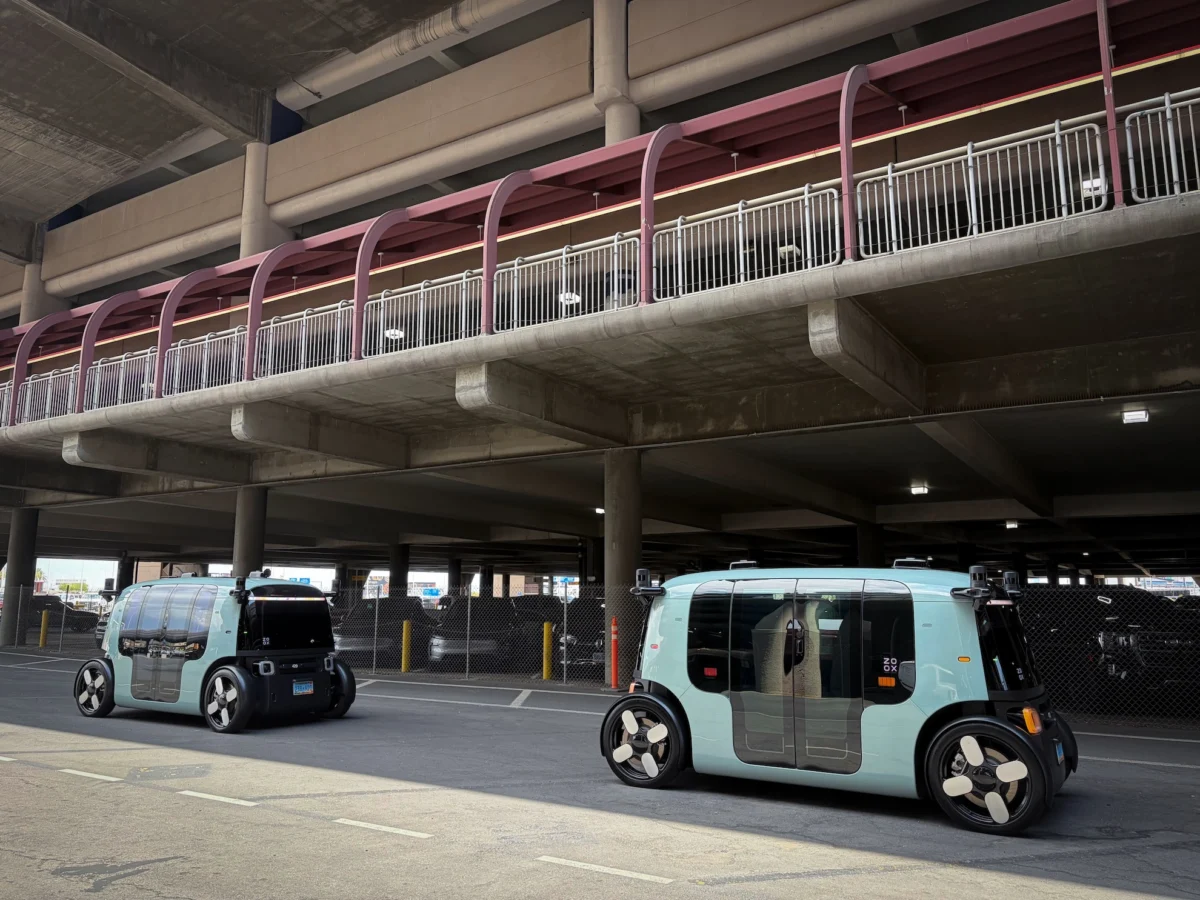
In a significant milestone for the autonomous vehicle (AV) industry, Amazon-owned Zoox has officially extended its commercial robotaxi service to include transit to and from Harry Reid International Airport in Las Vegas. This strategic expansion, which began this Thursday, marks a pivotal shift in the accessibility of driverless transit, moving beyond tourist loops and into the high-demand, high-friction environment of international travel hubs.
For Zoox, this move is the latest in a rapid-fire series of operational victories that have transformed the company from a long-term research and development project into a tangible, revenue-generating commercial operator. By securing the ability to navigate the complex traffic patterns of a major airport, Zoox is effectively challenging the long-standing dominance of traditional ride-hailing giants like Uber and Lyft.
A Decade of Development: The Path to the Road
The journey to this moment has been arduous. Silicon Valley-based Zoox has spent more than a decade meticulously crafting its proprietary self-driving stack and its bespoke robotaxi—a vehicle uniquely designed without the traditional manual controls of steering wheels, brake pedals, or accelerator assemblies.
For years, the company focused on the "carriage" problem, perfecting the safety architecture of a vehicle that operates as a symmetrical, bidirectional pod. While the company achieved incremental progress, including testing phases and pilot programs in Las Vegas, it remained shackled by regulatory barriers that prevented it from operating as a full-scale commercial service. The lack of traditional driver controls meant that Zoox required special dispensations from federal authorities to prove its vehicles could operate safely in public spaces.
Chronology: From R&D to Revenue
The trajectory of Zoox’s recent success is best understood through its rapid evolution over the past several months:
- August 2026: Federal safety regulators granted Zoox a critical two-year temporary exemption from specific Federal Motor Vehicle Safety Standards (FMVSS). This waiver, which covers eight standards—including those related to windshield defrosting and braking—allows for the deployment of up to 2,500 vehicles.
- August 10, 2026: Empowered by the federal exemption, Zoox officially pivoted to a commercial model, beginning to charge passengers for rides within its Las Vegas service area.
- Late August 2026: The company published its comprehensive safety framework, an essential document intended to provide transparency and build public trust in the reliability of its autonomous systems.
- September 2026: The expansion into San Diego and Houston for testing purposes was announced, signaling a broader geographic intent.
- Present Day: The integration of Harry Reid International Airport into the service network, marking the first time a dedicated, purpose-built robotaxi service has facilitated airport-to-city transport at scale.
Supporting Data: Infrastructure and Capability
The logistics of the airport rollout demonstrate the technical precision Zoox has achieved. Unlike traditional rideshare services, which often face logistical bottlenecks at airports, Zoox has secured prime pickup and drop-off points.
According to the company, Zoox robotaxis will serve both airport terminals, operating directly adjacent to baggage claim areas. This is a distinct competitive advantage over incumbents like Uber and Lyft. Currently, passengers hailing an Uber or Lyft at Harry Reid International must navigate a five- to ten-minute walk to the upper floor of a parking garage. By offering a "curbside-adjacent" experience, Zoox is attempting to redefine the passenger experience for travelers burdened with luggage, potentially increasing the stickiness of its platform.
Furthermore, the scale of the broader Las Vegas market is shifting rapidly. The Nevada Transportation Authority recently issued permits to industry heavyweights including Tesla, Uber (via its partnership with Hyundai’s Motional), and Waymo to operate in Clark County. Combined with Zoox, the local landscape is slated for a massive influx of autonomous vehicles, with projections suggesting up to 8,000 robotaxis could be active in the region within the next 12 months.

Implications for the Ride-Hailing Market
The entry of robotaxis into the airport ecosystem carries profound implications for the future of urban mobility.
The Death of the "Last Mile" Friction
The primary value proposition of the robotaxi is the removal of the human variable. By eliminating the driver, companies like Zoox can theoretically reduce the cost of a ride significantly over time. When combined with the convenience of a direct airport connection, the barrier to adoption for the average consumer drops precipitously. If Zoox can maintain safety records while scaling its fleet, the traditional "rideshare" model—which relies on gig workers—could face existential pressure.
Regulatory Precedent
The temporary exemption granted to Zoox serves as a bellwether for the rest of the industry. Federal regulators are signaling a willingness to accommodate vehicles that do not conform to 20th-century safety standards, provided the manufacturer can demonstrate a robust, data-backed safety framework. This creates a clear roadmap for other startups and tech giants to bypass the "steering wheel" requirement, provided they can prove their systems are safer than a human operator.
Competitive Dynamics
The partnership model between Uber and Motional, juxtaposed against Zoox’s "vertically integrated" approach (where they design both the car and the software), highlights a fundamental schism in the industry. Zoox is betting that controlling the entire hardware/software stack allows for a more seamless, optimized passenger experience. Conversely, Uber is banking on its massive user base and software platform to act as the "aggregator" for various autonomous fleet operators. The next year in Las Vegas will serve as a high-stakes, real-world experiment to see which business model wins the consumer’s favor.
Looking Ahead: The Challenges of Scaling
Despite the excitement, the path forward is not without peril. Scaling to thousands of vehicles in a dense, unpredictable urban environment like Las Vegas requires more than just permits. It requires:
- Public Trust: The "safety framework" released by Zoox is only the beginning. Every incident—no matter how minor—will be scrutinized by the public and regulators alike.
- Operational Complexity: Maintaining a fleet of 2,500 vehicles is a Herculean task. Charging, cleaning, maintenance, and remote tele-assistance for when a vehicle encounters an edge case (such as extreme weather or erratic human driving) will define the company’s bottom line.
- Infrastructure Integration: While the airport authorities have been cooperative, the broader city infrastructure must adapt to autonomous vehicles. This includes everything from dedicated signage and parking zones to software-enabled communication between the vehicle and the city’s smart-grid infrastructure.
Conclusion
Zoox’s expansion to Harry Reid International Airport is more than just a convenient feature for Las Vegas tourists; it is a declaration of maturity for the robotaxi industry. By successfully navigating the regulatory hurdles and operational complexities of one of the busiest transportation hubs in the United States, Zoox has transitioned from a speculative technology project into a legitimate player in the global transportation market.
As the streets of Las Vegas begin to fill with the silent, steering-wheel-less pods of multiple operators, the city is effectively becoming the world’s most advanced laboratory for autonomous mobility. Whether these companies can scale sustainably while maintaining the safety standards that granted them these exemptions will be the defining story of the next decade in tech and transportation. For now, the "future of mobility" is no longer a concept—it is waiting at the baggage claim.
About the Author