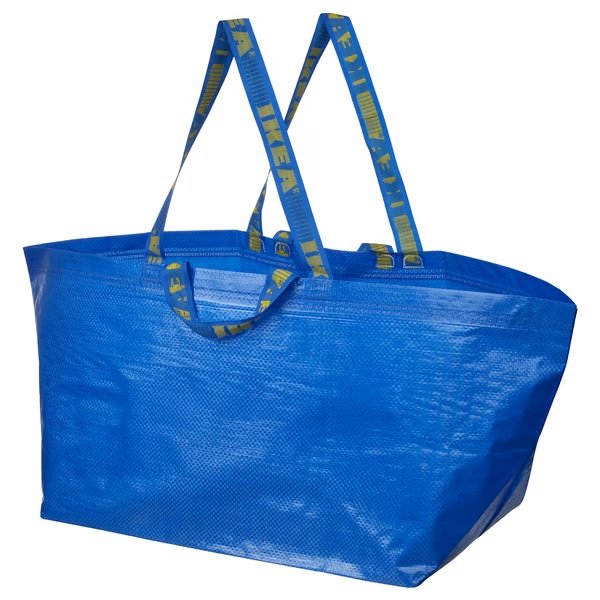
The IKEA FRAKTA bag is perhaps the most recognizable piece of industrial design in the modern home. With its signature electric blue hue, woven polypropylene durability, and staggering 19-gallon (71-liter) capacity, it has transcended its role as a simple utility tote to become a cultural icon. It is the vessel of choice for college move-ins, weekend laundry, and impromptu storage. Yet, for all its utility, the FRAKTA possesses one persistent annoyance: it is notoriously difficult to store when not in use. Bulky and structurally rigid, it resists neat folding, often ending up as a chaotic heap in a utility closet.
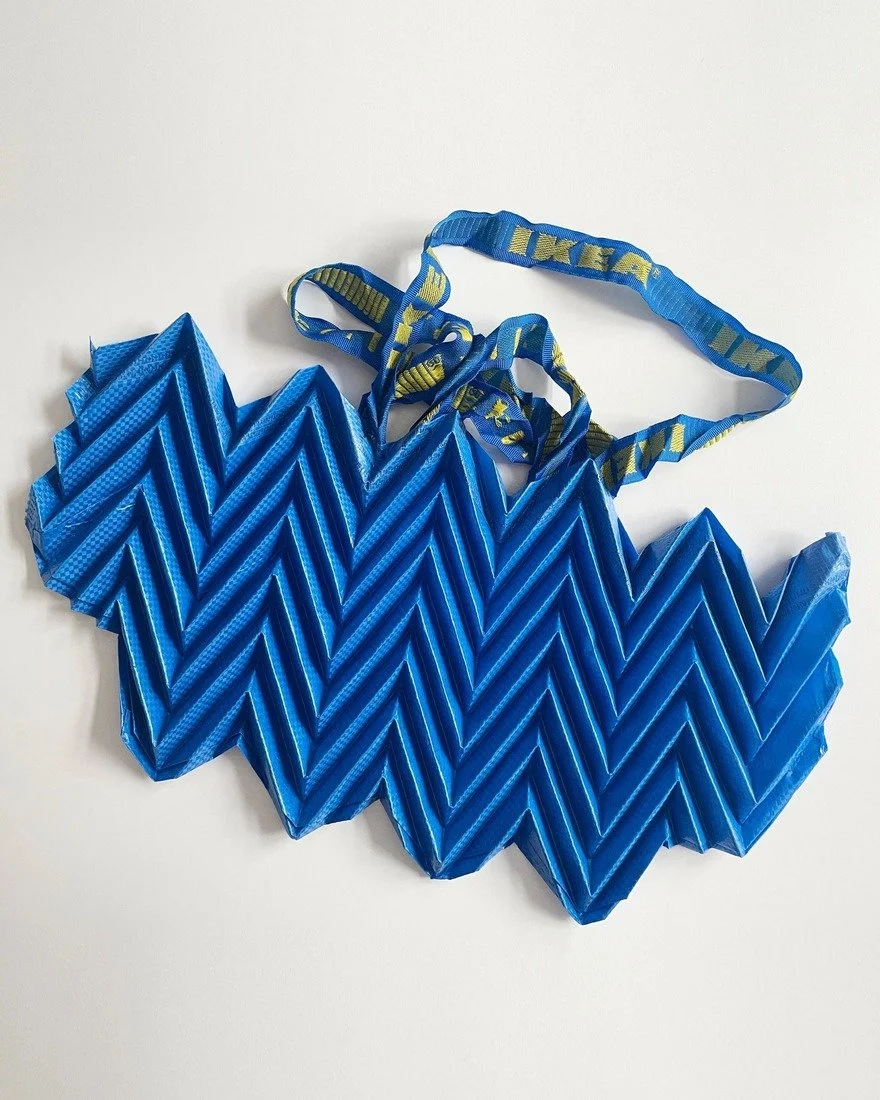
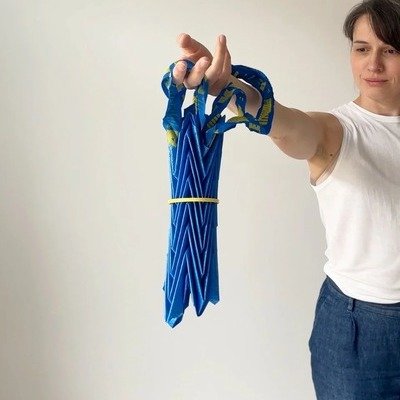
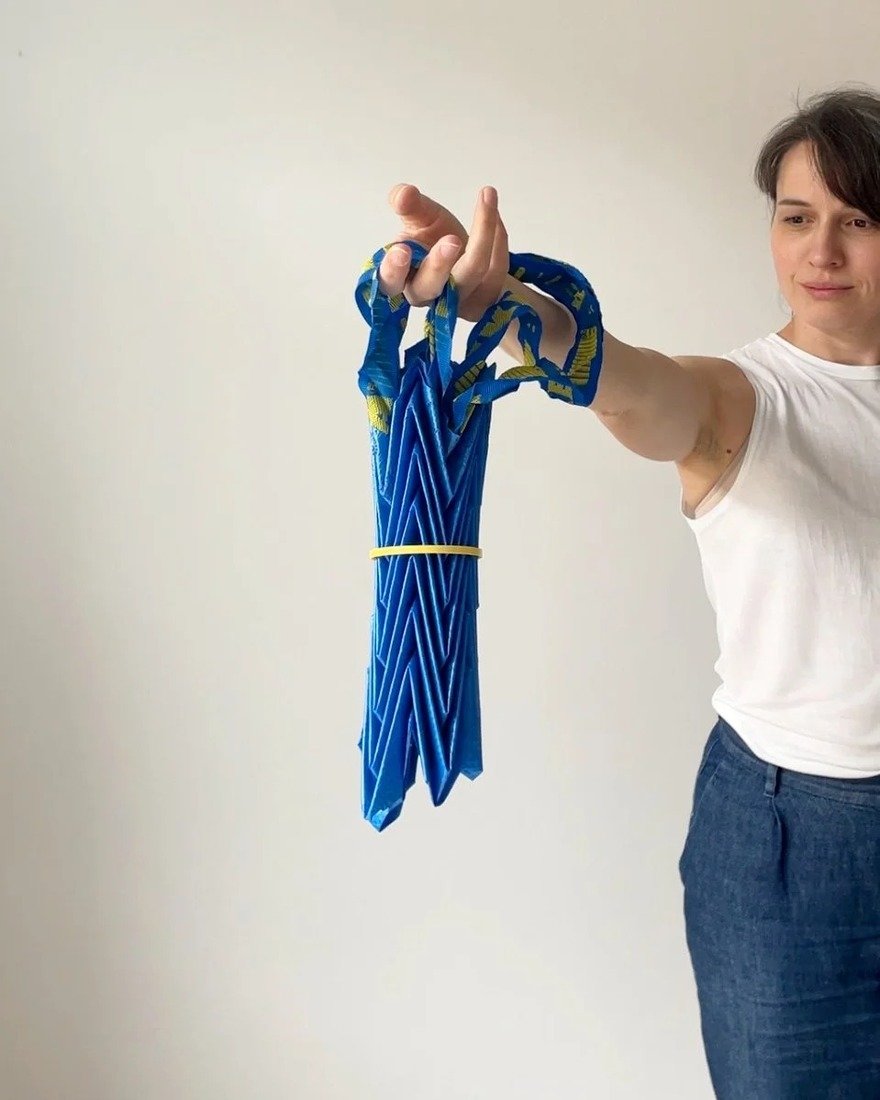
Enter Lisa Klingersberger, an Austrian industrial designer with a specialized focus on the intersection of textiles and geometry. Through a self-directed project, Klingersberger has applied the principles of "computational origami" to the FRAKTA, successfully engineering a method to collapse the cavernous bag into a silhouette no larger than a folded umbrella. Her work, which sits at the nexus of high-level mathematics and practical product design, suggests a future where the world’s most ubiquitous items are made not just for utility, but for spatial efficiency.
The Anatomy of an Icon: Understanding the FRAKTA
To understand the significance of Klingersberger’s innovation, one must first appreciate the design constraints of the original FRAKTA. Introduced by IKEA in 1996, the bag is constructed from polypropylene, a thermoplastic polymer chosen for its incredible strength-to-weight ratio and water resistance.
The material is inherently stiff. While this stiffness is exactly what allows the bag to haul heavy loads without tearing, it creates a "memory" in the fabric that makes traditional folding nearly impossible. Attempting to force the bag into a flat, compact shape usually results in awkward protrusions and wasted volume. For decades, consumers have treated the bag as a semi-permanent fixture—it is either full or it is a bulky obstacle.
Chronology of a Design Breakthrough
The genesis of this project lies in Klingersberger’s academic background. As a graduate of the University of Salzburg, her Master’s thesis, titled "Purpose Driven Computational Origami in Industrial Design," laid the theoretical framework for her later work.
- 2023 – Theoretical Research: Klingersberger spent months analyzing the structural limitations of non-woven fabrics. She utilized CAD (Computer-Aided Design) software to simulate how pleats could distribute stress across the polypropylene surface.
- Early 2024 – Prototype Development: Moving from digital simulation to physical fabrication, she began experimenting with heat-sealing and precise laser-cutting techniques to create "living hinges" within the bag’s material.
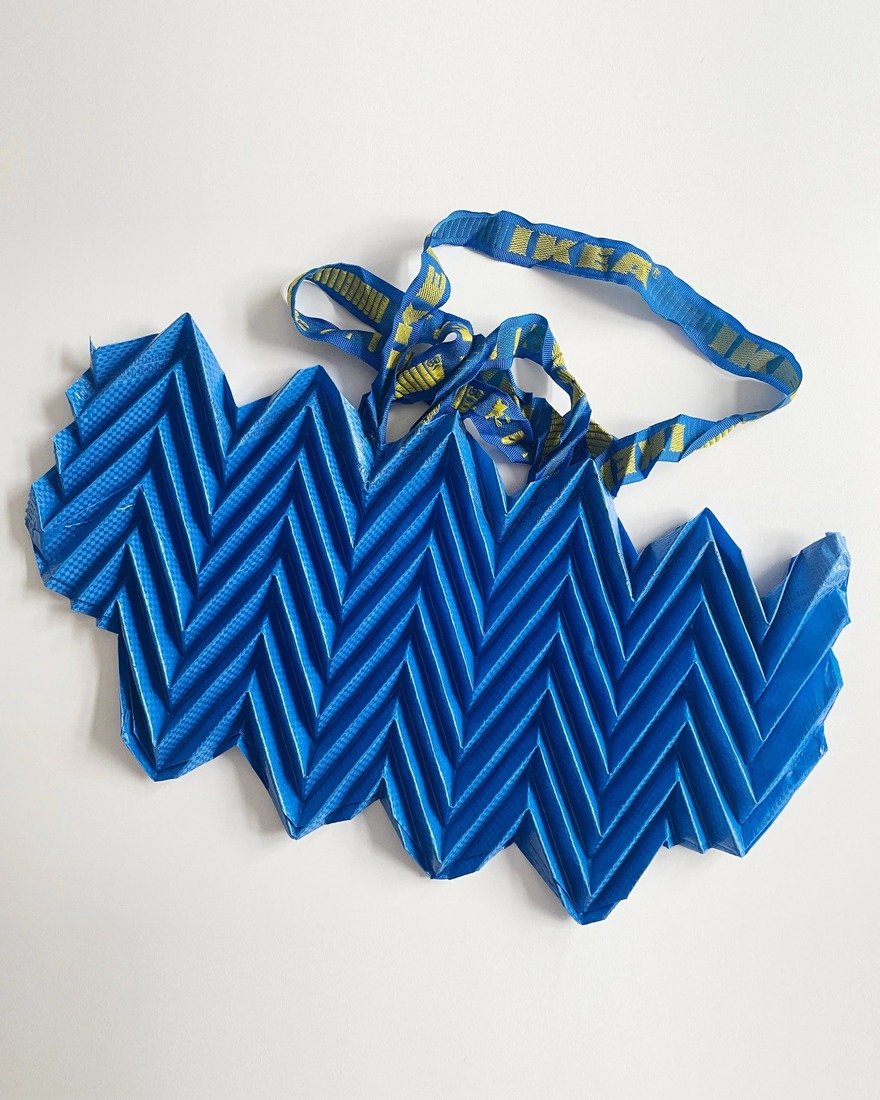
- Mid-2024 – The Refinement Phase: Klingersberger successfully implemented a systematic pleating pattern. By introducing geometric folds that align with the structural seams of the original bag, she managed to maintain the bag’s capacity while allowing it to collapse into a long, thin, and remarkably compact form.
- Late 2024 – Public Documentation: Klingersberger published the results of her project, showcasing the transformation of the FRAKTA through a series of step-by-step imagery that highlights the elegance of the folding process.
Computational Origami: The Science Behind the Pleats
The genius of Klingersberger’s redesign is not merely in the folding, but in the mathematical precision required to achieve it. Computational origami is a field of design that uses algorithms to determine how a flat sheet can be folded into a three-dimensional shape—or, in this case, how a three-dimensional object can be reduced to a near-planar state.
Klingersberger’s approach involved mapping the FRAKTA’s surface area into a series of interconnected triangles and rhombi. By creating sharp, pre-set pleats in the polypropylene, she enabled the material to "remember" the folding sequence. This is a common technique in aerospace engineering—most notably in the deployment of solar panels for satellites—but it is rarely applied to mass-market consumer goods due to the cost of manufacturing precision.
The result is a bag that can be deployed in seconds by pulling the handles, yet tucked away into a drawer or glove compartment when empty. It turns a "clutter object" into a "compact tool."
Supporting Data: Efficiency and Space-Saving Metrics
While the aesthetic appeal of the folded FRAKTA is evident, the practical implications are grounded in spatial data.
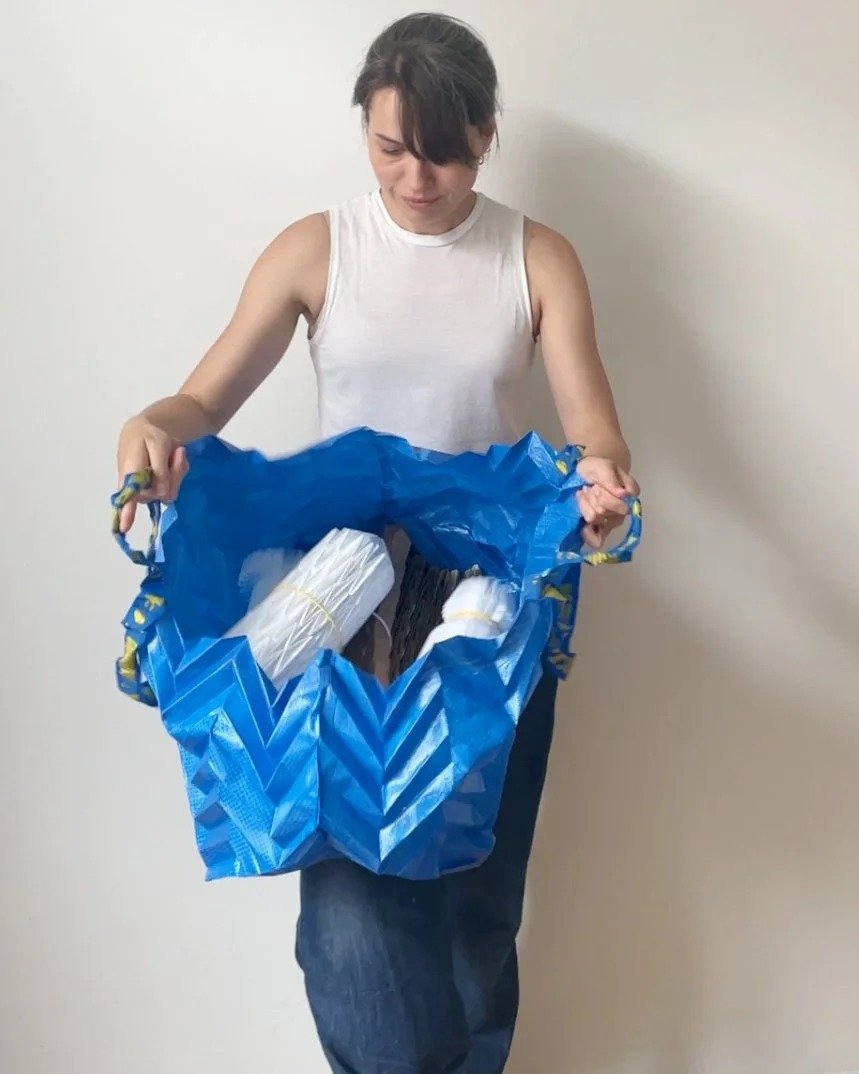
- Volumetric Reduction: In its standard state, a loosely tossed FRAKTA occupies roughly 3,000 to 4,000 cubic centimeters of space due to its inability to lay flat. When folded using Klingersberger’s method, that volume is reduced by approximately 85%, bringing the footprint down to roughly 400 cubic centimeters.
- Material Integrity: A common concern with pleating polypropylene is "fatigue failure"—the point at which the plastic cracks after repeated folding. Klingersberger’s research utilized specific fold angles (calculated to minimize material stress) to ensure the bag remains durable even after hundreds of cycles.
- Weight-to-Storage Ratio: The original bag weighs roughly 100 grams. The modified design adds zero weight, as the "hardware" is simply the bag itself, re-engineered through geometry rather than added fasteners or buttons.
The Silence from IKEA: Corporate Response and Industry Implications
As of this writing, IKEA has not issued an official statement regarding Klingersberger’s prototype. Historically, the Swedish retail giant is protective of its "Democratic Design" philosophy, which prioritizes low cost, high functionality, and flat-pack logistics.
Industry analysts suggest that the barrier to adopting such a design is not the technology, but the manufacturing process. The current FRAKTA is produced at an extreme scale using heat-pressing and stitching. Introducing complex, multi-directional pleating would require a retooling of the assembly line, potentially increasing the cost per unit.
However, there is a strong case for adoption. IKEA has been under increasing pressure to improve its sustainability profile. If a bag is easier to store and reuse, consumers are less likely to discard them, potentially extending the lifecycle of the product. Furthermore, the "premium" nature of a collapsible bag could allow IKEA to market a "Pro" or "Travel" version of the FRAKTA at a higher price point, appealing to urban commuters and travelers.
Implications for Future Industrial Design
Klingersberger’s project serves as a case study for the future of industrial design. We are moving toward an era where the objects we own must be as adaptable as the lifestyles we lead. As urban living spaces shrink, the demand for "collapsible-by-design" products is skyrocketing.
If a simple shopping bag can be reimagined through the lens of computational origami, what other household staples are due for a redesign? Kitchen appliances, furniture, and storage containers are all candidates for this type of geometric optimization.
For now, the project remains a masterclass in independent design. Klingersberger has proven that even the most static, ubiquitous products have hidden potential if one is willing to apply enough math and imagination. Whether IKEA chooses to collaborate with her or not, she has fundamentally changed the way we look at a piece of blue plastic. The FRAKTA is no longer just a bag; it is a dormant structure waiting for the right geometry to wake it up.
Looking Ahead
The ball is now in the court of mass-market manufacturers. The tools—computational modeling, precise material science, and sustainable design principles—are readily available. What remains is the corporate courage to move beyond the status quo. Lisa Klingersberger has provided the blueprint; the question is whether the industry is ready to fold in the right direction.
As the design community continues to monitor this development, one thing is certain: the era of the bulky, unmanageable storage bag is coming to a close. Through the marriage of origami and industry, the future of our daily utility objects is looking decidedly more compact.
About the Author