In the early 2000s, Kevin Roberts, then CEO of Saatchi & Saatchi, challenged the industry to look beyond the functional "brand" and embrace the "Lovemark"—a brand that commands both deep respect and irrational love. For two decades, this philosophy has served as the gold standard for emotional brand building. However, we have entered a new epoch: the Agentic Age.
As intelligent agents—AI-driven systems that curate our choices, automate our purchases, and filter our information—begin to mediate the consumer experience, the foundational pillars of branding are being tested. A groundbreaking new manifesto, Brand Constitutions: The Legible-Lovable Standard for Building Equity in an Agentic Economy by Thomas Marzano, suggests that the future of branding requires a radical shift. Brands must now speak to two distinct audiences simultaneously: the human heart and the machine mind.
The Evolution of the Brand-Consumer Dynamic
The core of the original Lovemarks philosophy was the "love-respect" axis. Respect provided the rational, functional, and reliable foundation, while love provided the emotional, irrational, and deeply personal connection. In a human-led world, this was intuitive. Consumers compared experiences, weighed reputation, and made choices based on individual judgment.
Today, that journey is being compressed. Intelligent agents are replacing the traditional, slow-moving decision funnel with system-driven filters. When an AI assistant recommends a product, it does not "feel" a brand’s history or aesthetic; it evaluates patterns, consistency, and structural integrity.
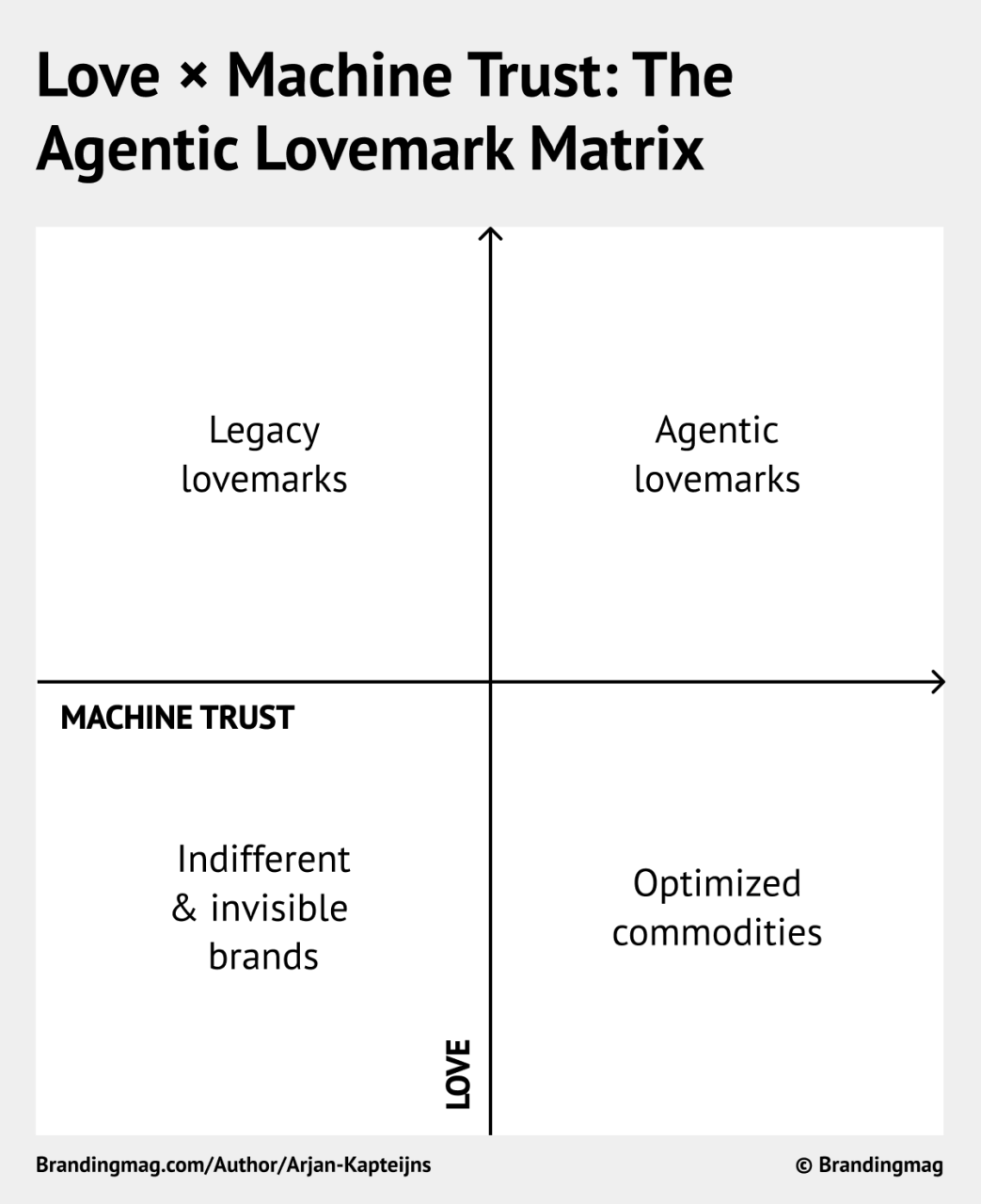
This transition has led to a critical realization: Respect is evolving into "Machine Trust." While the human side of the equation remains anchored in emotion, the rational side must now be expressed in a way that machines can verify. This is the birth of the "Agentic Lovemark"—a brand that is as legible to algorithms as it is lovable to people.
Chronology: From Functional Brands to Agentic Entities
To understand the necessity of this shift, one must look at the historical trajectory of brand evolution:
- The Era of Brands (1950s–1990s): Marketing was defined by functional claims, consistent availability, and mass-market positioning. The goal was visibility and rational preference.
- The Rise of Lovemarks (2000s–2020s): Kevin Roberts and the industry pivoted toward emotional connection. Brands moved away from commoditization by fostering intimacy, mystery, and sensuality.
- The Agentic Turn (2025–Present): With the proliferation of generative AI and autonomous agents, the decision-making process is shifting from human-browsing to agent-curation. Brands that fail to provide structural "legibility" are increasingly rendered invisible, regardless of their emotional resonance.
Supporting Data: Why "Meaning" Needs "Structure"
Recent analyses from firms like McKinsey suggest that as AI agents compress the consumer funnel, the "middle" of the market is disappearing. Content is becoming commoditized, and the "long tail" of products is being filtered out by algorithms designed to reduce complexity.
Data indicates that machine trust is now a prerequisite for consideration. If a brand is not "legible"—meaning its metadata, provenance, behavioral consistency, and structural data are not aligned—it simply will not make the shortlist. However, the data also confirms that once a brand passes the "machine filter," the deciding factor remains human: emotional resonance.
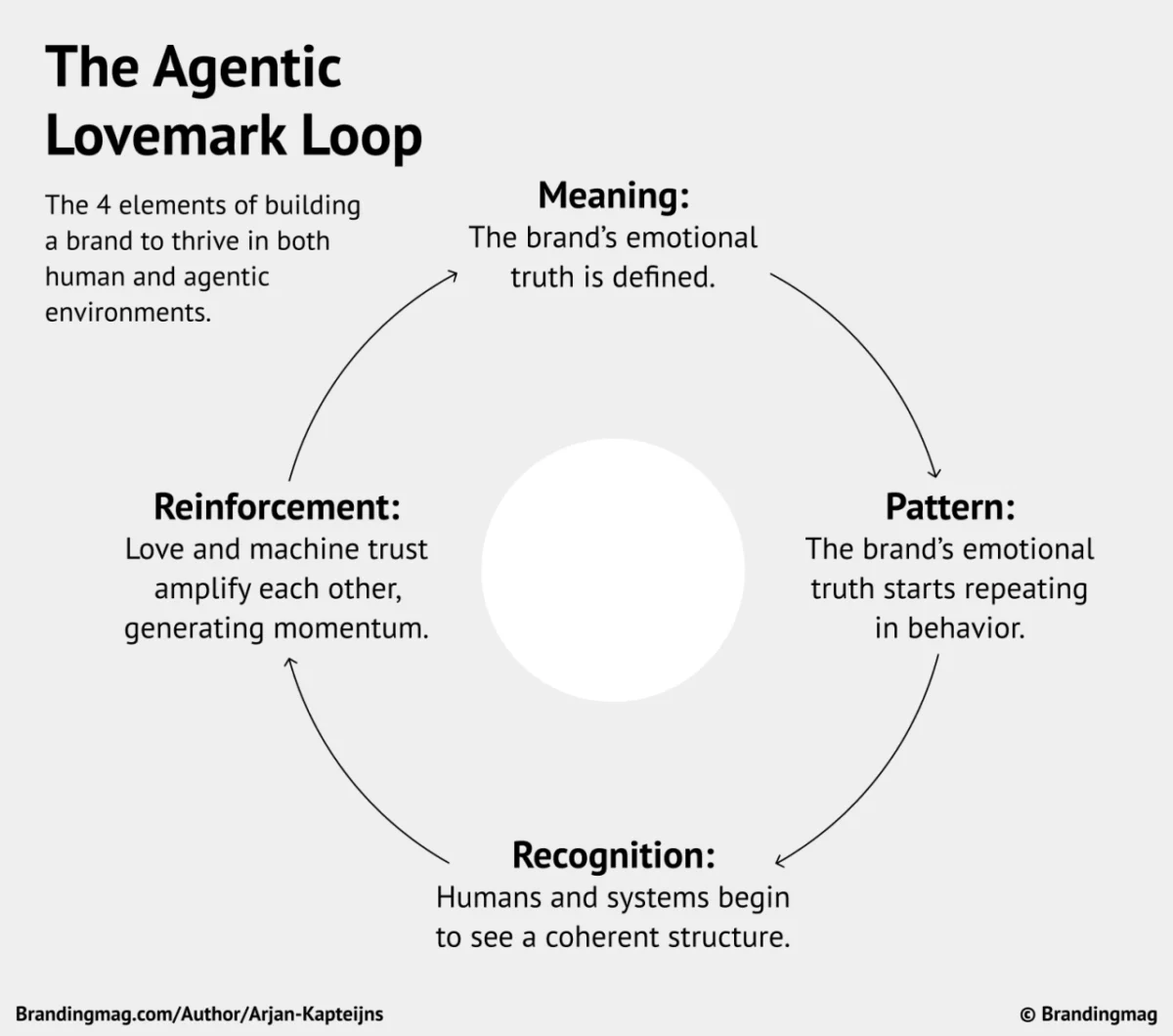
In an agentic economy, emotional distinction is not a luxury; it is a competitive requirement. Agents are increasingly picking up on behavioral cues that signal high customer loyalty, such as low churn rates and recurring engagement. Thus, the loop is closed: strong human love creates patterns that agents recognize as "trustworthy," which leads to more visibility, which in turn reinforces the love.
Official Perspectives: Marzano’s Brand Constitutions
Thomas Marzano’s manifesto serves as the architectural blueprint for this new reality. He argues that brands require a "Brand Constitution"—an internal, unified logic that guides both human expression and machine interaction.
"Brands must not only be lovable to humans but also legible to machines," Marzano writes. His perspective shifts the focus from sporadic, campaign-based marketing to a more holistic, system-based approach. The Constitution functions as the strategic compass, ensuring that the "organizing idea"—the core principle that makes a brand what it is—is codified into every touchpoint, from the interface design to the data structure.
The Role of the Organizing Idea
For decades, iconic brands like Apple, Nike, and IKEA have thrived because they operated around a singular organizing idea.
- Nike: "If you have a body, you are an athlete."
- Apple: "Unleashing creativity through simplicity."
- IKEA: "Design for the many."
In the Agentic Age, this idea is the bridge between human emotion and machine logic. It must be human enough to ignite passion and structured enough to serve as the "truth" that the machine uses to categorize the brand.
Implications: The Death of the "Banana Principle"?
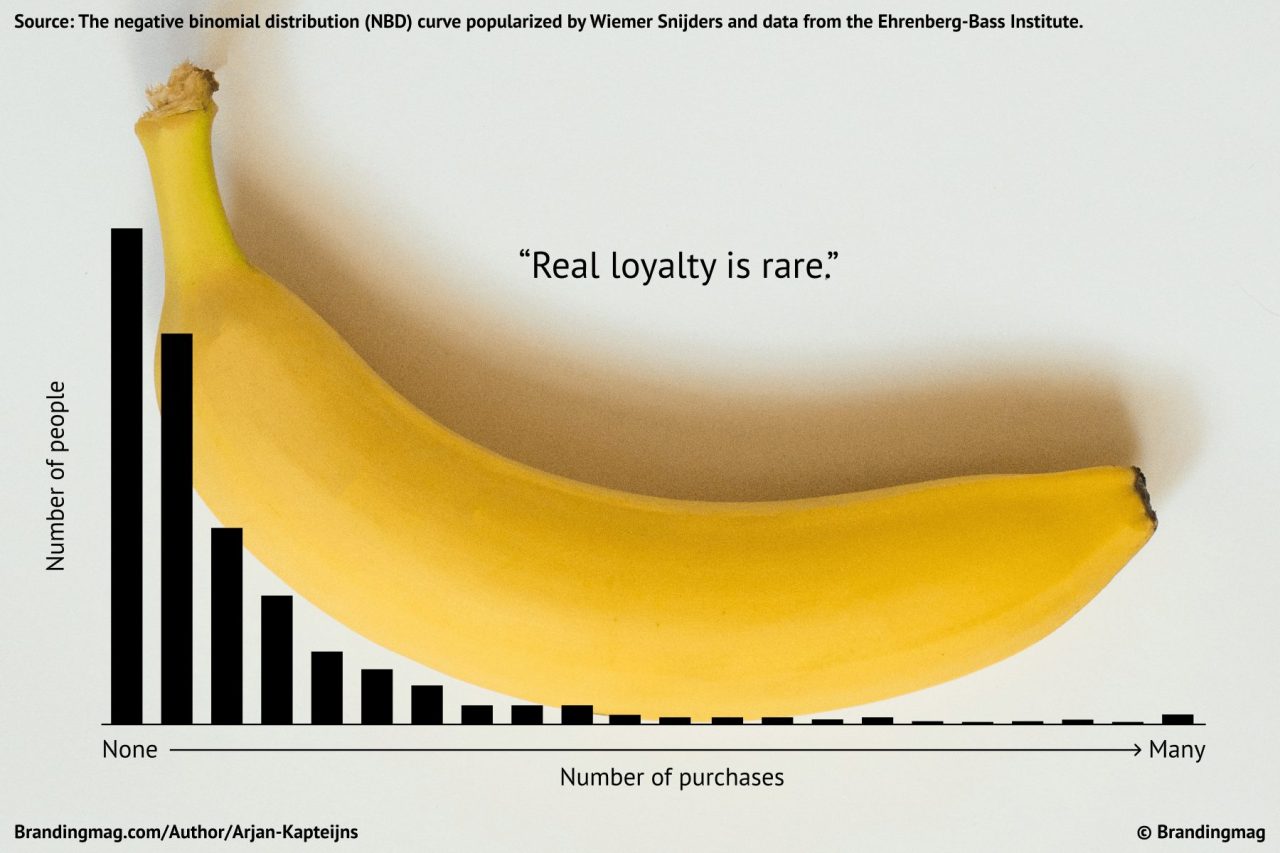
For years, the "Banana Principle" (based on the Ehrenberg-Bass Law) has suggested that loyalty is a byproduct of penetration and availability, and that true, irrational loyalty is statistically rare.
However, the rise of the Agentic Lovemark challenges this. Agents, by their nature, reduce choice and reinforce habits. If an agent consistently recommends a preferred brand, the "random" switching behavior described in older models may diminish. We are likely to see a "reversed banana" effect: fewer light, fickle buyers and more consolidated, stable loyalty. For brands that can achieve the status of an Agentic Lovemark, this offers a historic opportunity for market dominance.
The Creative Fear: Soul vs. Optimization
A common concern among creative professionals is that "machine-readable" brands will become sterile and robotic. There is a palpable fear that the soul of creativity—the "slightly crooked line" or the human imperfection—will be smoothed away by AI optimization.
However, the distinction must be made between creation and mediation.
- Creation remains human: AI is a tool, a "Formula 1 car" that requires a human driver. It can accelerate, but it cannot originate the emotional, lived-experience-based brilliance that drives human connection.
- Mediation is systemic: The structural legibility required by AI is not a demand for "perfection," but for "clarity."
The challenge for the next generation of marketers is to ensure that the creative work retains its humanity, while the systems supporting that work provide the necessary clarity for discovery.
Conclusion: The New Gold Standard
To be an Agentic Lovemark is to possess both a soul and a system. It is the ability to inspire a human to care while simultaneously providing the evidence an algorithm needs to recommend the brand as the "obvious" choice.
The path forward for brand builders is clear:
- Start with meaning: Define the emotional territory and the organizing idea.
- Build the pattern: Ensure that this meaning is repeated across all behavioral touchpoints.
- Foster recognition: Codify this behavior into systems that machines can interpret as reliability and trust.
- Reinforce the loop: Allow the machine’s visibility to amplify human engagement, deepening the brand’s presence in both the heart and the database.
As we move deeper into the agentic era, the brands that endure will not be those that simply survive the machine filter, but those that use the machine to amplify the love they have earned. The challenge is no longer just to be noticed; it is to be understood by the systems that now act as the gatekeepers of our future choices. In this new landscape, the union of emotion and structure is not just a marketing strategy—it is the essential architecture of survival.
About the Author