In the high-stakes world of industrial engineering, a "greenfield" project—the development of a facility from the ground up on previously undeveloped land—is the ultimate professional crucible. It represents a rare, blank-slate opportunity to implement state-of-the-art technology, optimize workflows, and build systems that are efficient by design. Yet, these projects are notoriously complex, requiring the synchronized efforts of EPC (Engineering, Procurement, and Construction) firms, multiple technology vendors, third-party specialists, and client stakeholders.
As the industry moves toward increasingly interconnected "smart" plants, the success of these massive undertakings hinges on one critical, often misunderstood discipline: System Integration.
The Main Facts: Defining the Integration Challenge
System integration is not merely the final act of connecting wires and writing code; it is the fundamental process of ensuring that disparate elements—automation platforms, vendor-supplied equipment packages, networking infrastructure, data architectures, and operator interfaces—function as a singular, cohesive organism.
On most greenfield projects, integration is where latent project flaws manifest. By the time a project reaches the commissioning and startup phase, the process design is "frozen," equipment is bolted to the floor, and the budget is largely exhausted. If the communication protocols between a vendor’s skid and the plant’s Distributed Control System (DCS) were not vetted months prior, the resulting technical hurdles create immediate bottlenecks. In the pressurized environment of startup, these issues are not just technical inconveniences; they are costly, schedule-jeopardizing roadblocks that threaten the facility’s first-product deadlines.
Chronology: The Evolution of a Greenfield Project
To understand the importance of early integration, one must look at the lifecycle of a capital project.
1. Conceptualization and FEED (Front-End Engineering Design)
This is the "golden hour" for integration. Decisions regarding the control narrative, the data architecture, and the cybersecurity posture are made here. When Hargrove Controls & Automation manages a greenfield project involving novel, first-at-scale processes, they emphasize that the design basis is rarely static. As teams learn more about equipment limitations, the control strategies must evolve. If these evolutions are documented early, they remain manageable; if they are left until the final stages, they become disruptive.
2. The Procurement Phase
Integration often fails because of "siloed" procurement. When vendor packages (such as boilers, compressors, or filtration skids) are purchased in isolation, the integration team is forced to play catch-up. Does the vendor’s local HMI support the plant’s alarm management philosophy? Does the communication gateway support the required cybersecurity standards? If these questions are not answered during the technical bid evaluation, the "integration" phase becomes a site-based troubleshooting nightmare.
3. Execution and Commissioning
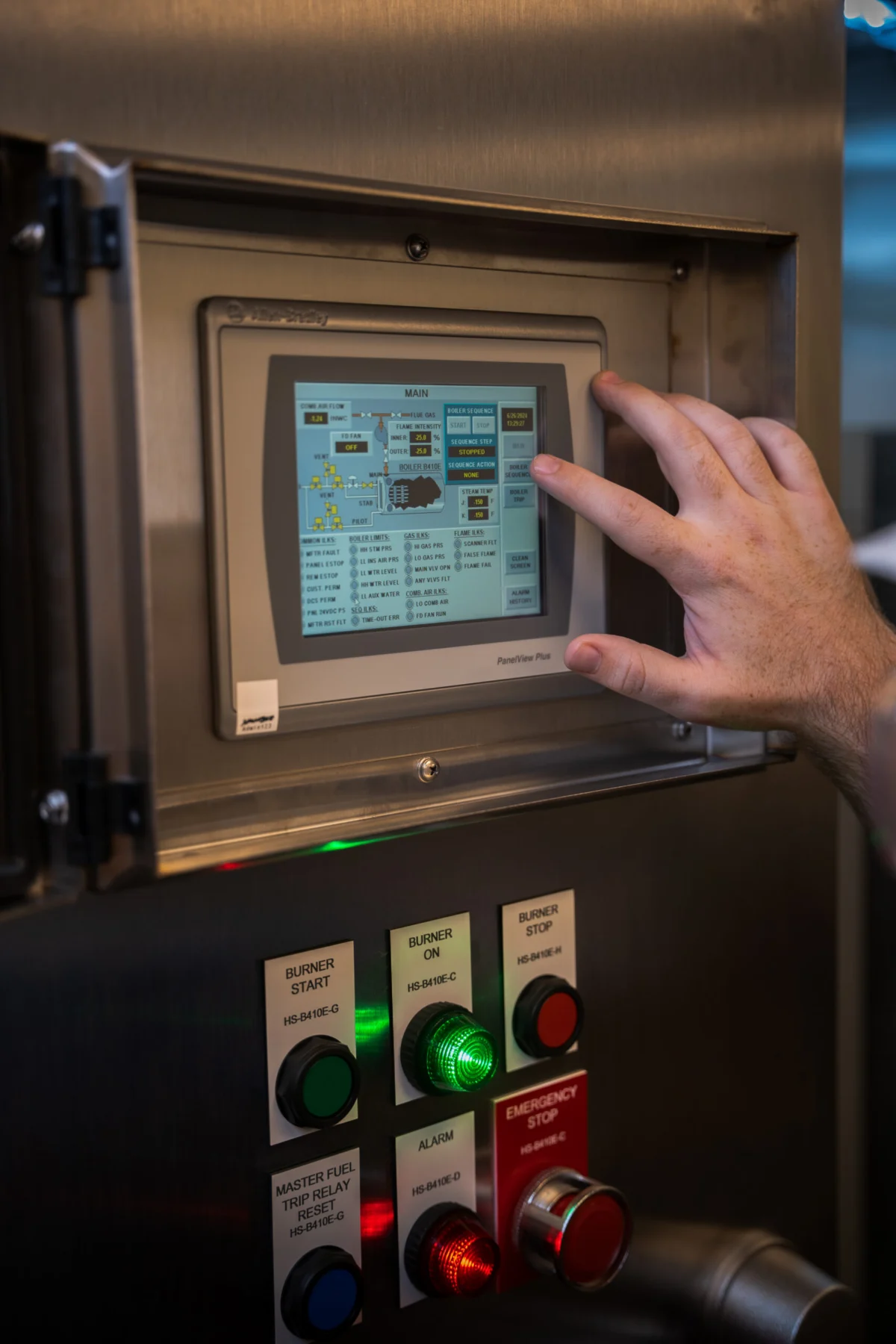
This is where the theoretical meets the physical. Control engineers perform loop checks, verify interlocks, and bring HMI graphics to life. In a project where integration has been ignored, this stage is characterized by "firefighting"—constant, high-pressure adjustments to correct fundamental design oversights. Conversely, in well-integrated projects, this stage is a methodical validation of a pre-tested design.
Supporting Data and Technical Realities
The complexity of modern facilities is driven by the sheer number of interconnected systems. Integration planning must account for:
- Distributed Control Systems (DCS) and PLCs: The "brain" of the operation.
- Safety Instrumented Systems (SIS): Critical for process safety and risk mitigation.
- Industrial Networks: The backbone of data transmission.
- Cybersecurity Layers: Essential for protecting OT (Operational Technology) from external and internal threats.
- Historians and Analytics: The primary tools for management to evaluate performance.
Research suggests that integration-related rework costs are often exponential. A design change made during the FEED stage might cost $1,000 in engineering time. The same change, if discovered during physical commissioning, can cost $10,000 or more when factoring in site labor, potential delays to other trades, and the impact on the critical path.

Expert Perspectives: The Human Element
Industry experts, such as those at Hargrove Controls & Automation, stress that integration is as much about communication as it is about configuration.
"Documentation is the operational memory of a plant," says a lead systems integrator. "If a decision is made in a meeting but not captured in a control narrative, that decision is effectively lost to history." As project teams rotate and vendors change personnel, the lack of robust documentation leads to "tribal knowledge" gaps. When a system behaves unexpectedly during startup, the lack of a clear, traceable design basis leads to redundant discussions and expensive guesswork.
Furthermore, the integration team must involve Commissioning and Startup (CSU) specialists early. These professionals, who focus on the practical "operability" of the plant, often spot issues that pure design engineers overlook. By asking questions like, "How will an operator manually override this loop during a pump failure?" or "Does this alarm sequence create alarm fatigue?", they ensure that the design isn’t just theoretically sound, but practically functional.
Cybersecurity and Data: The Modern Frontier
In the past, integration was strictly about ensuring the PLC talked to the DCS. Today, it is about secure data flow. A major pitfall on modern projects is the assumption that data can be easily moved between the operations network and the business network.
In one notable instance, a project team assumed that transferring data via USB drives would be an acceptable "low-tech" solution. However, this violated modern OT cybersecurity standards. Retrofitting a secure, segmented network architecture after the physical hardware was already installed required a complete overhaul of the historian configuration and user access policies. This serves as a cautionary tale: Cybersecurity must be baked into the integration architecture, not added as a patch.
Implications: Building for Day One
The ultimate goal of integration planning is to ensure that on "Day One" of operation, the facility runs as intended. When integration is treated as a final, minor task, the facility starts with a "performance debt"—a collection of workarounds, poorly tuned loops, and confusing graphics that will hamper efficiency for years to come.
The Three Pillars of Successful Integration
For engineers looking to succeed on greenfield projects, three strategies are paramount:
- Cross-Discipline Communication: Break down the walls between process, electrical, instrumentation, and IT teams. Integration must be a standing item in every design review.
- Continuity of Expertise: Protect the project’s institutional knowledge by keeping key integration leads involved from the start of design through the end of commissioning.
- The Testing Strategy: Do not wait until the plant is built to define how it will be tested. Define the Factory Acceptance Testing (FAT), Integrated Testing, and Site Acceptance Testing (SAT) protocols during the design phase.
Conclusion: The Path Forward
Greenfield projects represent the future of industrial capability, but they are unforgiving of poor planning. By moving integration from the end of the project timeline to the very beginning, engineers can transform the process from a chaotic scramble into a structured, predictable execution.
When automation strategy, data architecture, and commissioning planning are unified, the result is more than just a functional plant; it is a high-performance asset capable of meeting the demands of modern production. The choice is clear: build for integration today, or pay the price during the critical, irreversible hours of startup.
About the Author