In a move that signals a significant shift in the landscape of quick-service restaurant (QSR) logistics, autonomous delivery provider Coco Robotics has announced a strategic partnership with Little Caesars, the world’s third-largest pizza chain. This collaboration marks a pivotal moment in the integration of robotics into urban food delivery, promising to reshape how consumers receive their meals while addressing long-standing inefficiencies in the "last-mile" delivery sector.
Main Facts: A New Era for Pizza Delivery
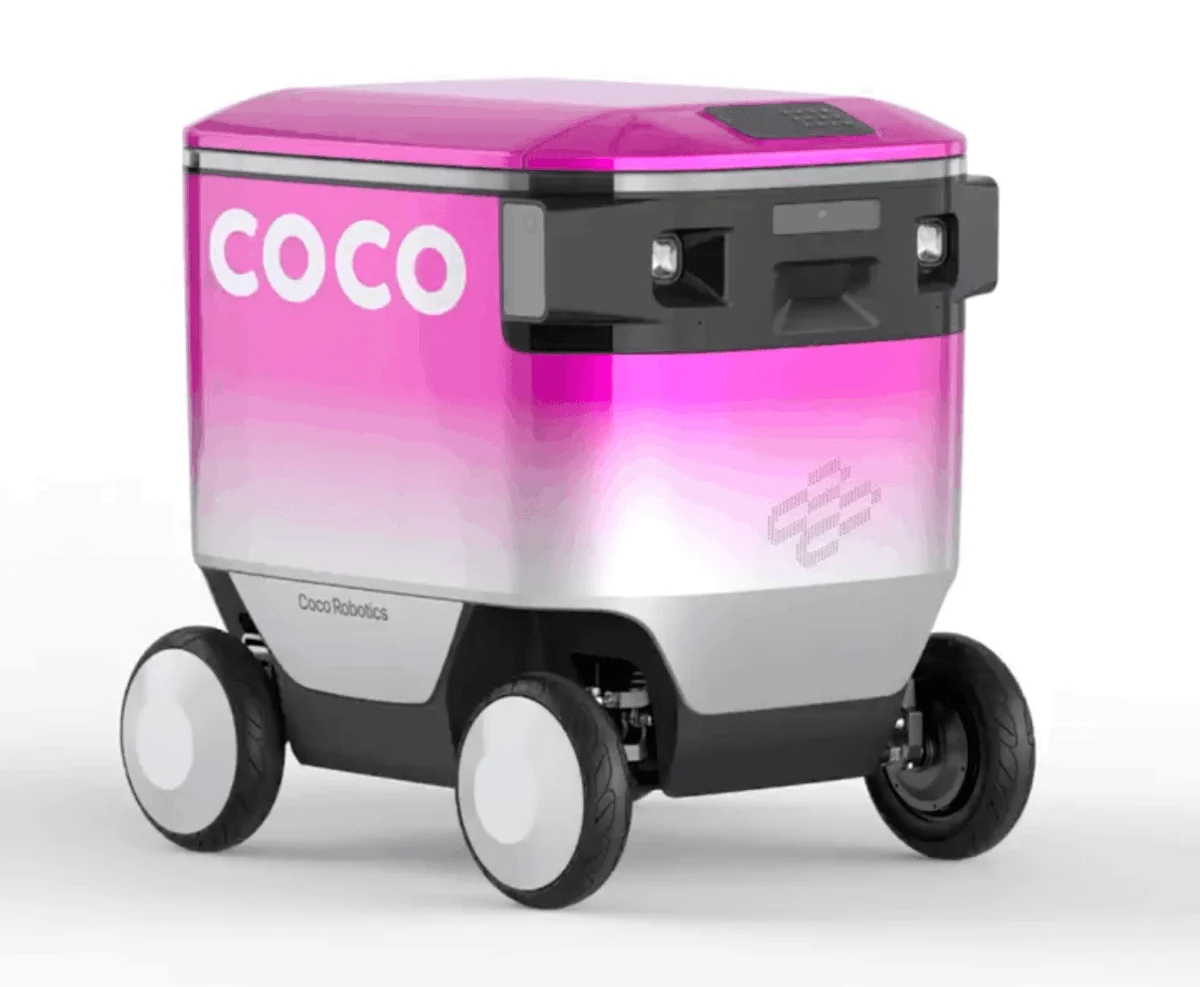
The partnership, unveiled this week, introduces Coco’s fleet of sidewalk-traversing autonomous robots to Little Caesars’ operational workflow. These robots, which bear a distinctive design often described as a high-tech, four-wheeled suitcase, are now tasked with navigating complex urban environments—including crowded sidewalks and busy street crossings—to bring hot pizzas directly to customers’ doorsteps.
The rollout is already active in several major metropolitan hubs, including Los Angeles, Chicago, and Miami, with an expansion into downtown San Jose slated for the near future. By leveraging existing third-party delivery infrastructure, including DoorDash and Uber Eats, the integration allows for a seamless transition for customers. When a user places an order at a participating Little Caesars, there is now a distinct possibility that their delivery will be fulfilled by a Coco robot, provided they reside within the typical 1- to 2-mile service radius of the store.
Chronology: The Rise of Coco Robotics
To understand the magnitude of this partnership, one must look at the trajectory of Coco Robotics. Founded in 2020, during the height of the global pandemic—a period that served as a massive catalyst for contactless delivery technology—the Santa Monica-based startup has moved with aggressive speed.
- 2020: Coco Robotics is founded with the goal of solving the inefficiencies of human-powered last-mile delivery, specifically focusing on urban density.
- 2021-2022: The company undergoes a period of rapid prototyping and pilot programs, refining its autonomous navigation stack and sensor suites to ensure safety in unpredictable urban environments.
- 2023: Coco achieves a major milestone, crossing the threshold of 500,000 completed zero-emission deliveries across its combined U.S. and European markets.
- 2024: The company secures the high-profile partnership with Little Caesars, marking its most significant commercial scaling effort to date.
This rapid expansion has been supported by a continuous learning model. Coco’s fleet does not operate in a vacuum; it benefits from "fleet learning," where data collected from millions of miles of real-world operations is synthesized to improve navigation algorithms. This allows the robots to adapt almost instantly to the unique infrastructure and pedestrian patterns of new cities.
Supporting Data: The Efficiency Equation
The business case for autonomous delivery rests on a foundation of data-driven efficiency. For retailers, the last mile is notoriously the most expensive and complex part of the supply chain. Human delivery drivers face challenges ranging from traffic congestion and parking shortages to rising labor costs.
Coco’s operational data suggests that these robots offer a superior alternative for short-range deliveries. By operating within a 1- to 2-mile radius, the robots effectively bypass the "car-based" congestion that often delays standard delivery drivers in dense urban cores.
Furthermore, the environmental impact is a significant factor. With over 500,000 deliveries completed, Coco has demonstrated that its electric-powered, emission-free fleet can replace hundreds of thousands of internal combustion engine vehicle trips. For a corporation like Little Caesars, which is under increasing pressure to meet sustainability goals, the partnership provides a measurable way to reduce the carbon footprint of its delivery operations.
The technology also provides a buffer against peak-time volatility. During high-demand periods, such as Super Bowl Sunday or Friday nights, human delivery fleets often face labor shortages. Robots, by contrast, can be deployed consistently, helping to keep order fulfillment times predictable.
Official Responses: The Strategic Rationale
The leadership teams at both companies view this as a transformative step toward operational excellence. Trish Heusel, Vice President of Innovation at Little Caesars, emphasized that the decision was driven by a commitment to the customer experience.
"This partnership is about delivering more value and convenience to our guests," Heusel stated. "By integrating Coco’s autonomous robots, we can deliver hot, delicious pizza in record time to more customers. With Coco, we’re now able to make deliveries even more quickly. Automating deliveries also reduces congestion in our stores and helps get orders out faster during peak periods."
From the perspective of Little Caesars, the robots function as an extension of the store’s kitchen. By automating the hand-off to a machine, the restaurant staff can remain focused on food preparation, which is the core of the business, rather than managing the logistics of delivery drivers entering and exiting the storefront.
Coco Robotics, meanwhile, frames the partnership as a validation of its technology. The company has focused heavily on "real-world adaptability." By working with a global brand like Little Caesars, Coco is proving that its robots can handle the rigors of high-volume, commercial-grade operations, moving beyond the "experimental" phase into a robust, scalable business model.
Implications: The Future of Urban Logistics
The implications of the Coco-Little Caesars partnership extend far beyond the pizza industry. We are witnessing a fundamental shift in the "Gig Economy."
1. The Transformation of the Gig Economy
For years, the gig economy has relied on a vast pool of independent contractors. However, rising labor costs and the complexities of managing a decentralized workforce have led companies to look toward automation. While autonomous robots are not intended to replace human drivers in every scenario—specifically those involving long distances or heavy lifting—they are poised to dominate the "short-haul" delivery sector. This will inevitably change the nature of delivery work, shifting the focus from manual driving to remote fleet monitoring and maintenance.
2. Urban Infrastructure Evolution
As these robots become a more common sight on sidewalks, cities will be forced to adapt their infrastructure. We are already seeing conversations around "robot curbside" zones and sidewalk right-of-way regulations. The success of Coco’s fleet suggests that urban planners must now account for non-human traffic, ensuring that sidewalks remain accessible for all while accommodating the robots that keep the local economy moving.
3. Sustainability and the Zero-Emission Mandate
As municipalities across the U.S. push for "Net Zero" initiatives, the transition to electric, automated last-mile delivery is becoming a policy priority. The fact that a major pizza chain is adopting this technology at scale is a clear indicator that the economics of "green" delivery are finally beginning to align with the bottom line.
4. Consumer Expectations
Finally, the standard for delivery is being reset. Customers are increasingly accustomed to real-time tracking, frictionless payments, and contactless delivery. The reliability of a robotic delivery—which operates on a predictable, algorithmically determined schedule—could soon become the benchmark by which all delivery services are judged.
Conclusion
The partnership between Coco Robotics and Little Caesars is more than a novelty; it is a pragmatic solution to the escalating costs and logistical hurdles of urban food delivery. By merging the culinary efficiency of a global pizza chain with the sophisticated autonomous navigation of a robotics leader, the two companies are setting a new standard for the industry.
As the program expands from the streets of Los Angeles and Chicago to San Jose and beyond, the data gathered will undoubtedly inform the next generation of autonomous delivery systems. We are in the early stages of a transition that will see sidewalks become just as important to the supply chain as highways. For the consumer, this means fresher pizza and a more efficient delivery experience. For the industry, it marks the definitive arrival of the robot-assisted economy.
The success of this collaboration will likely serve as a blueprint for other QSRs and retail giants, signaling that the future of delivery is not just about being faster—it is about being smarter, cleaner, and inherently autonomous. As the fleet grows and the navigation algorithms sharpen, the sight of a Coco robot carrying a hot, fresh meal will likely evolve from an occasional curiosity into a staple of modern urban life.
About the Author