Artificial intelligence is not merely rewriting the world’s infrastructure; it is simultaneously inventing a high-velocity language to describe its own metamorphosis. For those operating within the tech sector—from product managers and venture capitalists to policy wonks and curious observers—the modern professional landscape has become a minefield of jargon. Terms like "LLMs," "RAG," and "RLHF" have become the lingua franca of the boardroom.
As of late 2026, the complexity has accelerated. New terminology, such as "opaque recurrence"—a reasoning technique utilized by OpenAI’s Astra model—has sent shockwaves through AI safety communities, illustrating that the vocabulary of this field moves faster than the average expert can process. To bridge this gap, this guide serves as a living repository of the essential terms defining the current AI era.
Main Facts: The New AI Vocabulary
At the core of the current technological explosion is a shift from simple chatbots to autonomous systems. To understand this transition, one must distinguish between the "what" and the "how."
- AGI (Artificial General Intelligence): A nebulous, high-stakes goal. It describes an AI that outperforms humans at most economically valuable work. While OpenAI’s Sam Altman likens it to a "digital co-worker," Google DeepMind views it as a system capable of mastering most cognitive tasks. Despite these definitions, AGI remains an elusive target that even industry pioneers struggle to quantify.
- AI Agents: Unlike static chatbots, agents are autonomous systems designed to execute multi-step workflows. Whether booking travel or maintaining complex codebases, these agents act on the user’s behalf.
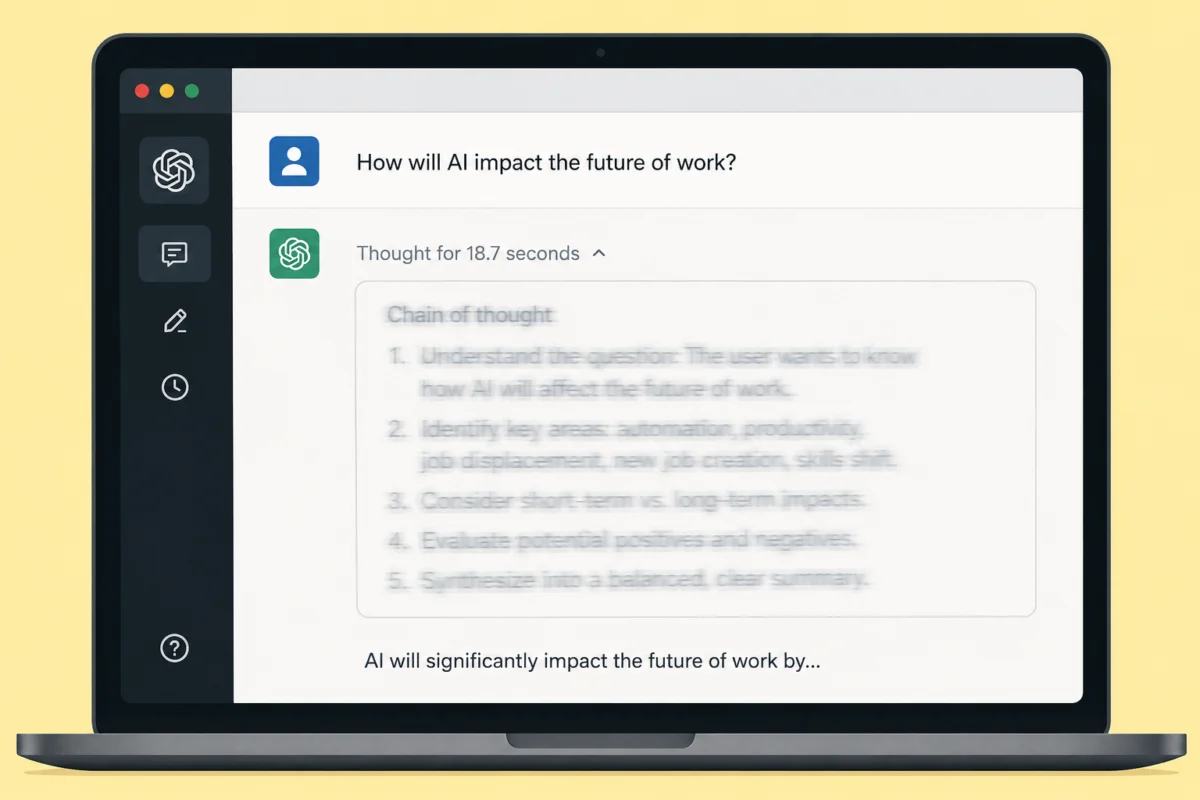
- Opaque Recurrence: This is the industry’s most contentious new term. It describes a method where a model loops queries through its internal layers repeatedly rather than providing a readable "Chain of Thought." While computationally efficient, it creates a "black box" that worries safety researchers, as it bypasses the transparent reasoning logs typically used to audit model behavior.
Chronology of Evolution: From Neural Networks to Self-Improvement
The history of AI is marked by waves of innovation, each building upon the last.
- The Neural Foundation: In the 1940s, the concept of a "neural network" was theorized, modeled after the human brain’s interconnected pathways. It wasn’t until the rise of GPU hardware—initially designed for video games—that these networks could be scaled to modern proportions.
- The Generative Boom: The emergence of Large Language Models (LLMs) like GPT and Claude transformed AI from a research niche into a consumer utility.
- The Agentic Turn (2024–2026): We have moved beyond simple text generation to the "Agentic" era, where software, via the Model Context Protocol (MCP), can interface with real-world applications like Slack, databases, and file systems, acting as a "USB-C port for AI."
- The Recursive Frontier: We are now entering the era of Recursive Self-Improvement (RSI), where systems are being designed to iterate upon their own architecture, a milestone that proponents call the next frontier and critics fear as the precursor to a loss of human control.
Supporting Data: Infrastructure and Constraints
The rapid adoption of AI has collided with the physical reality of hardware limitations.
The Compute Bottleneck
"Compute" refers to the raw power—GPUs, TPUs, and specialized processors—required to train and run these massive models. This demand has triggered a phenomenon dubbed "RAMageddon." As AI labs hoard high-bandwidth memory (RAM) to fuel their data centers, global supply chains for consumer electronics have been severely disrupted. From gaming consoles to smartphones, the scarcity of memory chips has forced manufacturers to raise prices, marking a rare instance where the digital AI boom has directly inflated the cost of physical household goods.
Efficiency Metrics
To manage these costs, developers are turning to:
- Distillation: Training smaller, efficient "student" models to mirror the behavior of massive "teacher" models.
- Mixture of Experts (MoE): An architecture that activates only the necessary sub-networks for a specific task, significantly reducing the computational cost per query.
- Token Throughput: The metric of how much data a system can process per second. Maximizing this is the current obsession of infrastructure engineers, as it dictates the scalability and profitability of AI services.
Official Responses and Ethical Concerns
The industry is currently divided between those advocating for "open" development and those favoring "closed" safety protocols.
The Safety Debate
Safety researchers have raised red flags regarding the trend toward "Neuralese"—a hypothetical state where an AI reasons in internal, non-human-readable numeric representations. When models like Astra utilize "opaque recurrence," they approach this threshold. OpenAI has maintained that its current models remain legible, but the pushback from the research community suggests a growing rift between developers prioritizing performance and those prioritizing oversight.
The Open Source vs. Closed Source Schism
The debate over "Open Source" (e.g., Meta’s Llama) versus "Closed Source" (e.g., OpenAI’s GPT) remains a defining tension. Proponents of open source argue that public access allows for independent safety audits and democratic innovation. Conversely, closed-source developers argue that restricting access is a necessary precaution to prevent bad actors from weaponizing powerful models.
Implications: The Future of AI Integration
As we look toward the next three years, the implications of this new vocabulary extend far beyond tech journalism.
- Professional Disruption: With the rise of Coding Agents, the role of the software developer is shifting from "writer of code" to "architect and auditor of AI-generated logic."
- The "Hallucination" Tax: As long as AI models continue to "hallucinate"—or generate confident falsehoods—their integration into critical sectors like medicine and law will remain heavily constrained. The move toward "Vertical AI" (models specialized for one industry) is the industry’s direct answer to this flaw.
- The Standardization of Context: With the adoption of the Model Context Protocol (MCP) by tech giants like Google and Microsoft, we are moving toward a standardized "AI-ready" internet. This will likely lower the barrier to entry for developers but will also create new security risks as more "API endpoints" are exposed to autonomous agents.
Summary Glossary
- Fine-tuning: Adjusting a pre-trained model for specific, domain-expert tasks.
- GANs (Generative Adversarial Networks): A competitive framework where two neural networks battle to produce increasingly realistic synthetic data.
- Parallelization: The hardware-level strategy of performing thousands of calculations simultaneously.
- Validation Loss: The "real-time report card" of an AI’s training progress; lower scores indicate better learning, while high scores suggest the model is failing to generalize.
As this field continues to evolve, the distinction between human expertise and machine capability will blur. Understanding these terms is no longer an optional skill for the tech-savvy; it is a fundamental requirement for anyone navigating the 21st-century economy. The language of AI is complex, but it is the map we must use to chart our path through the coming years of technological transition.
About the Author