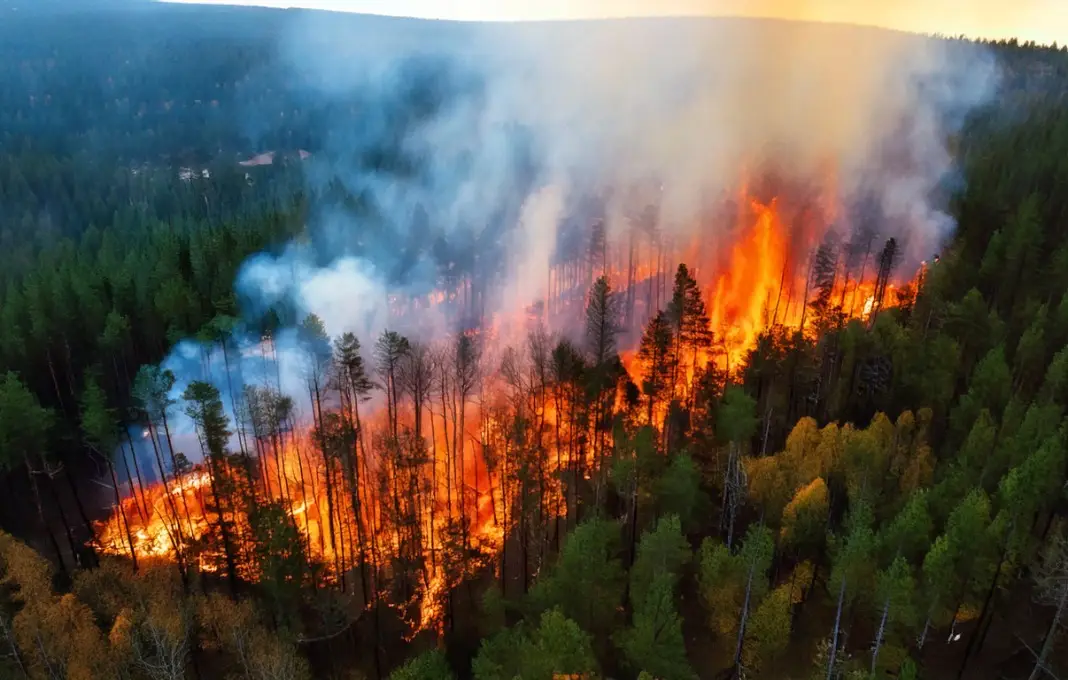
As the summer of 2026 reached its zenith, the world witnessed a staggering display of environmental volatility. From the scorched forests of France and Spain to the charred landscapes of Canada and the United States, the traditional seasonal rhythm of "summer" has been replaced by an era of unprecedented climate instability. For the modern CEO, this is no longer a matter of corporate social responsibility (CSR) or abstract environmental, social, and governance (ESG) reporting. It has become an urgent, front-line operational crisis.
When hundreds of thousands of people are forced to flee their homes, the probability that a significant portion of your workforce is among them is no longer theoretical—it is a statistical certainty. As the boundaries between "remote global disaster" and "internal HR crisis" dissolve, leadership must reckon with a new reality: the emergence of the "climate-affected" employee.
The New Frontline: Main Facts of the 2026 Crisis
The summer of 2026 will be remembered for the sheer scale of human displacement caused by wildfires. In Spain and France alone, more than 360,000 people were forced to evacuate their homes, marking what many observers categorized as France’s largest peacetime evacuation. The fire risk—exacerbated by record-breaking heatwaves—rippled across the continent, affecting nations from Romania to the Balkans.
Simultaneously, North America faced a harrowing reality. Canada reported nearly 5,000 wildfires, with over 4.1 million hectares consumed, forcing the mass evacuation of several First Nations communities. In the United States, the National Interagency Fire Center documented over 51,000 fires, burning 166% of the 10-year average.
These are not isolated events. They are the systemic outcomes of a changing climate that is actively disrupting the workforce. For the average corporation, these fires are not happening in a distant, outsourced supply chain; they are happening in the neighborhoods where their developers, accountants, and sales teams live.
A Chronology of Escalation
To understand the urgency, one must look at the trajectory of these climate events over the last decade.
- The Era of "Distant" Crises (2010–2020): During this period, corporate crisis management was reactive and geographically detached. If an earthquake struck a supplier in Bangladesh or a flood impacted a regional hub in Southeast Asia, the response was uniform: a public statement of sympathy, a modest donation to the Red Cross, and perhaps a corporate matching program. The impact on the "home office" or domestic workforce was negligible.
- The Pivot Point (2021–2025): The frequency of "climate-adjacent" events began to rise. Heatwaves began to impact local logistics, and regional wildfires started forcing short-term office closures. However, most companies still treated these as "acts of God"—unpredictable anomalies that did not warrant structural policy changes.
- The Systemic Reality (2026–Present): The summer of 2026 served as a tipping point. The sheer scale of domestic evacuations meant that companies could no longer outsource the trauma. When an employee is sleeping in a school gymnasium or a relative’s spare room, they are not merely "dealing with a personal issue." They are part of a massive, systemic workforce disruption that the old playbook is wholly unequipped to handle.
Supporting Data: The Cost of Inaction
The shift from "climate-aware" to "climate-affected" is not just a semantic change; it is a clinical one. According to research published in Occupational Medicine, exposure to natural disasters is directly linked to higher incidences of post-traumatic stress disorder (PTSD), depression, and anxiety.
Furthermore, the economic implications are staggering:
- Lost Productivity: The World Economic Forum estimates that climate-linked disasters will cost the global economy approximately $2.4 trillion in lost productivity by 2030.
- The Price of Trauma: Conservative estimates suggest that a single distressed employee costs a business roughly $15,000 annually in lost output, healthcare expenditures, and turnover.
- The Heat Penalty: Extreme heat creates a physiological barrier to performance. Roland Berger reports that for every degree Celsius above 18°C, productivity drops by approximately 2.2%. On a global scale, heatwaves are already shaving 1% off the global GDP annually.
When these factors are aggregated, it becomes clear that "thoughts and prayers" are not an economic strategy. They are a failure of risk management.
Official Responses and Global Warnings
International bodies have moved from suggesting policy changes to issuing direct warnings to the private sector. In July 2026, United Nations Secretary-General António Guterres issued a sharp rebuke to global leaders, urging both governments and businesses to stop treating every climate disaster as an isolated, "once-in-a-lifetime" tragedy.
"We are witnessing a systemic risk that is unfolding before our eyes," Guterres noted. The UN’s Environment Programme (UNEP) has further projected that the number of extreme wildfires is set to rise by 50% by the end of the century.
Governments are beginning to codify this risk, but the onus is increasingly falling on the private sector to provide a safety net where public infrastructure may fail. The message is clear: if a company’s disaster recovery plan does not include the physical and mental well-being of its people during a climate event, it is not a plan—it is a gamble.
Implications: The Death of the Old Playbook
The traditional corporate crisis playbook has collapsed under the weight of three distinct realities:
1. Mind the Gap
The gap between an employee’s need for basic survival—shelter, electricity, internet, safety—and a company’s expectations for "business as usual" is the new operational chasm. Organizations that lack the infrastructure to support an employee who has lost their home are effectively losing their talent in the moment it is needed most.
2. The Long Tail of Recovery
The crisis does not end when the fire is extinguished. Displacement, property loss, and the psychological weight of witnessing environmental destruction are chronic stressors. Most return-to-work policies are built on the assumption of a "quick recovery," failing to account for the reality that rebuilding a life can take years.
3. The Necessity of Standing Infrastructure
Just as a company maintains a cybersecurity team for data breaches, it must now maintain a "climate support" capability. This is not about one-off charitable donations; it is about standing operational procedures that can be triggered the moment an evacuation order is issued in a region where employees reside.
Four Urgent Steps for the Modern CEO
To navigate this new era, CEOs must implement a structured, proactive framework:
I. Establish a Climate-Specific Emergency Fund
Move beyond matching donations. Companies should establish a dedicated, liquid fund that allows for immediate, no-questions-asked financial support for employees displaced by climate disasters. This can cover emergency housing, satellite internet for those in remote shelters, or immediate medical care.
II. Redefine "Productivity" During Crises
Leadership must empower managers to exercise extreme flexibility. This means pre-authorized, no-penalty leave for the climate-affected, and a culture that explicitly removes the pressure to perform while an employee is in crisis mode. Productivity will recover; the trust lost by forcing a displaced person to log into a meeting from a shelter, however, is permanent.
III. Integrate Climate Risk into Mental Health Benefits
Standard Employee Assistance Programs (EAPs) are often insufficient for the scale of trauma associated with climate-induced loss. Companies must partner with specialized mental health providers who are trained in disaster-related trauma and grief. These services should be available long-term, not just for the first two weeks post-disaster.
IV. Audit the Corporate Footprint
Finally, CEOs must face the mirror. Supporting the climate-affected is a moral imperative, but it is only half the battle. Organizations must rigorously assess their own contribution to climate disruption. Failing to do so makes the company an active participant in creating the very crises their employees are fleeing.
Conclusion: The New Mandate
The era of the "climate-affected" employee is here. As these disasters become more frequent and more intense, the organizations that thrive will be those that view human resilience not as an externality, but as a core component of their business strategy.
Support and care for a displaced workforce requires a CEO who is willing to treat the statement "our people are currently displaced by a climate disaster" not as a tragic footnote, but as a critical operational fact. It requires a move from sympathy to structural support. The next fire is already burning somewhere on the map—the only question is whether your company is prepared to stand by its people when the smoke reaches their door.
About the Author