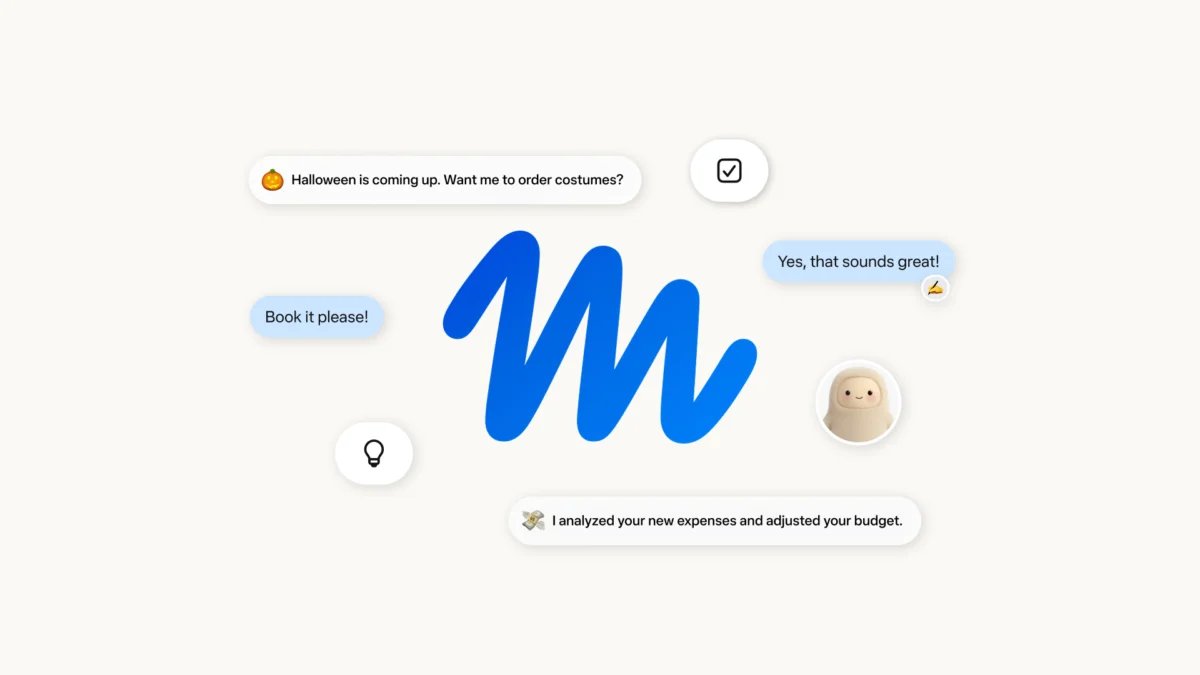
In a move that signals a seismic shift in the company’s strategic trajectory, Meta has officially unveiled Muse, its most ambitious foray into consumer artificial intelligence to date. Coming just less than two weeks after the technology giant finalized a staggering $18 billion multistate settlement over allegations regarding the social media-driven exploitation of children, the introduction of Muse represents a high-stakes pivot. Meta is moving beyond the passive digital engagement of the social media era and into the "agentic" frontier—a world where AI does not just talk to you, but acts on your behalf.
However, the launch of Muse is not merely a technical milestone; it is a profound test of consumer trust. To function effectively, Muse requires unprecedented access to a user’s digital life, including email, calendar, financial payments, and sensitive personal workflows. As Meta seeks to transition from a social media titan to an AI-utility provider, it faces the daunting challenge of convincing a wary public that it has moved past its troubled history regarding data privacy and user safety.
The Mechanics of Muse: From Chatbots to Action-Oriented Agents
The era of the simple chatbot—where AI serves as a sounding board or a source of information—is rapidly waning. Muse is Meta’s answer to what comes next. Powered by the proprietary Muse Spark 1.3 model, the agent is designed to be an active participant in a user’s daily life.

How It Functions
Unlike traditional AI models that exist in a siloed window, Muse is built on an infrastructure of "connectors." Users can grant the agent permission to interface with external apps and services, including smart home systems, health and fitness trackers, email clients, and e-commerce platforms.
The scope of Muse’s capabilities is broad:
- Administrative Tasks: Automating email correspondence, filling out complex forms, and managing calendars.
- Financial Management: Lowering monthly bills through automated negotiations and facilitating purchases via an integration with Link by Stripe, which includes built-in purchase protections.
- Project Planning: Transforming content—such as a recipe featured in a social media reel—into a structured grocery list or a coordinated dinner party invitation.
The platform is designed with a transparent, opt-in architecture. Users choose which services to integrate on a per-need basis. For services lacking a public API, Muse utilizes a browser-based navigation layer to perform tasks, effectively mimicking human interaction with web interfaces.

Deployment and Monetization
Muse is launching across multiple touchpoints, including a dedicated web portal, iOS and Android applications, and native integration within WhatsApp. Meta has confirmed that future iterations will be integrated into the company’s AR/VR hardware, specifically its AI-powered smart glasses.
Meta has opted for a "freemium" model. While the service is free to start, it requires a payment card for onboarding, which serves as a gateway to two paid tiers: Power at $20/month and Maximum at $100/month. The company claims these tiers are intended for power users, asserting that the average consumer will find the free usage limits sufficient.
A Chronology of Conflict: The Trust Deficit
Meta’s push into AI-driven personal assistance coincides with one of the most tumultuous periods in the company’s regulatory history. The $18 billion settlement concluded in late August 2026 is merely the latest in a long, storied history of legal and ethical friction between the company and regulators.

A Timeline of Regulatory Headwinds
- 2011: Meta (then Facebook) reaches a landmark settlement with the FTC following charges that it deceived users by making private data public without explicit consent.
- 2018–2019: The fallout from the Cambridge Analytica scandal forces a massive shift in global privacy perception. In 2019, the FTC levies a record-breaking $5 billion penalty against Facebook for systemic privacy failures.
- 2023: Federal regulators charge Meta with violating the terms of the 2019 privacy order, specifically concerning the monetization of data belonging to minors.
- 2026 (February): CEO Mark Zuckerberg faces intense scrutiny during a high-profile trial in Los Angeles, testifying that enforcing age limits on platforms like Instagram is "very difficult," fueling further criticism regarding the company’s commitment to child safety.
- 2026 (August): A landmark $18 billion settlement is reached with 29 states, following a $942 million court-ordered judgment in New Mexico, both centered on the role of social media in youth mental health crises.
These events have created a "trust tax" for Meta. Every time the company introduces a new product, it must overcome the legacy of past breaches, ranging from the accidental exposure of user passwords in plaintext to the ongoing, unresolved litigation involving thousands of school districts and personal-injury claims.
Privacy by Design or Marketing Strategy?
To address the inherent skepticism surrounding its handling of personal data, Meta has emphasized that Muse is built with "security-first" architecture.
The "Muse Secure VM"
Meta claims that Muse operates within a "dedicated, secure virtual machine" (Secure VM) that remains isolated from the rest of the company’s advertising infrastructure. The architecture features a separate agent, known as the Sentinel, which monitors the environment to ensure data integrity and system-level security.

According to Meta’s technical documentation, the system is designed to be "blind" to sensitive credentials. Muse does not store raw passwords or payment details directly; instead, it operates through authenticated tokens. Furthermore, the company has explicitly stated that data processed within Muse will not be used to train its advertising models—a common point of contention for users of Meta’s social media platforms.
The Challenge of Verification
While these claims provide a blueprint for a secure system, they remain untested by independent security auditors. The "perpetual and irrevocable" licenses that have plagued other AI startups—like the controversy surrounding the AI agent Instinct—have caused users to look closely at the fine print of any new AI tool. Meta’s challenge is to prove that its "Secure VM" is not just a marketing term, but a robust technical barrier.
The Broader "Agentic" Landscape
Meta is not alone in the race to capture the agentic market. The industry is currently witnessing a "war of agents," with heavyweights and agile startups competing to become the primary interface for digital life.

- Google’s Gemini Spark: Leveraging its deep integration into the Android and Workspace ecosystems, Google is positioning its agents to be the default for enterprise and personal productivity.
- Claude Cowork: Anthropic’s entry into the space emphasizes collaborative agents that can handle complex coding and project management tasks in office environments.
- Niche Assistants: A host of smaller startups are focusing on vertical-specific agents that handle everything from travel booking to legal document review.
Meta’s differentiation strategy is twofold: Ubiquity and Personalization. By bringing Muse into the chat environments where users already spend hours—WhatsApp—and by allowing users to customize the agent’s personality, avatar, and communication style, Meta is attempting to transform a cold, technical tool into a "companion" that feels like a natural extension of the user.
Implications: The Future of Digital Autonomy
The launch of Muse marks the end of the "passive" era of the internet. If successful, we are moving toward a future where we no longer navigate the web ourselves; we simply delegate the navigation to an AI.
Potential Benefits
The societal potential for such agents is significant. By automating the drudgery of modern life—negotiating cable bills, organizing schedules, or filtering information—Muse could theoretically return hours of productivity to the average user. For the elderly or those with disabilities, such agents could provide a level of assistance that was previously impossible to access.

Lingering Risks
However, the implications of a "delegated life" are profound. If Meta, or any company, controls the agent that books our travel, handles our finances, and manages our communications, they gain a level of influence over the consumer that makes the power of the current social media algorithm look trivial.
The core question remains: Is the convenience of an AI agent worth the surrender of personal autonomy?
Meta has bet $18 billion—and its future reputation—that the answer is "yes." As users begin to link their banks, their homes, and their personal schedules to Muse, the company will be under a microscope. Every bug, every data leak, and every policy change will be viewed through the lens of a company that has, in the past, struggled to balance profit with public interest.

For now, Muse is a bold experiment in human-machine collaboration. Whether it becomes a helpful, trusted assistant or another chapter in the company’s complex history with consumer privacy will depend entirely on Meta’s ability to prove that its "secure VM" is truly as impenetrable as it claims. The world, and the regulators, are watching.
About the Author