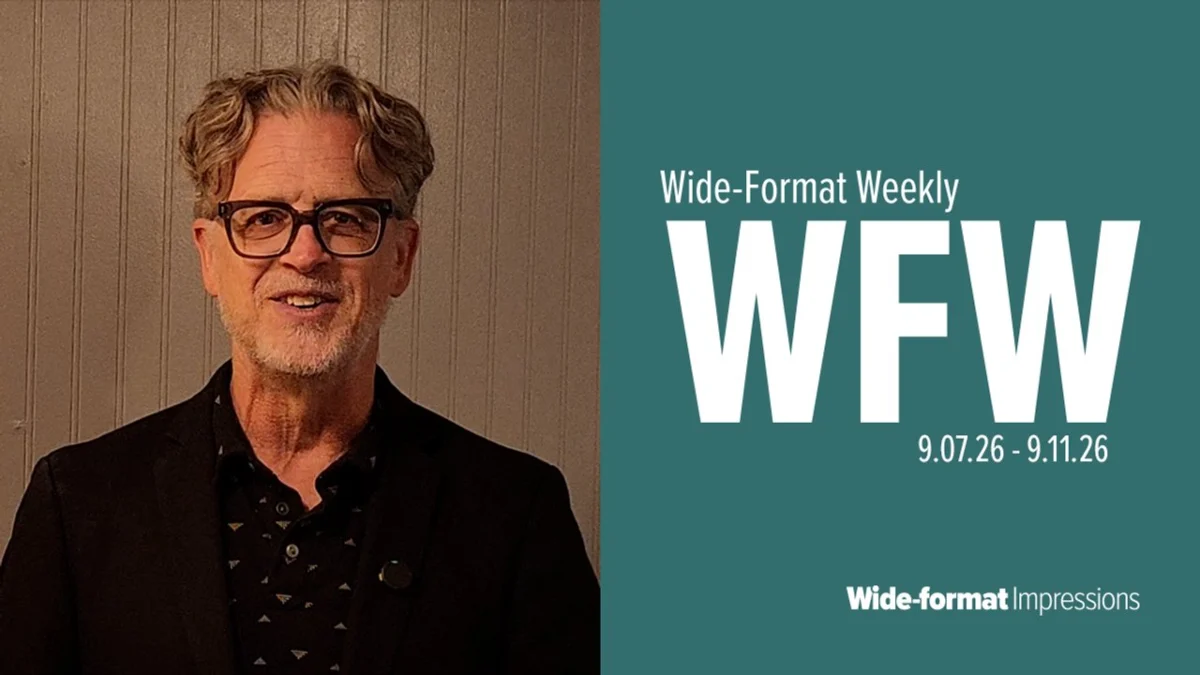
The printing industry is a mosaic of technical innovation, creative application, and human resilience. This week on Wide-Format Weekly, we bridge the gap between our collective history and the future of the sector. From reflecting on the profound impact of the events of September 11, 2001, on our community, to exploring the strategic maneuvers necessary to maintain growth in a tightening economic landscape, this installment provides a roadmap for the modern print professional. Furthermore, we enter the final countdown for the industry’s most anticipated gathering: the PRINTING United Expo in Las Vegas.
Main Facts: A Look at the Current State of Wide-Format
The wide-format printing industry remains a vital bellwether for the broader manufacturing and signage sectors. As we navigate the latter half of the year, the industry is balancing a unique set of challenges and opportunities. Our current discourse centers on three pillars: the cultural legacy of our community, the tactical evolution of business models, and the upcoming convergence of industry leaders at the year’s premier trade show.
While technological advancements in digital inkjet and sustainable substrates continue to dominate the headlines, the human element—how we communicate, remember, and plan—remains the true driver of long-term success. As we move toward the final quarter, the consensus among industry analysts is that agility will be the primary currency for printers looking to scale.
Chronology: The Evolution of Industry Perspectives
The Shadow of September 11
The printing industry, much like the nation at large, was fundamentally altered by the events of September 11, 2001. In this week’s featured coverage, we revisit the role of printing in the aftermath of the tragedy. For many in the commercial and wide-format space, the days following the attacks were characterized by a sudden, intense demand for clear, resilient, and rapid-response signage. Whether it was for safety, memorialization, or information dissemination, the print industry proved itself an essential service provider during a time of national crisis.
The Shift Toward Strategic Growth
Over the past two decades, the trajectory of the wide-format segment has shifted from simple "output-focused" business models to complex "solution-based" strategies. This evolution was not linear; it was accelerated by the 2008 financial crisis, the rapid digitization of the early 2010s, and the supply chain disruptions of the post-pandemic era. Today, the focus has moved to "Growth Under Pressure," a topic we explore in our latest podcast series, analyzing how companies are maintaining margins while facing increased raw material costs and labor market volatility.
Supporting Data: Navigating Growth in a Complex Market
To understand the current "Growth Under Pressure" narrative, one must look at the macro-economic variables currently impacting the wide-format sector. Industry data suggests that while the demand for high-quality, wide-format applications (such as architectural wraps, point-of-purchase displays, and environmental graphics) remains robust, the cost of entry and operation has surged.
The Profitability Gap
Recent surveys indicate that the most successful printing firms are those that have successfully integrated "value-add" services. These include:
- Design & Consultation: Moving beyond being a mere "vendor" to becoming a "strategic partner."
- Installation Services: Reducing the client’s friction by managing the full lifecycle of the print product.
- Sustainability Compliance: Meeting the growing corporate demand for eco-friendly ink and substrate options.
The Role of Technology
Data points from Wide-Format Impressions indicate that firms investing in automated workflow software are seeing a 15–20% increase in output efficiency. This efficiency is critical, as it offsets the rising costs of energy and logistics. The shift is clear: growth is no longer achieved solely by adding more hardware, but by optimizing the existing ecosystem.
Official Responses and Industry Leadership
As the industry prepares for the PRINTING United Expo, leadership from the PRINTING United Alliance has emphasized the necessity of collaboration. The Expo is not merely a product showcase; it is an official response to the need for education and networking in an increasingly fragmented digital world.
"We are at a turning point," states a representative from the Alliance. "The convergence of screen, digital, flexo, and offset printing means that the traditional silos are breaking down. Our goal for this year’s Expo is to provide a platform where these technologies intersect, allowing business owners to see the ‘big picture’ of their enterprise rather than just the next machine purchase."
Furthermore, organizations like the Women in Print Alliance are playing a pivotal role in shaping the workforce of the future. By fostering inclusivity and mentorship, they are addressing the talent gap that remains one of the most pressing concerns for print shop owners across the globe.
Implications: Preparing for the Future
The implications for the wide-format community are clear: the "wait and see" approach is no longer viable. The upcoming months require a proactive strategy that encompasses technology, talent management, and market positioning.
1. Technological Adoption
As we look toward 2025, the integration of AI-driven workflow tools and advanced color management systems will become the standard rather than the exception. Firms that delay this transition will likely face competitive disadvantages in both pricing and lead times.
2. The Power of Networking
The emphasis on the PRINTING United Expo is intentional. In an era dominated by email and video calls, the ability to see hardware in action and engage in face-to-face dialogue with peers is invaluable. It is here that partnerships are formed and niche market opportunities—such as the burgeoning demand for personalized packaging or sustainable textiles—are discovered.
3. Cultural Memory and Resilience
The reflection on 9/11 serves as a reminder that the printing industry is a foundation for public communication. Whether in times of celebration or tragedy, our ability to produce physical media that informs and connects society remains an essential function. Maintaining this legacy requires us to stay adaptable and mindful of the impact our work has on the communities we serve.
Call to Action: Resources for the Modern Printer
To stay ahead of the curve, we encourage our readers to engage with the following resources:
- Continuous Learning: Listen to our latest podcast, Growth Under Pressure, for a deep dive into the financial strategies currently employed by industry leaders.
- Community Engagement: Join the PRINTING United Alliance to stay informed on legislative and technological shifts affecting your business.
- Professional Development: Explore the Women in Print Alliance to support the ongoing effort to diversify and strengthen our industry’s workforce.
- The Main Event: Register now for the PRINTING United Expo. Time is running out to secure your spot at the largest gathering of industry professionals, where the future of print will be written in real-time.
As we continue to navigate the complexities of the modern market, let us remember that the strength of the wide-format industry lies in its people. By honoring our history and embracing the technological evolution before us, we ensure that the printing industry remains as relevant and vibrant as it has ever been. We look forward to seeing you in Las Vegas and to continuing the conversation on how we can collectively grow, adapt, and succeed in the years to come.
For more information, visit Wide-Format Impressions and subscribe to our newsletter to receive the latest updates directly in your inbox.
About the Author