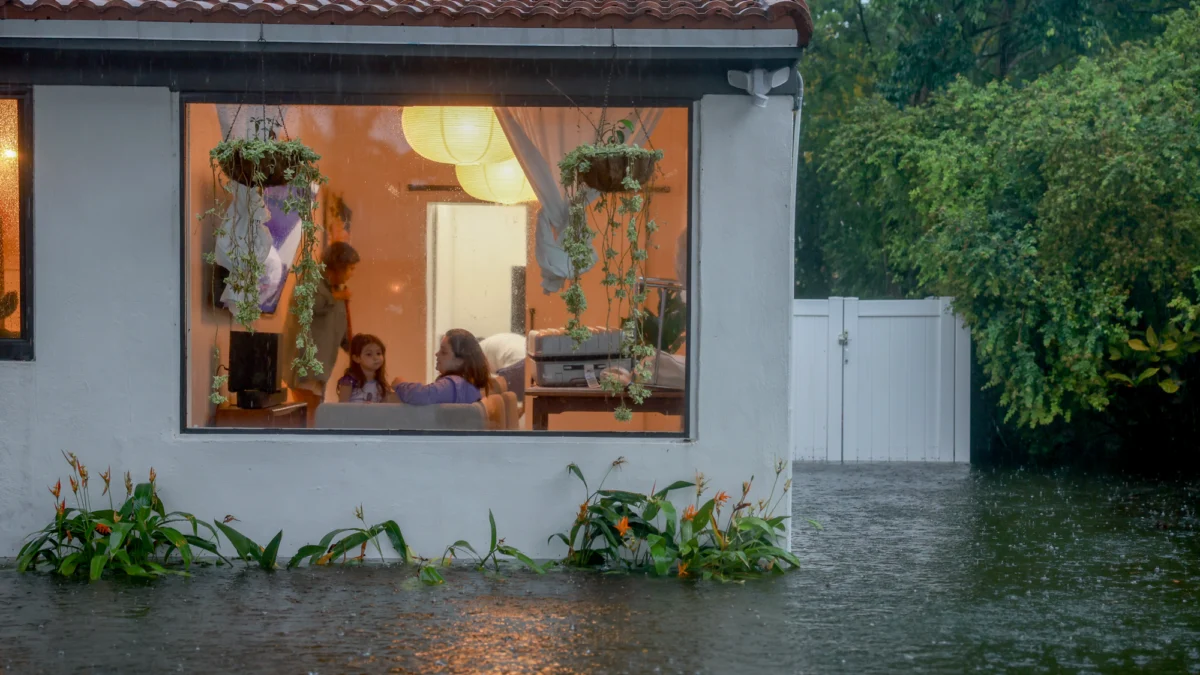
As the frequency and intensity of climate-driven disasters reach record highs, the American insurance landscape is undergoing a turbulent transformation. While rising premiums have become a generalized grievance across the nation, a recent report from the Consumer Federation of America (CFA) reveals a disturbing, systemic disparity: homeowners in predominantly Black and Hispanic communities are paying a significantly higher price for the same level of coverage as their peers in white neighborhoods.
This financial burden, often described as an "inadvertent" form of modern redlining, is creating a widening chasm in housing stability, threatening to erode the modest gains in minority homeownership and leaving vulnerable populations increasingly exposed to the mounting risks of a warming planet.
The Core Disparity: A Statistical Breakdown
The CFA’s comprehensive July 2026 report paints a stark picture of inequity. By analyzing identical insurance policies across diverse zip codes—effectively controlling for variables like home value, age, and individual creditworthiness—researchers isolated the "neighborhood effect" on premiums.
The findings are jarring: homeowners in predominantly Hispanic zip codes pay, on average, 30 percent more—equating to an extra $950 annually—than those in white communities. For Black households, the disparity is similarly concerning, with an average 16 percent increase in premiums, or $500 more per year.
Over the lifetime of a standard 30-year mortgage, these costs accumulate into a staggering financial penalty. For a Hispanic family, this amounts to at least $28,500 in additional insurance expenses; for a Black family, the figure is roughly $15,000. In an era where the dream of homeownership is already besieged by interest rates and supply shortages, these added costs represent a significant barrier to long-term wealth accumulation.
A Historical Echo: From Redlining to Algorithmic Bias
To understand the current crisis, one must look at the historical trajectory of American housing policy. For much of the 20th century, "redlining"—a federal practice that systematically denied mortgage lending to residents of minority neighborhoods—crippled the ability of Black and Hispanic families to build equity. While the Fair Housing Act of 1968 ostensibly ended these discriminatory practices, the structural echoes remain.
The modern version of this exclusion is less about explicit, ink-on-map discrimination and more about the opaque, "black box" nature of contemporary actuarial science. Insurers have increasingly turned to sophisticated, proprietary algorithms and artificial intelligence to assess risk. While industry leaders argue these models are "actuarially grounded," critics point out that they often utilize proxies for race—such as zip codes, credit scores, or neighborhood-level investment data—that disproportionately penalize communities of color.

For instance, the use of credit scores in determining insurance premiums imposes an average penalty of nearly $2,000 annually. Given that historical disinvestment has led to lower average credit scores in many minority communities, this practice acts as a multiplier of existing socioeconomic disadvantages. As Sharon Cornelissen, director of housing at the CFA and co-author of the report, noted: "A lot of this bias can kind of creep in if they’re not paying attention to potential unequal impacts. A lot of this could be through AI models or other factors that have a disproportionate impact on Black and Hispanic communities."
Geography of the Crisis: Where Disparities Peak
The impact of these policies is not uniform across the country; it is highly localized, often concentrated in states where climate risk is already a major political and economic flashpoint.
The Florida Paradox
In Florida, the epicenter of the nation’s insurance affordability crisis, the data is most alarming. Homeowners in predominantly Hispanic zip codes in the state pay an average of 58 percent more—or $5,014 annually—for the same coverage as their counterparts in white-majority areas.
The Midwestern and Northeast Divide
The disparity remains pronounced across the country, albeit with different demographic concentrations. In Michigan, the inequity for Black homeowners is the most extreme in the nation, with residents paying 74 percent more for insurance coverage than those in white zip codes. Pennsylvania follows closely with a 57 percent gap. In New York, Massachusetts, and Kansas, the premiums continue to trend higher for minority-majority neighborhoods, signaling a systemic issue that transcends regional climate profiles.
Industry Defense: The Actuarial Argument
The insurance industry maintains that its pricing models are strictly regulated and devoid of racial bias. Mark Friedlander, a spokesperson for the Insurance Information Institute (III), emphasizes that premiums are tethered to the physical risks of the property and the surrounding area.
"Using race, or any proxy for race, to set insurance rates is illegal in every US jurisdiction, and state insurance regulators review and approve the rating factors insurers use precisely to guard against that," Friedlander stated. He argues that many of the communities cited in the report are located in areas with "objectively higher catastrophe exposure" or higher costs to repair aging infrastructure.
From the industry perspective, the solution is not to investigate the racial impact of their algorithms, but to focus on "resilience efforts"—strengthening building codes, improving zoning, and increasing government-backed mitigation funding to lower the physical risk profile of these neighborhoods.

The Human Toll and Economic Implications
The debate over actuarial methodology often obscures the human reality. For many families, an additional $500 to $1,000 in annual insurance premiums is the difference between keeping a home and facing foreclosure.
Moira Birss, a senior fellow at the Climate and Community Institute, views this as a matter of fundamental justice. "When we’re thinking about how we’re having an affordability crisis in this country… that’s unconscionable," she says.
The financial drain on these communities has a cascading effect. When families are forced to divert income to cover inflated insurance premiums, they have less to invest in home maintenance, energy efficiency upgrades, or emergency savings. This leaves their homes more vulnerable to the very climate disasters that insurers cite as the reason for the high rates, creating a "doom loop" of rising costs and deteriorating housing stock.
Looking Forward: The Call for Transparency
The report concludes with a clarion call for state and federal intervention. Currently, the "proprietary" nature of insurance rating models acts as a shield against public scrutiny. The CFA is calling for:
- Increased Regulatory Transparency: States must mandate that insurance companies disclose how their algorithms and AI models weigh specific variables, ensuring that race-based proxies are not influencing outcomes.
- Enforcement of Fair Housing Laws: State regulators should be tasked with performing "disparate impact" analyses on insurance rates, mirroring the scrutiny applied to mortgage lending.
- Accountability for "Inadvertent" Bias: Even if discrimination is not intentional, its effect remains discriminatory. The industry must be held accountable for the real-world outcomes of its automated models.
"Unless the insurance industry wants to give us more information about why this is happening," says Birss, "it’s pretty hard not to interpret this as pretty serious racial discrimination."
As the United States grapples with the long-term impacts of climate change, the insurance industry is positioned as the primary gatekeeper of property security. If the current trajectory continues, the gap between those who can afford the safety of insurance and those who are priced out will be drawn along the same lines of race and class that have defined American history for decades. Whether the regulatory system can pivot to address this "hidden tax" will determine if the next generation of American homeowners can weather the coming climate storms—or if they will be left to face them entirely on their own.
About the Author