For 13 years, the name Keith Rabois has been synonymous with the gilded geography of Silicon Valley’s Sand Hill Road. As a key partner at Khosla Ventures, Rabois has operated from the epicenter of venture capital, the Menlo Park corridor that serves as the de facto headquarters for the global tech ecosystem. However, in a move that signals a significant shift in the gravitational pull of the American venture capital landscape, Khosla Ventures is officially crossing the continent.
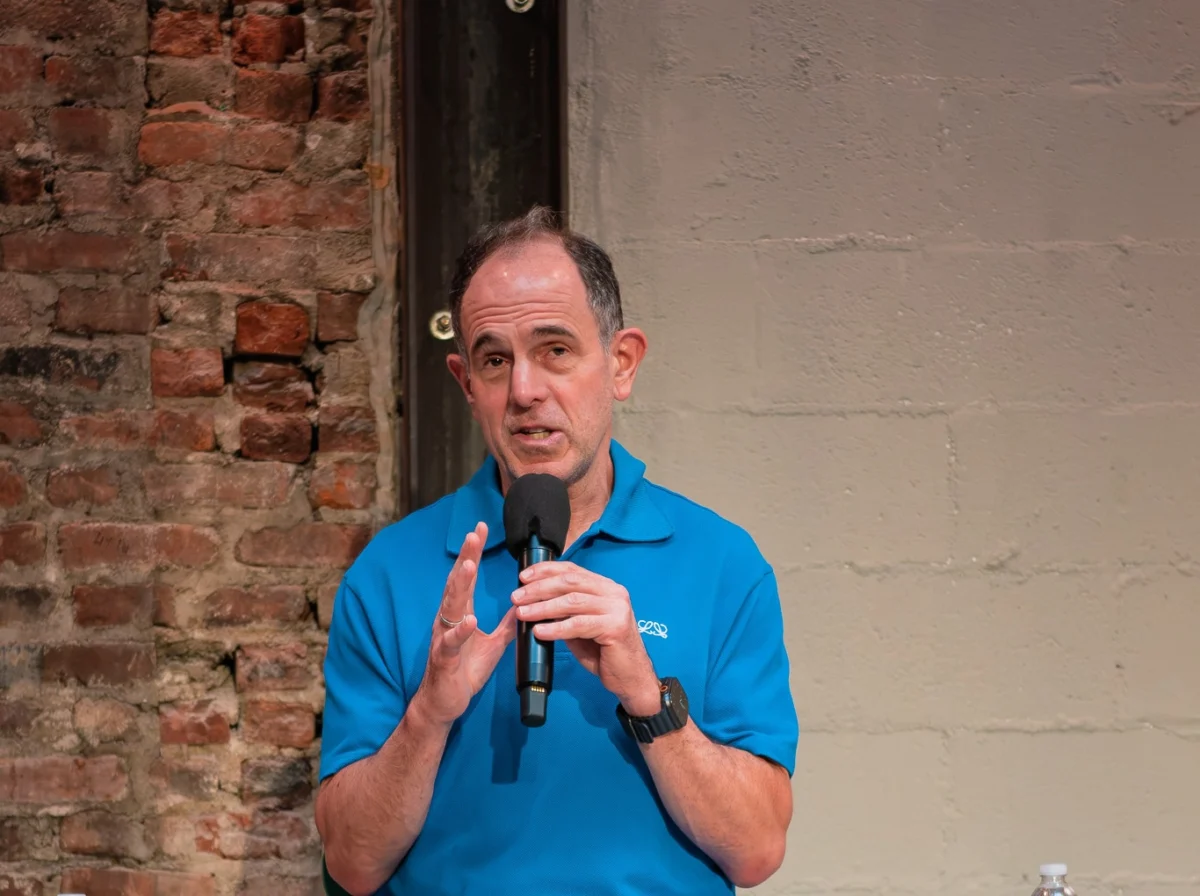
Speaking at TechCrunch’s StrictlyVC event in New York City’s West Village, Rabois confirmed that the firm is establishing its first-ever office outside the San Francisco Bay Area. Located on 14th Street in Manhattan, the new outpost is slated to open its doors this fall, marking a historic departure for a firm that has historically eschewed even a formal office presence in San Francisco, let alone across the country.
The Chronology of a Strategic Pivot
The decision to open a New York office is not merely an exercise in corporate expansion; it is a response to the evolving personal and professional landscape of the firm’s leadership.
The timeline of this shift began with a personal relocation: earlier this year, Rabois moved to the East Coast to be closer to his family, including his husband, Jacob Helberg, who serves as the Under Secretary of State for Economic Growth, Energy, and the Environment, and their children based in Washington, D.C. While the move was initially personal, it quickly became a catalyst for a larger strategic realignment.
The firm’s construction process for the new space is currently underway, though Rabois—a veteran of the tech industry’s often-optimistic construction timelines—remains cautiously realistic. "It’s actually allegedly being built out now," Rabois told attendees at the West Village event. "We’ll see. This fall opening date is very vague in my mind."
The "Executive Briefing Center": A New Model for Value Creation
The most innovative aspect of the New York office is not its geography, but its utility. Unlike traditional venture offices designed primarily for internal meetings and administrative tasks, the 14th Street location will house an "executive briefing center."
This facility is designed to solve a perennial problem for early-stage startups: access to enterprise-scale customers. Rabois outlined a plan to host 10 to 12 portfolio companies at a time for deep-dive sessions with Fortune 500 executives, four days a week.
"The portfolio companies love this," Rabois explained. "They get pilots and customers, and so it’s going to be a very vibrant office because of that." By positioning the firm as a bridge between high-growth technology disruptors and established legacy corporations, Khosla Ventures is attempting to manufacture the "serendipity" that is often cited as the primary advantage of physical proximity in Silicon Valley.
The Talent Paradox: New York vs. The Bay Area
The announcement of a New York office naturally begs the question: Can the Big Apple compete with the Bay Area’s legendary density of technical talent? According to Rabois, the answer depends entirely on the level of the talent being recruited.
Junior Talent: The New York Advantage
Rabois is emphatic about the strength of New York’s pipeline for early-career professionals. He points to the fintech firm Ramp, a company he has backed extensively, as a case study. "Individual contributor level, right out of school, absolutely," he said. "We’ve been tapping into right-out-of-school graduates and been able to create a critical density of talent from the intern class onward that is extraordinary." For companies looking to build from the ground up, New York provides a robust, highly skilled, and readily available pool of talent.
The Senior Engineer and Executive Hurdle
However, the narrative shifts when discussing senior technical and executive leadership. "Senior engineers, architect-level—no, I think that’s a challenge," Rabois admitted. He noted that the modern era might require fewer of these high-level architects per company than historically necessary, which may mitigate the difficulty, but the recruitment of senior executives remains a significant pain point.
The primary obstacle is not the supply of talent, but the logistics of urban living. Rabois, who grew up in a New York commuter suburb, notes that the "in-office culture" remains a friction point for senior executives with families. "If you have an in-office culture, most of the more senior people that live and reside in the New York area live outside the city, and the commute in and out of the city for an office environment can be very painful," he explained. "When you need to recruit proven executive talent, and you really believe in an in-office culture, [that has] been very challenging."
Ramp’s solution, according to Rabois, has been to circumvent the executive recruitment market entirely. "We don’t hire senior people. We just build from the bottom up, ground up," he said. While this strategy has worked for the last three years, he acknowledges its limitations. "If you need a CFO, a SVP of sales, someone who’s got a lot of gravitas and experience, it’s really hard to have them in the office five days a week, because unless they’re very independently wealthy, they really can’t afford to raise a family right in the middle of the city."
Industry Implications and the Changing Landscape
Khosla’s move puts it in a small, albeit growing, club of Bay Area firms establishing an East Coast presence. While legacy firms like Sequoia Capital and Andreessen Horowitz have maintained New York offices for years, these have traditionally been modest outposts. The scale of the Khosla project—specifically the focus on a high-frequency briefing center—suggests a more aggressive commitment to the New York ecosystem.
This shift coincides with a landmark report from CBRE released last month, which found that New York has narrowly overtaken the San Francisco Bay Area in total tech talent headcount for the first time in the 13 years the firm has tracked the data. This development is largely attributed to finance and legacy firms aggressively recruiting for AI talent, even as traditional Bay Area tech giants have undergone cycles of layoffs and restructuring.
However, the industry remains skeptical. The reaction from the audience at StrictlyVC was telling; when the CBRE data was mentioned, one attendee remarked, "I heard about that study. I don’t buy it."
This skepticism reflects the deep-seated identity of the Bay Area as the singular home of innovation. Yet, for firms like Khosla, the decision is less about replacing the Bay Area and more about acknowledging a multi-polar tech reality. As the lines between "tech" and "finance" continue to blur—particularly with the rise of AI—the geographic necessity of being where the capital and the clients reside is driving a new chapter in venture capital history.
Conclusion: A New Frontier for Venture Capital
The establishment of Khosla Ventures’ New York office is a watershed moment that acknowledges a fundamental shift in the industry. By placing a significant bet on Manhattan, the firm is not just following the migration of its partners; it is positioning itself to capture the next wave of corporate digital transformation.
While the challenges of recruitment for senior roles and the logistical realities of the NYC commute persist, the firm’s strategy of building an executive briefing center suggests a forward-thinking approach to the value-add model of venture capital. Whether New York can eventually match the density and the "special sauce" of Silicon Valley remains an open debate, but for the first time in over a decade, the conversation has officially shifted away from Sand Hill Road. As the industry watches the construction on 14th Street, it is clear that the future of venture capital may be defined not by where it started, but by its ability to adapt to a changing global map.
About the Author