In a significant leap forward for heavy-duty electrified transport, energy giant Shell and Chinese automotive powerhouse FAW Trucks have unveiled a collaborative breakthrough in battery thermal management. The two companies have successfully developed and validated an immersion-cooling battery system designed to overcome the persistent challenges of heat dissipation in commercial vehicles. By utilizing an electrically insulating fluid that directly surrounds battery cells, the technology promises to redefine the limits of vehicle performance, charging speed, and overall battery longevity.
As the global logistics industry pushes toward decarbonization, the demand for more robust and efficient battery technology has never been higher. This partnership, born from the Shell Starship program, offers a glimpse into a future where heavy-duty hybrid trucks can operate under extreme stress without the performance degradation typically associated with conventional battery cooling methods.
The Core Innovation: Moving Beyond Traditional Cooling
For decades, battery thermal management in electric and hybrid vehicles has relied primarily on indirect cooling methods. Standard configurations typically involve cooling plates attached to the bottom or sides of battery modules, which move heat away from the cells through conduction. While effective for light-duty passenger vehicles, this approach often falls short in the commercial sector.
Heavy-duty trucks face intense operating cycles, including heavy hauling, frequent rapid acceleration, and high-power charging—all of which generate significant thermal stress. When cells reach uneven temperatures or overheat, the result is often "thermal throttling," where the system restricts power output to protect the battery, thereby reducing efficiency.
The solution pioneered by Shell and FAW is "immersion cooling." In this system, the battery cells are submerged in a specially engineered, electrically insulating fluid. Because the fluid is in direct contact with the surface of every cell, it provides superior heat transfer compared to solid cooling plates. This allows for a more uniform temperature distribution across the entire pack, preventing "hot spots" and ensuring that the battery operates within its ideal thermal window regardless of the load or the intensity of the power draw.
Chronology: A Collaborative Path to Innovation
The development of this technology did not happen in a vacuum; it is the culmination of years of targeted research under the umbrella of the Shell Starship program. The program serves as a sandbox for testing cutting-edge technologies aimed at increasing commercial vehicle efficiency and lowering emissions.
- Foundation Phase: The partnership between Shell and FAW Trucks was established to bridge the gap between advanced fluid chemistry and large-scale vehicle engineering. Shell provided the expertise in thermal management fluids, while FAW contributed its deep knowledge of commercial chassis design and heavy-duty drivetrain integration.
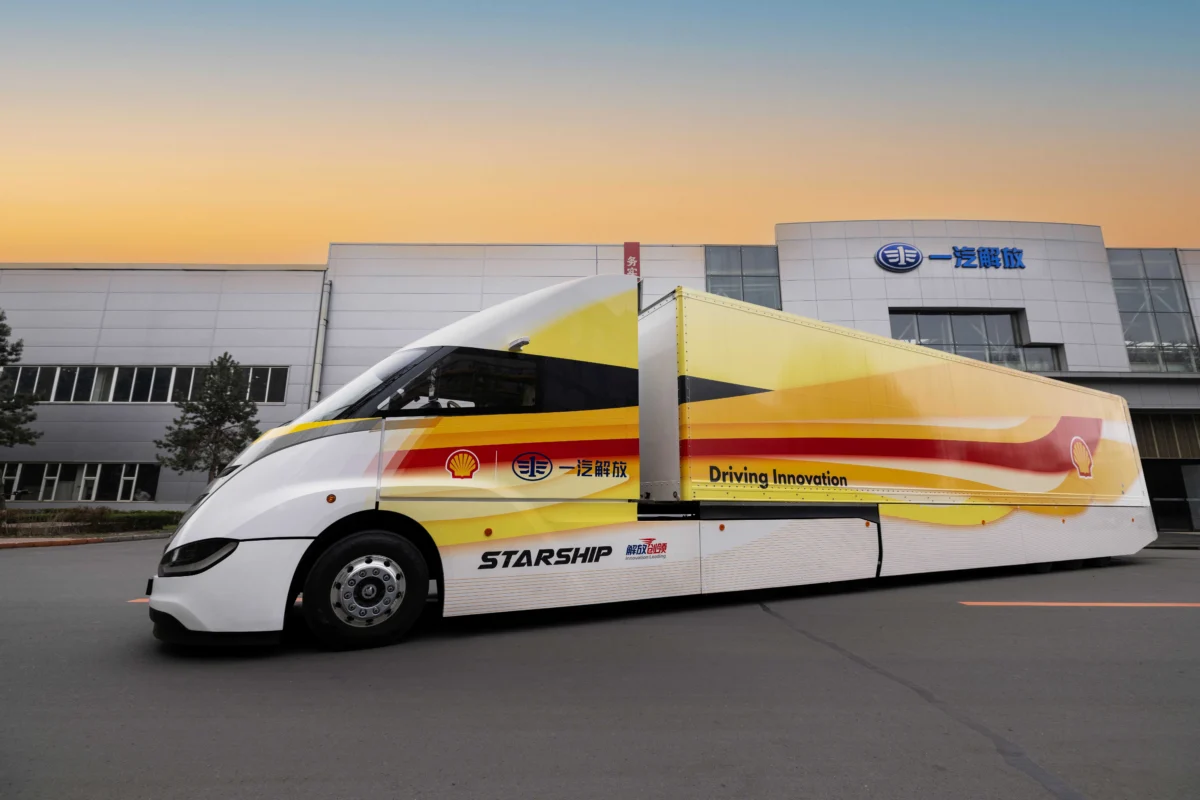
- Concept Development: The teams focused on the "Starship 3.0 Hybrid," a demonstration platform designed to push the boundaries of what is possible in commercial hybrid powertrains.
- Validation Trials: Over the past several months, the integrated battery pack underwent rigorous testing under simulated real-world conditions. These tests focused on sustained high-power charging and discharging—scenarios that typically push standard batteries to their thermal limits.
- Independent Verification: To ensure the credibility of the findings, the data was submitted to the China Automotive Technology and Research Center (CATARC). The center verified the test results, providing an objective endorsement of the technology’s performance claims.
- The Path Forward: The companies are now transitioning from the validation phase toward evaluating the potential for integrating this technology into future FAW hybrid production lines. The official public showcase is slated for the IAA Transportation 2026 event in Hannover, Germany.
Supporting Data: Quantifying the Performance Gains
The technical results of the immersion-cooling trials are striking, suggesting that this method could be a transformative upgrade for the logistics industry. According to data released by Shell, the immersion-cooled battery pack demonstrated clear advantages over traditional cooling systems in three key metrics:
1. Enhanced Gradability
One of the most impressive findings was an up to 98% increase in maximum gradability. For a heavy-duty truck, the ability to climb steep inclines while fully loaded is a critical performance metric. By maintaining the battery at an optimal temperature, the system can sustain the high power output required for steep climbs without hitting thermal safety cut-offs.
2. Energy Efficiency Gains
Vehicle-level energy efficiency saw a measured improvement of 0.8%. While this may seem like a marginal percentage, in the world of long-haul logistics—where fleets operate millions of miles annually—a sub-1% improvement in efficiency translates into massive operational savings and a significant reduction in the total carbon footprint of the fleet.
3. Extended Battery Life
Perhaps the most critical data point for fleet operators is the 32% potential improvement in battery life. Battery degradation is the single largest cost factor in the lifecycle of an electric vehicle. By keeping the cells in a consistent, cool environment, the immersion-cooling system effectively slows the chemical aging process of the battery, potentially allowing fleets to run vehicles for longer periods before requiring expensive battery replacements or reconditioning.
Official Perspectives: The Role of Strategic Partnership
The collaboration is viewed by both organizations as a blueprint for how energy companies and OEMs (Original Equipment Manufacturers) must work together to solve the complex problems of the energy transition.
"As commercial vehicles continue to evolve, so do the technologies needed to support them," noted Cara Tredget, vice president of Mobility & Lubricants Technology at Shell. "By working closely with OEMs like FAW Trucks, we’re developing advanced fluid solutions designed to support evolving vehicle technologies, including electrification powertrains and thermal management systems."
Tredget emphasized that the Shell Starship program acts as a tangible proof-of-concept for industry stakeholders. "The Shell Starship Hybrid vehicle demonstrates what’s possible when collaboration and innovation come together," she added.
For FAW Trucks, the partnership is a strategic alignment that leverages Shell’s chemical expertise to solve mechanical limitations. By embedding fluid-based cooling into the heart of the battery design, FAW is positioning itself to be at the forefront of the next generation of hybrid heavy-duty transport, where the goal is to match the power and endurance of diesel engines with the efficiency of electric powertrains.
Implications for the Future of Freight
While the results are promising, it is important to note that this technology is currently at the validation stage and has not yet been integrated into a commercial production fleet. The move from a concept vehicle to a mass-produced truck involves significant hurdles, including manufacturing scalability, cost-benefit analysis for fleet owners, and long-term maintenance protocols for specialized fluids.
However, the implications of this technology are vast:
- Charging Infrastructure: If batteries can be cooled more effectively, they can handle higher-power charging sessions for longer durations without damage. This could drastically reduce downtime at charging hubs, a primary pain point for the logistics sector.
- Design Freedom: Because immersion cooling is so efficient, manufacturers may be able to design more compact battery packs that deliver the same power as larger, less efficient packs, effectively reducing the weight of the truck and increasing cargo capacity.
- Hybrid Versatility: For hybrid trucks, which balance internal combustion engines with electric motors, this technology allows the electric portion of the drivetrain to do more heavy lifting, making the hybrid system more effective and reducing reliance on the combustion engine.
As we look toward the IAA Transportation 2026 expo in Hannover, the industry will be watching closely to see if the Shell and FAW collaboration can successfully transition from the test track to the highway. If successful, the era of "immersion-cooled" freight could fundamentally alter the economics of heavy-duty transport, providing a cleaner, more efficient, and more durable path for the movement of global goods.
For now, the project stands as a testament to the power of cross-industry collaboration. By focusing on the microscopic interactions between battery cells and cooling fluids, Shell and FAW are tackling the macro-level challenge of sustainable global logistics, one degree at a time.
About the Author