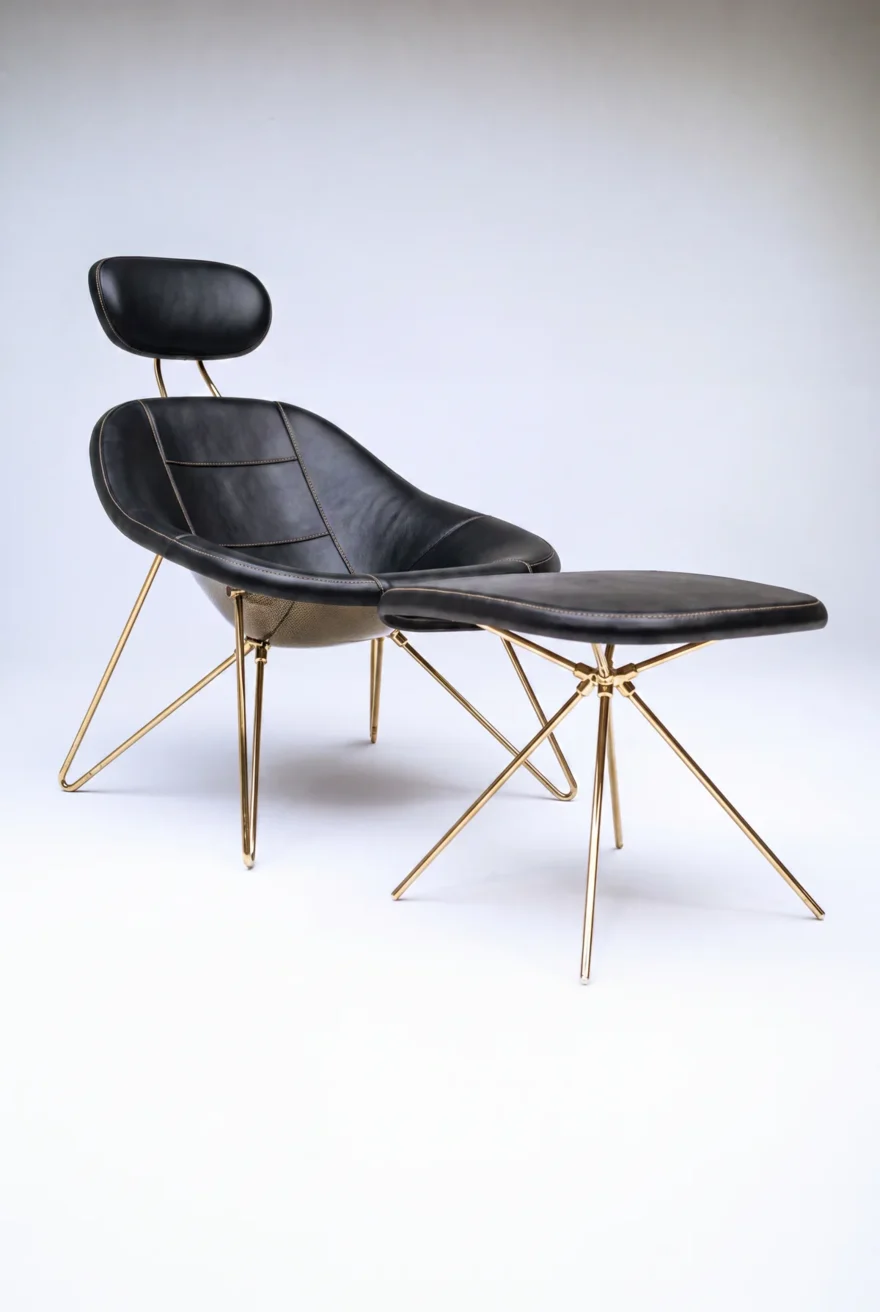
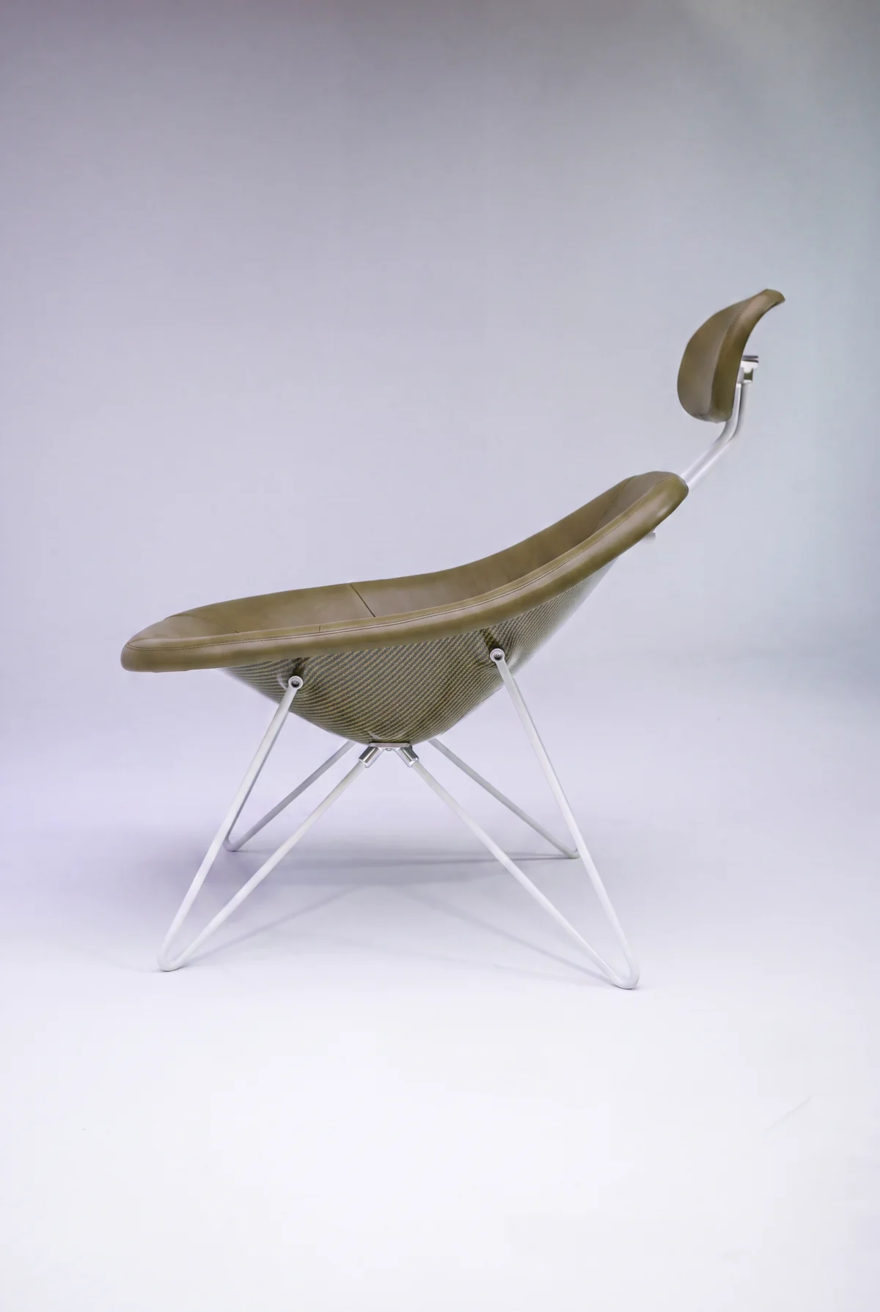
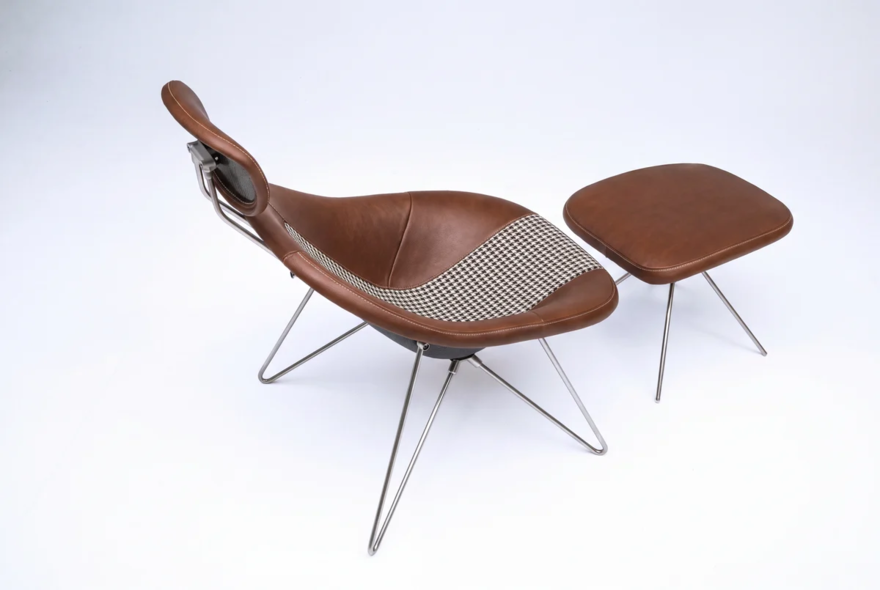
At first glance, the profile of the Maniac Chair evokes the familiar, sweeping curves of mid-century modernism. It suggests a piece of furniture that might have graced a high-end architectural catalog in 1950s Scandinavia—a nod to the organic minimalism championed by Eames or Jacobsen. However, a closer inspection reveals that this is no vintage relic. The textures are too precise, the rigidity too absolute, and the materials altogether alien to the era of wood and molded plywood.
The Maniac Chair is a bold collision between the world of bespoke automotive engineering and high-end residential design. Created by Oilstainlab, the California-based design house famous for its low-volume HF-11 hypercar, the chair serves as a functional bridge between the racetrack and the living room. It is a piece of furniture engineered with the same obsessive rigor as a road-legal race car, pushing the boundaries of what domestic seating can achieve when stripped of convention and rebuilt with carbon fiber.
Main Facts: A Study in Automotive DNA
The Maniac Chair is the flagship offering from House D’ Stains, the lifestyle brand associated with Oilstainlab. Unlike mass-produced furniture, the Maniac is built to order, functioning less like a retail product and more like a commission for a custom vehicle.
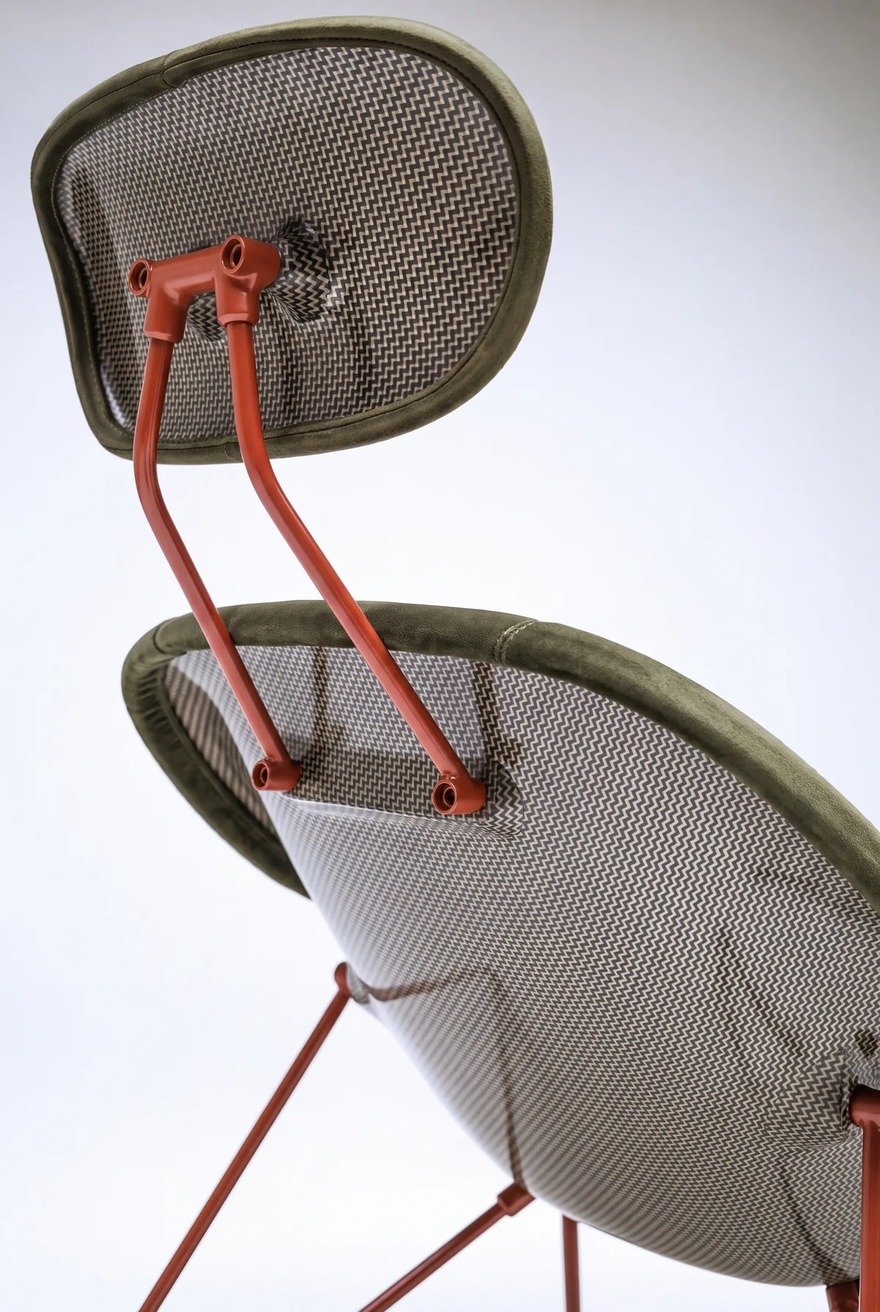
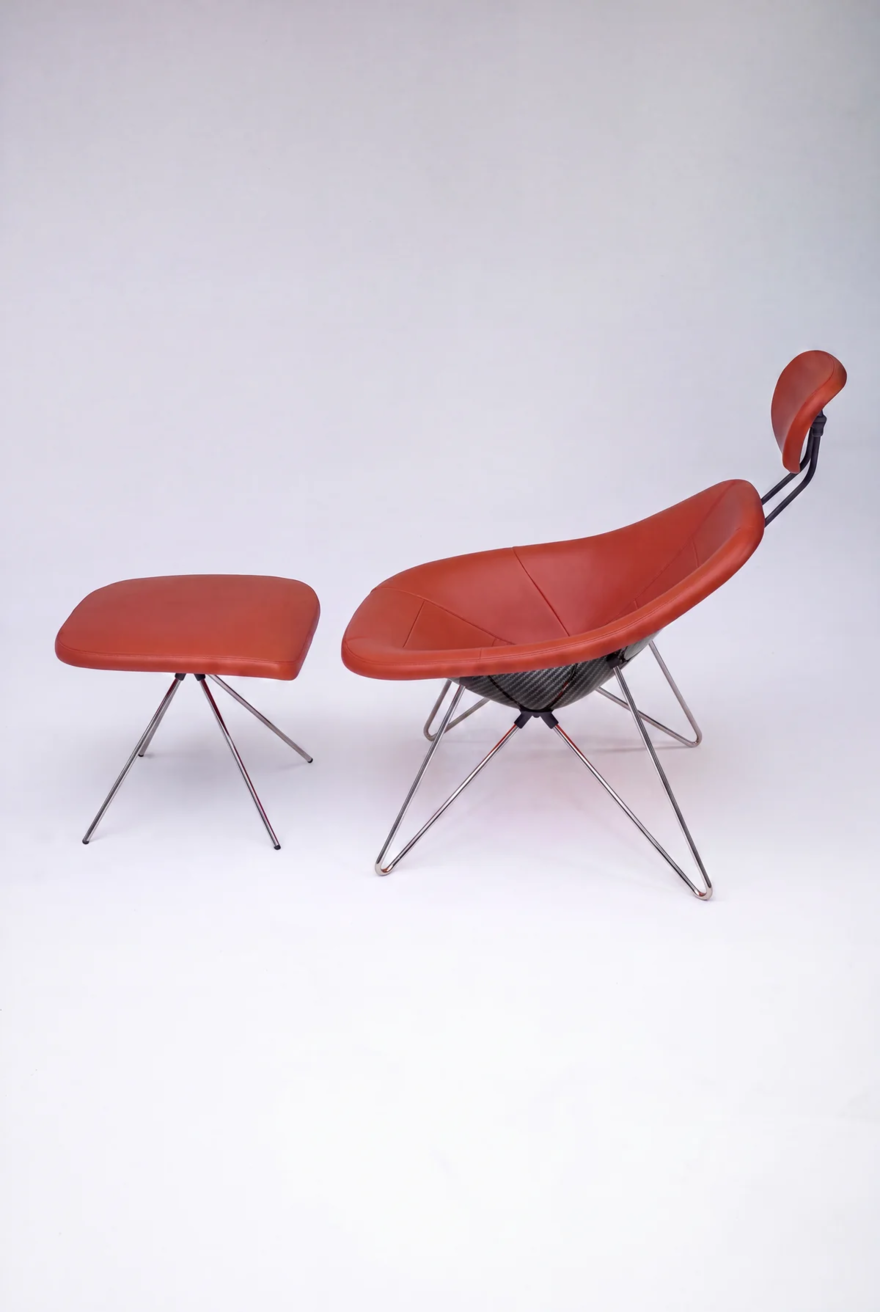
The structural core of the chair consists of a CNC-machined aluminum frame, which provides the necessary rigidity and mounting points for its complex geometry. This skeleton is then clad in a hand-laid carbon fiber shell. The result is a piece of furniture that is startlingly lightweight yet incredibly durable—a direct inheritance from the chassis development of the HF-11 hypercar.
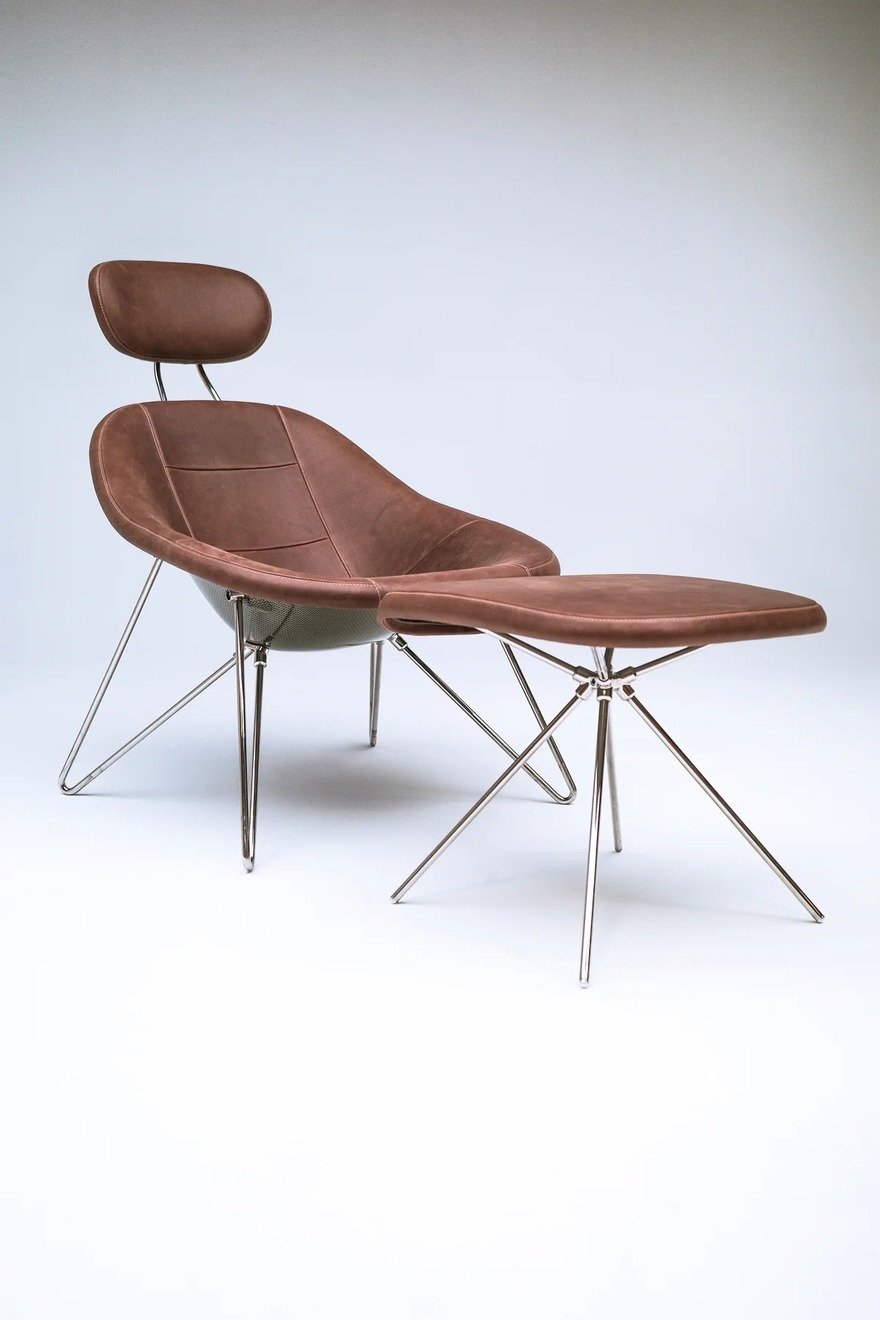
By utilizing high-performance composites, Oilstainlab has managed to create a silhouette that feels impossibly thin and light, yet offers the structural integrity of a performance machine. It is not merely "inspired" by cars; it is manufactured using the same industrial processes, tolerances, and material ethics as the vehicles that share its name.
Chronology: From the Track to the Living Room
To understand the Maniac Chair, one must understand the evolution of Oilstainlab. Founded by Nikita and Iliya Bridan, the outfit emerged as a disruptive force in the automotive world with the HF-11. The brothers, both automotive designers with pedigrees in major OEM studios, sought to create a car that prioritized the "analog" driving experience—a machine that felt alive, lightweight, and visceral.
During the development of the HF-11, the design team spent countless hours prototyping lightweight structures and ergonomic driver positions. The realization occurred that the same design language—a focus on extreme weight reduction, structural exposure, and minimalist luxury—could be applied to the domestic environment.
The transition from car to chair was not an afterthought but a deliberate exploration of "automotive furniture." In early 2024, as the HF-11 began to gain traction in the collector car community, House D’ Stains began teasing the Maniac Chair. The design was finalized through a series of iterative digital models, ensuring that the transition from a racing bucket seat to a lounge chair maintained the ergonomic comfort required for long-term sitting without sacrificing the aggressive, industrial aesthetic that defines the brand.
Supporting Data: Engineering the Maniac
The technical specifications of the Maniac Chair read more like a spec sheet for a track-day special than a furniture catalog.
The Material Palette
- Carbon Fiber: Each shell is hand-laid, ensuring optimal fiber orientation for maximum strength-to-weight ratio. The weave is exposed, showcasing the material’s inherent texture, which acts as the chair’s primary visual "upholstery."
- CNC-Machined Aluminum: The frame is milled from solid billet, ensuring that every bolt, joint, and pivot point meets aerospace-grade tolerances.
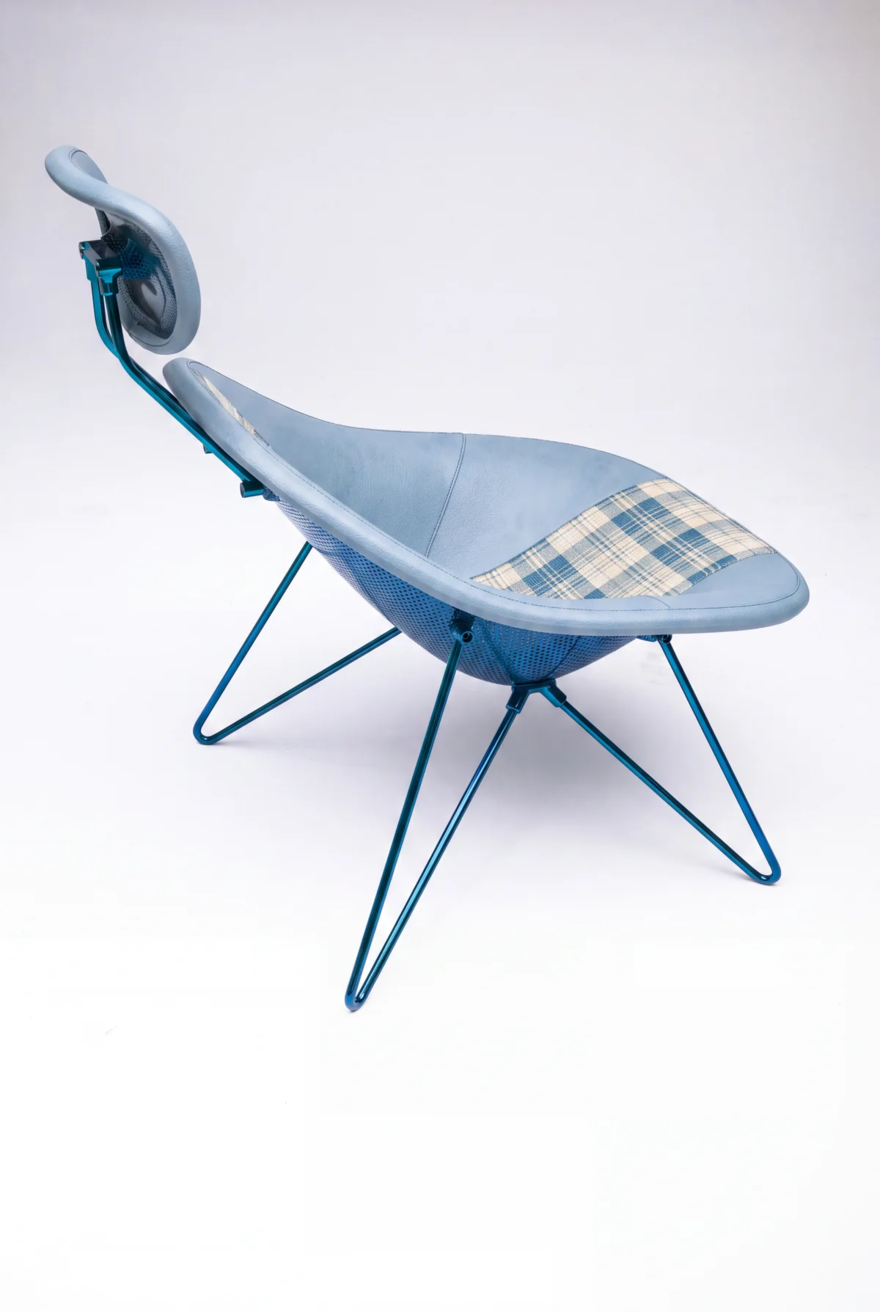
- Bespoke Textiles: Recognizing that the chair is intended for a living space, the brand offers a variety of "trim levels." Clients can select from premium automotive-grade leathers, Alcantara, or technical fabrics, all of which are sourced from the same suppliers that provide materials for high-end vehicle interiors.
Ergonomics and Modularity
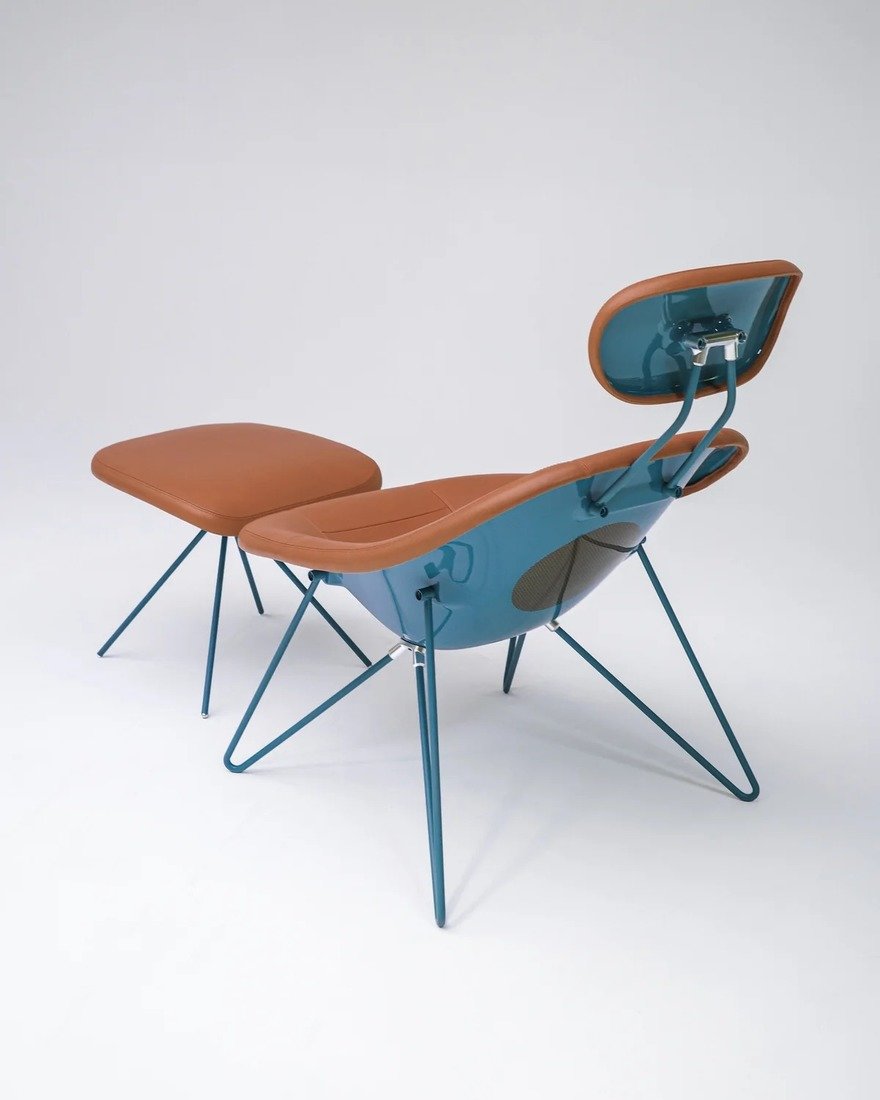
The chair’s design is inherently modular. It can be ordered in various configurations, including an optional headrest and a companion ottoman. This modularity allows the owner to tailor the experience to their specific physical needs and the spatial constraints of their home. Whether the client wants an upright, supportive task chair or a deep, reclined lounge experience, the Maniac’s geometry can be adjusted through its various assembly options.
Official Perspectives: The Philosophy of Oilstainlab
The founders of Oilstainlab, the Bridan brothers, have often described their design process as "unapologetic." In discussions surrounding the launch of the Maniac Chair, they emphasized that they did not want to create furniture that simply "looked" like a car; they wanted to create furniture that embodied the ethos of car culture.
"We wanted to build something that felt like it belonged in a garage, but looked like it belonged in a gallery," says the team. This duality is central to their mission. By blurring the line between a product and a sculpture, Oilstainlab challenges the conventional furniture market, which they view as often being too conservative and reliant on traditional materials like wood and steel.
Their approach to the Maniac is grounded in the belief that "the driver’s seat is the most important part of a car." By extending that logic to the home, they are inviting the owner to treat their leisure time with the same focus and intensity as a driver approaching a hairpin turn. It is about the tactile sensation of the material—the cool touch of the aluminum frame, the stiffness of the carbon shell, and the precision of the stitching.
Implications: The Future of "Automotive Furniture"
The arrival of the Maniac Chair signals a larger trend in design: the "cross-pollination" of luxury sectors. As high-end automotive brands like Porsche, Ferrari, and now boutique hypercar makers like Oilstainlab expand their reach into lifestyle products, the definition of home luxury is shifting.
A Shift in Industrial Aesthetics
Furniture has historically been defined by organic materials—wood, cotton, wool, leather. The Maniac Chair, by contrast, celebrates the "synthetic." It marks a transition toward an aesthetic that finds beauty in industrial processes. This is not just a trend; it is a fundamental shift in how we perceive value. In the past, value was derived from the rarity of wood grain or the labor-intensive nature of hand-carved joinery. Today, for a new generation of collectors, value is derived from the complexity of CNC milling and the performance characteristics of carbon fiber.
The Collector’s Market
The Maniac Chair is positioned firmly within the luxury collector’s market. Because each piece is bespoke—with clients choosing their own "trim levels" and color palettes—it serves as a status symbol that bridges the gap between gearheads and design aficionados. This exclusivity is deliberate. By limiting production and ensuring that no two chairs are identical, Oilstainlab has created a piece that is likely to appreciate in value, much like the hypercars that inspired it.
Sustainability and Durability
While carbon fiber is often criticized for its environmental impact, the longevity of the Maniac Chair offers a different perspective on sustainability. By creating a product that is designed to last a lifetime—and is modular enough to be repaired or updated as parts wear out—Oilstainlab argues for a "buy it once" philosophy. In an era of disposable, flat-pack furniture, the Maniac is an outlier, built for a permanence that defies the modern trend of planned obsolescence.
Conclusion: A New Standard for the Modern Interior
The Maniac Chair by Oilstainlab is more than a place to sit; it is a manifestation of the modern obsession with performance and precision. By stripping away the domestic cliches of traditional furniture design, the team has delivered a product that feels both futuristic and fundamentally honest.
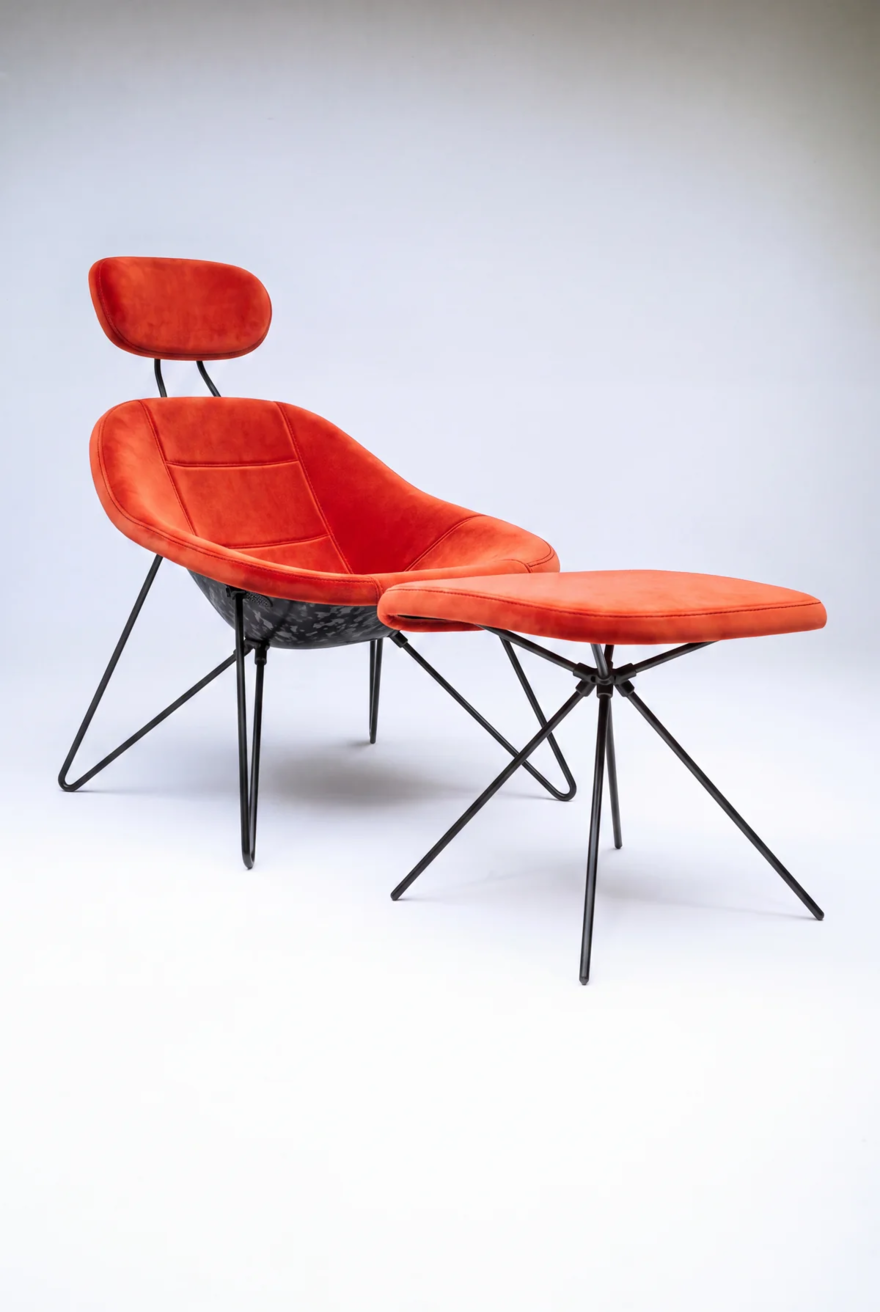
It is a testament to what happens when designers stop thinking about "home decor" and start thinking about "chassis architecture." Whether placed in a minimalist loft or a high-end garage, the Maniac Chair commands attention not because it is loud, but because it is technically superior to almost everything else in the room. As Oilstainlab continues to refine its design language, the Maniac stands as a hallmark of their early success—a bold statement that the future of interior design is, quite literally, being forged in the same furnaces as the fastest cars on earth.
About the Author