In the complex ecosystem of medical device manufacturing, the path from prototype to market is rarely a straight line. For startups aiming to innovate in the mobility space, the journey is often paved with the rigid, high-stakes requirements of the U.S. Food and Drug Administration (FDA). In the United States, power-driven wheelchairs are classified as Class II medical devices—a category that places them in the same regulatory oversight tier as infusion pumps, surgical sutures, and advanced X-ray systems. This classification necessitates rigorous clinical validation, safety testing, and a bureaucratic marathon that can stifle even the most promising technological breakthroughs.
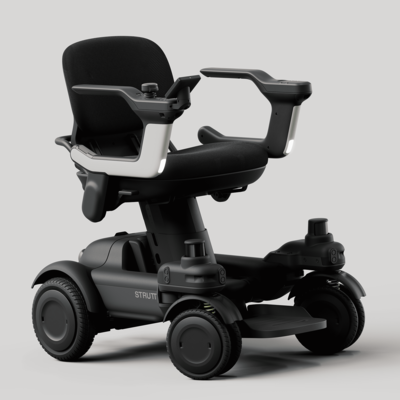
However, a Singaporean startup named Strutt has taken a provocative, unconventional approach to this barrier: they have simply opted out of the "wheelchair" label entirely. By marketing their flagship product, the Strutt ev¹, as a "smart everyday vehicle" rather than a medical device, the company has bypassed years of regulatory red tape to bring a high-tech mobility solution directly to consumers.
The Technical Breakdown: A New Class of Mobility
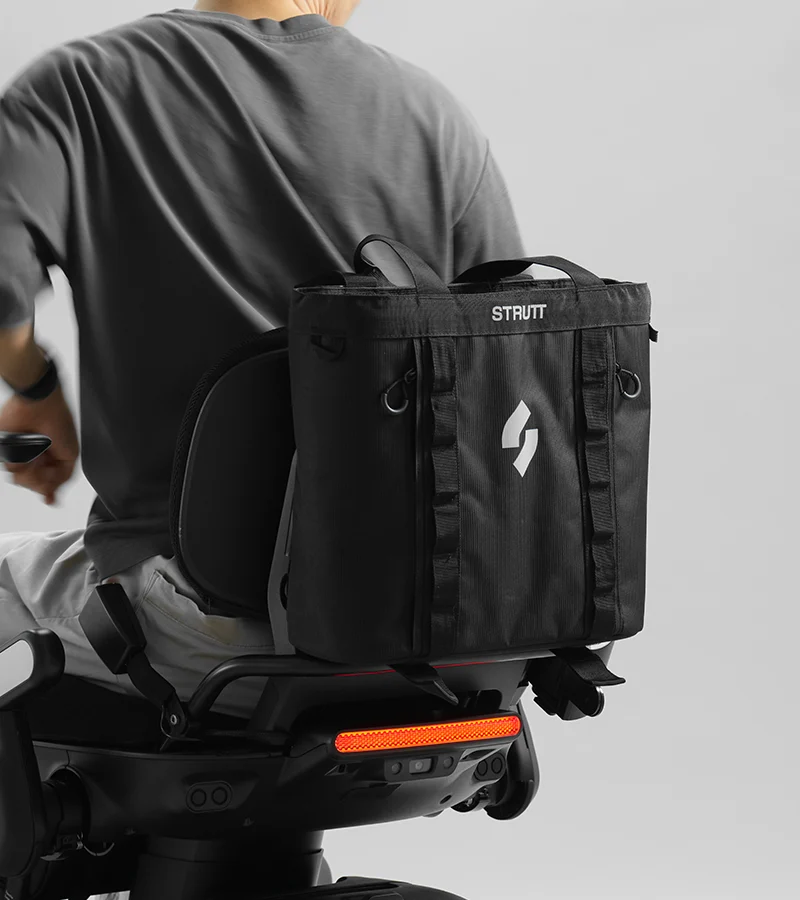
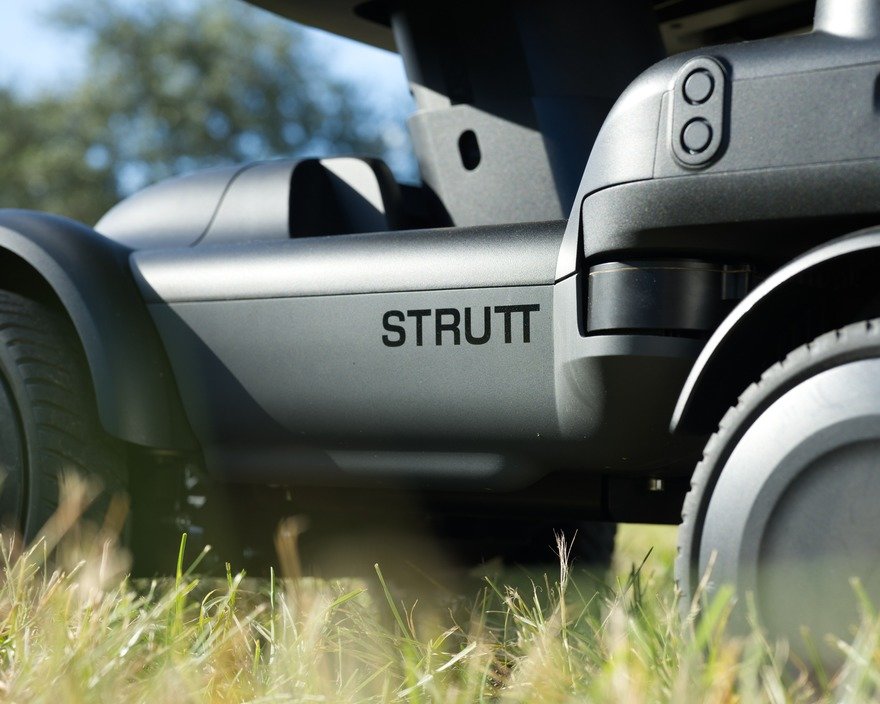
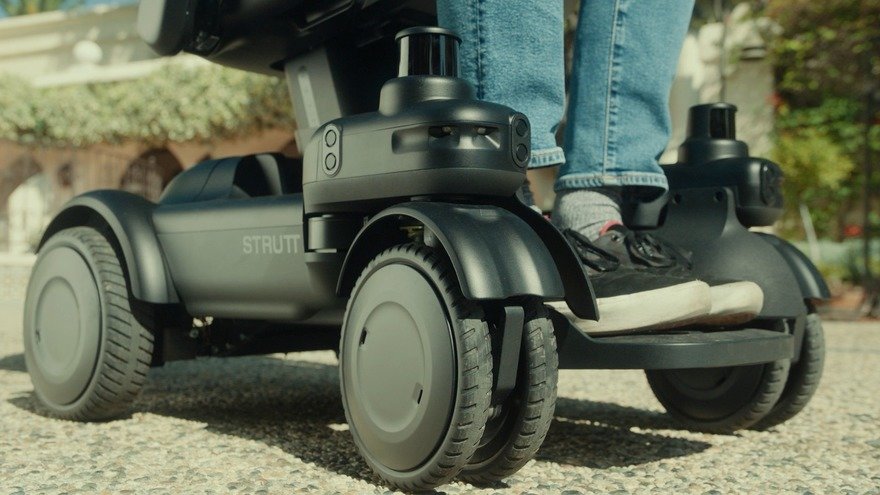
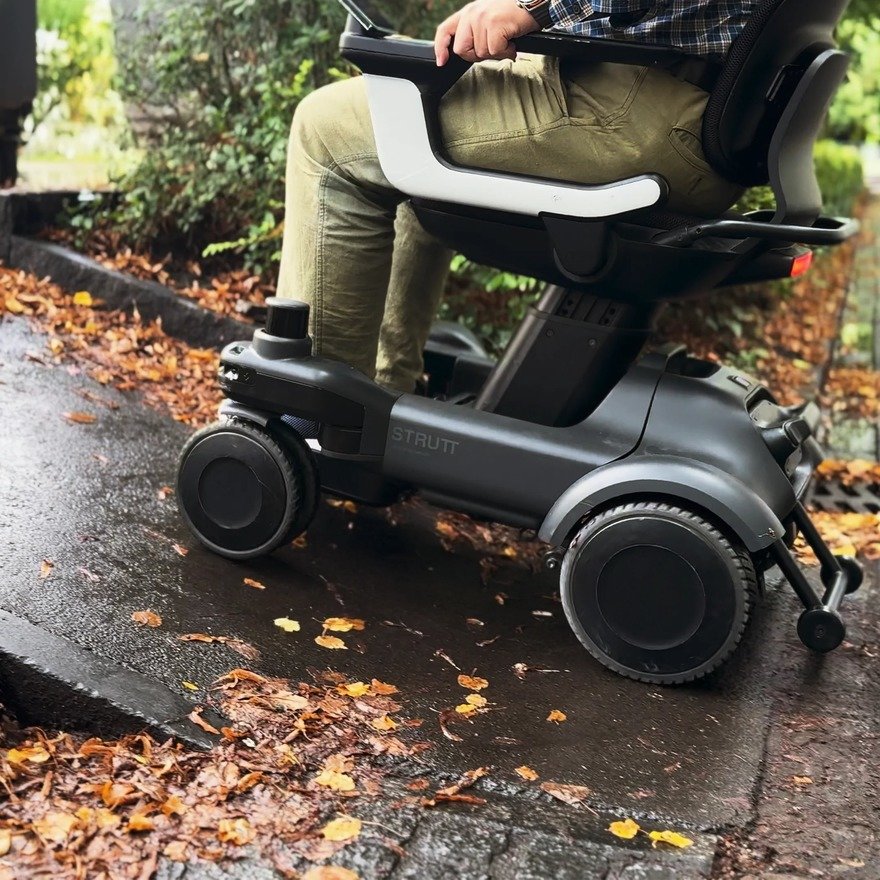
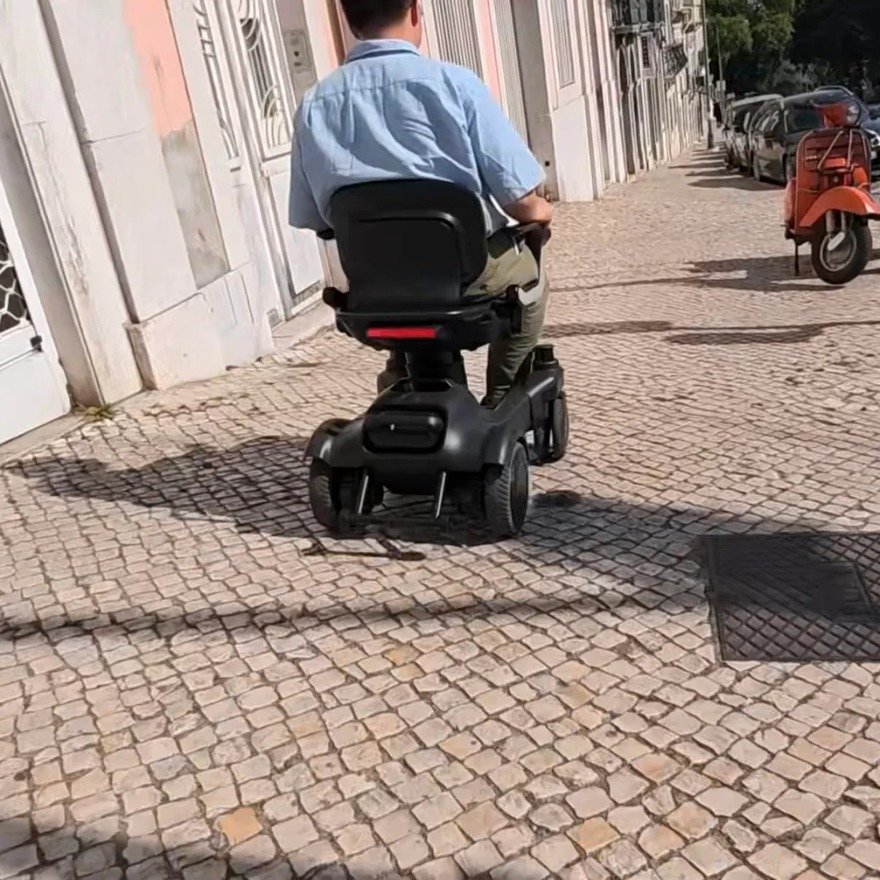
The Strutt ev¹ is not your grandfather’s mobility aid. It is a sophisticated piece of robotics engineering designed to tackle the limitations of incumbent designs. At its core, the device utilizes a four-wheel independent drive system, with a dedicated electric motor housed in each wheel. This configuration allows for unparalleled maneuverability and traction, enabling the vehicle to traverse varied terrains, including grass, gravel, and uneven pavement, with relative ease.
Beyond raw power, the ev¹ integrates modern automotive-grade safety features. It comes equipped with electronic stability control (ESC) and an anti-lock braking system (ABS), both of which are rare luxuries in the world of standard mobility equipment. These features are critical for safety, especially when the device encounters slick surfaces or steep inclines. According to manufacturer specifications, the ev¹ can handle a 13° slope, clear a 2-inch curb, and navigate across a 4.7-inch gap, making it significantly more versatile than many traditional electric chairs.
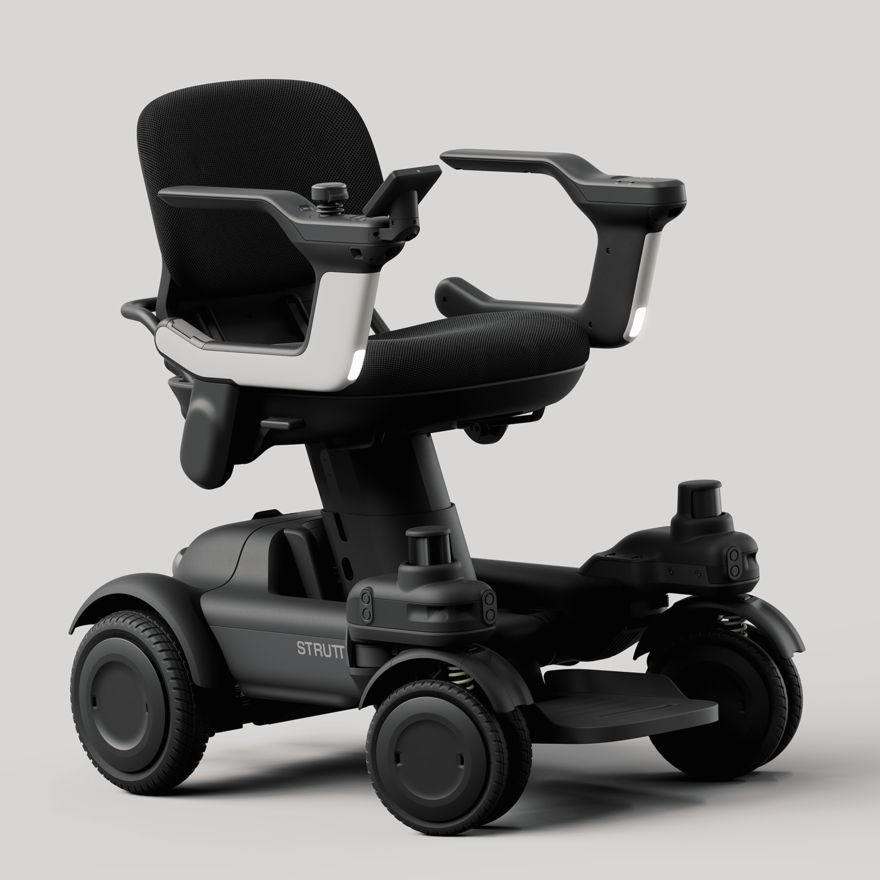
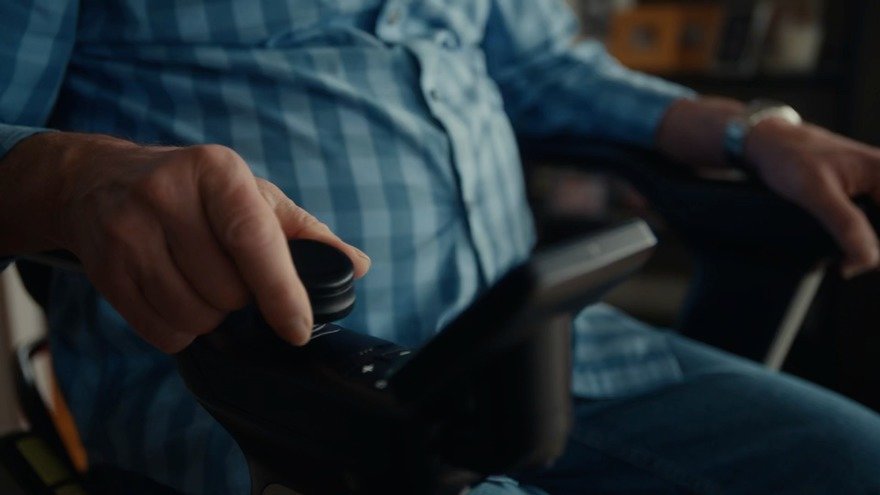
Perhaps the most impressive aspect of the ev¹ is its onboard intelligence. While the primary control interface is a tactile joystick, the vehicle is augmented by a suite of onboard cameras and sensors. These enable what the company calls "Pathfinder" and "Waypoint" modes. In these modes, the vehicle can autonomously avoid obstacles and navigate to pre-mapped coordinates, effectively providing a self-driving experience for the user.
Chronology of a Disrupted Market
The arrival of the ev¹ follows a long period of stagnation in the personal mobility industry. While consumer electronics have seen exponential growth in sensor technology, battery efficiency, and software intelligence, the mobility aid market has remained largely conservative.
- Pre-2022: The mobility sector remains dominated by legacy manufacturers who prioritize regulatory compliance over rapid iteration. Innovation is largely limited to cosmetic adjustments or incremental battery improvements.
- Early 2023: Strutt begins development on the ev¹ prototype, focusing on integrating automotive-grade robotics into a compact, user-friendly form factor.
- Late 2023: The engineering team completes the transition from prototype to functional unit, testing the vehicle’s off-road capabilities and sensor-based navigation systems.
- Early 2024: Faced with the prospect of an arduous FDA Class II certification process, the company pivots its marketing strategy. They finalize the branding as a "Smart Everyday Vehicle" (SEV), ensuring they comply with consumer product safety standards rather than medical device regulations.
- Mid-2024: The ev¹ is launched to the public. It is priced at $7,500, positioning it as a premium personal mobility tool for those who prioritize advanced features over insurance-subsidized medical equipment.
Supporting Data and Technical Specifications
To understand the gap between the ev¹ and the current market, one must look at the technical specifications of the unit. The focus on power and adaptability suggests the vehicle is intended for a demographic that values independence and active lifestyles.
| Feature | Specification |
|---|---|
| Drive System | 4-Motor Independent Drive |
| Safety Systems | Electronic Stability Control, Anti-Lock Brakes |
| Climbing Ability | 13° Gradient |
| Obstacle Clearing | 2-inch curb, 4.7-inch gap |
| Intelligence | Pathfinder & Waypoint Autonomous Modes |
| Battery | 640 Wh |
| Retail Price | $7,500 |
The 640 Wh battery represents a significant power density, providing enough range for daily commutes. However, the capacity also places it at the center of a logistical challenge: current international air travel regulations often restrict lithium-ion batteries over a certain wattage for safety reasons. This means that while the ev¹ is designed for mobility, it is currently "grounded" when it comes to air travel, a limitation the company says it is working to resolve with an airline-compliant battery pack in the near future.
Official Responses and Strategic Positioning
Strutt’s official stance on the classification of the ev¹ is a masterclass in linguistic engineering. By distancing the product from the medical device industry, they have successfully avoided the high costs of FDA clinical trials. However, this comes with a distinct trade-off.
In a recent communication, a spokesperson for the company emphasized the versatility of the device, focusing on its utility as a "mobility companion" rather than a prosthetic. This framing is crucial for their business model: by remaining outside the medical system, they avoid the "medical device" tax—the high costs of compliance—but they also lose the ability to be covered by medical insurance.
For many potential users, this is a double-edged sword. On one hand, they gain access to technology that is years ahead of what is currently available through insurance providers. On the other hand, they must pay the full $7,500 out-of-pocket, which is a significant barrier to entry for many who rely on wheelchairs.
The Broader Implications: Innovation vs. Regulation
The Strutt ev¹ raises fundamental questions about the nature of the "mobility" industry. Is it better for a company to undergo a decade of testing to ensure their product is covered by insurance, or is it better to innovate rapidly, bypass the red tape, and offer a more advanced product to those who can afford it?
The Insurance Conundrum
Because the ev¹ is not certified as a medical device, it is currently ineligible for insurance reimbursement. This creates a two-tiered system: one for those who depend on state-supported or insurance-covered mobility devices that meet strict clinical standards, and another for those who can afford to "opt-out" and purchase high-performance, non-medical mobility vehicles.
The Regulatory Precedent
If Strutt succeeds in normalizing the "Smart Everyday Vehicle" category, we may see a flood of similar tech-heavy, consumer-grade mobility devices. This could force the FDA to re-evaluate how it defines a "wheelchair." If a device looks like a chair, acts like a chair, and is used by people with mobility issues, does it have to be a medical device? Or does the integration of autonomous features and stability control move it into the realm of personal transportation, similar to an e-scooter or an electric bicycle?
The Future of Mobility
The implications for the disability community are profound. While the loss of insurance support is a significant hurdle, the move towards consumer-grade tech offers a glimpse into a future where mobility aids are designed with the same excitement and pace as smartphones or electric cars. If Strutt can successfully develop an airline-compliant battery and continue to lower the cost of production, they may force the legacy players to accelerate their own research and development cycles.
Ultimately, the Strutt ev¹ is not just a vehicle; it is a signal. It tells the industry that consumers are tired of waiting for the bureaucratic process to catch up with modern technology. By redefining the category, Strutt has opened a door—and it remains to be seen whether the rest of the industry will follow them through it, or if they will continue to be anchored by the very regulations designed to protect them. For now, the ev¹ stands as a testament to the idea that sometimes, to move forward, you have to find a new path entirely.
About the Author