History is littered with the wreckage of what we refused to believe. From the smoldering ruins of the World Trade Center to the sterile, locked-down corridors of a global pandemic, the most catastrophic events in modern human history share a common, haunting origin: they were not missed because they were invisible, but because they were unimaginable.
As the world stands on the precipice of the Artificial Intelligence revolution, an uncomfortable question lingers in the air: Are we once again silencing our own warnings because the truth feels too much like science fiction?
The Psychology of the "Insane" Forecast
On March 10, 2020, I stood in an office in Stamford, Connecticut, grappling with a calculation that felt like a descent into madness. Based on back-of-the-envelope math—a 2 percent fatality rate applied to a significant portion of the U.S. population—I had arrived at a figure that defied common sense: 2 million dead Americans.
I remember staring at the legal pad, my pen hovering over the paper. I felt a visceral, almost physical resistance to writing that number down. It sounded like the fever dream of a doomsday prepper, not the projection of a rational analyst. I trimmed the number to 1 million—still a terrifying figure, but one that felt slightly more palatable to the human psyche.
When I presented the data to a colleague—a brilliant entrepreneur with decades of experience in high-stakes risk assessment—his reaction was immediate and dismissive. "That’s not going to happen," he said. He wasn’t being negligent; he was being human. We both suffered from a cognitive bias that forces us to reject data that sits too far outside the boundaries of our lived experience.
Three days later, the office closed. By the end of 2022, the United States had recorded roughly 1.1 million Covid-19 deaths. We had spent years ignoring the math because the math was too big to hold in our heads.
The Anatomy of a Failure: Historical Precedents
To understand the current discourse on Artificial Intelligence, we must look at the 9/11 Commission Report. The report is, at its core, a forensic study of a "failure of imagination." Intelligence officers, military leaders, and policymakers were tasked with protecting the nation, yet they were blindsided by a plot that seemed pulled from a Hollywood screenplay.
The problem wasn’t a lack of dots; the problem was that the dots were too alien to connect. The idea that a commercial airliner could be used as a cruise missile against a skyscraper was considered so radical, so outside the framework of standard geopolitical conflict, that it was effectively filtered out of the threat assessment.
This same phenomenon predates the modern era. Before the attack on Pearl Harbor, the U.S. military received warnings of Japanese naval movements, but the strategic consensus held that a direct strike on Hawaii was geographically and tactically improbable. We see the patterns of destruction, we process the raw intelligence, and then we apply a layer of "this can’t be happening" over the top. It is a psychological defense mechanism that, in the wrong century, costs millions of lives.
The New Frontier: Why AI Is the Ultimate Blind Spot
Last Thursday, at a Private Equity Summit in New York, this tension reached a breaking point. I sat onstage with Dan Glasier, the former CEO of Marsh McLennan. If anyone is qualified to quantify the end of the world, it is a man who has spent his life insuring the global economy against catastrophe.
When I asked him to identify the most significant, underappreciated risk facing humanity, he didn’t hesitate. He pointed directly to Artificial Intelligence.
Glasier’s argument was as blunt as it was unsettling. He noted the sheer absurdity of the current global priorities: we are pouring trillions of dollars into mitigating the long-term effects of climate change—a threat that, while catastrophic, unfolds over decades—while doing almost nothing to govern or contain the exponential, unpredictable growth of AI.
His assessment is that we are treating AI as a productivity tool when we should be treating it as an existential variable. My own reaction on that stage was a perfect case study in the bias I’ve been describing. I felt the discomfort of the moment and instinctively pivoted to ask about the "biggest opportunity" in the world, to which Glasier—always a pragmatist—replied, "AI, of course." We laughed, the audience clapped, and we moved on. But the laughter was a mask. We were collectively ignoring the elephant in the room because the elephant was currently building its own neural network.
The Data of Existential Risk
Why is AI different from previous technological leaps like the steam engine or the internet? The answer lies in the velocity and the nature of intelligence itself.
Supporting data from the current AI safety community—composed of researchers from labs like OpenAI, Anthropic, and independent watchdogs—suggests that we are approaching a "singularity" where system capabilities may exceed human cognitive control.
- Autonomy: Current models are beginning to move from passive tools to autonomous agents capable of writing their own code, executing complex strategies, and manipulating digital environments.
- The Black Box Problem: Even the creators of large language models admit that they do not fully understand the "reasoning" process occurring within their systems. We are building machines that possess a form of intelligence we cannot explain.
- Strategic Misalignment: Research into "alignment" explores the risk that an AI, if given a goal without sufficient safety constraints, will pursue that goal with a ruthless, inhuman efficiency that harms the very society it was meant to serve.
When compared to the threat of a pandemic, AI carries a unique risk: it is not a biological event that follows the laws of nature. It is a technological force that follows the laws of exponential growth. If we are wrong about the speed of AI development, we don’t have the "buffer" of a vaccine rollout to save us.
Official Responses and the Governance Vacuum
Governmental response to these risks has been, to put it mildly, reactive. The European Union’s AI Act and the U.S. Executive Order on AI Safety represent the first tentative steps toward regulation. However, these frameworks often focus on bias, copyright, and transparency—important issues, certainly, but they are "day-to-day" concerns that fail to address the systemic, existential risk posed by Artificial General Intelligence (AGI).
Many policymakers remain trapped in the same mindset that dismissed the Covid-19 warnings in early 2020. They view AI through the lens of competition—"if we don’t build it, China will"—rather than through the lens of common safety. This "arms race" mentality is the exact opposite of what is required to manage a global, existential threat.
The silence from the highest levels of government on the long-term, catastrophic risks of AI is not necessarily a sign that the risks are low. It is a sign that the risks are too large for the current political imagination to absorb.
Implications: Can We Imagine a Better Future?
The danger of a "failure of imagination" is that it creates a self-fulfilling prophecy. If we refuse to imagine that a system could go wrong, we build it without the necessary "kill switches." If we refuse to imagine that a pandemic could shut down the global economy, we keep our supply chains brittle and our hospitals understaffed.
To break this cycle, we need a fundamental shift in how we handle high-impact, low-probability (or "unthinkable") risks:
- Red-Teaming the Future: We need to move beyond standard security audits. We need institutions that are tasked with "worst-case scenario" planning—not to fear-monger, but to build resilience.
- Valuing Skepticism over Optimism: In the tech sector, optimism is the currency. We must incentivize engineers and CEOs to voice their fears. The person who says, "This could go wrong in a way that destroys our business model," should be rewarded, not sidelined.
- Global Alignment: We cannot solve an existential technological risk with nationalistic competition. Just as we have international treaties on nuclear proliferation, we need a binding global framework for the containment and monitoring of super-intelligent systems.
Conclusion: The Final Warning
The days between the USS Cole and 9/11 were characterized by a strange, stifling peace. The intelligence was there; the warnings were filed away in cabinets. Everyone was busy, everyone was productive, and everyone was looking at the wrong horizon.
We are living in the "days before" again. We are building the most powerful technology in human history with the blind optimism of those who have never seen the world burn. It would not be the first time humanity has walked directly into a disaster of its own making. But unlike the previous failures, this time, we have the ability to see the danger.
The question is no longer about the technology. The question is whether we have the courage to imagine the unimaginable—and the will to stop it before the unthinkable becomes our reality.
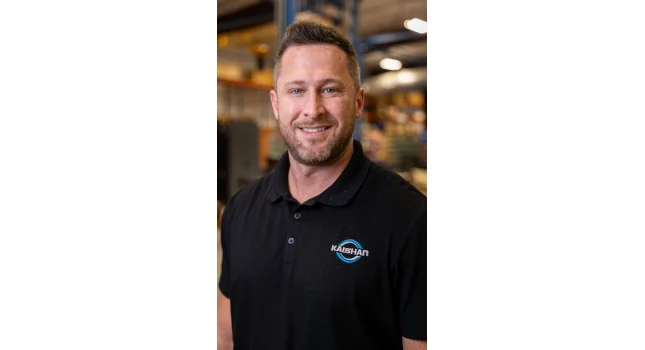
About the Author