In a move that marks a significant milestone for the future of logistics, autonomous trucking developer Kodiak AI and commercial transportation services leader PrePass announced a strategic partnership on Monday. The collaboration establishes a digital bridge between driverless trucks and state roadside enforcement systems, effectively integrating autonomous vehicles into the existing national weigh station infrastructure. By routing safety inspection records directly from Kodiak’s automated driving systems into state-level compliance databases, the partnership addresses one of the most critical, yet often overlooked, hurdles in the deployment of self-driving semi-trucks: how to conduct safety inspections when there is no driver behind the wheel.
The implementation of this integration began immediately in Texas and Louisiana, serving as a template for how autonomous freight will navigate the complexities of highway enforcement as the technology moves from pilot programs to full-scale commercial operations.
The Core Innovation: Digital Inspections for Driverless Freight
The fundamental challenge for autonomous trucking is operational continuity. In a traditional trucking scenario, a human driver pulls into a weigh station, presents credentials, and interacts with enforcement officers. In an autonomous world, the absence of a driver renders this traditional interaction impossible.
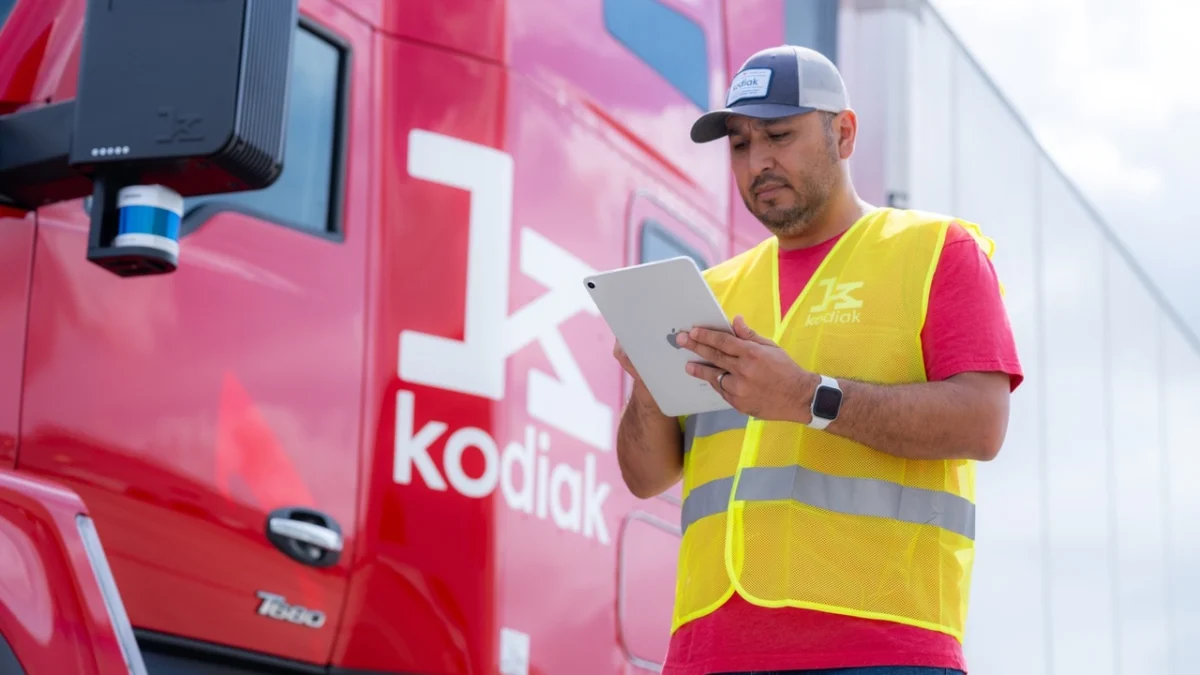
The PrePass-Kodiak solution leverages the Commercial Vehicle Safety Alliance’s (CVSA) Enhanced Commercial Motor Vehicle Inspection Program. Specifically designed for vehicles equipped with Automated Driving Systems (ADS), this protocol allows for a "digital handshake" between the truck and the weigh station. Before a Kodiak truck begins its driverless journey, a CVSA-trained inspector verifies that the vehicle is free of safety defects. Once cleared, that verification is uploaded into the PrePass platform.
When a Kodiak truck approaches a weigh station, the system automatically transmits these pre-verified records to enforcement personnel. If the truck is in compliance, the system authorizes a bypass. Crucially, the final decision-making power remains with the state authorities, ensuring that law enforcement retains its oversight role while the technology handles the administrative data flow.
Chronology: From Pilot Projects to Scaling Autonomous Operations
The road to this partnership was paved by years of technical refinement and collaborative industry trials.
- 2023: Early Exploration: Kodiak AI recognized early on that navigating weigh stations would be a regulatory bottleneck. The company conducted a pilot program in Texas using Drivewyze, a competitor to PrePass, to test the feasibility of digital bypasses for autonomous platforms. This served as a "proof of concept" for the current, more robust integration.
- 2024: Operational Expansion: Kodiak solidified its commercial footprint by integrating its driverless technology into customer-owned semi-trucks. Partners including industry titans like Werner Enterprises, C.R. England, and IKEA began collaborating with Kodiak to integrate the "Kodiak Driver" into their existing supply chains.
- 2025: Corporate Maturation: Kodiak AI transitioned into a publicly traded entity, completing a de-SPAC merger with Ares Acquisition Corp. II. This transition provided the capital and regulatory transparency required to accelerate the path toward driverless commercial launch.
- May 2026: Setting the Target: In its first-quarter earnings call, Kodiak publicly committed to a late-2026 timeline for the launch of fully driverless commercial operations on public highways.
- October 2026: The PrePass Partnership: The announcement of the PrePass collaboration serves as the final piece of the infrastructure puzzle, ensuring that the technology is not just capable of driving, but capable of interacting with the regulatory environment in real-time.
Supporting Data: Why Infrastructure is the Real Scaling Barrier
While much of the public discourse surrounding autonomous trucking focuses on sensor suites, artificial intelligence algorithms, and safety recordkeeping, industry experts argue that the true "scaling" challenge is infrastructural.
PrePass operates a massive network spanning 581 sites across North America. By utilizing this existing architecture, Kodiak is avoiding the need to lobby for separate, dedicated lanes or specialized autonomous-only weigh stations. This is a pragmatic, cost-effective approach that allows state agencies to manage autonomous fleets using the same software interfaces they use for human-operated trucks.
The CVSA certification process is equally rigorous. The 24-hour clearance window provided by the Enhanced Inspection Program is a critical operational buffer. It allows for a truck to complete long-haul transit routes across multiple states without the need for redundant inspections, provided the vehicle’s status has not changed.
Key Industry Partners Utilizing Kodiak Technology:
- Logistics & Retail: Werner Enterprises, C.R. England, Roehl Transport, IKEA.
- Energy & Industrial: Atlas Energy Solutions, Bridgestone.
- Defense: General Dynamics Land Systems.
The inclusion of General Dynamics and major energy players underscores that Kodiak’s utility extends far beyond simple consumer goods, moving into specialized, high-stakes logistics sectors that require absolute compliance with federal and state safety regulations.
Official Responses: Aligning Safety and Innovation
The partnership has received vocal support from both the private and public sectors, signaling a unified approach to autonomous deployment.
Chas Wurster, Chief Technology Officer of PrePass:
"The next barrier to scaling driverless trucking isn’t inside the truck. It’s the infrastructure around it. By working with Kodiak to advance driverless trucking into real-world commercial operations, PrePass is operationalizing the blueprint for what comes next: bringing states, roadside infrastructure, and trusted data together to make autonomous operations work at scale."
Don Burnette, Founder and CEO of Kodiak AI:
"Launching driverless service is not just about building technology. It’s about building a solution that works in the real world. It enables us to provide critical information to commercial vehicle enforcement agencies, maintain compliance with safety requirements, and scale the Kodiak Driver across the United States."
Collin Mooney, Executive Director of the CVSA:
"CVSA welcomes this collaboration between PrePass and Kodiak AI to support the implementation of CVSA’s Enhanced Commercial Motor Vehicle Inspection Program for autonomous trucks. As commercial motor vehicle technologies continue to advance, inspection and enforcement processes must evolve with them while maintaining a strong focus on transportation safety."
Implications: A New Era for Logistics and Enforcement
The implications of this collaboration are profound. By solving the "enforcement problem," Kodiak is removing one of the last major regulatory hurdles preventing the mass adoption of driverless trucking.
1. Seamless Regulatory Integration
For state Departments of Transportation (DOTs), the primary concern regarding autonomous vehicles is the potential for gridlock at weigh stations. By funneling autonomous traffic into the established PrePass workflow, states can maintain safety standards without requiring additional manpower or specialized training for every enforcement officer.
2. Economic Efficiency for Carriers
For logistics companies like Werner or C.R. England, the primary advantage is time. Every minute a truck spends idling at a weigh station is a minute lost in transit. A streamlined, digital-first inspection process means that autonomous trucks can maintain consistent transit times, making them more competitive with, and eventually more efficient than, human-operated fleets.
3. The Blueprint for Future Automation
This partnership serves as a roadmap for the entire autonomous vehicle industry. As other players in the automated driving space look to scale, they will likely be required to adopt similar standardized protocols. The Kodiak-PrePass model establishes that industry-wide collaboration—rather than fragmented, proprietary solutions—is the only way to achieve true, national-scale autonomy.
4. Safety as a Competitive Advantage
By prioritizing compliance and working proactively with the CVSA, Kodiak is positioning itself as a "safety-first" company. In the eyes of regulators and insurance providers, this proactive approach to compliance is likely to lower the barrier for future permits and highway access, creating a clear competitive advantage over firms that attempt to bypass or ignore traditional safety frameworks.
As the industry looks toward the end of 2026, the question is no longer whether autonomous trucks can drive themselves, but whether the infrastructure is prepared to accommodate them. With this integration, the answer is increasingly "yes." The digital infrastructure is now in place, allowing the Kodiak Driver to move from the testing grounds to the mainstream of the American supply chain.
About the Author