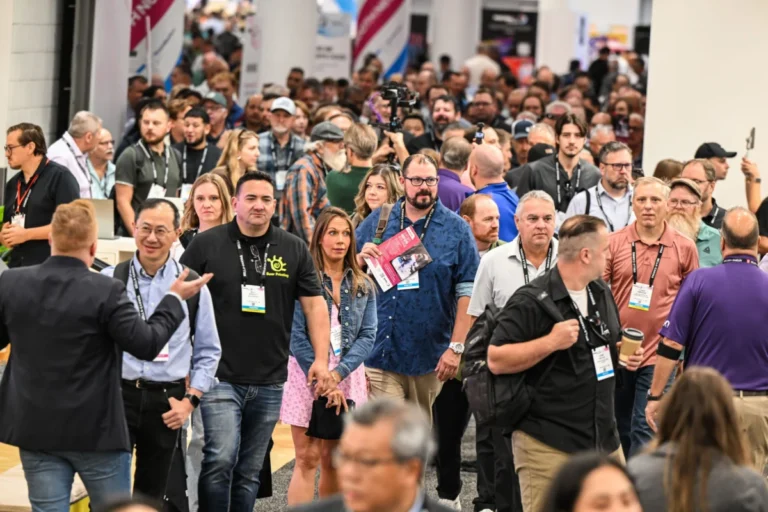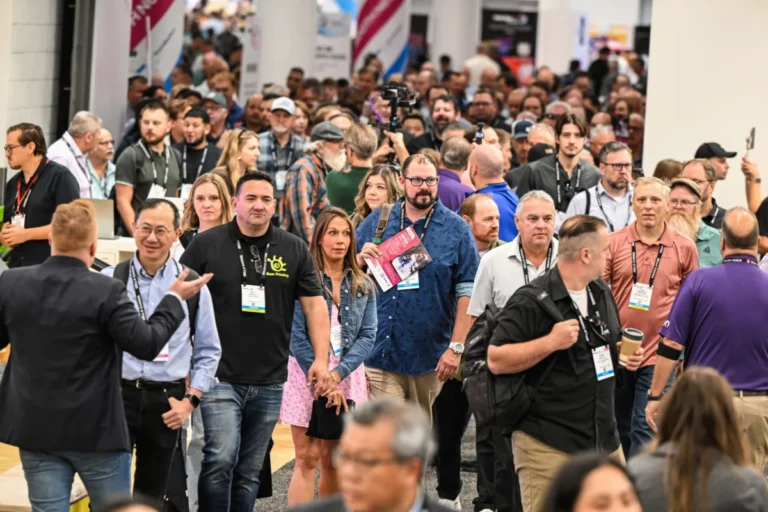
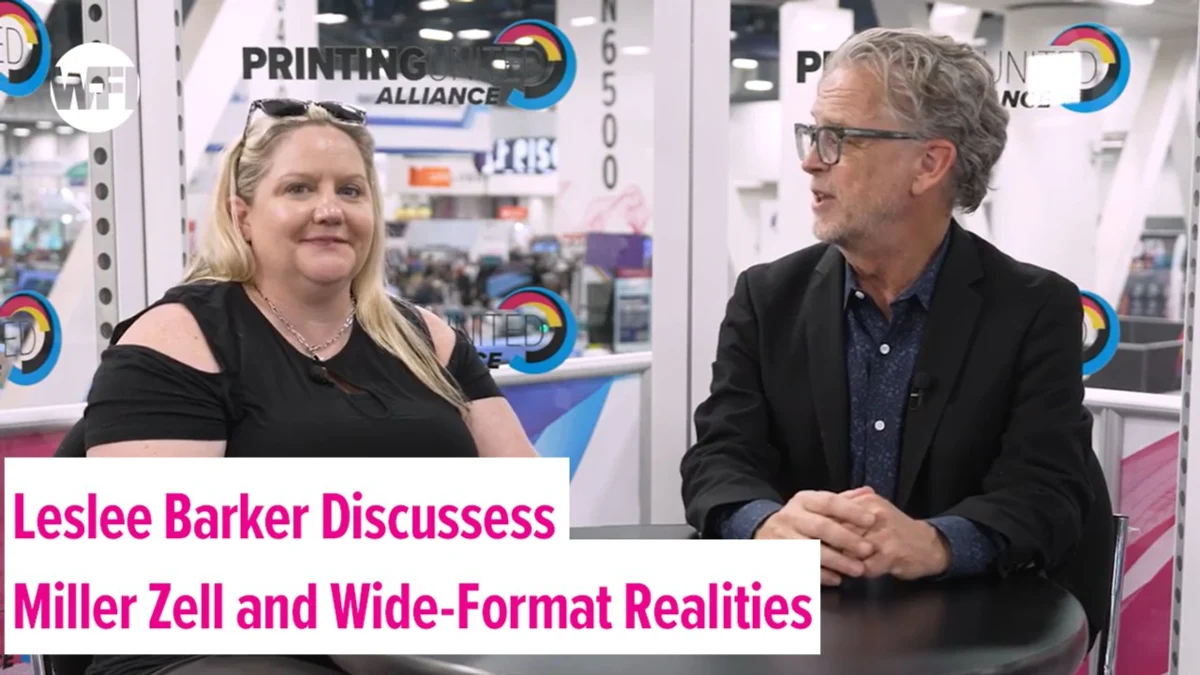
The landscape of the wide-format printing industry is undergoing a seismic shift, driven by rapid technological integration and an increasing demand for sustainable business practices. At the 2026 PRINTING United Expo, industry leaders gathered to dissect these changes, with one session standing out for its pragmatic approach to innovation: the keynote discussion featuring Leslee Barker, Director of Graphic Center Operations at Miller Zell.
As a veteran of the print production space, Barker provided a comprehensive look at how a legacy brand like Miller Zell balances the traditional demands of retail graphic production with the high-speed requirements of the digital age. Her insights covered the spectrum from operational efficiency to the controversial yet inevitable adoption of Artificial Intelligence (A.I.) in print workflows.
Main Facts: The State of Wide-Format at Miller Zell
Miller Zell has long served as a titan in the retail experience and visual merchandising sector. The core of their business—transforming brick-and-mortar spaces into immersive brand environments—relies heavily on high-quality, wide-format graphic production.
In her discussion, Barker highlighted that the primary challenge for modern print service providers (PSPs) is no longer just "getting the ink on the substrate." Instead, it is the mastery of the supply chain, the speed of turnaround, and the ability to maintain consistency across hundreds of retail locations simultaneously.
Key takeaways from Barker’s address included:
- Operational Agility: The need for internal production centers to mimic the speed of digital marketing campaigns.
- Sustainability as a KPI: Sustainability is no longer a "nice to have" but a core metric in client procurement contracts.
- Strategic Automation: Using technology to reduce human error in repetitive prepress tasks.
Chronology: The Evolution of Print Production
To understand where Miller Zell is headed, one must look at the trajectory of the industry over the last decade.
2016–2020: The Digitization Phase
The industry moved from traditional offset and screen printing toward high-speed UV-curable and latex wide-format systems. During this period, the focus was entirely on machine speed and hardware reliability. Miller Zell focused on scaling their equipment to handle the rising volume of retail graphic updates.
2021–2024: The Supply Chain Disruption
The global supply chain crises forced a massive pivot. PSPs had to rethink inventory management and substrate sourcing. Miller Zell shifted toward localized sourcing strategies to ensure that national retail rollouts were not stalled by global shipping bottlenecks.
2025–2026: The Intelligence Era
As evidenced by the 2026 PRINTING United Expo, the industry has transitioned into the era of intelligent production. This phase is characterized by data-driven workflows, where the software governing the press is as important as the print head itself. Barker’s leadership at Miller Zell during this time has focused on integrating these smart systems to optimize material usage and reduce waste.
Supporting Data: Industry Trends and Economic Indicators
The wide-format printing market is projected to grow significantly through the remainder of the decade, yet the nature of that growth is changing. According to industry analysis presented alongside the expo, the "value-add" in print is shifting away from simple square-footage production toward total project management.
Key Industry Metrics
- Material Cost Volatility: PSPs reported an average 12% increase in substrate costs over the last 24 months, forcing a shift toward more efficient nesting software and high-yield inks.
- Sustainability Mandates: Approximately 65% of Fortune 500 retail clients now include specific sustainability clauses regarding VOC emissions and recyclable substrates in their RFPs.
- A.I. Integration: While only 20% of mid-to-large PSPs have fully implemented A.I. in their prepress workflows, those that have reported a 30% reduction in pre-flighting time.
Barker noted that Miller Zell’s investment in these areas has directly correlated with their ability to retain major retail accounts. By utilizing software that predicts material usage with 98% accuracy, the company has significantly reduced the overhead associated with excess inventory and scrap.
Official Responses: Leslee Barker on the A.I. Imperative
Perhaps the most provocative portion of Barker’s discussion centered on the role of Artificial Intelligence. While many in the print industry remain skeptical—viewing A.I. as a threat to the artisanal nature of graphic design or a potential security risk—Barker holds a different view.
"We are at a crossroads," Barker stated during the session. "The industry has always been about precision. A.I. is simply the next evolution of that precision. If you are not exploring how machine learning can automate your file processing or optimize your print queues, you are effectively choosing to be slower and more expensive than your competitors."
Barker emphasized that at Miller Zell, the goal is not to replace the human workforce, but to empower it. By automating the mundane—such as color profiling, file correction, and predictive maintenance scheduling—staff members are freed to focus on high-level problem-solving and client relationship management.
She urged other PSPs to start small. "Don’t try to overhaul your entire production facility overnight," she advised. "Start with the bottleneck. Use A.I. to analyze where your jobs are stalling in the prepress queue, and start there. The data will prove the value faster than any sales pitch."
Implications for the Future of Retail Graphics
The implications of the strategies discussed by Barker are far-reaching. As retail spaces become more digitized, the demand for "phygital" (physical plus digital) experiences will increase. Print is the bridge between these worlds, and the PSPs that thrive will be those that can act as technology partners rather than just vendors.
The Sustainability Mandate
Sustainability is no longer an external pressure; it is a business model. Barker highlighted that Miller Zell is exploring circular economy initiatives, such as take-back programs for used graphics and the transition to non-PVC, bio-based films. These efforts are not merely for public relations; they are vital for staying compliant with increasingly stringent environmental regulations in North America and Europe.
The Human Element in an Automated World
Despite the focus on A.I., Barker remained adamant that the "human element" remains the most critical component of success. She noted that technology cannot replicate the intuition required to manage a complex, multi-site retail launch where unforeseen site conditions might require an on-the-fly change of plans. The future of print is a hybrid model: humans providing the strategic direction and empathy, while A.I. and automated systems handle the heavy lifting of production.
A Call to Action for PSPs
The final takeaway from Barker’s discussion was a call for industry-wide transparency and collaboration. She encouraged fellow PSPs to move away from the "siloed" mentality of the past. "We are all navigating the same challenges—labor shortages, rising costs, and a rapidly changing retail landscape," she said. "Sharing best practices on how we integrate A.I. or how we source sustainable materials benefits the entire ecosystem."
Conclusion: Adapting to Survive and Thrive
The 2026 PRINTING United Expo served as a reminder that the wide-format industry is far from stagnant. Through the lens of Miller Zell’s operational philosophy, it is clear that the path forward involves a delicate balance of legacy expertise and future-forward innovation.
Leslee Barker’s advocacy for A.I. adoption and sustainable practices is a beacon for other PSPs that may feel overwhelmed by the pace of technological change. By focusing on data-driven efficiency and a commitment to environmental stewardship, firms like Miller Zell are not only securing their own future but are also helping to define the standards for the entire wide-format sector.
As we look toward the remainder of the decade, the mantra for print professionals remains clear: adapt or be left behind. The integration of A.I. is not a distant possibility; it is a present reality, and for those willing to embrace it, it represents an unprecedented opportunity to redefine what is possible in the world of large-scale graphic production.
About the Author