In the halls of America’s most prestigious research institutions, a quiet but profound transformation is underway. For decades, the university was viewed as a sanctuary for independent inquiry—a place where the pursuit of truth superseded the interests of political parties or corporate bottom lines. However, a new study published in the journal Energy Research & Social Science suggests that this independence is rapidly eroding, creating a landscape where academic freedom is increasingly subordinated to the demands of fossil fuel giants, libertarian donor networks, and federal political agendas.
The study, led by Noel Healy of Salem State University, paints a grim picture: a systemic "capture" of higher education that threatens not only the integrity of climate science but the foundational autonomy of the American academy itself.
The Chronology of Influence: From Utilities to Industry Capture
The encroachment on academic autonomy is not a modern phenomenon, but its current manifestation is unprecedented in both scale and aggression. The history of external pressure on universities reveals a long-term strategic effort to convert intellectual capital into political leverage.
The Early Days: Utilities and the Anti-Regulatory Stance
In the 1920s, electric utility monopolies pioneered the use of academic partnerships to safeguard their business models. By funding specific lines of research, they successfully steered public discourse away from the benefits of public ownership and toward the defense of private monopolies. This set the precedent that would guide corporate strategy for the next century: if you cannot win the debate in the public square, win it in the lecture hall.
The Fossil Fuel Era: Funding Doubt
By the 1950s, the fossil fuel industry began to replicate this model on a national scale. Documents unearthed in recent years have confirmed that companies recognized early on that academic prestige could be "purchased" to build credibility for industry-friendly narratives. This era focused on sowing doubt regarding the public health impacts of their products, effectively using university-affiliated researchers to provide a veneer of scientific legitimacy to lobbying efforts.
The Modern Shift: The 2025 Turning Point
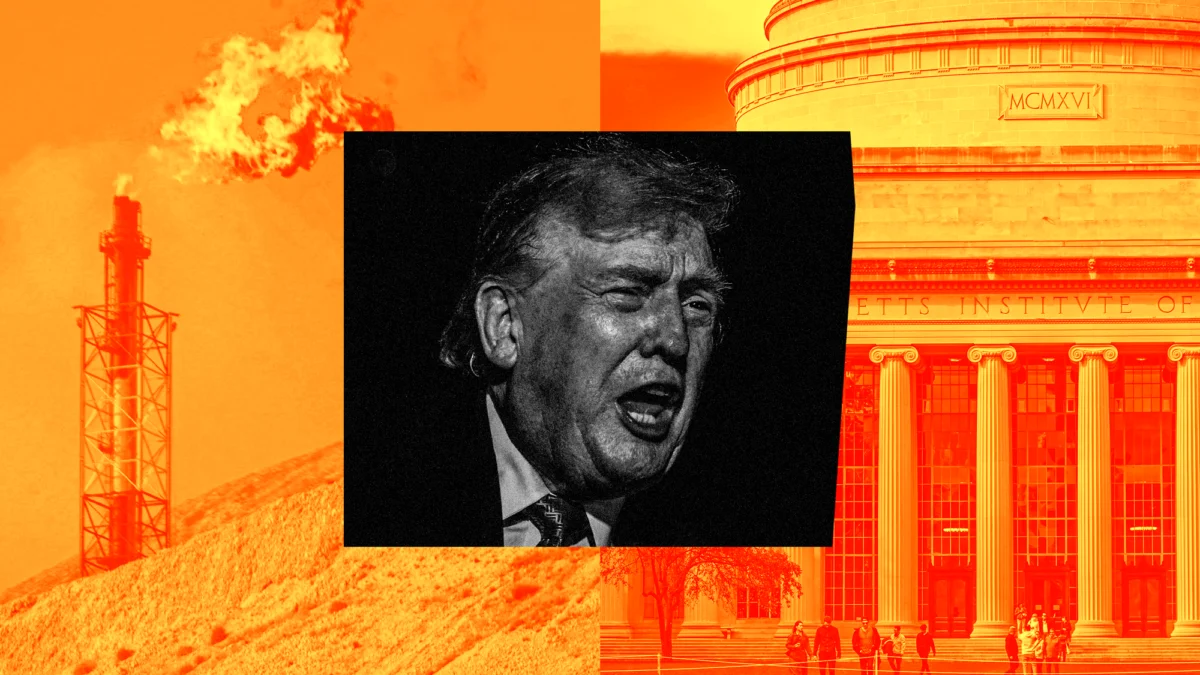
While the "donor-influence" model gained traction in the early 21st century—notably through the influence of figures like David Koch at institutions such as MIT—the year 2025 marked a watershed moment. The Trump administration’s aggressive pivot toward direct federal intervention transformed latent influence into active, state-sponsored suppression. By freezing billions in research funding and launching investigations into 75 institutions, the administration effectively forced a "compliance culture" upon the American university system.
The Mechanism of Control: Federal Funding and Self-Censorship
The most potent weapon in the current assault on academic freedom is the federal purse. When $4 million in climate research grants at Princeton University are canceled overnight, the chilling effect reverberates through every department in the nation.
The Economics of Compliance
The study highlights a grim reality: when federal funding is tied to adherence to administration policy, researchers become risk-averse. According to Healy, the pressure is so acute that scholars have begun proactively scrubbing terms like "climate change" from their grant applications. This self-censorship is arguably more dangerous than overt bans; it creates an environment where the most critical questions are never even asked, let alone investigated.
The "Academic Freedom" Index
The impact is quantifiable. The Academic Freedom Index, which tracks the ability of scholars to research and teach without interference, reports a staggering decline in U.S. institutional autonomy—dropping from a score of 3.3 in 2019 to just 1.7 in 2025 (on a scale of 0 to 4). This decline suggests that the American system is trending toward the type of centralized, state-controlled models often seen in authoritarian regimes, where academic legitimacy is a prerequisite for political survival.
Data and Disparity: The Cost of Corporate Philanthropy
The influence of fossil fuel companies is not merely conceptual; it is backed by massive capital flows. Between 2010 and 2020, six major fossil fuel corporations funneled over $700 million into American universities.
The Price of a Seat at the Table
This influx of cash frequently comes with strings attached. Donor agreements, which are often shielded from public view, have increasingly granted outside actors a say in faculty hiring, the development of curricula, and the scope of research initiatives. When a donor provides the funding for a center or a chair, they often demand a seat on the governance board, effectively shifting the power dynamic from the faculty to the financier.
The State-Level Pivot: The Rise of "Civic Centers"
Beyond private funding, state legislatures have institutionalized this influence. Since 2016, a growing number of states have established publicly funded "libertarian academic centers." These entities, which are projected to receive $50 million in taxpayer support during the 2025-2026 school year, operate largely outside the purview of traditional faculty oversight. They answer directly to legislators, serving as ideological outposts within the university system designed to promote specific political agendas under the guise of academic research.
Official Responses and Institutional Justifications
Universities have largely defended these partnerships by citing the need for industry collaboration in solving complex, real-world problems.
MIT, for example, has consistently maintained that its partnerships with the energy sector are essential for developing practical, scalable climate solutions. The MIT Energy Initiative has long argued that their industry partners exercise no control over the content, methodologies, or findings of their research. For many administrators, the logic is clear: the energy transition requires the cooperation of the very entities currently responsible for the crisis, and academic institutions are uniquely positioned to facilitate that transition.
However, critics argue that this "collaboration" is a false equivalence. By treating fossil fuel companies as neutral stakeholders in the climate conversation, universities grant them a level of legitimacy that ignores the industry’s long-standing history of obstructionism and disinformation.
The Path Forward: Restoring the Public Mission
The authors of the study argue that the current trajectory is unsustainable if universities wish to retain their role as trusted arbiters of knowledge. Reclaiming the academic mission will require more than just a return to the status quo; it requires a structural overhaul of how universities interact with their donors.
The Transparency Imperative
Transparency is the first, but not the final, step. Universities must be required to disclose all donor contributions and the specific terms of those agreements. Sunlight, however, is not a shield. The study emphasizes that "transparency lets you see the deal, but it doesn’t let you stop it."
Empowering Faculty Governance
To truly protect academic freedom, faculty must be given the authority to review and, where necessary, reject major gifts. The model proposed by the "UnKoch My Campus" campaign—which advocates for clear, public-facing gift-acceptance policies—offers a roadmap. Under this model:
- Faculty committees have the final say on whether a gift is compatible with the university’s mission.
- Donors are prohibited from influencing hiring, tenure, or curriculum.
- Agreements are made fully accessible to the public.
The Role of Unionization
Finally, the study points to the power of collective bargaining. Union contracts provide a critical layer of protection for faculty, giving them the legal standing to challenge corporate capture and political overreach. As the pressures on higher education mount, labor organization may prove to be the most effective mechanism for defending the professional independence of the professoriate.
Implications: A Warning from History
The most chilling takeaway from the study is its historical context. Healy notes that in countries that have experienced the collapse of academic freedom, the process rarely begins with a total takeover. It begins with the erosion of legitimacy—attacks on the credibility of researchers, the creation of ideologically aligned centers, and the slow, systematic replacement of independent faculty with those who align with the state or its corporate patrons.
"Universities came under attack before those governments had full control, not after," Healy warns.
The struggle for the future of the American university is not merely a debate over research funding or private donors; it is a fundamental battle for the integrity of the information ecosystem. If the ivory tower is allowed to become a subsidiary of the corporate board room or the state legislature, the damage will not be limited to the halls of academia. It will strip the public of its most reliable tools for navigating a world defined by the climate crisis, effectively ensuring that the solutions of tomorrow are built on the compromised foundations of today.
About the Author