Introduction: A Relic of Socialist Functionalism
In the annals of mid-century industrial design, few artifacts capture the intersection of utility and political philosophy as effectively as the desk lamp produced by VEB Zweckleuchtenbau during the 1970s. Hailing from the German Democratic Republic (GDR), this unassuming object serves as a physical manifestation of a state-planned economy that prioritized durability, standardization, and unadorned functionality. While it may appear as a simple piece of office equipment to the casual observer, a closer inspection reveals a fascinating marriage of mechanical ingenuity and the austere, pragmatic design language of the Eastern Bloc.
As global design trends move toward a "new brutalism" and a resurgence of interest in vintage Soviet-era aesthetics, this specific lamp has transcended its origins as a mass-produced workplace tool. It now stands as a case study in how limited resources and ideological constraints fostered a unique brand of industrial minimalism.
Chronology: The Evolution of East German Lighting
To understand the significance of the VEB Zweckleuchtenbau lamp, one must first look at the industrial landscape of East Germany in the 1970s.
The Post-War Industrial Mandate
Following the devastation of World War II, the GDR faced the Herculean task of rebuilding its domestic infrastructure. Under the directive of the Socialist Unity Party, state-owned enterprises (Volkseigener Betrieb, or VEB) were established to streamline production and minimize waste.
The Rise of VEB Zweckleuchtenbau
By the early 1970s, VEB Zweckleuchtenbau—literally translated as "Purposeful Lighting Construction"—became the primary engine for office and domestic lighting across East Germany. The design philosophy of the era was dictated by the "Standardization Decree," which discouraged individualistic flourish in favor of modularity and longevity.
The 1970s Design Peak
The lamp in question emerged during this period of peak state-controlled production. It was designed not for luxury, but for the ubiquitous desks of party bureaucrats, engineers, and factory administrators. The decade marked a transition from the heavy, cast-iron designs of the 1950s to lighter, stamped-steel constructions that were cheaper to produce and easier to distribute throughout the Warsaw Pact nations.
Supporting Data: Engineering the "Purposeful" Lamp
The technical specifications of the VEB Zweckleuchtenbau lamp offer a masterclass in economy of design.
Materiality and Production
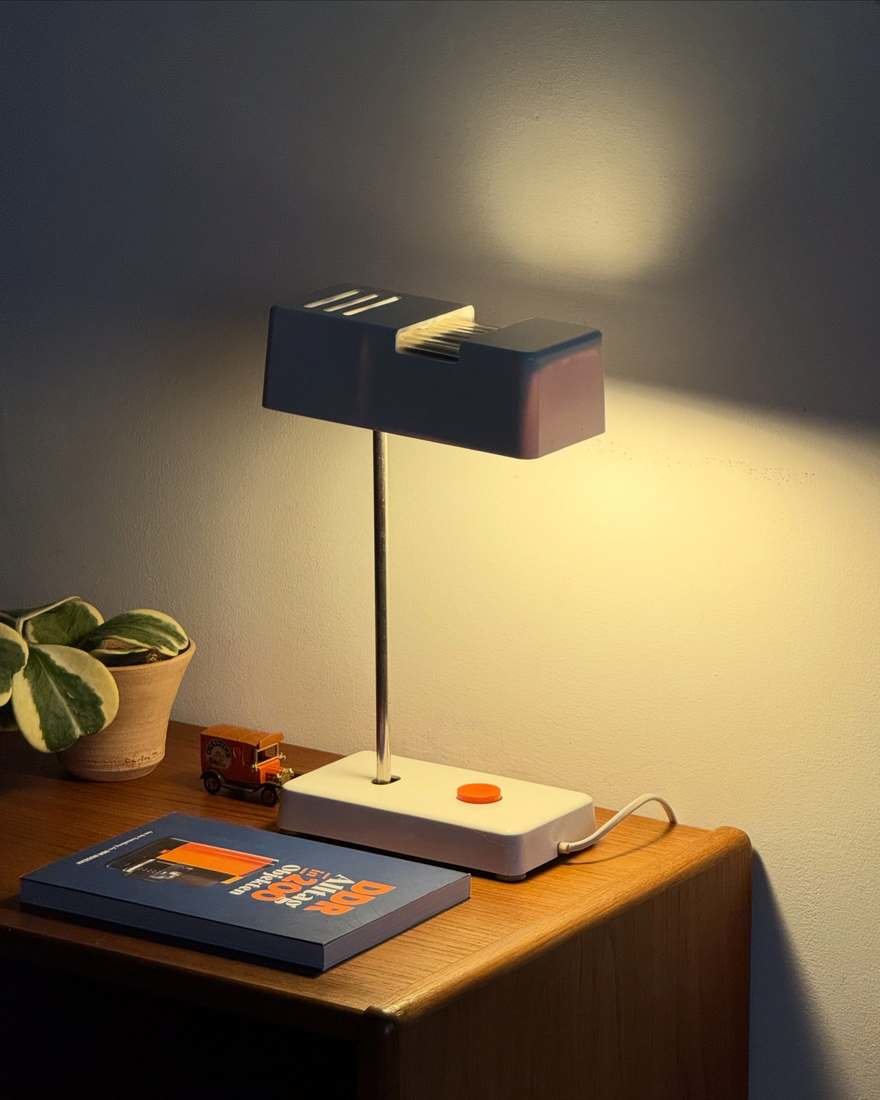
The lamp is constructed primarily of pressed steel, finished in industrial-grade enamel. This was a deliberate choice: enamel provided a hygienic, easy-to-clean surface that could withstand the rigors of a multi-shift factory environment. The color palette was almost exclusively limited to neutral greys, deep greens, or functional blacks—colors that minimized visual distraction in the workplace.
Mechanical Kinematics: The Stalk and Channel
Perhaps the most distinctive feature of this model is the adjustment mechanism. Unlike Western lamps of the same era, which often utilized complex articulated arms or spring-loaded tension hinges, the VEB model employs a simple, sliding stalk housed within a channel in the base.
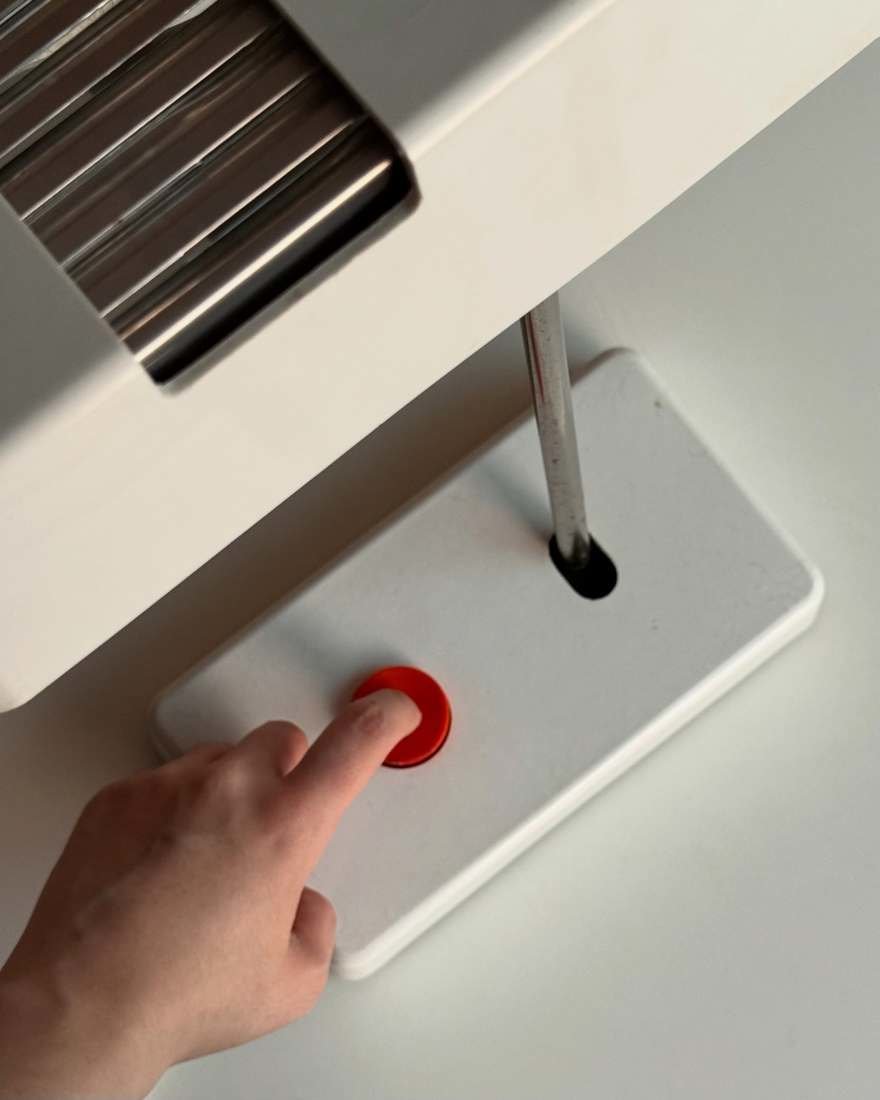
This design is a brilliant example of "frugal engineering." By using a physical track to lock the lamp head into specific tilt angles, the designers eliminated the need for tension springs or screw-tightening knobs, both of which were prone to wear and mechanical failure. It is a system that demands user interaction, essentially forcing the operator to acknowledge the machine’s mechanics every time they adjust the light.
The "Visible" Switch
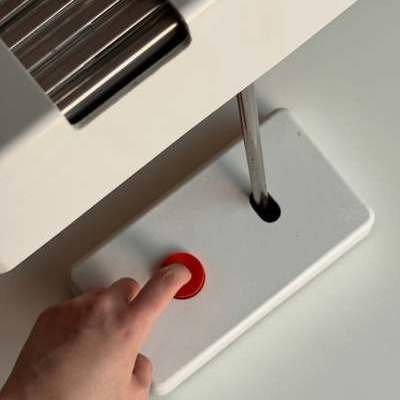
The lamp’s switch is famously prominent. In many Western designs, switches were hidden or integrated into the base for aesthetic cleanliness. In the GDR design ethos, the switch was a component that required immediate, tactile accessibility. It is a design choice that screams "utility over elegance," ensuring that in a dimly lit office, the user would never struggle to locate the power source.
Official Responses and Ideological Implications
When discussing VEB products, one cannot separate the object from the political climate. Official archives from the GDR’s Amt für Industrielle Formgestaltung (Office for Industrial Design) consistently emphasized that the role of an object was to "serve the collective."
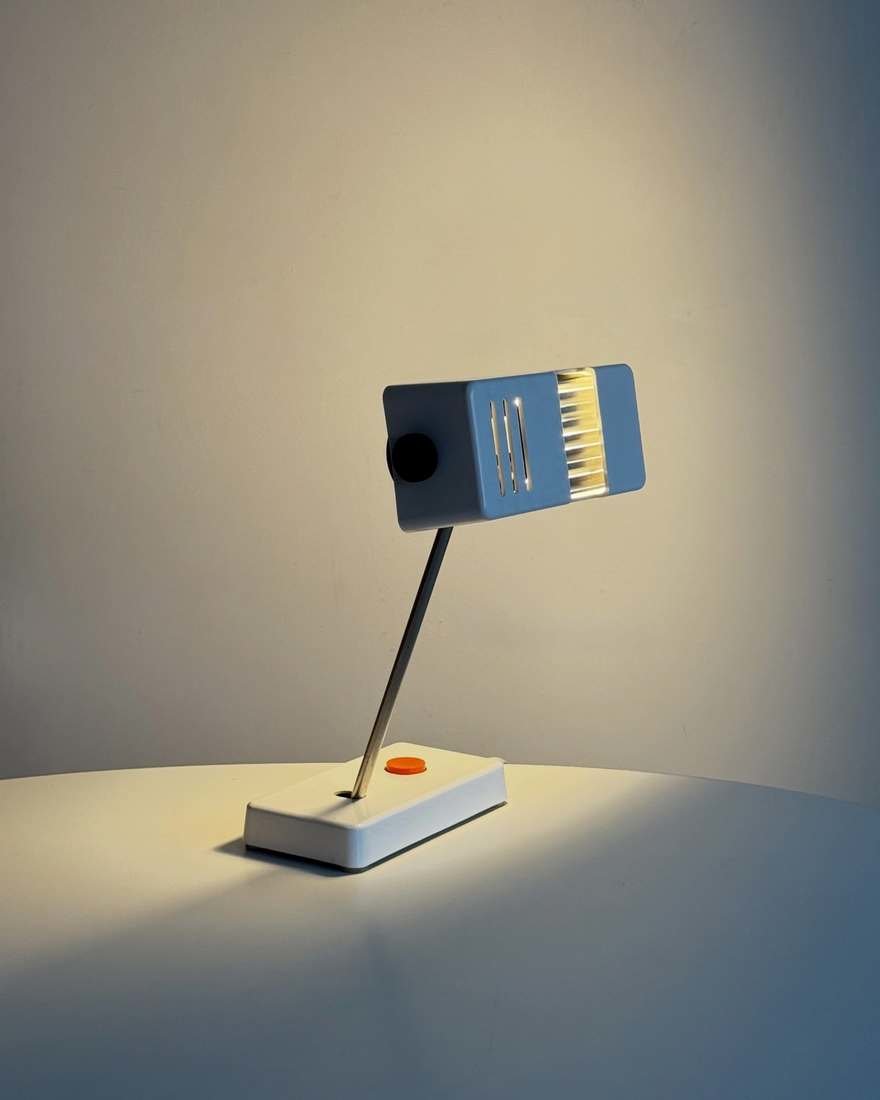
Designers at the time were often discouraged from "bourgeois aestheticism." Any feature that added cost without adding function was viewed as wasteful. Consequently, the VEB Zweckleuchtenbau lamp was marketed as a "People’s Lamp"—a tool that democratized access to quality lighting. The lack of decoration was not a failure of imagination, but a badge of socialist honor.
Implications: The Luxury Market and Modern Nostalgia
The current fascination with this lamp in the Western design market highlights a paradoxical trend: the commodification of communist scarcity.
The Ferrari Shift Gate Comparison
There is an undeniable allure to the lamp’s mechanical simplicity. When one considers the design language of a vintage Ferrari shift gate—a mechanical system where the movement is dictated by a restrictive, tactile guide—the parallels to the VEB lamp become clear. Both systems rely on "gated" movement, where the physical path of the component defines the experience of the user.
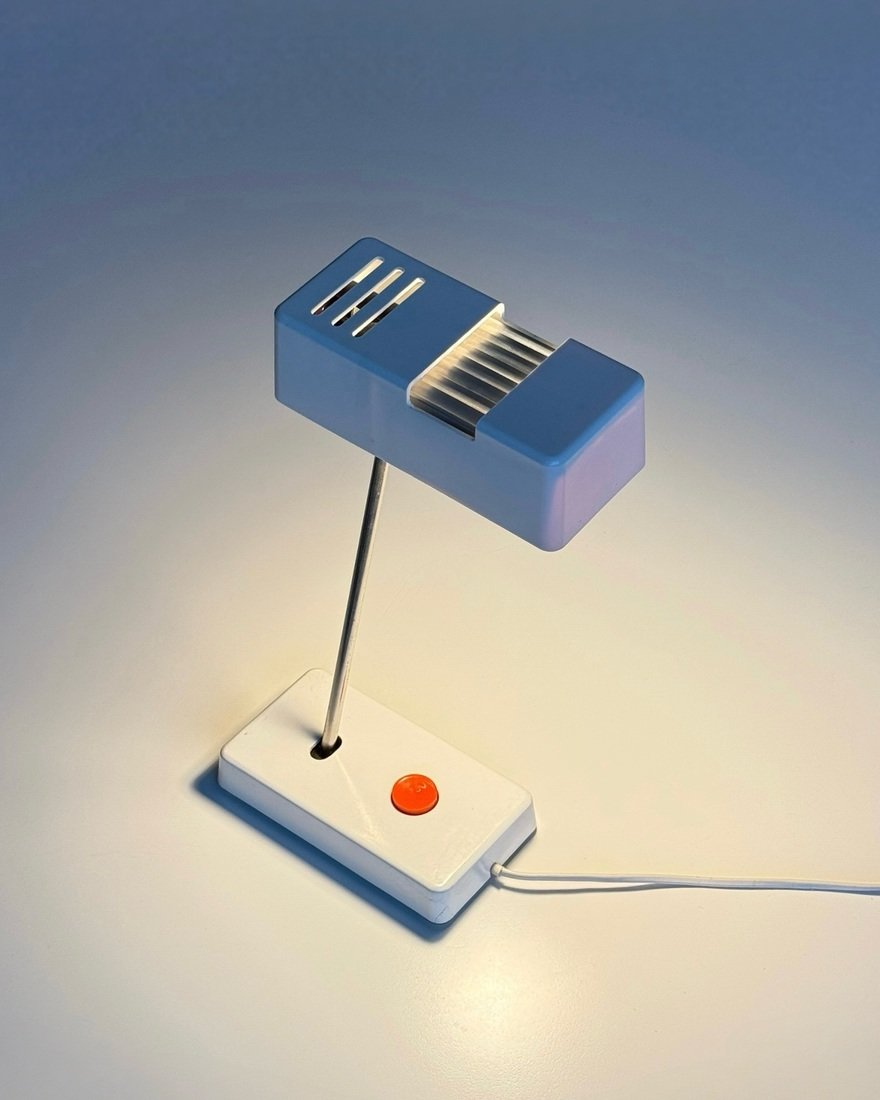
If a contemporary luxury brand were to adopt this "channel-based" adjustment system—pairing the industrial honesty of the GDR base with a refined, high-end materials palette—it would likely be marketed as a "minimalist masterwork." The irony is that the original VEB design was born of a lack of access to refined materials, whereas a modern iteration would be expensive specifically because of its artificial scarcity and perceived "authenticity."
The Collectibility Factor
Today, these lamps are highly sought after by collectors of 20th-century industrial design. They serve as a bridge between the high-concept Bauhaus movement and the harsh realities of late-20th-century state manufacturing. Their durability means that thousands of these units are still functional, having survived the fall of the Berlin Wall and the subsequent economic shifts of the 1990s.
The Future of "Purposeful" Design
As we look toward the future of sustainable design, the lessons of VEB Zweckleuchtenbau are more relevant than ever. In an age of planned obsolescence, where consumer electronics are designed to fail within three years, the "purposeful" nature of this 1970s lamp is a critique of modern waste.
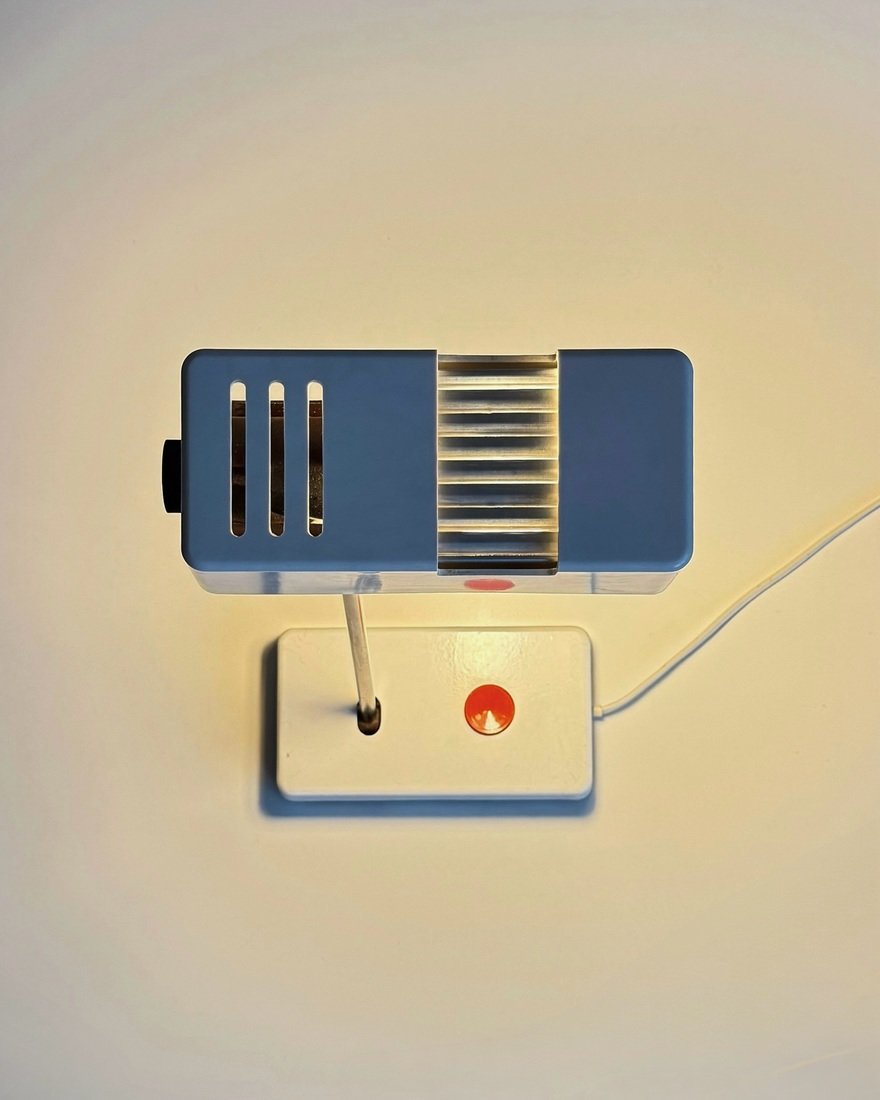
The lamp does not offer dimming capabilities, smart-home integration, or ergonomic flexibility. It offers light, stability, and a mechanical interface that has not changed in half a century. It represents a "slow design" philosophy—a product built to exist in the world for decades, not months.
Conclusion
The VEB Zweckleuchtenbau desk lamp is more than just a lighting fixture; it is a historical document. It reminds us that good design is not always defined by luxury, but by the efficiency with which an object solves a problem. Whether it sits on the desk of a modern creative or in the archives of a museum, it remains a powerful symbol of an era where design was dictated by the state, yet executed with a mechanical precision that commands respect.
As we analyze the potential for high-end reinterpretations of these humble objects, we are forced to confront the reality that the most "luxurious" design choice may simply be to build something that lasts forever. The East Germans understood this out of necessity; perhaps it is time for the modern world to learn it by choice.
About the Author