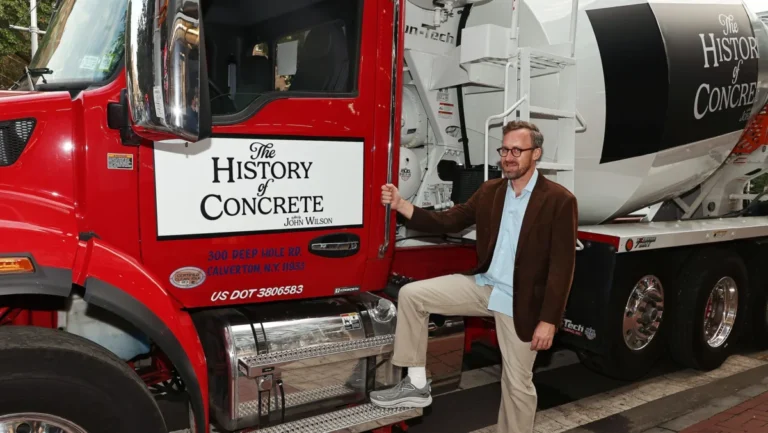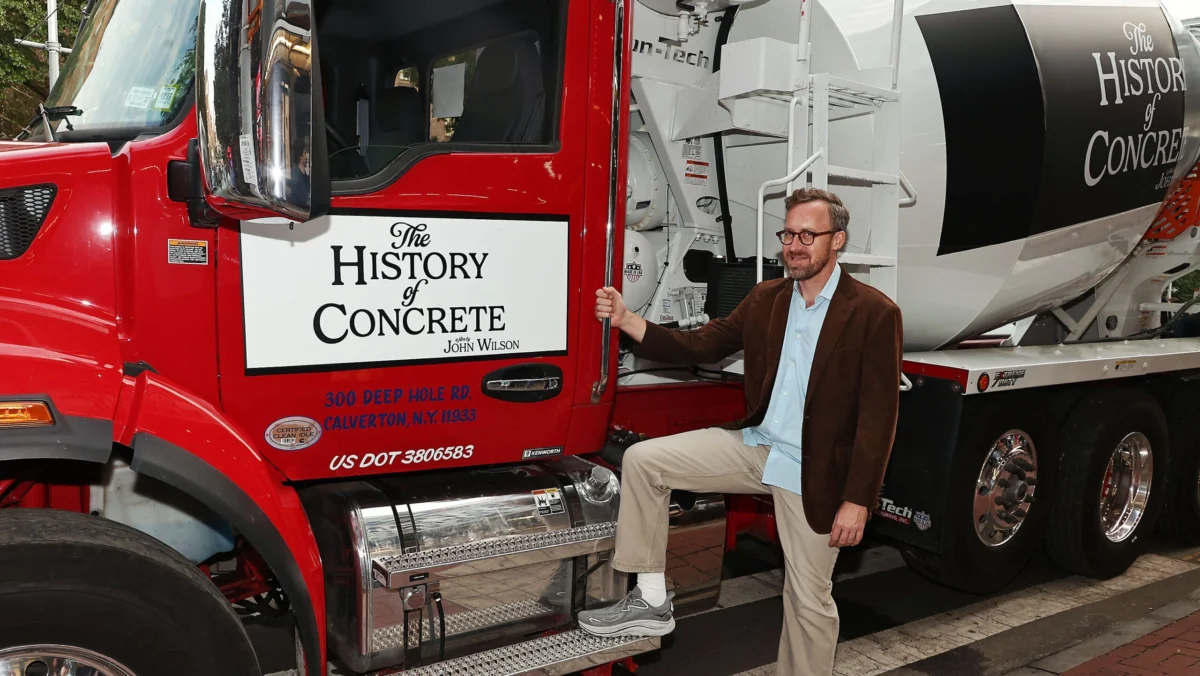
It is the second-most consumed substance on Earth, surpassed only by water. It is the skeletal structure of our modern existence, the literal foundation of our cities, and an environmental catastrophe that we have largely learned to ignore. Now, documentarian John Wilson—famed for his uncanny ability to find profound, laugh-out-loud absurdity in the mundane—has turned his lens toward the material that defines our civilization: concrete.
In his new feature-length film, The History of Concrete, Wilson does not offer a dry lecture on infrastructure. Instead, he applies his signature "How To" aesthetic—a blend of observational, handheld footage and deadpan, inquisitive narration—to the substance that holds our world together even as it slowly falls apart.
The Main Facts: An Unseen Crisis
While the film is styled with the whimsical, often disjointed charm of a Hallmark movie, its core is deeply unsettling. Wilson uses concrete as a narrative thread to explore the forgotten corners of the urban landscape. By examining the ubiquitous gray slabs that line our streets and skyscrapers, he exposes a paradox: we are entirely dependent on a material that is simultaneously the third-largest contributor to global greenhouse gas emissions and a rapidly deteriorating safety hazard.
The documentary suggests that we are living on borrowed time. Concrete, despite its reputation for permanence, has a finite and surprisingly short lifespan. As Wilson explores the cracks, leaks, and structural failures across New York City, he reveals a society that is literally and metaphorically cracking under the pressure of its own architecture.
A Chronology of Decay: From Basement Leaks to Urban Instability
The origin of Wilson’s obsession was personal. Like many New Yorkers, he found himself grappling with the realities of urban living when the basement of his Queens apartment building began to flood. His amateur attempts to patch the foundation with store-bought concrete proved futile, sparking a curiosity that would span over a year of filming.
The Path of Inquiry
- Initial Discovery: Wilson’s frustration with a recurring leak led him to document the pervasive water damage found in his own neighborhood.
- Broadening Scope: As he continued filming throughout 2025 and 2026, he began to notice the same structural failure on a city-wide scale—from public swimming pool facilities to architectural landmarks.
- The Breaking Point: The film captures a montage of "patch jobs" on major infrastructure, including the Brooklyn Promenade and high-profile midtown skyscrapers that are already showing signs of needing total demolition, despite being only a decade old.
This chronology of decay is exacerbated by the climate crisis. As extreme weather events become the new normal, the very structures designed to protect us are failing. Increased rainfall, combined with the "urban heat island" effect—where concrete absorbs and radiates heat, turning streets into 140-degree griddles—creates a feedback loop that accelerates the erosion of these structures.
Supporting Data: The High Cost of Construction
The statistics presented in The History of Concrete are sobering. To understand the gravity of the situation, one must look at the sheer volume of resources consumed by the construction industry:
- Sand Consumption: Humans consume approximately 50 billion tons of sand annually. Sand is the essential aggregate in concrete, and our global extraction methods are devastating coastlines and ecosystems.
- Global Warming: The production of cement, the binding agent in concrete, is responsible for an estimated 8 percent of global CO2 emissions.
- The Urban Heat Island Effect: In metropolitan areas, concentrated concrete can raise local ambient temperatures by as much as 7 degrees Fahrenheit, contributing to hundreds of heat-related deaths annually, particularly in arid regions like Arizona.
- Structural Lifespans: Experts interviewed by Wilson, including former New York City traffic commissioner Sam Schwartz, suggest that vital infrastructure like the Brooklyn Promenade has a design life of only 40 years, putting us on the precipice of potential mass structural failure.
Official Responses and the "Solution" Trap
The film also investigates the industry’s attempts to mitigate its own damage, specifically through concrete recycling. However, Wilson’s findings are discouraging. He tracks a recycling facility near a Brooklyn marine terminal, intended to turn demolition debris into new, lower-emission building materials.
The facility became a flashpoint for local activism. Residents complained of dangerous levels of airborne dust, which blanketed neighborhoods and rattled homes. The protests were so intense that the facility was forced to close in 2025. This episode highlights the "intractable" nature of our concrete dependency: even our efforts to act sustainably are hampered by the physical realities of the material itself.
When Wilson asks contractors and experts about alternatives, the response is almost universally dismissive. As one contractor tells him, "We’d be up a creek without concrete. It is used for everything." This sentiment underscores a lack of viable, large-scale alternatives, leaving cities trapped in a cycle of constant repair and massive resource extraction.
Implications: The Climate Paradox of Urban Life
One of the most compelling aspects of the documentary is how it challenges the environmental narrative surrounding urban versus suburban living. While it is standard environmentalist dogma that dense urban living is "greener" due to reduced reliance on automobiles, Wilson’s film forces a re-evaluation.
Most carbon footprint calculations for city dwellers ignore the "embodied carbon"—the immense energy and material costs required to construct and maintain the sewers, skyscrapers, and vast paved surfaces that make high-density life possible. If we account for the massive, short-lived concrete infrastructure required to sustain a city, the environmental ledger looks far more complicated.
A Call to Pay Attention
The brilliance of The History of Concrete lies not just in its critique of materials, but in its invitation to observe. By the end of the film, the viewer is left with a heightened sensitivity to the world around them.
The filmmaker’s technique of capturing the bizarre—such as a spiritual 3,100-mile race around a single Queens block or a mortuary specializing in tattoo preservation—serves as a reminder that life happens on and around this concrete. We are not just inhabitants of a city; we are participants in a high-stakes, gray-tinted experiment.
As the viewer leaves the theater, the world is transformed. A pothole is no longer just an annoyance; it is a symptom of a global crisis. A puddle is no longer just water; it is a sign of a failing drainage system. A skyscraper is no longer just a marvel of engineering; it is a ticking clock.
John Wilson’s work ultimately suggests that while we may not be able to change our lifestyle overnight, the first step is awareness. We must stop treating the ground beneath our feet as a permanent, inert background and start recognizing it as the fragile, finite, and fading foundation that it is. In a world where the infrastructure is literally falling apart, the most radical act one can commit is to look down, notice the cracks, and acknowledge that we are all, in a very literal sense, in danger somehow.
About the Author