The global contract logistics landscape is undergoing a significant transformation, and at the heart of this shift is GXO Logistics. In its third-quarter earnings report for 2026, the Greenwich, Connecticut-based logistics giant showcased a complex dichotomy: record-breaking business acquisition and organic revenue growth clashing against tighter margins and diminished cash flow. While the company continues to solidify its position as a dominant force in outsourced warehousing and supply chain management, investors and analysts are closely scrutinizing the cost of this aggressive expansion.
Main Facts: A Quarter of Record Momentum
GXO Logistics, the world’s largest pure-play contract logistics provider, reported a robust third-quarter revenue of $3.59 billion, marking a 5.7% increase compared to the same period in 2025. Perhaps most telling of the company’s underlying health is its organic revenue growth, which clocked in at 6.4%—the fastest pace the company has recorded in over three years.
The company’s ability to capture market share remains its strongest suit. During the quarter, GXO secured $375 million in new business wins, a staggering 34% year-over-year increase. This marks the second consecutive quarter in which the company has achieved double-digit growth in new contracts exceeding 30%. Furthermore, the company’s sales pipeline—a leading indicator of future revenue—has surged to a record $3.1 billion, a 30% jump from the previous year. These figures underscore a broader trend: as supply chains become more volatile and complex, major corporations are increasingly turning to GXO to manage the intricacies of their warehousing, distribution, and automation needs.
Chronology of Performance
To understand GXO’s current trajectory, one must look at the progression throughout the first nine months of 2026.
- First Half 2026: GXO began the year with a focus on geographic expansion, particularly in North America, which emerged as its fastest-growing market by the second quarter. The company’s strategic shift toward automation-heavy contracts began to pay dividends early on.
- Third Quarter 2026 (July–September): This period served as an inflection point. While revenue and new business wins accelerated, the company faced significant pressure on operating costs. Direct operating expenses climbed to $3.06 billion, up from $2.86 billion in Q3 2025. This escalation in costs, which outpaced top-line revenue growth, placed a heavy burden on operating margins.
- Year-to-Date Performance: Through the first nine months of the year, GXO has generated $10.33 billion in total revenue, a 6.8% increase over the $9.67 billion reported during the same period in 2025. Despite the volatility in cash flow, the company has remained consistent in its shareholder return strategy, repurchasing $84 million in common stock during Q3 alone.
Supporting Data: The Margin Paradox
While the top-line numbers are undeniably impressive, the underlying financial health of the company reflects the growing pains of rapid scaling. The following breakdown illustrates the disparity between revenue growth and bottom-line efficiency:
Operating Profitability
Operating income for the quarter dropped by 18.6% to $96 million, down from $118 million in the prior-year period. Consequently, the operating margin contracted from 3.5% to 2.7%. This decline is largely attributed to the aforementioned increase in direct operating expenses, suggesting that the costs of onboarding new clients and scaling operations are currently weighing heavily on profitability.
Cash Flow Challenges
The most striking figure in the Q3 report was the contraction in cash flow. Operating cash flow fell by 32.8% to $156 million, while free cash flow saw a sharper decline of 54.5%, dropping to $85 million. Capital expenditures were reduced by nearly half (down 48.6% to $74 million), a move that may reflect a strategic pivot toward managing liquidity as the company balances its high-growth ambitions with a $2.8 billion debt load.
Segmented Performance
The diversification of GXO’s portfolio continues to provide a buffer against industry-specific downturns:
- Technology & Electronics: A major highlight, with $498 million in revenue (up 18.6% YoY).
- Omnichannel Retail: The company’s bread-and-butter segment, contributing $1.69 billion in revenue, reflecting a steady 2.7% growth.
- Industrial & Manufacturing: Posted a solid 4.9% gain to reach $405 million.
- Food & Beverage: The sole major segment to face headwinds, with revenue declining 5.4% to $351 million, likely reflecting broader inflationary pressures in consumer staples.
Official Responses and Strategic Pivot
GXO CEO Patrick Kelleher has remained bullish, attributing the performance to a "new strategy" implemented over the past 12 months. In a formal statement accompanying the earnings release, Kelleher noted that the company is successfully converting its record-level pipeline into actual contracts.
"The new strategy we put in motion over the past year is delivering results," Kelleher stated. He emphasized that the company’s focus on "strategic growth sectors"—specifically aerospace, defense, and life sciences—is successfully insulating the company from volatility in the broader retail market. Approximately 40% of the year’s new business wins have come from these high-barrier-to-entry industries, which typically offer more stable, long-term contracts than traditional retail.
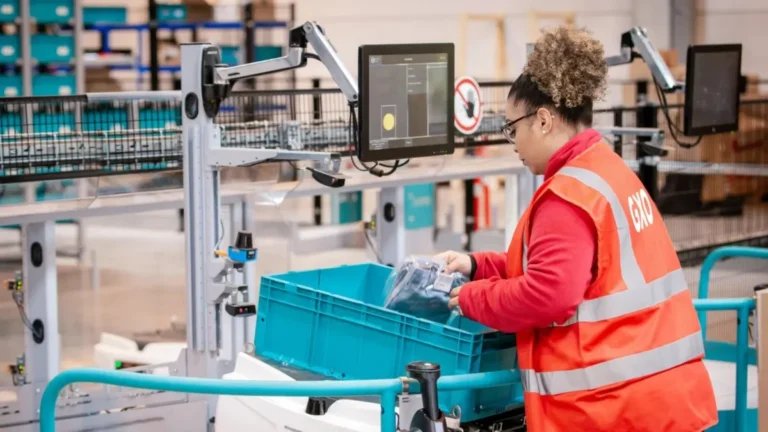
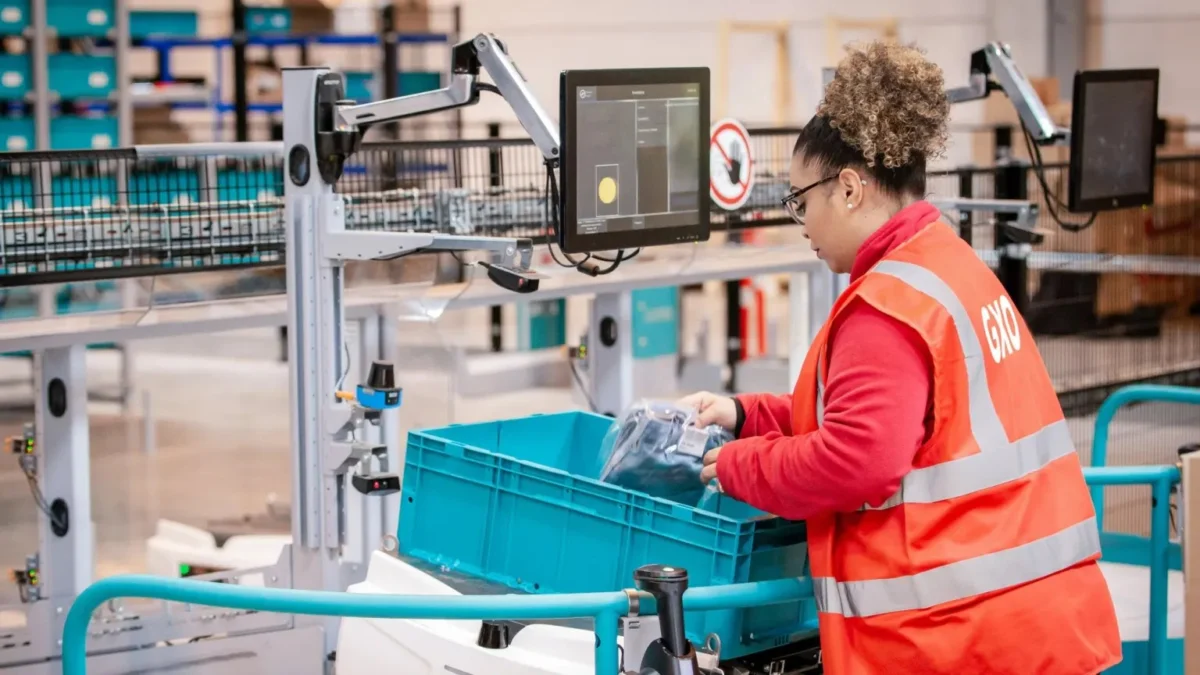
Management has maintained its full-year 2026 outlook, signaling confidence that the current margin compression is a temporary byproduct of aggressive investment and onboarding rather than a systemic failure. The company remains focused on its "automation drive," betting that long-term investment in robotics and smart-warehousing will eventually normalize operating margins as these sites reach peak efficiency.
Implications: The Road Ahead
The implications of GXO’s third-quarter results are twofold. On one hand, the company is winning the "war for scale." By securing over $1 billion in new business in just nine months, GXO has solidified its moat, making it difficult for smaller, less technologically advanced competitors to compete on service capability. The record-high $3.1 billion pipeline suggests that the market’s appetite for outsourced, tech-enabled supply chain management is not waning.
However, the "margin squeeze" serves as a warning sign. The market will be looking for clear evidence in Q4 and into 2027 that GXO can successfully transition these new, high-growth contracts into high-margin operations. The decrease in free cash flow, coupled with significant debt, means that GXO must execute its operational strategy with near-perfect precision.
Investor Sentiment
Investors are expected to watch the upcoming conference call closely for details on how management plans to stabilize operating margins. While the 12.7% increase in adjusted diluted EPS (to $0.89) is a positive signal that the bottom line is being managed, the contraction in operating margin remains the primary concern.
In conclusion, GXO Logistics finds itself at a critical juncture. It is undeniably a company in growth mode, successfully leveraging its technological edge to win massive contracts. Yet, the current reality of rising operating costs and tightening cash flow highlights the inherent challenges of being a global leader in a sector as capital-intensive as logistics. For GXO, the path forward is clear: continue to fuel the record-breaking pipeline while shifting focus toward operational efficiency and margin expansion. Whether they can achieve this balance will define their performance in the fiscal year ahead.
About the Author