As modern industry becomes inextricably linked to the reliability of its power infrastructure, the standard operating procedures for maintaining that infrastructure are undergoing a seismic shift. For decades, the manual inspection of switchgear, substations, and high-voltage environments has remained a high-stakes, labor-intensive necessity. However, a new paradigm is emerging: the integration of robotics, artificial intelligence (AI), and advanced sensor arrays to redefine the role of the field service engineer.
This transition is not merely about adopting "gadgets"; it is a fundamental rethinking of how risk is managed in safety-critical industrial environments. By prioritizing "visibility before exposure," the industry is moving toward a future where human expertise is augmented by data, rather than tested by hazardous conditions.
Main Facts: The New Frontier of Industrial Maintenance
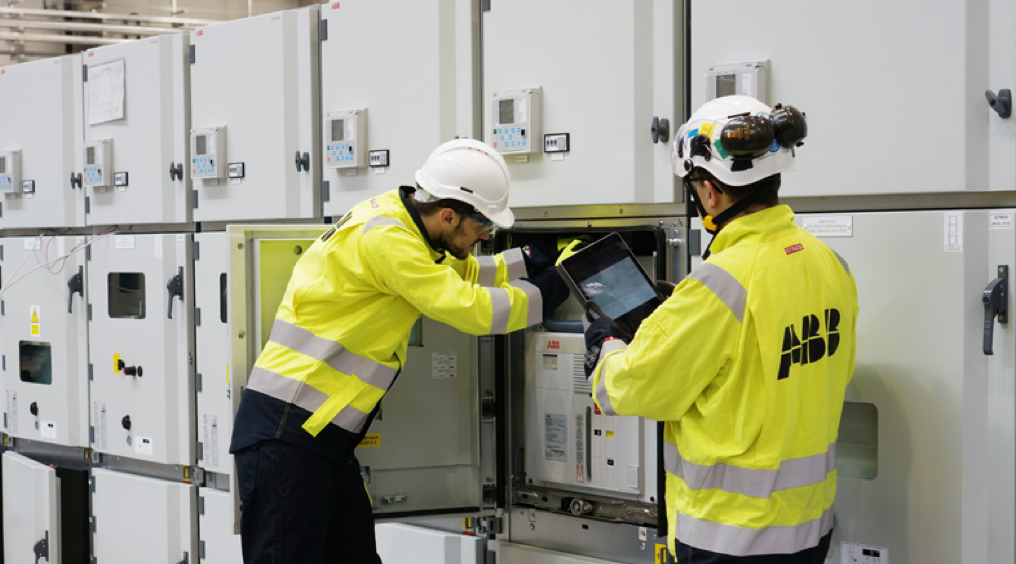
The central thesis of current industrial advancement is simple yet profound: field service engineers should not be the first line of contact in potentially lethal environments. In a traditional workflow, an engineer enters a live switchgear room with limited situational awareness, relying on physical proximity to identify anomalies.
The new approach leverages robotic platforms—autonomous or semi-autonomous drones and ground-based crawlers—to conduct the initial reconnaissance. These platforms are equipped with a suite of diagnostic tools:
- Thermal Imaging: Detecting hotspots that indicate impending failure or loose connections.
- Acoustic Monitoring: Identifying ultrasonic signatures that signal electrical discharge (arcing) long before it becomes visible to the human eye.
- Visual Inspection: High-definition optical mapping that provides a granular record of asset health.
These platforms operate as the "eyes and ears" of the service team, relaying real-time data to a control center. This allows engineers to conduct a comprehensive assessment of the environment from a position of safety, ensuring they have a complete, data-driven picture of the asset’s condition before ever stepping onto the floor.
Chronology: The Evolution of Inspection Practices
To understand the urgency of this transition, one must look at the historical progression of site maintenance:
- The Manual Era (1950s–2000s): Maintenance was entirely reactive or strictly time-based. Inspection relied on the physical presence of personnel and their ability to detect faults through sight, sound, or smell. Safety was managed through rigorous PPE and procedural checklists, but exposure to high-voltage risk was constant.
- The Digital Integration (2010s): The introduction of IoT sensors and smart grid technology began to provide remote telemetry for certain assets. However, the "last mile" of inspection—entering the room—remained a manual task.
- The Robotic Prototype Phase (2020–2025): The industry began testing general-purpose robotics. The challenge was that off-the-shelf robots lacked the specialized software "application layers" needed to interpret complex electrical data within high-EMI (electromagnetic interference) environments.
- The Current Transition (2026–Present): We are now seeing the convergence of specialized robotics and AI. Research is no longer focused on the hardware alone, but on the software integration that allows robots to understand the nuances of electrical service environments. We are currently in the phase of transitioning from "experimental prototypes" to "field-validated deployment."
Supporting Data: Why Change is Necessary
The argument for automated inspection is supported by the dual requirements of operational resilience and risk mitigation.
- Risk Reduction: According to industry safety metrics, the highest percentage of electrical accidents occur during the initial assessment and diagnostic phases of a maintenance task. By moving the "first-look" to a robotic platform, companies can statistically reduce human exposure to live electrical components by an estimated 60–80%.
- Predictive Accuracy: Traditional manual inspections are snapshots in time. Automated platforms can perform continuous monitoring. Studies have shown that early detection of thermal anomalies—often invisible during a standard human inspection—can prevent up to 30% of unplanned downtime events in mission-critical facilities.
- Resource Optimization: With a global shortage of highly skilled electrical engineers, the "force multiplier" effect of automation is vital. By using robots to filter out "false alarms" and providing detailed reports before the engineer arrives, companies can increase the productivity of their senior field experts by ensuring they only travel to sites that require their specific, high-level intervention.
Official Perspectives: Industry Leadership and Strategy
The consensus among global engineering leaders is that automation is not an "automation of the job," but an "automation of the task."
"Our objective is to understand how emerging technologies can be applied to solve real-world service challenges," notes the engineering team at ABB in their latest industry whitepaper. "We are not looking to adopt robots for their own sake. The goal is to strengthen human capability, not replace it."
Industry experts emphasize that the complexity of modern electrical systems—where a single decision can have catastrophic consequences for grid stability—renders total automation of decision-making impossible and undesirable. Instead, the "Human-in-the-Loop" model is the gold standard. In this framework, the robot gathers the "raw signal," the AI interprets the "diagnostic pattern," and the human engineer provides the "final judgment."
This strategy shifts the engineer’s role from a "manual inspector" to a "data analyst and strategist." This change in job description is also seen as a way to attract a new generation of digital-native talent into the field service industry, which has historically struggled with recruitment.
Implications: The Future of Field Service
The shift toward automated inspection carries significant implications for the future of industrial infrastructure:
1. The Death of the "Blind" Inspection
The most significant impact is the end of the "blind" entry. By utilizing digital twins and pre-visit robotic scans, engineers will enter environments with a full dossier of the asset’s health. They will know exactly which panel, cable, or breaker requires attention, effectively eliminating the need for exploratory work in dangerous zones.
2. Integration with Asset Management
Automated inspection data does not exist in a vacuum. It is increasingly being funneled into broader Asset Performance Management (APM) systems. This creates a feedback loop where historical inspection data informs future maintenance schedules, inventory management for spare parts, and even the design of future infrastructure.
3. Regulatory and Safety Standards
As robots become standard fixtures in substations, regulatory bodies are beginning to draft standards for "robotic-assisted work environments." This includes requirements for electromagnetic compatibility, cybersecurity, and fail-safe communication protocols. The standardization of these practices will likely accelerate the adoption rate across the sector.
4. Economic Viability
While the initial capital expenditure for robotics can be high, the Return on Investment (ROI) is realized through the reduction of unplanned outages. In industries like data centers, oil and gas, and manufacturing, the cost of a single hour of downtime can reach tens of thousands of dollars. If an automated inspection platform prevents just one major failure, the system effectively pays for itself.
Conclusion: A Collaborative Future
The path forward is clear: human expertise remains the cornerstone of electrical infrastructure. However, the environment in which that expertise is applied is becoming too complex and too dangerous for traditional manual methods alone.
By embracing automated inspection, the industry is not distancing itself from the human element; it is protecting it. By offloading the repetitive, high-risk data gathering to robotics and leveraging AI to synthesize that information, companies are empowering their engineers to perform at a higher level. The future of electrical field service is one where the engineer acts as an informed orchestrator of technology, entering complex environments not as a risk-taker, but as a master of the situation.
As the technology continues to mature, the focus will remain on the synergy between the two: a world where robotic platforms handle the exposure, and human engineers provide the intelligence. For further insights on the evolution of these technologies, industry professionals are encouraged to review the latest research on electrification services and infrastructure longevity.
About the Author