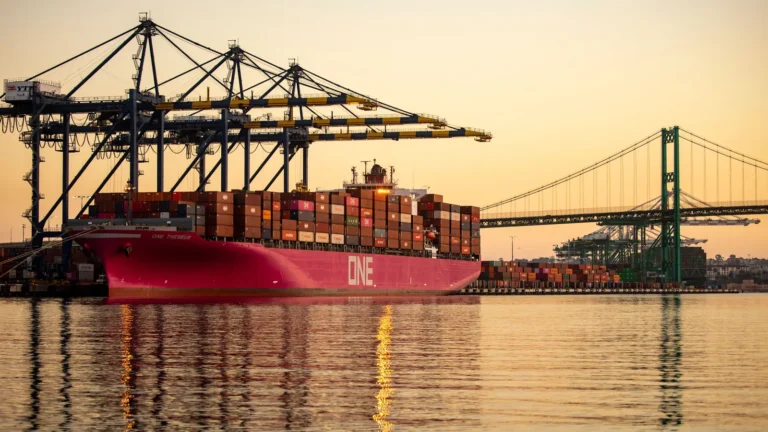
LOS ANGELES, CA – The traditional rhythm of global ocean shipping, long dictated by predictable seasonal peaks and troughs, is undergoing a profound transformation. Companies are increasingly abandoning conventional patterns, opting instead for a more agile, opportunistic approach to cargo movement. This strategic pivot, driven by a complex interplay of geopolitical uncertainties, fluctuating trade policies, and volatile operating costs, has ushered in an "early peak season" and record-breaking volumes at major U.S. ports, even as the future beyond the immediate horizon remains shrouded in uncertainty.
Gene Seroka, Executive Director of the Port of Los Angeles, articulated this fundamental shift during a July 15 media briefing, observing that businesses are no longer passively awaiting "perfect conditions" but are actively seizing "favorable openings" to move cargo. This new paradigm reflects a calculated rebalancing act by retailers and manufacturers, who are weighing critical factors such as back-to-school and holiday demand against the looming specter of tariffs, the relentless climb of fuel costs, and a pervasive sense of global instability.
The implications of this altered landscape are far-reaching, impacting everything from inventory management strategies for multinational corporations to the operational tempo of the world’s busiest maritime gateways. As the industry grapples with this evolving reality, port authorities, logistics providers, and supply chain stakeholders are being forced to adapt in real-time, simulating potential scenarios and developing flexible responses to an increasingly unpredictable global trade environment.
Main Facts: The New Calculus of Ocean Shipping
The core of the current situation lies in a significant departure from established shipping norms. Historically, ocean freight saw distinct peaks leading up to major retail events like the holiday season, often referred to as the "peak season" stretching from late summer into autumn. This allowed for predictable planning cycles for carriers, ports, and shippers alike. However, recent global disruptions have shattered this predictability.
Key takeaways from the current environment include:
- Erosion of Seasonality: Companies are no longer adhering strictly to traditional seasonal shipping schedules. Instead, they are prioritizing opportunistic cargo movement whenever conditions, such as available vessel space or favorable pricing, allow.
- Strategic Frontloading: Retailers and manufacturers are proactively advancing cargo shipments, a strategy known as "frontloading," to build inventory ahead of anticipated disruptions. This is a direct response to lingering supply chain uncertainties, potential future tariffs, and rising operational costs.
- Early Peak Season: This frontloading has effectively created an "early peak season," with significant cargo volumes observed much earlier in the year than traditionally expected.
- Record Port Volumes: Major West Coast ports, particularly the Port of Los Angeles and the Port of Long Beach, have reported exceptionally strong volumes, setting new historical benchmarks for monthly throughput.
- Uncertainty Beyond Short-Term: Despite the current surge, the long-term outlook for ocean shipping beyond the immediate two to three months remains highly uncertain, primarily due to expiring trade policies and volatile geopolitical factors impacting fuel prices.
- Rising Operational Costs: Fuel, now representing a substantial portion (upwards of 30%) of a vessel’s voyage cost, is a critical concern, with anticipated adjustments in fuel surcharges set to further impact transportation expenses.
Chronology: A Timeline of Strategic Shifts and Surging Volumes
The current state of ocean shipping is not an isolated event but rather the culmination of a series of strategic adjustments made in response to a volatile global landscape.
Pre-Existing Conditions & The Genesis of Uncertainty (Late 2025 – Early 2026):
The global supply chain has been in a state of flux since the onset of the COVID-19 pandemic, experiencing unprecedented disruptions ranging from port congestion and labor shortages to factory shutdowns. While some stability had returned, new challenges emerged. Geopolitical tensions, particularly the ongoing conflict in the Middle East involving Iran, began to exert pressure on global energy markets, leading to upward trends in crude oil prices. Simultaneously, discussions surrounding the potential expiration or renewal of certain U.S. trade tariffs, notably Section 122 tariffs, created an environment of regulatory uncertainty for importers.
The Strategic Response: Frontloading Takes Hold (Early 2026):
Facing this cocktail of rising costs, potential trade barriers, and the lingering memory of past supply chain shocks, retailers and manufacturers began to re-evaluate their inventory management strategies. Rather than risking delays or higher costs later in the year, many opted to "frontload" their cargo. This meant placing orders and shipping goods earlier than usual, aiming to build up safety stock and ensure product availability for critical sales periods like back-to-school and the year-end holidays. This proactive measure effectively pulled demand forward, laying the groundwork for an "early peak season."
May 2026: Early Indicators of Surge:
Initial data from major U.S. ports began to show an unusual uptick in cargo volumes. While not yet at record levels, the increases were significant enough to signal a departure from typical seasonal patterns. Port officials and industry analysts started to take note of the accelerated flow of goods.
June 2026: Record-Breaking Throughput:
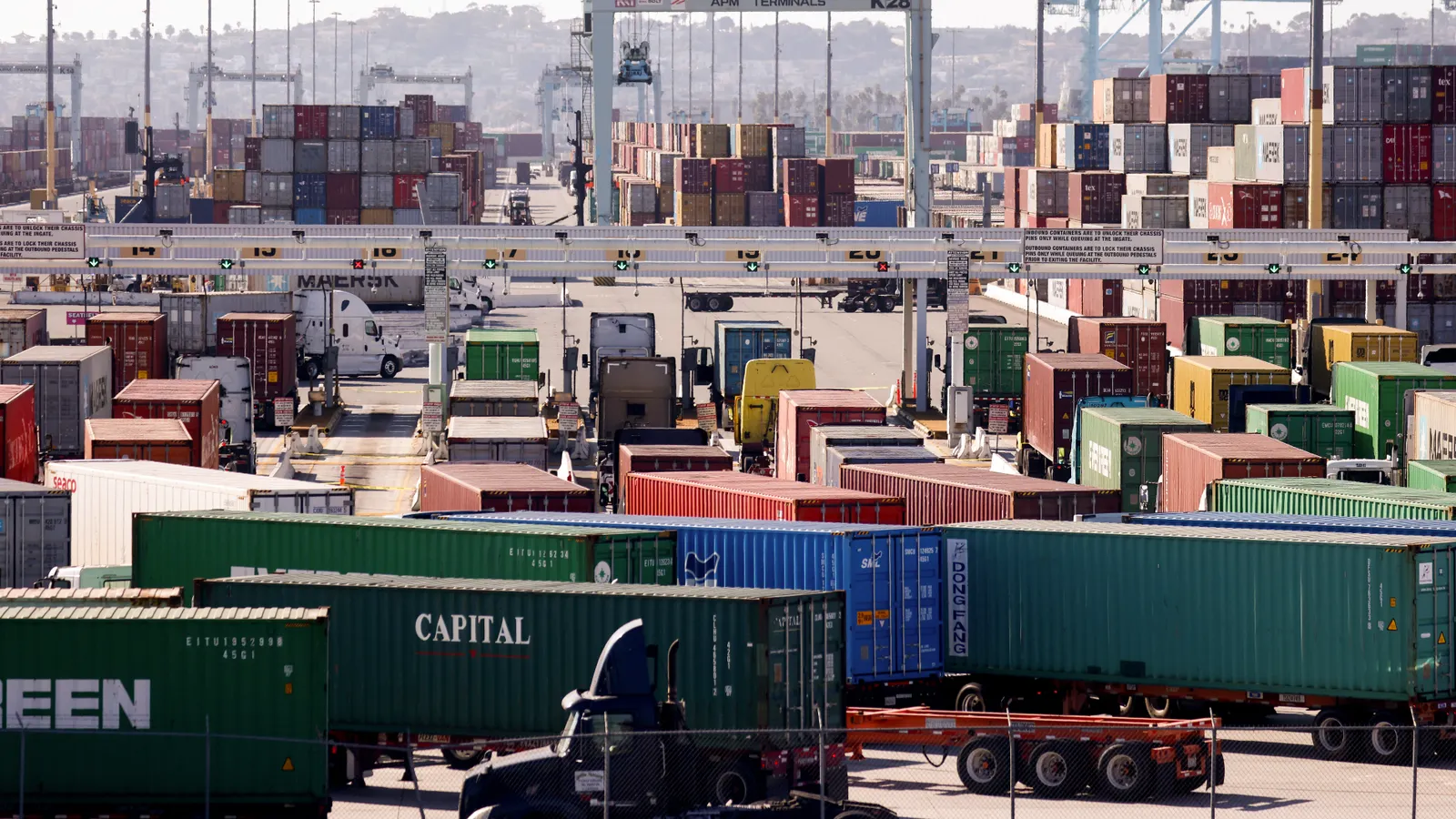
The strategy of frontloading manifested dramatically in June. The Port of Los Angeles, a bellwether for trans-Pacific trade, processed an astounding 1,002,734 Twenty-foot Equivalent Units (TEUs), marking its best June in the port’s 118-year history. This monumental figure represented a 12% increase year-over-year, driven primarily by a 13% surge in loaded imports.
Concurrently, the Port of Long Beach, a key partner in the San Pedro Bay port complex, also experienced robust growth. Its June throughput reached nearly 780,000 TEUs, an impressive 10.6% increase compared to the previous year. Loaded imports at Long Beach climbed by 11% year-over-year to 387,025 TEUs, reinforcing the trend of accelerated inbound cargo.
July 2026: Continued Momentum and Looming Expiration:
Forecasts for July indicated that the strong volumes would persist, albeit with a slight moderation from June’s historic high. The Port of Los Angeles projected cargo volumes to remain above 900,000 TEUs. However, the horizon for July also brought a critical deadline: the expiration of Section 122 tariffs on July 24. This date became a focal point of uncertainty, with businesses unsure whether the tariffs would be renewed, modified, or allowed to lapse. This ambiguity further fueled the earlier frontloading efforts, as companies sought to move goods before any potential re-imposition of duties.
Beyond July 2026: The Harder-to-Read Picture:
As Gene Seroka noted, the outlook beyond July becomes "a little harder to read." The expiration of tariffs, the ongoing impact of the Iran war on fuel prices, and the subsequent adjustments in ocean carrier fuel surcharges all converge to create a complex and unpredictable environment. The industry is bracing for a period where flexibility and real-time adaptation will be paramount, as the factors influencing shipping costs and patterns remain highly dynamic.
Supporting Data: Quantifying the Early Peak Season
The unprecedented activity at the Ports of Los Angeles and Long Beach serves as compelling evidence of the fundamental shift in global shipping patterns. These figures underscore the intensity of the "early peak season" and the strategic decisions made by companies to secure their supply chains.
Port of Los Angeles: June by the Numbers
The Port of Los Angeles, the busiest container port in the Western Hemisphere, reported record-shattering performance for June, reflecting the widespread frontloading efforts:
- Total Processed TEUs: 1,002,734
- This figure represents a substantial 12% increase year-over-year (YoY). To put this into perspective, exceeding the one-million TEU mark in June is historically significant, typically reserved for the traditional late-summer/early-fall peak season. This indicates that the volume of goods moving through the port was consistent with or even surpassed levels usually seen during the busiest times of the year. The sheer volume places immense demands on port infrastructure, labor, and logistics networks.
- Loaded Imports in TEUs: 530,558
- A robust 13% increase YoY in loaded imports is the primary driver of the overall volume surge. This metric directly reflects the influx of consumer goods, manufacturing components, and other products destined for the U.S. market. The sharp rise signifies that retailers and manufacturers were aggressively bringing in inventory to preempt potential disruptions, higher costs, or tariff changes. Such a high import volume suggests a strong push to replenish stocks and prepare for future demand.
- Loaded Exports in TEUs: 126,365
- Exports remained largely flat YoY, showing no significant change. This stagnant export performance, in contrast to the surging imports, highlights a persistent trade imbalance. While U.S. consumers are receiving a flood of goods, American producers are not seeing a corresponding increase in demand for their products abroad, or face greater logistical hurdles. This imbalance means that many containers arrive full but depart empty, contributing to operational inefficiencies and potentially higher costs for importing.
- Empty Container Units in TEUs: 345,811
- An notable 17% increase YoY in empty container units underscores the import-heavy nature of current trade flows. These empty containers are primarily being repositioned back to Asia to be refilled with new imports. The significant rise indicates that carriers are prioritizing the rapid return of empty boxes to origin ports to capitalize on the lucrative import trade, rather than waiting for export cargo. This often comes with operational costs for the shipping lines and can further exacerbate the imbalance in global container flows.
Port of Long Beach: Complementary Growth
The Port of Long Beach, located adjacent to Los Angeles, also demonstrated exceptional performance in June, further solidifying the trend of intensified cargo movement across the San Pedro Bay complex:
- Total Processed TEUs: Nearly 780,000
- This figure represents a strong 10.6% increase YoY, showcasing consistent growth across both major Southern California gateways. The combined strength of these two ports makes the San Pedro Bay complex a critical barometer for trans-Pacific trade.
- Loaded Imports in TEUs: 387,025
- Long Beach saw an 11% increase YoY in loaded imports, mirroring the trend observed at the Port of Los Angeles. This parallel growth confirms that the frontloading strategy is a widespread industry phenomenon, not isolated to a single port.
July Forecasts: Sustained Momentum
Looking ahead, the Port of Los Angeles forecasts continued robust activity for July, with cargo volumes expected to exceed 900,000 TEUs. While this represents a slight dip from June’s all-time high, it nonetheless signifies a sustained period of elevated throughput, well above historical averages for the month. This continued strength reinforces the narrative that the "early peak season" has extended well into the summer, defying traditional seasonal lulls. Industry reports, such as those from the National Retail Federation (NRF), corroborate these port-level findings, predicting record import cargo volumes across the U.S. ahead of potential August tariff adjustments.
Official Responses: Navigating the Fog of Uncertainty
Gene Seroka, a seasoned veteran in port operations and global logistics, offered incisive commentary on the drivers behind these trends and the challenges that lie ahead. His remarks underscore the strategic agility required from both shippers and port authorities in this evolving landscape.
Seroka emphasized that the shift away from traditional seasonality is a deliberate, calculated move by businesses. "In other words, retailers are making strategic decisions about when and how much to ship, balancing back-to-school and holiday demand against tariffs, rising fuel costs, and global uncertainty," he stated. This highlights a complex optimization problem for companies: they are not simply reacting but are proactively managing risk by adjusting their shipping timelines. The balancing act involves ensuring shelves are stocked for crucial sales periods while simultaneously mitigating the financial impact of potential trade barriers and escalating transportation costs.
However, Seroka also cautioned that the clarity of the immediate past and present gives way to significant ambiguity further down the line. "The picture gets a little harder to read beyond July," he admitted. This increased opaqueness is attributed to several critical factors:
- Trade Policy Volatility: The impending expiration of Section 122 tariffs on July 24 is a major source of uncertainty. These tariffs, which can significantly alter the cost of imported goods, create a dilemma for businesses. Without clear guidance on whether they will be renewed, modified, or allowed to lapse, companies are forced to make speculative decisions. This policy uncertainty was a key driver for the earlier frontloading, as businesses sought to move goods under known conditions. Seroka explicitly linked this to the retailers’ actions: "This is part of the reason why you saw the retail community advance shipments and inventories because they just don’t know what’s going to happen with any level of specificity after these Section 122s expire."
- Geopolitical Impact on Fuel Costs: The ongoing conflict involving Iran continues to exert a tangible influence on global transportation costs. The volatility in the Middle East directly impacts oil prices, which in turn drives up the cost of bunker fuel for ships. Seroka highlighted the sheer magnitude of this expense: "Currently, fuel represents upwards of 30% of a vessel’s voyage cost." This significant operational cost inevitably trickles down to shippers through fuel surcharges.
- Lag Effect of Fuel Surcharges: Seroka also provided critical insight into how fuel costs translate into shipping expenses. He explained the mechanism of fuel surcharges from ocean carriers: "So, you’ll see a bump there, and then when prices go down, usually that surcharge remains elevated, and it lags for some time before it gets back to a price point that’s a little more reflective of what we see today in a snapshot in time." This "lag effect" means that even if global oil prices stabilize or decrease, the benefits may not be immediately passed on to shippers, contributing to sustained higher costs for a period.
In response to this fluid environment, the Port of Los Angeles is adopting a proactive, adaptive strategy. Seroka outlined the port’s preparedness measures: "Looking ahead, Seroka said that the port’s operations teams both on the import and export side will continue to run simulation exercises on scenarios like new tariffs and higher fuel prices. Teams will then reconvene to determine how to handle any new developments." This commitment to scenario planning and flexible operational adjustments is crucial for maintaining efficiency and minimizing disruption in a landscape defined by uncertainty.
Implications: Reshaping the Global Supply Chain Landscape
The observed shifts in shipping patterns and the underlying drivers carry profound implications for various stakeholders across the global supply chain, from multinational corporations to the end consumer. This is not merely a temporary blip but potentially the harbinger of a more fundamentally altered trade environment.
For Retailers and Manufacturers: The Inventory Conundrum
The strategic frontloading of cargo, while mitigating immediate risks, introduces its own set of challenges for retailers and manufacturers.
- Inventory Management Complexity: Holding larger inventories for longer periods incurs significant warehousing costs, insurance premiums, and the risk of obsolescence, especially for fashion or technology goods with short product lifecycles. Companies must now meticulously balance the cost of holding inventory against the risk of stockouts or price increases due to tariffs and higher shipping costs.
- Demand Forecasting Difficulty: In a volatile economic climate, accurately forecasting consumer demand becomes exceptionally difficult. Overstocking can lead to costly markdowns, while understocking can result in lost sales and customer dissatisfaction. The traditional seasonal cues for demand are now blurred by the "early peak."
- Capital Allocation: Tying up capital in inventory for extended periods can strain liquidity and limit investment in other areas of the business, such as product development or marketing.
For Ports and Logistics Providers: The Need for Agility
Ports, terminal operators, drayage companies, and warehouses are on the front lines of this transformation.
- Infrastructure Strain: Record volumes, even if frontloaded, still place immense pressure on existing port infrastructure, equipment, and labor. While potentially alleviating congestion during what would have been a traditional peak, it requires constant vigilance and readiness.
- Operational Flexibility: The erosion of predictable seasonality demands greater operational flexibility. Ports must be able to scale up and down their operations more dynamically, responding to unexpected surges or lulls rather than relying on historical patterns. This impacts staffing, equipment deployment, and gate hours.
- Data-Driven Decision Making: The need for real-time data and advanced analytics becomes paramount. Ports like Los Angeles, with their simulation exercises, exemplify the proactive approach required to anticipate and manage potential bottlenecks or disruptions.
For Consumers: Price Volatility and Product Availability
Ultimately, the costs and complexities embedded in the supply chain will likely impact consumers.
- Price Increases: Rising fuel costs, potential tariffs, and the increased cost of holding inventory will inevitably be passed on to consumers through higher retail prices. The "lag effect" of fuel surcharges, as described by Seroka, suggests that consumers may experience sustained elevated prices even if underlying energy costs stabilize.
- Product Availability: While frontloading aims to ensure product availability, severe disruptions or miscalculations could still lead to shortages for specific goods. Conversely, overstocking could result in widespread discounts.
- Evolving Shopping Habits: Consumers might adapt to these changes by shopping earlier for holiday goods or becoming more flexible with their brand choices based on availability and price.
For Global Trade and Policy Makers: A Call for Clarity
The current situation highlights the fragility of global trade in the face of geopolitical tensions and inconsistent policy.
- Resilience Strategies: The emphasis on frontloading and opportunistic shipping underscores a broader trend towards building resilience into supply chains, moving away from purely "just-in-time" models to "just-in-case" strategies. This may involve diversifying sourcing, investing in regional production, or increasing buffer stocks.
- Geopolitical Risk Management: The Iran war’s impact on fuel costs is a stark reminder of how regional conflicts can have global economic ramifications, forcing businesses to factor geopolitical risk more heavily into their planning.
- Policy Stability: The uncertainty surrounding Section 122 tariffs underscores the critical need for clear, consistent, and predictable trade policies. Ambiguity forces businesses into costly speculative actions, ultimately creating inefficiencies in the global trading system. Policy makers have a crucial role in providing clarity to enable more stable and efficient supply chain planning.
In conclusion, the days of a neatly compartmentalized, seasonally predictable ocean shipping industry may be firmly in the past. What emerges is a more dynamic, complex, and high-stakes environment where agility, strategic foresight, and robust risk management are not merely advantageous but essential for survival and success. The record volumes seen today are a testament to the industry’s capacity to adapt, but the road ahead remains fraught with variables that will test the resilience of global trade for years to come.
About the Author