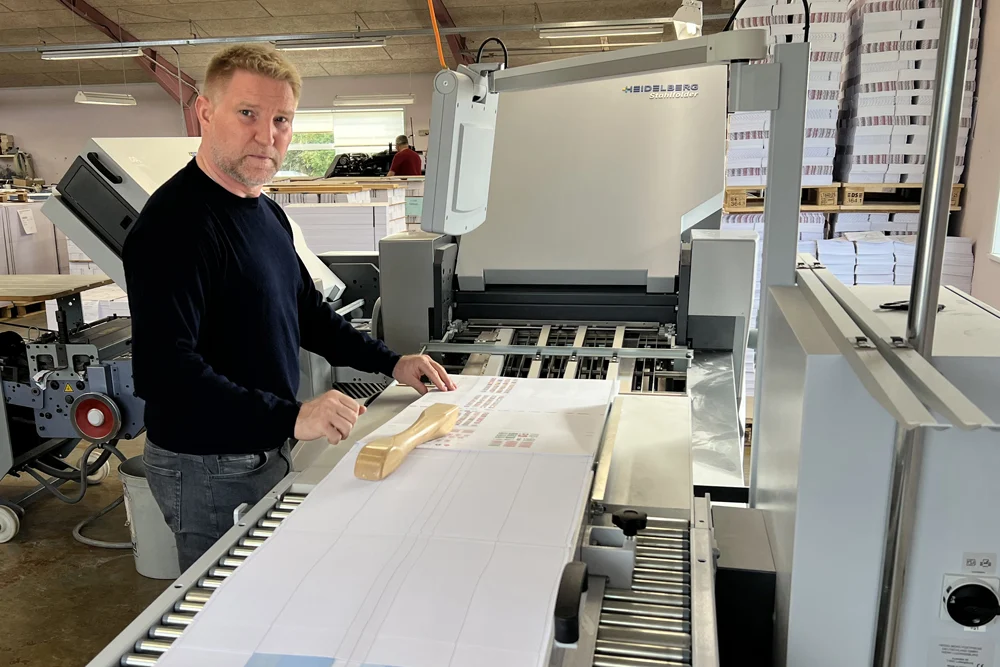
RANDERS, DENMARK – In a decisive move underscoring its commitment to operational excellence and domestic production, Provinsforlaget Miljøkalendere, a leading Danish publisher specializing in eco-friendly calendars, has announced a significant investment in its second Stahlfolder folding machine within an ambitious 18-month timeframe. This rapid expansion of its post-press capabilities positions the Randers-based firm to sharpen its competitive edge, meet escalating demand for high-quality, Danish-produced goods, and reinforce its strategic vision for sustainable growth.
The acquisition, facilitated by long-standing partner Heidelberg Danmark, highlights Provinsforlaget’s proactive approach in a print market often characterized by flux. By integrating advanced automation into its production workflow, the company aims to enhance efficiency, maintain stringent quality standards, and capitalize on a stable market for physical calendars, particularly those with an environmental focus. This strategic investment not only fortifies Provinsforlaget’s current operations but also signals a robust outlook for the future of specialized print production in Denmark.
A Legacy of Precision: The Chronology of Provinsforlaget Miljøkalendere
The journey of Provinsforlaget Miljøkalendere is a testament to resilience, strategic adaptation, and an unwavering commitment to quality in the print industry. Its evolution reflects broader trends within the sector, from the foundational role of traditional print to the modern imperative of sustainability and technological integration.
Roots and Early Days: Forging a Niche in Print
While the precise founding date of Provinsforlaget is not detailed in the immediate context, its long-standing presence in the Danish market, particularly its specialized focus on calendars, suggests a history rooted deeply in the country’s printing traditions. For decades, calendars have served as essential tools for planning, branding, and daily utility, making them a consistent staple in both corporate and private sectors. Early iterations of Provinsforlaget likely catered to local businesses and organizations, building a reputation for reliability and quality in a competitive landscape. The designation "Miljøkalendere" (Eco-calendars) further indicates a forward-thinking approach, recognizing the growing importance of environmental consciousness long before it became a mainstream business imperative. This specialization would have allowed the company to cultivate expertise in sourcing sustainable materials and developing environmentally responsible production processes, distinguishing it from generalist printers.
The Helms Era Begins: Strategic Acquisition in 2017
A pivotal moment in Provinsforlaget’s history occurred in 2017 when Torben Helms acquired the company. Helms, already a seasoned entrepreneur in the graphic arts industry through his ownership of DK Laminering, saw immense potential in Provinsforlaget. DK Laminering operates as a crucial subcontractor for other graphic companies, specializing in intricate post-press services such as spiral binding and wire-O finishing. This existing expertise provided a natural synergy with Provinsforlaget’s calendar production. The acquisition was not merely an expansion but a strategic consolidation of complementary capabilities. Helms’ vision was to integrate Provinsforlaget’s established portfolio with DK Laminering’s finishing prowess, thereby offering a more comprehensive, streamlined, and value-added service to clients. This move immediately enhanced the group’s vertical integration, allowing for greater control over quality and delivery timelines, and opening new avenues for cross-selling and efficiency.
Navigating Market Shifts and Initial Investments
The print industry has faced profound transformations over the past two decades, largely driven by digitalization. While many sectors of print have contracted, specialized niches like high-quality calendars and promotional materials have demonstrated remarkable resilience. Provinsforlaget, under Helms’ leadership, actively navigated these shifts by focusing on its core strengths and investing in technology. The initial investment in a Stahlfolder machine, prior to the recently announced second one, was a critical step in this modernization strategy. This first machine likely addressed immediate needs for increased capacity and efficiency in folding operations, a crucial stage in calendar production. It allowed Provinsforlaget to handle larger print runs with greater precision and speed, laying the groundwork for further expansion. This early adoption of advanced post-press technology demonstrated a commitment to staying ahead of the curve and leveraging automation to maintain competitiveness.
The Latest Strategic Expansion: A Rapid Reinforcement
The decision to invest in a second Stahlfolder folding machine within a mere 18 months of the first underscores a period of sustained growth and strategic confidence at Provinsforlaget. This rapid succession of high-capital investments is highly unusual in the current print market, particularly in the Nordic region, as noted by industry observers. It signals not just an increase in demand but also a deliberate strategy to build robust, redundant, and highly efficient production lines. The choice of another machine equipped with a round pile feeder is particularly telling, indicating a continued focus on large-volume orders and the need for uninterrupted, high-speed feeding of paper sheets. This latest acquisition is a direct response to a "fine and stable order intake" and the growing preference among customers for domestically produced calendars. It represents a significant upgrade in both capacity and technological capability, designed to future-proof Provinsforlaget’s operations and solidify its market leadership.
Driving Forces: Supporting Data and Market Dynamics
The strategic investments made by Provinsforlaget Miljøkalendere are not isolated decisions but are deeply rooted in compelling market dynamics and technological advancements. Understanding these underlying forces provides context for the company’s aggressive pursuit of efficiency and quality.
The Enduring Appeal of Physical Calendars
In an increasingly digital world, the resilience of physical calendars might seem counterintuitive. However, several factors contribute to their sustained demand:
- Tangibility and Presence: A physical calendar offers a tangible presence that digital alternatives often lack. It serves as a constant, visible reminder of dates, events, and, crucially, a brand message. Unlike digital screens that are prone to distractions, a calendar on a wall or desk provides a static, always-on reference point.
- Branding and Marketing Value: For businesses, calendars are powerful, year-long marketing tools. They offer sustained brand exposure in offices and homes, reinforcing corporate identity and goodwill. High-quality, aesthetically pleasing calendars become appreciated gifts, enhancing customer loyalty.
- Functionality and Practicality: Despite smartphones, many individuals and businesses still prefer the quick overview and easy annotation offered by a physical calendar. They are especially useful in collaborative environments where a shared visual reference is beneficial.
- The "Eco" Factor: Provinsforlaget’s specialization in "Miljøkalendere" taps into a growing global consciousness regarding environmental responsibility. Consumers and businesses are increasingly prioritizing suppliers who demonstrate sustainable practices. Calendars made from recycled paper, printed with eco-friendly inks, and produced with energy-efficient processes carry an added value proposition that resonates with modern sensibilities. This niche mitigates some of the general decline seen in other print sectors.
- Danish Production Premium: As Torben Helms noted, many customers prioritize Danish-produced calendars. This preference is driven by several factors:
- Quality Assurance: Danish manufacturing is renowned for its high standards, precision, and reliability. Customers trust that products made locally adhere to strict quality controls.
- Ethical Sourcing and Labor: Domestic production often implies adherence to higher labor standards and more transparent supply chains, appealing to ethically minded buyers.
- Reduced Lead Times and Flexibility: Local production allows for quicker turnaround times, easier communication, and greater flexibility for custom orders or last-minute adjustments, a significant advantage over often distant and less agile international suppliers.
- Support for Local Economy: Choosing Danish-produced goods contributes to the national economy, supporting local jobs and businesses.
The Power of Automation and Advanced Folding Technology
Post-press finishing, particularly folding, is a critical stage in the production of calendars and many other printed materials. The efficiency and precision of this stage directly impact overall production costs, timelines, and product quality.
- Stahlfolder Technology: Heidelberg’s Stahlfolder machines are industry benchmarks for automated folding. They represent the pinnacle of German engineering in the print finishing sector, known for their robustness, versatility, and precision.
- Key Benefits of Automation:
- Increased Speed and Throughput: Automated folding machines can process thousands of sheets per hour, drastically reducing production times compared to manual or semi-automatic methods.
- Enhanced Precision and Consistency: Modern folders maintain exact folds across entire runs, eliminating human error and ensuring uniform quality, which is paramount for multi-page products like calendars.
- Reduced Labor Costs: Automation minimizes the need for manual intervention, allowing staff to be redeployed to more skilled tasks or reducing overall labor requirements.
- Waste Reduction: Precise folding reduces misfolds and spoilage, leading to less material waste and improved cost efficiency.
- Versatility: Stahlfolder machines can handle a wide range of paper types, weights, and folding patterns, offering flexibility to produce diverse calendar formats and other printed items.
- The Round Pile Feeder Advantage: The specific choice of machines with a round pile feeder is highly strategic for Provinsforlaget.
- Continuous Feeding: Round pile feeders allow for continuous loading of paper stacks without interrupting the folding process, maximizing uptime and throughput. This is ideal for very large print runs, where even minor interruptions can significantly impact overall production time.
- High Volume Handling: They are designed to manage substantial stacks of paper, ensuring a steady, reliable supply to the folding unit, crucial for companies like Provinsforlaget that handle "store oplag" (large print runs).
- Reduced Operator Intervention: With fewer stops for reloading, operators can oversee multiple machines or focus on other tasks, further enhancing overall efficiency.
Randers as a Hub for Industrial Excellence
Randers, a city in eastern Jutland, Denmark, has a long-standing history as an industrial and commercial center. It boasts a diverse economy with a strong manufacturing base, logistics infrastructure, and a skilled workforce. Businesses like Provinsforlaget Miljøkalendere contribute significantly to the local economy, providing employment and fostering innovation. The presence of such a technologically advanced printing operation reinforces Randers’ reputation as a hub for industrial excellence, attracting talent and supporting a network of related businesses and services. This local context underscores the broader impact of Provinsforlaget’s success beyond its immediate balance sheet.
Voices from the Forefront: Official Responses
The leadership of Provinsforlaget Miljøkalendere and Heidelberg Danmark offer insightful perspectives on this latest investment, shedding light on their strategic thinking, market observations, and the strength of their enduring partnership.
Torben Helms on Strategy and Vision
Torben Helms, Director and owner of Provinsforlaget Miljøkalendere, articulated the driving force behind the recent investment with clear conviction. His statements underscore a shrewd understanding of market demands and operational imperatives.
"We are currently experiencing a fine and stable order intake," Helms affirmed. This isn’t merely a casual observation but a strategic assessment of the market. In an industry where volatility can be common, stability signifies a strong product-market fit and effective sales strategies. He elaborated on this stability, attributing it largely to a key customer preference: "Fortunately, many customers prioritize a Danish-produced calendar over cheaper foreign versions." This insight is crucial. It validates Provinsforlaget’s commitment to local production and the quality premium associated with it. Customers are not just buying a product; they are buying reliability, transparency, ethical production, and often, faster, more flexible service. This preference allows Provinsforlaget to compete effectively not on price alone, but on a holistic value proposition.
Helms further explained the operational necessity: "We therefore need to ensure that our machine park is efficient and up-to-date." This statement reflects a fundamental principle of modern manufacturing: continuous investment in technology is not an option but a prerequisite for sustained competitiveness. Outdated machinery leads to inefficiencies, higher costs, and compromised quality. His confidence in the chosen technology is palpable: "At Provinsforlaget, we have very good experiences with our existing Stahlfolder folding machines. The machines are productive and deliver top quality." This prior positive experience is key to the rapid second investment. It mitigates risk and ensures that the new machine integrates seamlessly into an already proven workflow. The decision to again select a machine with a round pile feeder is a deliberate tactical choice: "We have again chosen a machine with a round pile feeder, which is optimal for the large runs we process." This reiterates the company’s focus on high-volume production, where uninterrupted feeding and speed are paramount to profitability and timely delivery.
Looking ahead, Helms’ vision extends beyond mere capacity. He envisions a future where Provinsforlaget, supported by its advanced machinery, can further differentiate itself through innovative calendar designs, enhanced customization options, and an even stronger commitment to environmental stewardship. The synergy with DK Laminering also provides a powerful competitive advantage, allowing for a broader range of finishing services in-house, offering clients a single point of contact for complex projects. This integrated approach, backed by state-of-the-art equipment, positions Provinsforlaget not just as a calendar producer but as a comprehensive print solutions provider.
Poul Breindal on Partnership and Industry Trends
Poul Breindal, Sales Manager at Heidelberg Danmark, echoed Helms’ sentiments, emphasizing the profound nature of their long-standing relationship and Heidelberg’s perspective on Provinsforlaget’s strategic acumen.
"We are incredibly happy that Provinsforlaget chooses us again," Breindal stated, highlighting the significance of repeat business in building trust. He quickly elaborated on the depth of this relationship: "Our cooperation with them spans more than 30 years, so there is plenty of mutual trust." This three-decade partnership is a testament to consistent performance, reliable service, and a shared understanding of industry challenges and opportunities. Such a long-standing collaboration transcends mere vendor-client dynamics; it represents a strategic alliance built on proven results and shared values.
Breindal expressed particular admiration for Provinsforlaget’s investment strategy: "We are very impressed with Provinsforlaget’s investment capacity in a market that is otherwise not characterized by growth." This observation is critical. It positions Provinsforlaget as an outlier, a success story in a sector often battling stagnation or decline. Their ability to invest so heavily, and so rapidly, speaks volumes about their financial health, market confidence, and forward-thinking leadership. He underscored the rarity of this phenomenon: "There are not many other customers in the Nordics who have invested so heavily in folding machines in such a short time in recent years." This statement elevates Provinsforlaget’s actions from a mere business transaction to a significant industry benchmark, potentially inspiring other companies to re-evaluate their own investment strategies.
From Heidelberg’s perspective, Provinsforlaget exemplifies the ideal customer: one who understands the value of advanced technology, is willing to invest, and builds long-term partnerships. Breindal would likely elaborate on Heidelberg’s commitment to supporting customers through evolving market conditions, offering not just machinery but also service, training, and consultation. He might also touch upon broader industry trends, such as the consolidation of smaller print shops, the increasing demand for highly specialized finishing, and the critical role of automation in maintaining profitability. Heidelberg, as a global leader, continuously innovates its product lines to meet these evolving needs, making partners like Provinsforlaget crucial in demonstrating the real-world impact of their technological advancements.
Broader Horizons: Implications and Future Outlook
The strategic investment by Provinsforlaget Miljøkalendere has far-reaching implications, extending beyond the company’s immediate operational benefits to influence its workforce, the broader Danish print industry, and potentially serve as a blueprint for niche market success.
Impact on Provinsforlaget and its Workforce
The addition of a second advanced Stahlfolder machine fundamentally transforms Provinsforlaget’s operational landscape.
- Enhanced Capacity and Efficiency: The most direct impact is a significant boost in production capacity. This means the company can handle larger orders, accept more simultaneous projects, and reduce lead times, making it more attractive to clients. The increased efficiency, driven by automation and continuous feeding, translates into lower per-unit production costs, improving profitability.
- Job Security and Skill Enhancement: While automation often raises concerns about job displacement, in specialized, high-quality printing, it more often leads to a shift in roles. Employees transition from repetitive, manual tasks to overseeing sophisticated machinery, quality control, and maintenance. This requires upskilling, which can lead to more engaging and higher-value jobs, potentially enhancing job security within a modernized workforce.
- Improved Working Conditions: Automation reduces the physical strain associated with manual handling of large paper stacks and repetitive folding tasks, leading to a safer and more ergonomic working environment.
- Innovation and Flexibility: With increased capacity and efficiency, Provinsforlaget gains the flexibility to experiment with new calendar designs, offer more customization options, and respond rapidly to market changes or urgent client requests, fostering a culture of innovation.
Strengthening the Danish Print Industry
Provinsforlaget’s robust investment stands as a powerful counter-narrative to the often-heard stories of decline in the traditional print industry.
- A Model for Modernization: The company serves as an excellent example for other Danish print businesses, demonstrating that strategic investment in cutting-edge technology, combined with a focus on niche markets and quality, can lead to significant growth even in challenging times.
- Contribution to the Local Economy: By investing in advanced machinery and maintaining production in Randers, Provinsforlaget contributes directly to the local economy through employment, tax revenue, and demand for local services. It helps retain skilled labor within Denmark, preventing the outflow of expertise to lower-cost regions.
- Elevating the "Danish-Produced" Brand: The company’s success reinforces the value proposition of "Made in Denmark," particularly in the graphic arts sector. It showcases that Danish printers can compete effectively on quality, reliability, and sustainability, not just domestically but potentially internationally.
A Blueprint for Niche Market Success
Provinsforlaget’s trajectory offers valuable lessons for businesses across various sectors:
- Specialization is Key: Focusing on a specific niche—eco-calendars and high-quality finishing—has allowed Provinsforlaget to build deep expertise and a strong brand identity, differentiating it from generalist competitors.
- Continuous Investment in Technology: The willingness to reinvest profits into state-of-the-art machinery is crucial for maintaining a competitive edge. It ensures efficiency, quality, and the ability to meet evolving customer demands.
- Value of Strong Supplier Partnerships: The 30-year relationship with Heidelberg Danmark highlights the importance of fostering long-term, trusting partnerships with suppliers. Such relationships go beyond transactional exchanges, offering mutual support, technical expertise, and a shared vision for success.
- Responding to Customer Values: Recognizing and acting upon customer preferences, such as the desire for Danish-produced and environmentally friendly goods, is fundamental to sustainable growth.
The Path Ahead
As Provinsforlaget Miljøkalendere moves forward with its enhanced capabilities, its future appears bright. The company is well-positioned to consolidate its leadership in the Danish calendar market, potentially explore new product lines, and perhaps even expand its specialized finishing services further afield. The combination of visionary leadership, strategic investment, a focus on sustainability, and an unwavering commitment to quality ensures that Provinsforlaget will continue to thrive, setting a high standard for innovation and excellence in the print industry for years to come. This latest investment is not just about a new machine; it’s about cementing a legacy and charting a course for continued prosperity in a dynamic global market.
About the Author