In the modern landscape of high-velocity logistics, the warehouse is no longer merely a site of storage; it is a complex, data-driven engine of fulfillment. As consumer expectations for rapid, sustainable delivery continue to skyrocket, warehouse operators are pivoting away from siloed mechanical solutions toward highly collaborative, integrated ecosystems. A primary driver of this evolution is the implementation of automated, "right-sized" packaging systems, which are increasingly viewed as the final, critical touchpoint in a seamless supply chain.
According to industry analysts, the global automated packaging market is poised for robust expansion, with projected annual growth exceeding 7% over the next several years. This surge is fueled by a fundamental change in the vendor-client relationship, as warehouses demand equipment that does more than simply function—it must integrate.
The Paradigm Shift: From Performance to Plug-and-Play
For years, the gold standard for packaging equipment was raw throughput—how many boxes could a machine fold, fill, and seal per hour? While speed remains essential, the conversation has shifted. Vanessa Lopez, a market analyst at the tech research firm Interact Analysis, highlighted this transition in a recent report on warehouse packaging trends.
"Rather than focusing solely on machine performance, vendors are increasingly positioning their solutions around ease of implementation," Lopez explained. "The messaging has shifted toward plug-and-play deployment, modular design, and seamless integration with existing warehouse systems. The value proposition is now focused on easy incorporation into broader operations."
This "plug-and-play" philosophy addresses a primary pain point for modern logistics managers: the complexity of retrofitting legacy facilities. As warehouses introduce robotics, Automated Storage and Retrieval Systems (AS/RS), and sophisticated conveyor networks, they cannot afford the downtime associated with custom-engineered, proprietary packaging hardware. Today’s systems must play well with others, effectively acting as an extension of the broader warehouse automation fabric.
Chronology of Innovation: The Medline Case Study
The effectiveness of this integrated approach is best observed in real-world application. Medline, a global leader in medical and surgical supplies, has become a bellwether for this trend. Facing the pressure of keeping pace with the accelerated picking speeds afforded by modern AS/RS technology, Medline looked to modernize its Grayslake, Illinois, distribution center.
Phase 1: Closing the Gap in Grayslake
Medline’s objective was to automate its downstream manual box-forming operations. The goal was to deliver pre-assembled, corrugated boxes directly to the ports of their existing AutoStore AS/RS, ensuring that as soon as items were picked, they could be packed and moved toward dispatch without a bottleneck.
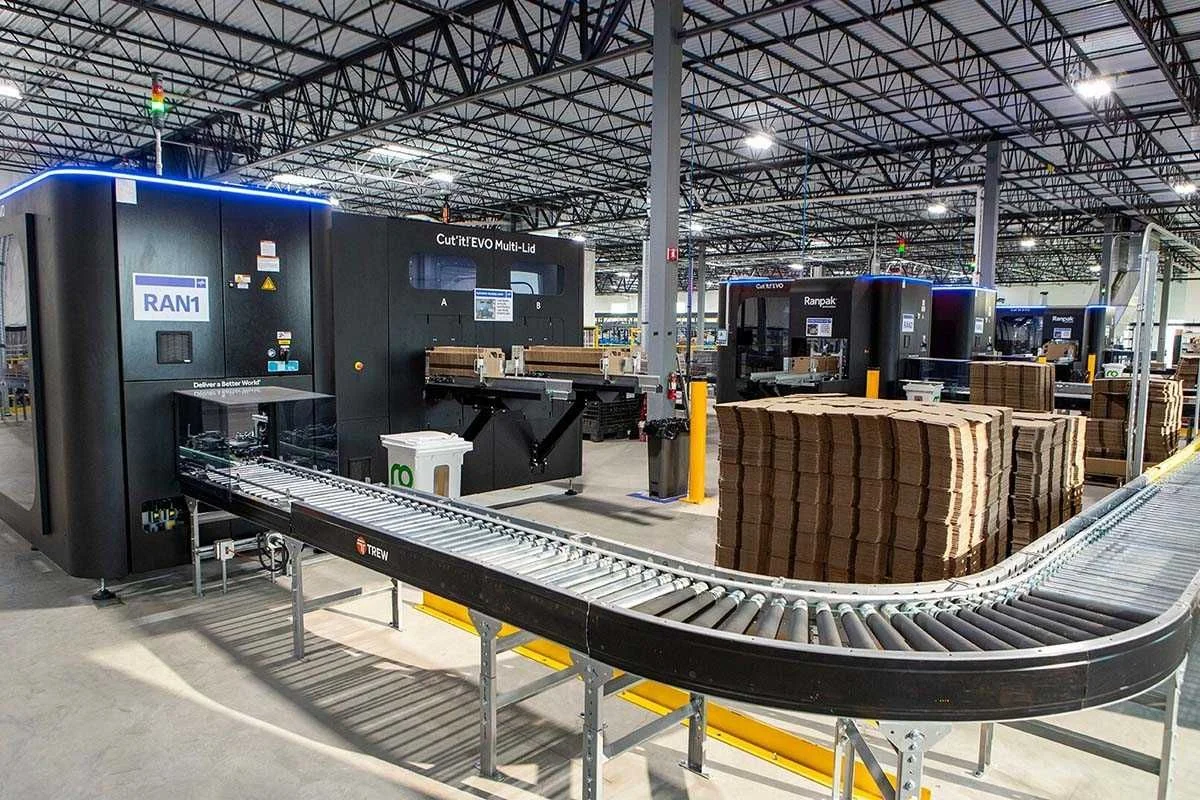
Collaborating with Ranpak, a leader in automated packaging, Medline implemented a solution consisting of four right-sized packaging machines and five case-erector machines. The workflow is a model of precision:
- Case Erection: Ranpak’s "Form’it" machines process flat corrugated blanks into sealed, ready-to-pack cartons at high speeds, feeding them directly into the AutoStore picking ports.
- Picking: Associates at the ports place items directly into the cartons.
- Right-Sizing: The cartons move to Ranpak’s "Cut’it!" machines, which automatically calculate the volume of the contents. The system trims the box to the exact height of the tallest item, eliminating empty head-space.
- Closure: The system automatically applies a pre-made lid, sealing the box for shipment.
The impact of this integration was immediate. Since implementation, order cycle times at the Grayslake facility have improved by 50%. The facility currently manages 10,000 cartons per day, with significant capacity for future growth.
Phase 2: The Pick Pack Pro Expansion
Building on the success of the Grayslake installation, Medline embarked on a more complex project at its high-volume distribution center in Montgomery, New York. This initiative, dubbed "Pick Pack Pro," was designed to handle the massive, cyclical surge of "health plan allowance" orders—items like vitamins and first-aid supplies that see extreme spikes in demand at the start of each fiscal quarter.
To manage this, Medline integrated a multi-vendor stack:
- Batching: Medline-developed software batches up to 1,100 orders simultaneously.
- Sorting: Tompkins Robotics’ "tSort" autonomous mobile robots (AMRs) route specific items to individual order boxes. Unlike traditional sorters, these robots move independently along the shortest path, providing unparalleled flexibility.
- Conveyance and Packaging: A TREW conveyor system transports the filled boxes to a Ranpak right-sized packaging system, which seals the final package without the need for additional filler material.
Supporting Data: Efficiency and Sustainability
The quantitative results of Medline’s strategic pivot provide a compelling argument for integrated automation. Beyond the 50% improvement in cycle time, the company has realized significant operational efficiencies:
- Corrugate Savings: By optimizing the box size for each order, Medline reduced its corrugated spending by 30%.
- Inventory Consolidation: The company successfully reduced its diverse catalog of 18 different carton types down to just four, significantly simplifying procurement and warehouse storage.
- Waste Reduction: The elimination of "air" in shipping boxes negates the need for plastic or paper filler material, aligning the company with broader corporate sustainability goals.
- Workforce Upskilling: By automating the repetitive, manual tasks of box forming and sizing, Medline has enabled its associates to transition into higher-value, more complex roles within the facility, improving both retention and operational quality.
Official Perspectives: The Human and Business Impact
The implications of these projects extend far beyond internal metrics. Jacob Makarewicz, Medline’s director of engineering project management, notes that the primary achievement has been a massive increase in throughput consistency. "The system can process up to approximately 1,100 orders at a time, allowing us to significantly increase capacity and maintain performance during spikes," Makarewicz stated. "Beyond that, we’ve seen gains in fulfillment speed, order accuracy, and consistency—especially for repeat orders—along with improved workforce efficiency."
From a leadership standpoint, the project is viewed as a strategic investment in customer experience. Brad Mariam, Medline’s executive vice president of non-acute care sales, emphasizes that for health plan members, speed and reliability are not just metrics—they are a service promise.
"Innovations like Pick Pack Pro go a long way with health plans whose members depend on speed, consistency, and reliability," Mariam said in a statement. "By advancing fulfillment capabilities, Medline is helping the plans deliver benefits more efficiently—something these customers see not just as a Medline investment but as an investment in them and the members they support."
Future Implications: The Road Ahead
The integration of packaging into the broader warehouse automation ecosystem is likely to accelerate as artificial intelligence and machine learning become more deeply embedded in order management systems. As vendors continue to prioritize "plug-and-play" design, the barrier to entry for smaller and mid-sized distribution centers will lower, allowing for a wider democratization of high-efficiency packaging.
However, the path forward is not without challenges. As systems become more interconnected, the importance of data integrity and system interoperability will grow. Warehouses must ensure that their software stacks are capable of communicating across multiple vendor platforms—a trend that is currently reshaping how technology firms approach API development and data standards.
Ultimately, the trend toward integrated, right-sized packaging represents a maturation of the warehouse industry. By shifting focus from the individual machine to the integrated process, companies like Medline are proving that sustainability, speed, and efficiency are not competing priorities—they are the pillars of a modern, resilient supply chain. As the market continues to grow by 7% annually, the warehouses that will thrive are those that can effectively "fit" their technology to their business needs, ensuring that every box shipped is a testament to precision and operational excellence.
About the Author