One year has passed since the United States Agency for International Development (USAID) officially ceased operations, marking the culmination of a dramatic shift in American foreign policy under the second Trump administration. The agency, which for decades served as the primary vehicle for U.S. humanitarian and development assistance, was dismantled and its remaining functions absorbed by the State Department. This move was the centerpiece of a broader, aggressive campaign to drastically curtail U.S. foreign aid spending.
As the dust settles, a new comprehensive survey from the Pew Research Center, conducted across 16 middle-income nations, reveals a profound sense of anxiety and uncertainty regarding the long-term impact of these cuts. While the halls of Washington may view the elimination of the agency as a victory for fiscal discipline, the view from the ground in nations ranging from Kenya to Colombia is far more nuanced, marked by apprehension and a struggle to gauge how the sudden withdrawal of American support will manifest in their daily lives.
The Chronology of Disengagement
The dissolution of USAID did not happen in a vacuum; it was the result of a deliberate, multi-year strategy.
- Fiscal Year 2024: USAID operated under the established mandates of previous administrations, providing more than $5 billion in aid to the 16 nations analyzed in the recent study.
- Early 2025: The administration signaled a shift in priorities, moving toward an "America First" budgetary framework that prioritized domestic spending over international development.
- July 2025: USAID officially shut its doors. The remaining operations were folded into the State Department, a move critics argued would politicize humanitarian aid and reduce its efficiency.
- Fiscal Year 2026: Total aid to the surveyed middle-income nations plummeted to just over $500 million—a reduction of more than 75% compared to the 2024 baseline.
- Spring 2026: The Pew Research Center conducted its Global Attitudes Survey to measure the pulse of these nations as they faced their first full year of reduced U.S. support.
Data and Public Sentiment: The View from 16 Nations
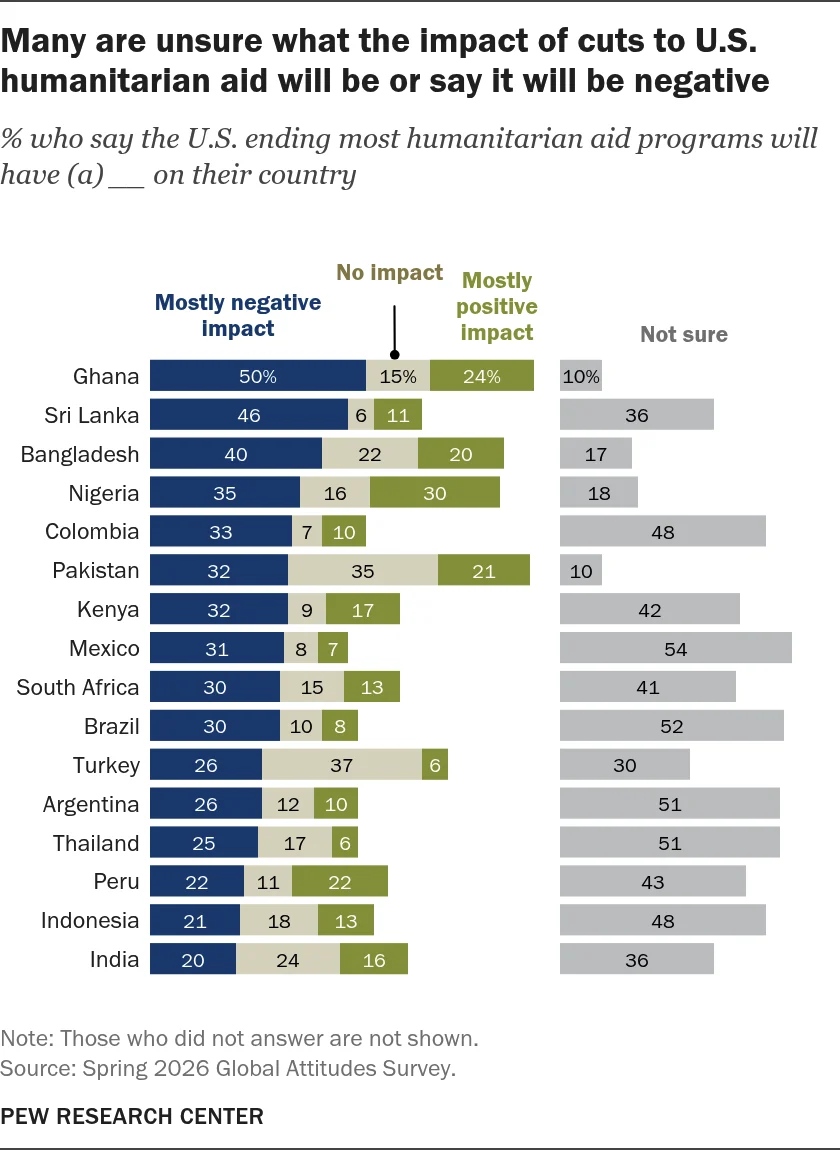
The data from the Spring 2026 survey paints a picture of a world caught in transition. Across these 16 middle-income countries, the prevailing sentiment is not necessarily one of anger, but of profound confusion. In many nations, a significant portion of the population is simply unsure what the impact of the U.S. withdrawal will be.
In countries like Mexico, Brazil, and Colombia, the "not sure" category often accounts for nearly half of the respondents. This uncertainty suggests a gap in communication; citizens are aware that something has changed, but the tangible effects of the aid reduction have not yet reached them in a way that allows for a clear assessment.
However, where opinions are solidified, they skew heavily toward the negative. In Ghana, for instance, 50% of respondents believe the cuts will have a "mostly negative impact." Similarly, in Sri Lanka and Bangladesh, 46% and 40% respectively view the retrenchment with concern. These figures represent a stark reality: when residents of developing nations consider the loss of U.S. humanitarian aid, they see it as a loss of a critical safety net.
In contrast, some nations—such as Pakistan and Turkey—report higher levels of indifference or perceptions of "no impact." This is largely attributed to the nature of the aid previously provided, which may have been more targeted or less integrated into the basic public services of those specific nations.
A Comparative Look: What Americans Think
The skepticism regarding foreign aid is not unique to the U.S. government; it is a sentiment shared by segments of the American public. However, the survey data highlights a complex paradox in American attitudes.
A 2025 Pew Research Center survey revealed that while many Americans are wary of broad foreign aid spending, they remain highly supportive of specific humanitarian interventions. For example, 83% of Americans expressed support for providing medicine and medical supplies to developing nations. This indicates that while the "brand" of foreign aid may have suffered in American political discourse, the moral imperative to assist in health crises remains robust.
Furthermore, a 2023 study found that one-third of Americans view U.S. aid as a net positive for developing nations, while 37% argue that the impact is a mixture of benefit and harm. This suggests that the administration’s decision to cut funding may have been driven more by a desire to reshape the U.S. role in global affairs rather than a total lack of support for the concept of aid itself.

The Implications of the "Great Withdrawal"
The implications of these cuts are far-reaching and touch upon several critical areas of global stability.
1. Healthcare and Infrastructure
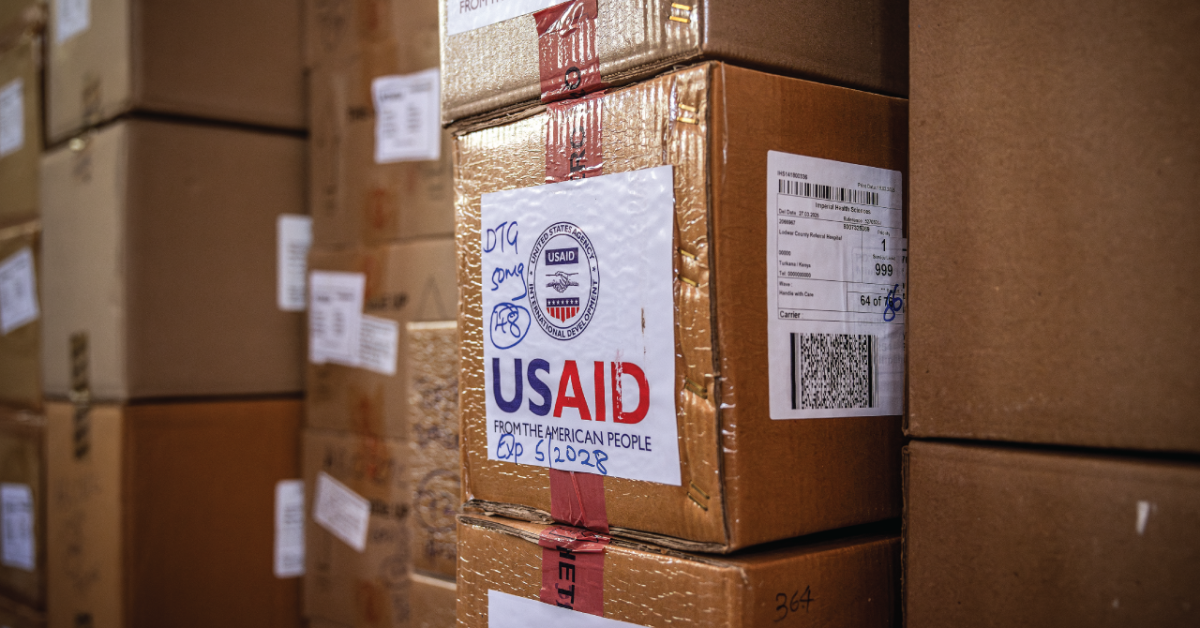
The image of boxes of drugs sitting in a pharmacy storeroom in Lodwar, Kenya, serves as a haunting reminder of the transition. When aid is withdrawn, the immediate impact is often felt in supply chains for essential medicines and equipment. Without the technical and logistical support previously provided by USAID, local healthcare systems—already operating on thin margins—face the risk of collapse.
2. Political Reliability and Soft Power
The report Trump Gets Negative Reviews Internationally notes that fewer people now view the U.S. as a reliable partner. The dismantling of USAID is seen by many global observers as a retreat from international obligations. This perceived lack of reliability can create a power vacuum, allowing other global actors, such as China, to expand their influence through increased economic investment and development projects, potentially at the expense of American strategic interests.
3. Demographic and Religious Perspectives
The survey in Nigeria provides a fascinating case study in how internal demographics influence views on international policy. Christians in Nigeria were more likely than their Muslim counterparts to view the cuts negatively (39% vs. 30%). Such findings underscore that foreign policy decisions are often filtered through local cultural, religious, and political lenses, and the loss of aid can exacerbate internal social tensions.
Future Outlook: A Shifting Global Order
The decision to shutter USAID and drastically reduce humanitarian funding is more than just a line-item change in the federal budget; it represents a fundamental reordering of how the United States engages with the developing world.

For the 16 nations surveyed, the transition is far from over. As they navigate the loss of these funds, governments will be forced to seek alternative partnerships or, in more difficult scenarios, slash domestic programs that were previously subsidized by American aid.
The widespread uncertainty identified in the survey may, in time, harden into a clearer, perhaps more critical, assessment of U.S. foreign policy. If the coming years see an increase in instability or a decline in public health outcomes in these regions, the U.S. may find that the short-term financial savings of the 2025 budget cuts are offset by a long-term decline in global soft power and influence.
As the international community continues to grapple with the aftermath, one thing is certain: the world is watching, and for millions of people, the absence of American support is a void that is being felt every single day. The data provided by the Pew Research Center serves as a critical baseline for understanding this new era—a period where the traditional structures of global development have been dismantled, and the consequences remain, for many, a daunting mystery.
Research Methodology Note:
This analysis is based on a survey of 20,888 adults across 16 countries: Argentina, Bangladesh, Brazil, Colombia, Ghana, India, Indonesia, Kenya, Mexico, Nigeria, Pakistan, Peru, South Africa, Sri Lanka, Thailand, and Turkey. Interviews were conducted between February 8 and May 12, 2026. All data collection was designed to be representative of the adult population in each respective country.
About the Author