In the world of industrial design, the transition from industrial byproduct to domestic artifact is a rare alchemy. Zhangzhou-based designer John Meng has achieved precisely this with "Achille," a cigar ashtray that recontextualizes the utilitarian components of espresso machinery into an object of quiet, stoic luxury. By stripping the humble portafilter of its morning coffee ritual and repurposing it for the contemplative evening smoke, Meng has created more than a functional accessory—he has crafted a statement on the permanence and silent elegance of well-made things.
The Anatomy of Achille: Main Facts and Construction
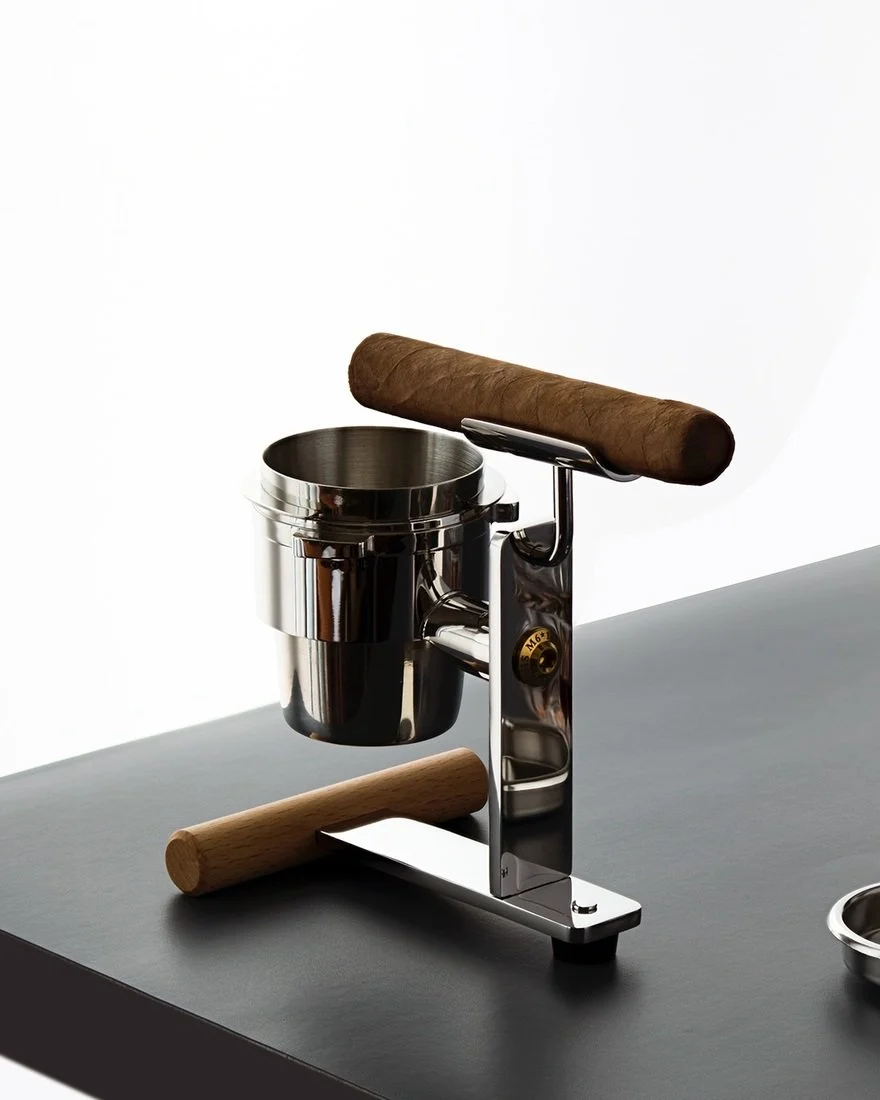
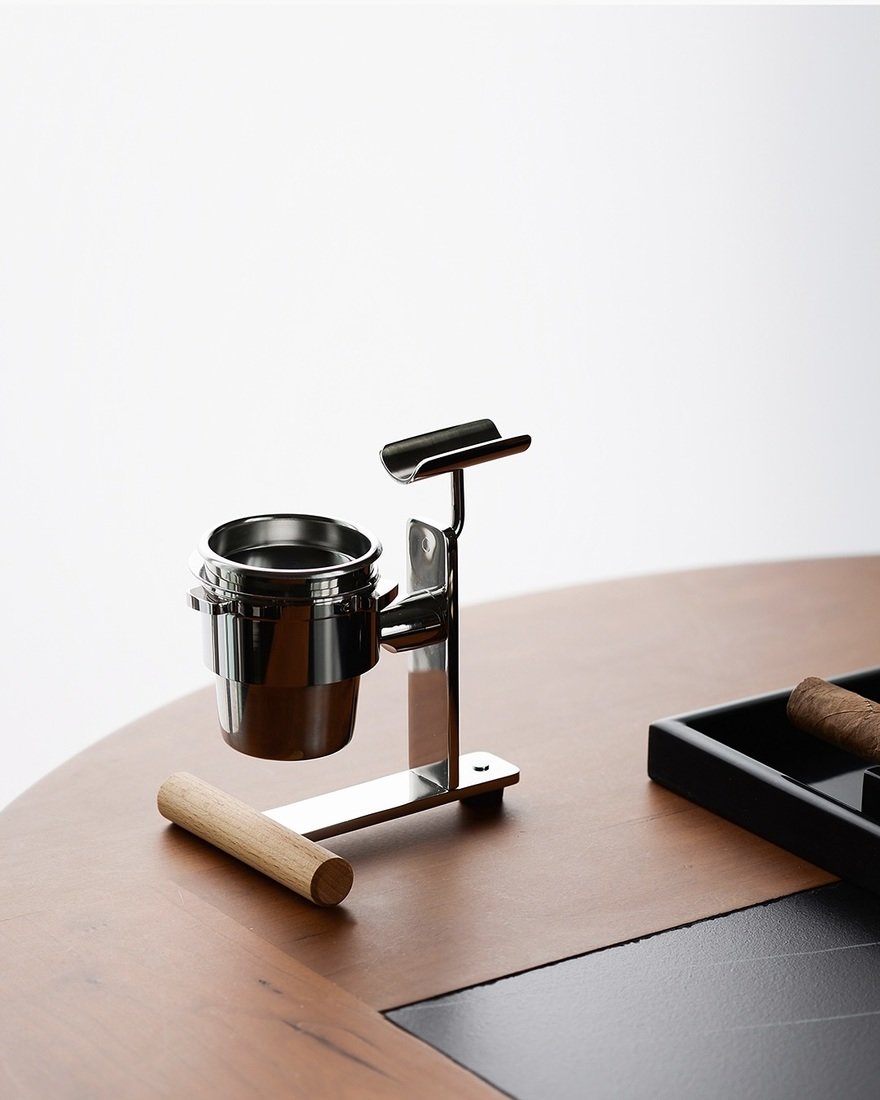
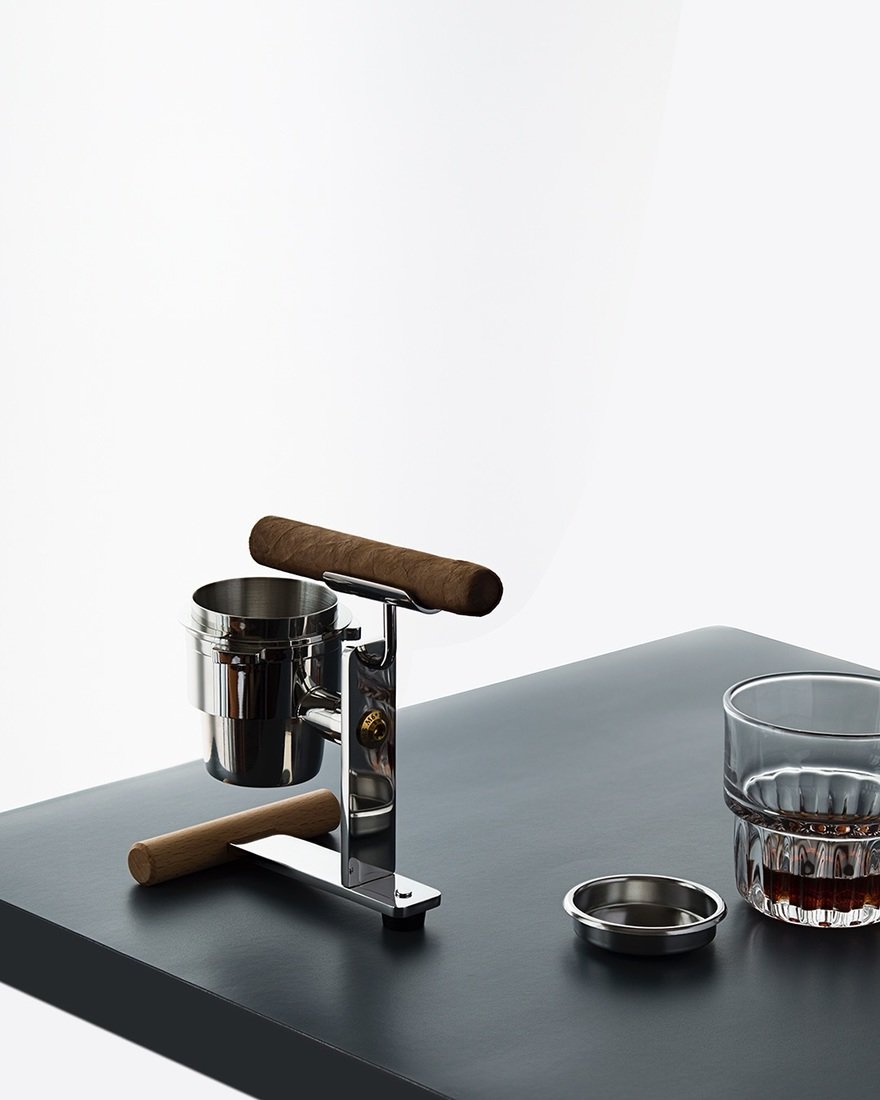
At its core, the Achille ashtray is a masterclass in material honesty. Meng’s design philosophy centers on the marriage of disparate industrial parts—a portafilter component, a filter basket, and a blind bowl—to form a cohesive, sculptural whole.
The piece is defined by its material palette: surgical-grade stainless steel paired with the warm, organic grain of Beech wood. The stainless steel provides a cold, clinical weight, while the Beech wood introduces a tactile softness, grounding the industrial origins of the components. Every surface is hand-polished, a process that removes the aggressive sheen of mass-manufactured steel and replaces it with a soft, diffused glow that catches the ambient light of a study or smoking lounge.
Unlike decorative items that rely on ornate carvings or gilded embellishments, Achille derives its authority from its geometry. The circularity of the filter basket, originally designed to withstand the high-pressure extraction of espresso, is perfectly repurposed to hold the smoldering ember of a cigar. The weight is substantial—not merely for stability, but to impart a sense of "permanence," a core tenet of Meng’s design ethos.
A Chronology of Concept: From Coffee Shop to Smoking Room
The genesis of the Achille project can be traced to a wider movement in contemporary design: the "found-object" or "recontextualization" school. While the exact timeline of the project’s development remains private to Meng’s studio, the progression is evident in the finished result.
- Conceptual Phase: Meng identified the portafilter—a ubiquitous tool in café culture—as an object of underappreciated sculptural potential. Its handle-and-basket geometry naturally suggests a pedestal or a vessel.
- Prototyping: The initial design iterations focused on the tension between the stainless steel hardware and the integration of wood. Early prototypes experimented with various timbers, but the choice of Beech—known for its subtle grain and durability—ultimately prevailed to balance the hardness of the metal.
- Refinement: The polishing process was refined over several months. Meng sought a finish that felt "lived-in" rather than "fresh off the line." This transition from raw industrial part to refined interior object required precise machining and meticulous hand-finishing.
- Public Reveal: With the launch of the project on his professional portfolio, Meng moved the Achille from a personal design exercise to a public-facing endeavor, inviting scrutiny from the design community.
Supporting Data: The Philosophy of "Silent Design"
The impact of the Achille ashtray lies in its intentionality. Meng describes his goal as a "subtle balance between individuality and elegance." In a market saturated with "loud" designs—objects that scream for attention through neon colors, aggressive silhouettes, or complex digital interfaces—Achille stands as a quiet antithesis.
"An ashtray should be unmistakably itself, yet never loud," Meng writes. This statement touches on a critical aspect of modern interior design: the idea that an object earns its place in a room through its utility and its "silence."
Designers often struggle with the "noise" of accessories. A desk or a side table is already a hub of activity; adding a cluttered, overly decorative ashtray risks visual cacophony. By utilizing components that are inherently designed for high-heat, high-pressure environments, Meng ensures that the Achille is not just a visual success but a functional one. The stainless steel is impervious to the ash and heat of a cigar, while the weight ensures that it will not be easily tipped or nudged. It is an object that promises to remain in a room for decades, aging alongside its owner.
Historical Precedents: The Ghost of Joe Colombo
To understand the cultural weight of Meng’s work, one must look at the lineage of "vice-centric design." The most notable forebear in this category is the legendary Italian designer Joe Colombo.
Colombo, who defined the mid-century modern aesthetic, famously designed objects that elevated the rituals of smoking and drinking. His "Smoke" glasses and various ashtray designs were not merely receptacles; they were ergonomic inventions that acknowledged the physical reality of the vice. When Colombo designed for the smoker, he accounted for the hand’s grip, the distance of the ash from the surface, and the way light plays off glass or metal.
John Meng’s Achille shares this lineage. It recognizes that smoking is a ritualized behavior. By repurposing espresso components, Meng taps into a similar sensory satisfaction. Just as the portafilter is the "heart" of the espresso machine, the Achille becomes the heart of the smoking ritual. It creates a bridge between two distinct domestic pleasures: the caffeine-fueled start of the day and the tobacco-fueled end of it.
Implications for the Future of Design
The Achille ashtray serves as a case study for the "circular economy" in high-end design. We are currently witnessing a shift away from the "buy-and-discard" culture toward a model where high-quality materials are salvaged, re-engineered, and elevated.
The Sustainability Angle
While Meng’s work is primarily aesthetic, there is a distinct sustainability argument to be made for his approach. By utilizing existing industrial components—many of which are mass-produced with extreme durability in mind—the designer reduces the need for virgin material extraction. The repurposing of these components into a luxury object effectively upcycles hardware that might otherwise have been scrapped or relegated to a storage drawer.
The Role of the Designer as Curator
Meng’s work suggests a future where the designer’s primary role is not necessarily to create something from nothing, but to act as a curator of existing mechanical excellence. This "curatorial design" empowers the user to see the beauty in the mundane. When a user looks at the Achille, they are forced to re-evaluate the portafilter—a tool they likely encounter daily—in a new, elevated light.
Challenges in Scaling
The primary challenge for designs like the Achille is scalability. Because the object relies on the hand-polishing and careful assembly of specific, high-grade components, it is not a candidate for mass-market retail. It remains an artisan object. However, this scarcity is part of its appeal. In an age of digital homogeneity, the physical, tactile, and finite nature of Meng’s work offers a form of "slow luxury" that resonates with collectors who are increasingly tired of the mass-produced.
Conclusion: Earning Its Place
The Achille cigar ashtray is a testament to the idea that great design does not always require a blank sheet of paper. Sometimes, it requires the designer to look at the world around them, identify the overlooked beauty in utilitarian objects, and provide the refinement necessary to elevate them to art.
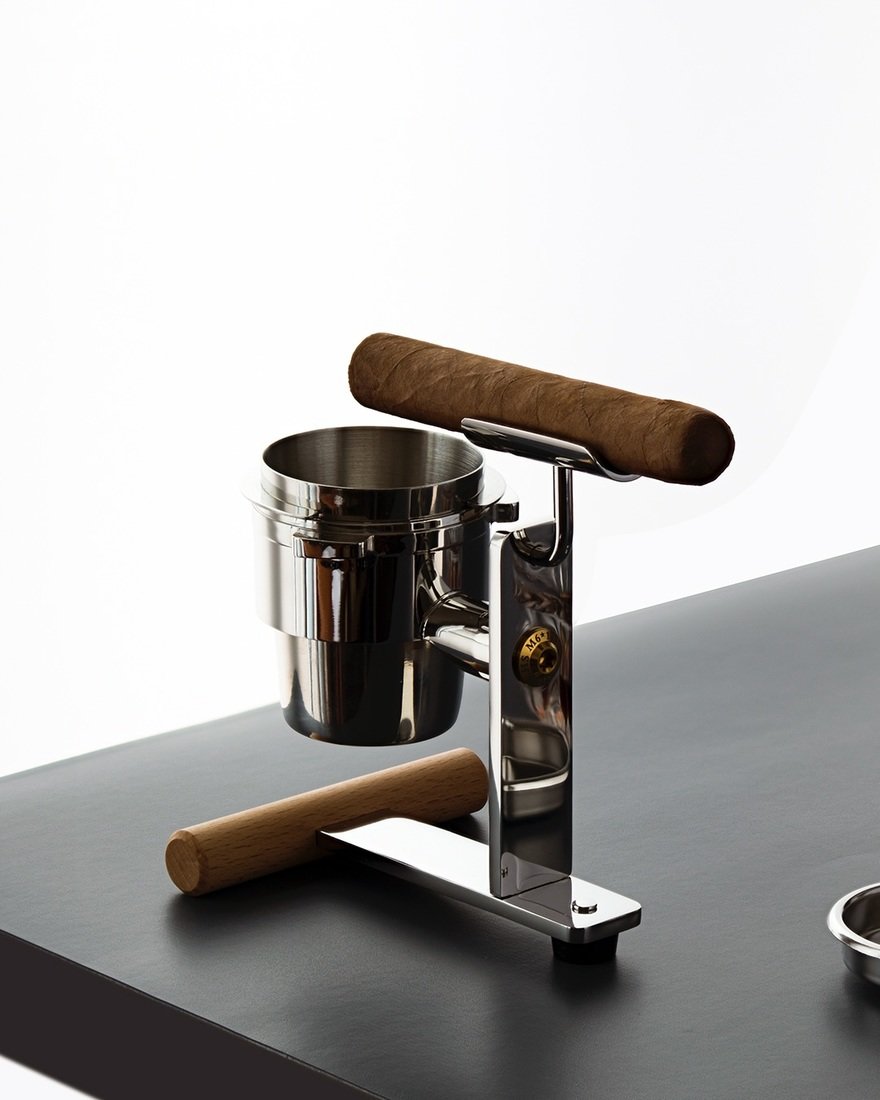
John Meng has successfully avoided the trap of "designing for the sake of design." He has not created an ashtray that tries to be a sculpture; he has created a sculpture that functions flawlessly as an ashtray. By focusing on weight, silence, and permanence, he has tapped into a timeless desire for objects that hold their own in a room, not through arrogance, but through the quiet confidence of their own construction.
For the contemporary smoker, the Achille offers more than just a place to rest a cigar. It offers a moment of connection to the history of industrial craft, a nod to the legacy of mid-century masters like Colombo, and a reminder that even the most fleeting of habits—the burning of a cigar—can be grounded by an object of enduring, hand-polished beauty. In the quiet, heavy, stainless-steel silence of the Achille, we find the best of what modern design can be: thoughtful, durable, and profoundly, unapologetically present.
About the Author