In the modern professional landscape, "optionality" has become the ultimate status symbol. From entry-level associates to C-Suite executives, the prevailing wisdom suggests that keeping one’s doors open, maintaining a side hustle, and refusing to fully commit to a single path is the safest strategy for career longevity. Yet, as the global economy shifts toward hyper-specialization, a growing body of evidence suggests that this obsession with keeping options open is fundamentally flawed.
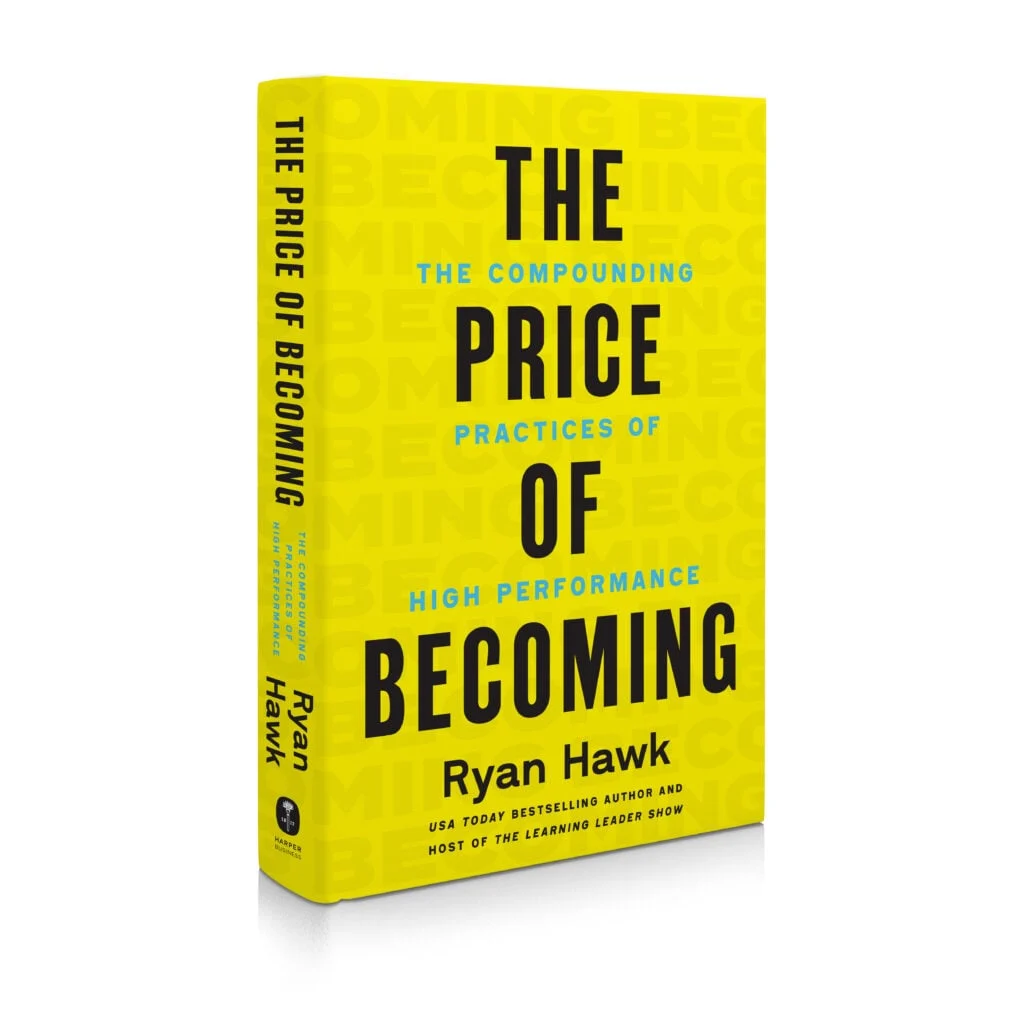
True competitive advantage in the executive ranks is no longer found in a diversified portfolio of "maybe" projects. It is found in the radical, uncompromising commitment to a single pursuit. In his latest work, The Price of Becoming: The Compounding Practices of High Performance, leadership expert Ryan Hawk argues that the most significant breakthroughs occur only when an individual eliminates all escape routes and throws their full weight into a singular vision.
The Mirage of Optionality: A Strategic Trap
The cultural obsession with optionality is often masked as strategic foresight. We tell ourselves that by staying broad, we are "keeping our powder dry." However, as Hawk observes, options without execution are functionally useless. When a professional spreads their energy across multiple interests, they inadvertently settle for mediocrity in all areas rather than achieving excellence in one.
This tension between breadth and depth is a common crossroads for high achievers. For Hawk, the epiphany arrived at the height of his corporate career. While serving as a Vice President of Sales at a multi-billion dollar firm, he simultaneously launched The Learning Leader Show. As the podcast gained momentum, it began to generate high-level keynote invitations, executive coaching requests, and consulting opportunities.
The result? He was effectively managing a $500 million revenue stream by day and building a media empire by night. He was, by his own admission, becoming "average at everything." The decision to leave the corporate world in 2017 to pursue his media venture full-time was not just a career change; it was a fundamental shift in philosophy. By closing the "escape route" of his corporate salary, he forced himself to reach a level of performance that he could never have achieved while his attention was fractured.
The Chronology of Commitment
The journey from a "portfolio" career to a singular focus is rarely a linear ascent. It is a process of clearing the brush to allow for deeper growth.
- The Phase of Dilution (Pre-2017): Characterized by high output but scattered focus. The individual experiences the illusion of success, but lacks the depth required to dominate a specific niche.
- The Choice Point: The moment of realization where the "cost of being average" outweighs the security of multiple revenue streams.
- The Valley of Sacrifice (2017–2019): A critical period where income often dips below corporate benchmarks. This is the "testing phase" where total commitment is required to validate the new path.
- The Compounding Effect (2020–Present): The stage where consistency creates momentum. The path becomes self-sustaining because the reputation built during the "Valley of Sacrifice" begins to pay dividends.
This trajectory underscores a vital truth: the initial years of total commitment are often the most difficult, as they require sacrificing the safety net of secondary options. However, as Hawk notes, there is no way to uncover the true potential of a path without first committing to it completely.
The Anatomy of Magnetic Leadership
While commitment to a craft is the first step toward mastery, it is only half of the equation. To reach the upper echelons of leadership, one must also become a "magnet for talent." This is the point where individual commitment transforms into institutional impact.
The case of Microsoft’s Azure division provides a masterclass in this phenomenon. When Steve Ballmer needed to pivot the software giant toward cloud computing, he knew he couldn’t rely on existing internal structures alone. He recruited Dave Cutler, the legendary engineer behind Windows NT.
Crucially, Ballmer did not just hire an individual contributor; he hired a nucleus. Cutler arrived with his "gang"—a loyal cadre of engineers who had followed him through previous high-stakes projects. These individuals weren’t following a corporate mandate; they were following a leader whose track record of excellence and commitment made him a "talent magnet."
The Multiplier Effect of Trust
Magnetic leadership is predicated on a compounding interest model. Every professional relationship is an investment. When a leader consistently delivers results and treats their team with integrity, they build a reputation that precedes them.

- The Initial Bet: A team member follows a leader because of a past success.
- The Demonstration of Character: The leader handles a high-stress crisis with composure and shares credit for the team’s success.
- The Compounding Trust: This reputation for reliability and brilliance spreads, making it exponentially easier to attract top-tier talent for the next venture.
This is the "math" of modern leadership. A single high-trust relationship can influence dozens of hiring decisions over a career. When talented people repeatedly choose to follow a leader into uncertain territory, it serves as a signal to the market that the leader is a high-value asset worth betting on.
The Ethics of the Small Moments
It is a common misconception that "magnetic" leaders are defined by charisma or high-profile public speaking. In reality, magnetic leadership is forged in the quiet, unglamorous moments of daily operations.
- The Crucible of Disagreement: How a leader navigates a difference of opinion when stakes are high defines their credibility.
- The Stewardship of Success: Leaders who hoard credit rarely retain talent. Those who act as a conduit for their team’s recognition create a culture that attracts elite performers.
- The Resilience Test: How a leader reacts when a project fails is the ultimate litmus test for their team. A leader who remains steady and supportive during failure earns the unwavering loyalty that is impossible to buy with compensation packages alone.
These moments accumulate over years, forming a "reputation capital" that functions as a permanent competitive advantage. In a crisis, organizations do not look for individuals who are simply skilled; they look for individuals who can serve as a catalyst for others.
Implications for the Future of Work
The implications for the modern executive are clear: stop optimizing for optionality and start optimizing for reputation.
In an era of AI-driven automation and rapid market shifts, individual technical skills are becoming increasingly commoditized. However, the ability to build trust, maintain long-term standards, and attract exceptional people to a vision remains a uniquely human, high-value asset.
The Decadal Mindset
The most successful leaders think in decades, not quarters. They are willing to endure temporary discomfort—the loss of a "safe" path, the struggle of a startup phase, the patience of building a reputation—because they understand that the reward is not found in the immediate result, but in the compounding value of their influence.
As organizations face increasingly complex challenges, they will move away from hiring "individual contributors" and toward hiring "magnets." They will look for those who have spent years building a reputation of consistency, high standards, and reliability.
Conclusion: The Courage to Commit
The pursuit of excellence is inherently uncomfortable. It requires us to say no to the siren song of "keeping options open." It demands that we make peace with the paths not taken and the "what-ifs" we leave behind.
But as Ryan Hawk argues, this discomfort is the entrance fee to greatness. By fully committing to a path and acting as a magnet for talent, we do more than just build a career; we build a legacy. When we close off our escape routes, we don’t trap ourselves—we liberate ourselves to focus on the only thing that truly matters: the relentless pursuit of something worth doing.
In a world where everyone is looking for the next exit, the person who has the courage to stand their ground and fully commit is the one who will eventually be in control of their own destiny. As the old adage suggests, "if you chase two rabbits, you catch neither." The most successful leaders in the C-Suite have learned that by choosing one rabbit—and being the absolute best at catching it—they eventually attract everything they ever needed.
About the Author