After five years of relentless disruption—marked by the COVID-19 pandemic, geopolitical instability, volatile tariff regimes, and soaring operational costs—the once-back-office function of supply chain management has been thrust into the heart of the boardroom. For mid-sized manufacturers, the days of viewing procurement and logistics as mere "cost centers" are over. Today, these departments are the frontline of corporate survival.
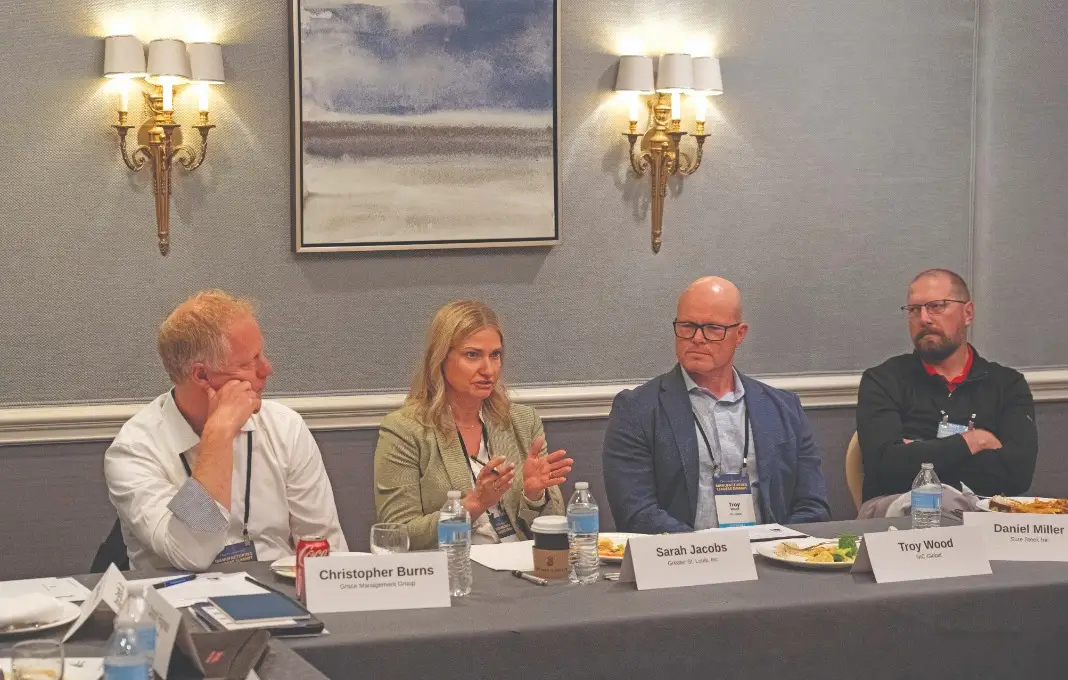
In May, at Chief Executive’s Manufacturing Leaders Summit in St. Louis, held in partnership with Greater St. Louis, a candid, off-the-record roundtable brought together supply chain managers, operations leaders, and COOs. The consensus was clear: while the C-suite is finally paying attention, there remains a dangerous disconnect between the data traveling up the chain and the harsh realities on the factory floor.
Main Facts: The New Operational Paradigm
The modern manufacturing environment is defined by a shift from global efficiency to regional resilience. Sarah Jacobs, senior director of business growth at Greater St. Louis, notes that the conversation has evolved from simple cost-cutting to complex strategic positioning.
"This is no longer just an operational discussion," Jacobs explains. "Companies are really trying to figure out what to localize, where automation pays off, and when to redesign products versus when to simply absorb costs or exit a market entirely."
The summit highlighted three core pillars dominating the current landscape:
- Vertical Integration: A move away from heavy reliance on third-party outsourcing.
- Strategic Automation: Using technology to de-skill roles and mitigate labor volatility.
- Financial Vigilance: A renewed focus on cash forecasting as the primary lever of survival.
Chronology of Disruption: From Just-in-Time to Just-in-Case
The trajectory of the last half-decade has forced a fundamental rethink of the "Just-in-Time" model that dominated the 2000s and 2010s.
- 2019–2021 (The Crisis Phase): Manufacturers faced a perfect storm of broken logistics and material shortages. Many companies, particularly those attempting to onshore or reshore operations, suffered from "early adopter" penalties. They faced stretched accounts payable and skeptical vendors who, fearing bankruptcy, tightened credit terms.
- 2022–2023 (The Realignment): As global supply lines remained fractured, firms began the painful process of vertical integration. The realization dawned that outsourcing, while cheaper on paper, carried an unacceptable risk of 8–10 week lead times that could halt production entirely.
- 2024–Present (The AI and Data Squeeze): The rise of AI data centers has created a new, unforeseen supply bottleneck. Manufacturers now find themselves competing for raw materials and components—such as fans and cooling equipment—with the booming data center industry, further driving up lead times and costs.
Supporting Data and Real-World Evidence
The discussions in St. Louis revealed that the shift toward internalizing operations is not ideological, but a pragmatic response to market volatility.
The Cost of Vertical Integration
One manufacturer, having recently completed a 140,000-square-foot fabrication facility, noted that the ability to control turnaround times was a competitive game-changer. "If we have something hot, we can stop what we’re doing and move on to that process," he said. The sentiment was echoed by another leader: "Had we known this 20 years ago, we’d have made this decision 20 years ago."
The Automation Unlock
The narrative around automation has matured. Gone are the days of "cobots" gathering dust in breakrooms. Today’s leaders are framing automation as a win-win for labor. By implementing profit-sharing models tied to automated efficiencies, companies are incentivizing workers to think like owners. The result is a more resilient workforce and a reduced reliance on the impossible-to-find "perfectly skilled" candidate.
Financial Volatility
A turnaround expert present at the summit offered a sobering statistic: nine out of ten companies he encounters lack a formal cash forecast. In an environment where build cycles can last 15–18 months, failing to manage cash flows—specifically the timing of milestone payments versus material outlays—is a primary cause of insolvency. His mantra: "Decide your margin first, then back into the budget."
Official Perspectives: The Communication Chasm
Perhaps the most startling revelation of the summit was the persistent gap between what leadership hears and what is actually occurring.
One participant recounted a story of "corporate gaslighting," where he tracked down the president of a chronically late supplier via LinkedIn. During their conversation, the supplier’s president realized, in real-time, that his own internal team had been lying to him about production statuses. This highlights a broader issue: the "smoothing over" of bad news as it travels up the hierarchy.
Internal silos are equally problematic. Often, engineering teams dictate the use of specific, high-cost vendors under the guise of "no alternatives." One attendee’s solution—hiring a second engineer specifically to challenge the first—underscores the lack of transparency in many procurement processes.
Implications for Future Strategy
For CEOs and board members, the takeaway is that the current era of volatility is not a temporary anomaly; it is the new baseline.
1. Culture as a Risk Mitigator
The most critical asset a company can possess is a culture where "bad news travels fast." CEOs must actively foster environments where plant managers and procurement officers feel safe reporting failures before they become crises. If your people are afraid to tell you the truth, you are effectively blind to your own supply chain risks.
2. The Myth of Supplier Loyalty
Vertical integration by large OEMs is a direct threat to suppliers. As one participant noted, smaller suppliers often dismiss the threat of their clients building internal capacity, only to see their business erode slowly. The lesson: assume nothing about loyalty. Deliver constant, undeniable value, or risk being replaced by your client’s own internal operations.
3. Mastering the Cash Position
In an era of high interest rates and shifting demand, cash is not just "king"—it is the only thing that allows a company to adapt. Boards must demand rigorous, 6-to-8-week rolling cash forecasts. Without them, even the most innovative manufacturer is flying blind.
4. The End of "Settling Down"
As Sarah Jacobs concluded at the summit, the hope that the supply chain would "settle down" post-COVID has proven to be a fantasy. Global markets remain in a state of flux, and the competition for resources—whether it is human capital or AI-adjacent components—will continue to intensify.
Conclusion
The St. Louis summit served as a wake-up call. The manufacturing leaders who succeed in the coming decade will be those who dismantle the silos between their C-suite and their factory floors. By treating supply chain, automation, and financial forecasting as a unified strategic front rather than disconnected tasks, manufacturers can turn the current period of volatility into a period of competitive advantage. The question remains: is your leadership team ready to hear the truth, or are they still listening to the filtered, smoothed-over reports of the past?
About the Author