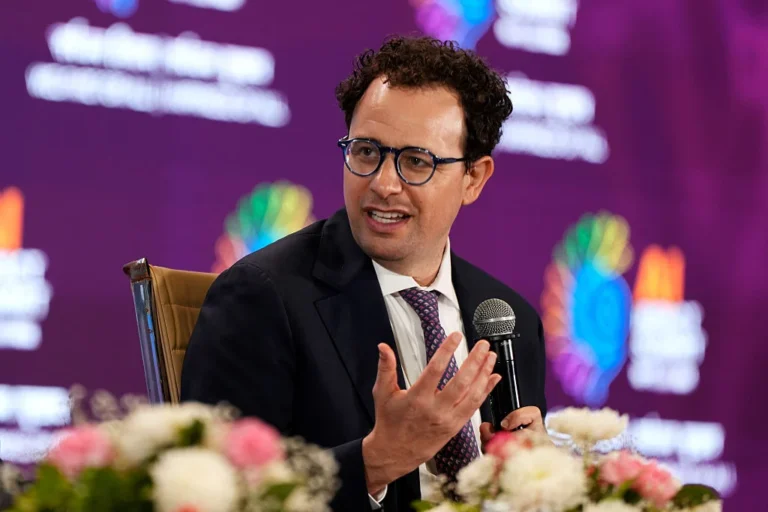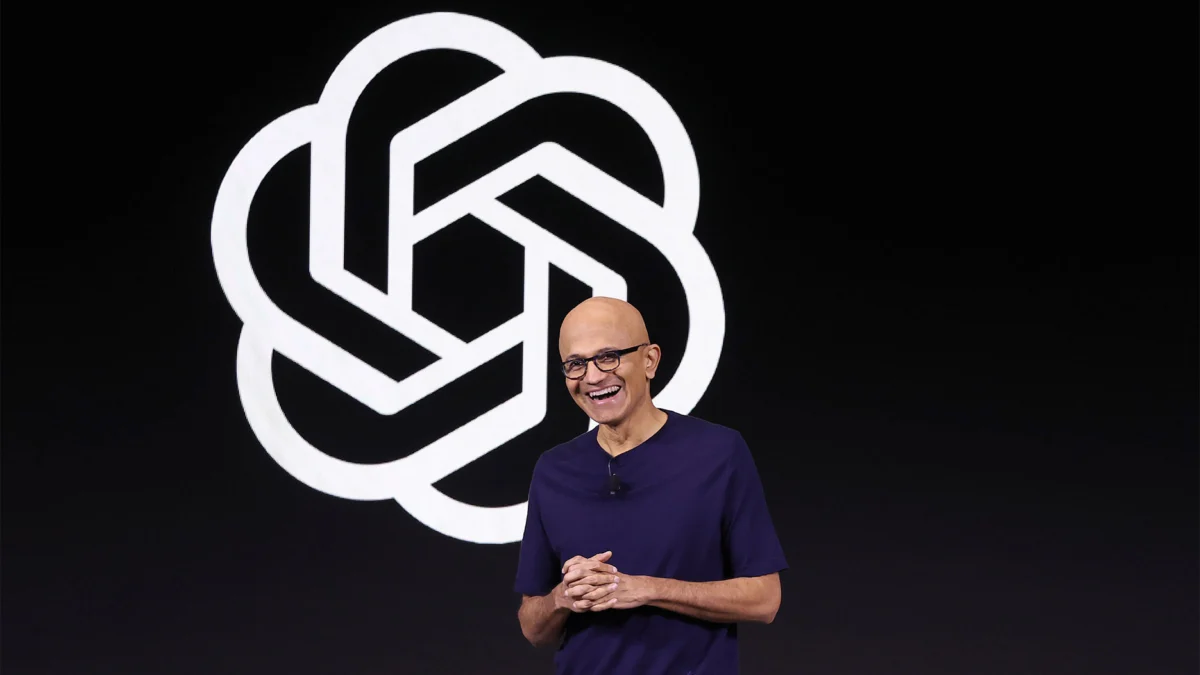
In a striking intervention that has sent ripples through the technology sector, Microsoft CEO Satya Nadella has issued a definitive warning to the corporate world: businesses that fail to maintain control over their own AI infrastructure risk not only their competitive edge but their very survival.
Speaking on CNN’s Fareed Zakaria GPS this Sunday, Nadella doubled down on a provocative thesis he first introduced earlier this month. His message is stark: companies that rely entirely on proprietary AI labs for their operational intelligence are effectively "outsourcing their thinking," a precarious position that could lead to corporate obsolescence. As AI agents move from experimental pilot programs to the backbone of enterprise decision-making, Nadella’s warning marks a pivot in the industry—from a "gold rush" of AI adoption to a more cautious, strategic assessment of digital sovereignty.
The Chronology of a Warning
The conversation surrounding AI independence has been accelerating throughout 2026. While the AI boom initially focused on the speed of integration and the novelty of Large Language Models (LLMs), the discourse has shifted toward long-term risk management.
- Early July 2026: Nadella first hinted at the dangers of total dependency on third-party model providers during an industry roundtable, suggesting that "black box" models pose a systemic risk to enterprise autonomy.
- Mid-July 2026: The conversation gained momentum as startups and enterprise CIOs began debating the "lock-in" effect created by AI coding assistants like Anthropic’s Claude Code and OpenAI’s ChatGPT Codex.
- July 26, 2026: During his appearance on Fareed Zakaria GPS, Nadella crystallized his warning, explicitly advising firms to decouple their data and workflows from specific model providers to maintain "control of their own destiny."
The Core Thesis: Sovereignty Over Outsourcing
At the heart of Nadella’s argument is the concept of data and metadata retention. According to the Microsoft CEO, the standard practice of feeding proprietary data and prompts into a third-party model without retaining the usage metadata is a dangerous oversight.
"Every time you use the model, all of the metadata around it should be retained by you," Nadella explained to Zakaria. "So that you could use all of that to train perhaps your own weights or your own open model."
In this context, "weights" refer to the trained parameters—the "brain" of the AI. Nadella is advocating for a structural shift where companies act as the primary curators of their AI intelligence. By retaining usage data, companies build a repository of internal expertise that can be used to fine-tune open-source models or train custom, proprietary models that are not tethered to a single vendor.
The Role of AI Gateways
Nadella identifies the "harness"—the integrated coding environment or agentic tool—as the primary point of vulnerability. When an enterprise uses a model-maker’s proprietary harness, the model provider gains deep insight into the business’s internal logic, workflows, and proprietary code.
To mitigate this, Nadella argues for the implementation of "AI gateways." These are intermediary infrastructure layers that separate a company’s prompts and context from the underlying model. By keeping the harness, memory, and context separate from the model, a firm ensures that if one provider fails, experiences a service outage, or changes its pricing, the firm can seamlessly migrate its operations to another provider.
Implications for the Enterprise
The implications of Nadella’s warning are profound for the modern corporate landscape, affecting everything from IT procurement to long-term R&D.
1. The Risk of "Platform Cannibalization"
The most existential threat highlighted by Nadella is the risk that AI labs will eventually compete with their own customers. If a startup or enterprise outsources its core "thinking" to a model provider, that provider essentially gains a front-row seat to the business’s success.
If an AI agent has access to the "innards" of a company—its supply chain, customer data, and internal product roadmap—it is only a matter of time before the model provider develops the capability to automate that business model entirely. This fear is not new; it mirrors the concerns raised by high-profile investors like Jason Calacanis, who previously warned startups that accepting AI credits from major labs could lead to their ideas being absorbed into the platform’s native offerings.
2. The Shift Toward Open-Weight Models
As enterprises become more sophisticated, they are increasingly turning to open-weight models—models with publicly available code that can be fine-tuned on private, internal hardware. This shift is driven by both cost considerations and the desire for privacy. By running models locally or within private clouds, companies can ensure that their sensitive data never leaves their perimeter. This, in turn, creates a demand for a new layer of "Model Management" software capable of orchestrating multiple AI providers without relying on any single vendor’s ecosystem.
3. The Budgetary Reality
While security is the primary driver, financial prudence is a close second. Relying on a single vendor for AI intelligence creates a "vendor lock-in" scenario that often leads to ballooning costs. By building an architecture that allows for model swapping, companies can leverage cheaper, more specialized models for different tasks, effectively optimizing their AI spend in real-time.
The Paradox of the Microsoft Position
Critics of Nadella’s warning have pointed to the apparent irony of his stance. Microsoft is a major investor in both OpenAI and Anthropic, two of the industry’s most powerful model makers. Furthermore, Microsoft’s Azure cloud business is actively positioning itself as the platform for the very "alternative infrastructure" that Nadella is recommending.
However, industry analysts suggest that Nadella’s warning is a calculated move to position Microsoft as the "neutral" facilitator of AI rather than just a model provider. By encouraging companies to adopt a multi-model, sovereign approach, Microsoft is essentially selling the "picks and shovels" of the AI era—infrastructure, cloud hosting, and management tools—rather than betting solely on the success of a single black-box model.
The Consumer Divide: Data as Currency
Perhaps the most notable boundary drawn by Nadella is between the enterprise and the individual. When pressed by Zakaria on whether everyday users should be equally concerned about their data, Nadella took a markedly different tone.
For consumers, Nadella argued, the sharing of data is an inherent "value exchange." He noted that in the consumer space, free access to powerful AI tools is effectively subsidized by the data provided by users. In his view, this is a continuation of the advertising-based business model that has defined the internet for the last three decades.
This distinction highlights the dual nature of AI: for individuals, it is a utility; for enterprises, it is a strategic asset. The former is encouraged to accept the status quo of data-for-service, while the latter is warned that if they treat their data with the same casualness, they may not survive the decade.
Conclusion: Preparing for an Agentic Future
As we look toward the horizon of 2027 and beyond, the "sovereignty mandate" issued by Microsoft’s leadership appears to be a harbinger of a more mature AI market. The era of blindly adopting the most popular AI tool is coming to an end.
The future, according to Nadella, belongs to those who build an architecture of resilience. For the modern firm, this means:
- Retaining metadata: Treating usage data as a proprietary asset.
- Decoupling: Using AI gateways to prevent vendor lock-in.
- Diversifying: Investing in a mix of proprietary and open-weight models to ensure operational agility.
In the final analysis, Nadella’s warning is a call for digital self-reliance. As AI agents become more deeply integrated into the fabric of business, the ability to control one’s own "thinking" will be the defining trait of the companies that endure. Whether this is a genuine attempt to guide the industry toward a healthier ecosystem or a strategic play to solidify Microsoft’s role as the infrastructure provider of choice, the message to the C-suite is clear: outsource your models, but never outsource your strategy.
About the Author