In 1962, the publication of Rachel Carson’s Silent Spring fundamentally altered the trajectory of global industry. By meticulously documenting the devastating effects of indiscriminate pesticide use, Carson did more than just launch the modern environmental movement; she introduced a paradigm shift. Her central insight—that ecological systems are inextricably linked in ways that industrial processes routinely ignore—remains the foundational logic of the sustainability profession today.
However, in the six decades since Carson’s seminal work, the "sustainability canon" has undergone a massive expansion. What was once a niche concern for marine biologists and conservationists has transformed into a multidisciplinary field encompassing artificial intelligence, global finance, corporate governance, and indigenous jurisprudence. As we navigate the mid-2020s, the literature of sustainability has moved beyond the "warning phase" and into the "implementation phase."
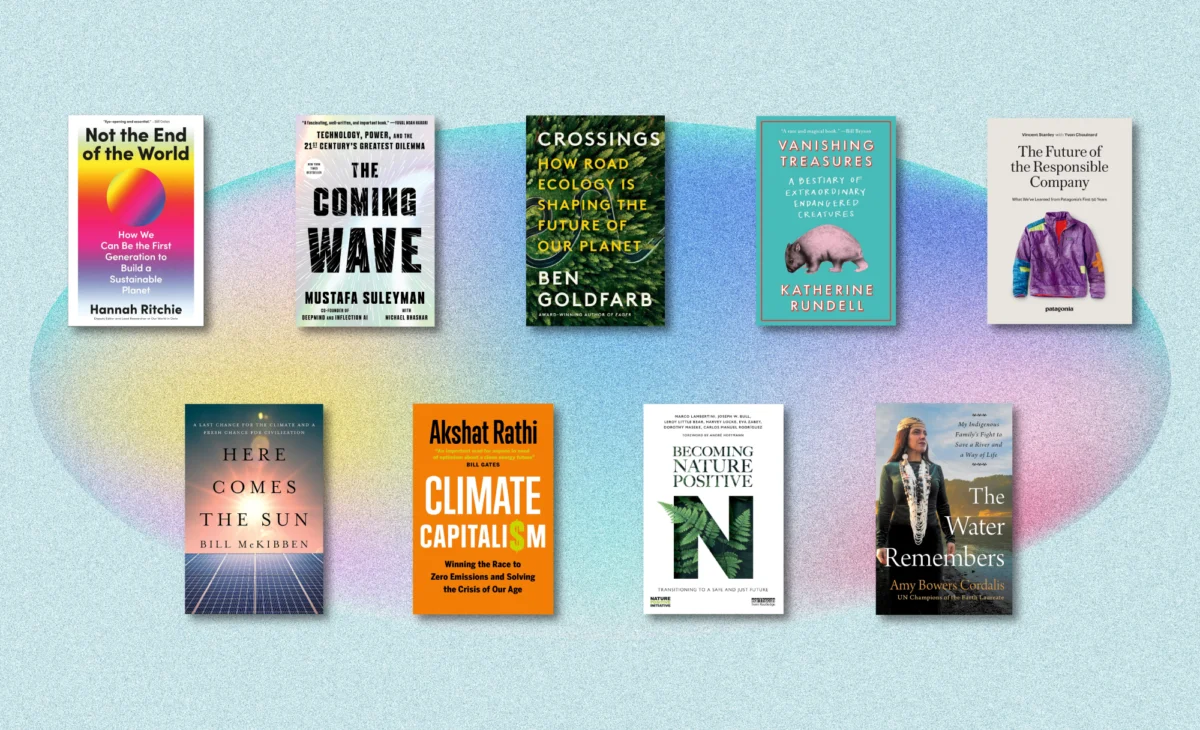
The following analysis explores nine seminal works published between 2023 and 2025 that are redefining the professional landscape for sustainability leaders, policymakers, and corporate executives.
Main Facts: The New Literacy of Sustainability
The contemporary sustainability professional is no longer just an environmental steward; they are a risk manager, a technologist, and a social strategist. The books emerging in this era reflect this complexity. The core themes of the current literary wave focus on three critical pillars:
- Data-Driven Optimism: Moving away from "climate doomism" toward actionable, empirical progress.
- The Technological Paradox: Managing the energy-intensive rise of AI while leveraging it for ecological breakthroughs.
- Nature-Positive Governance: Transitioning from "doing less harm" to "restoring systems" as a corporate mandate.
These works represent a shift in tone from the elegiac prose of the 20th century to the pragmatic, solution-oriented reporting of the 21st.
Chronology: The Evolution of Environmental Thought
To understand the relevance of these new titles, one must view them through the lens of environmental history:
- 1962–1980s (The Era of Awakening): Dominated by Silent Spring and the first Earth Day. The focus was on point-source pollution and chemical toxicity.
- 1987–2015 (The Era of Sustainable Development): Defined by the Brundtland Report (Our Common Future) and the emergence of the "Triple Bottom Line." This period focused on balancing economic growth with social and environmental health.
- 2015–2022 (The Era of Urgency): Post-Paris Agreement literature focused heavily on "Net Zero" and the catastrophic risks of 1.5°C warming.
- 2023–Present (The Era of Implementation): The current literature (highlighted below) focuses on the mechanics of the transition—how to build, how to govern, and how to scale technologies in a fragmented world.
Supporting Data: Nine Essential Works for the Modern Professional
1. The Data of Progress: Not the End of the World
Author: Hannah Ritchie (2024)
As the deputy editor at Our World in Data, Hannah Ritchie provides a much-needed empirical counter-narrative to the prevailing sense of environmental despair. Ritchie analyzes seven key metrics: air pollution, climate change, deforestation, food systems, biodiversity loss, ocean plastics, and overfishing. Her data suggests that while we are far from the finish line, many global trends have already peaked or are in decline. For sustainability professionals, this book serves as a vital toolkit for navigating a polarized public discourse, offering a model for how to use data to inspire action rather than paralysis.
2. The AI Dilemma: The Coming Wave
Authors: Mustafa Suleyman and Michael Bhaskar (2023)
Mustafa Suleyman, CEO of Microsoft AI, tackles "the containment problem." For the sustainability sector, this is the definitive guide to the "double-edged sword" of technology. While AI promises to optimize energy grids and discover new carbon-capture materials, its physical footprint—massive data centers requiring immense amounts of water and electricity—presents a new ESG (Environmental, Social, and Governance) challenge. Suleyman argues that the speed of proliferation may outpace our ability to regulate these impacts.
3. The Infrastructure of Ecology: Crossings
Author: Ben Goldfarb (2023)
Named a best book of 2023 by the New York Times, Goldfarb’s work explores "road ecology." With 40 million miles of roadway globally, infrastructure is a dominant force in habitat fragmentation. For professionals involved in supply chain logistics or land-use planning, Goldfarb provides a fresh perspective on biodiversity. He highlights how wildlife crossings and smarter engineering can mitigate the "insect apocalypse" and restore migration routes, proving that infrastructure and ecology need not be at odds.
4. The Psychology of Conservation: Vanishing Treasures
Author: Katherine Rundell (2024)
Sustainability is often reduced to spreadsheets and carbon credits. Rundell, a Renaissance scholar, returns the "sense of wonder" to the conversation. By profiling endangered creatures through a literary and naturalist lens, she argues that humanity protects what it finds magical. This book is a reminder for C-suite leaders that the emotional and cultural value of biodiversity is often as powerful a motivator for stakeholder engagement as the financial risk.
5. Redefining Ownership: The Future of the Responsible Company
Authors: Vincent Stanley and Yvon Chouinard (2023)
Following Patagonia’s 2022 decision to transfer its ownership to a purpose trust, this book provides the blueprint for "Earth as the only shareholder." Stanley and Chouinard offer practical advice on mapping supply chains, building durable products, and, most importantly, earning the trust of a skeptical workforce. It is a foundational text for anyone looking to move beyond "greenwashing" into radical corporate transparency.
6. Standardizing the Future: Becoming Nature Positive
Authors: Marco Lambertini et al. (2025)
"Nature Positive" has become a buzzword, but this multi-author work seeks to turn it into a rigorous metric. Released as an open-access title, it brings together voices from the Nature Positive Initiative and the Global Environment Facility. It provides the mechanics for nature-positive business strategies, finance, and governance. For sustainability officers under pressure to set biodiversity targets alongside carbon goals, this is the definitive technical manual.
7. The Economics of Transition: Climate Capitalism
Author: Akshat Rathi (2024)
Bloomberg’s Akshat Rathi makes a blunt economic case: "It is now cheaper to save the world than to destroy it." Through profiles of bureaucrats in China and oil executives in the U.S., Rathi demonstrates that the clean energy transition is the greatest business opportunity of the century. This book is essential for professionals who need to make the internal business case for climate investment, providing real-world proof points that the emissions curve is finally bending.
8. The Solar Revolution: Here Comes the Sun
Author: Bill McKibben (2024/2025)
Bill McKibben, once the herald of "The End of Nature," has shifted toward a "pragmatic optimism." His latest work tracks the staggering speed of the renewable energy transition. In 2024, more than 92% of new electricity capacity worldwide came from renewables. McKibben documents the "ground-level" reality of this shift—from rooftop solar in Pakistan to natural gas reduction in California—while warning of the political forces attempting to stall this momentum.
9. Indigenous Leadership: The Water Remembers
Author: Amy Bowers Cordalis (2025)
This memoir by a Yurok attorney details the largest dam removal project in U.S. history on the Klamath River. For sustainability professionals, "stakeholder engagement" is often a checkbox; Cordalis shows what it looks like as a generational fight for justice. Her work highlights the critical role of Indigenous knowledge and legal rights in modern ecological restoration, offering a masterclass in long-term advocacy and river rights.
Official Responses and Expert Critical Reception
The reception of these works reflects a broader consensus among global leaders that sustainability has moved into the core of geopolitical and economic strategy.
- Bill Gates described Hannah Ritchie’s Not the End of the World as "eye-opening and essential," signaling a shift in the philanthropic community toward data-driven solutionism.
- The World Economic Forum (WEF) and various ESG rating agencies have begun incorporating the principles found in Becoming Nature Positive, moving toward a more standardized framework for biodiversity reporting.
- Corporate Analysts have noted that the Patagonia model described by Stanley and Chouinard is increasingly being studied by family-owned enterprises and B-Corps as a viable alternative to the traditional IPO (Initial Public Offering) path.
Implications: The Future of the Profession
The insights from these nine books suggest several profound implications for the next decade of sustainability work:
1. The Integration of "Nature" and "Tech"
Sustainability professionals can no longer afford to be "tech-illiterate," nor can tech leaders be "ecology-illiterate." As Suleyman points out, the energy demands of the AI revolution will require a new form of "computational sustainability."
2. The Shift from Carbon to Biodiversity
While carbon has dominated the conversation for two decades, works like Crossings and Becoming Nature Positive indicate that biodiversity loss is the next great frontier of corporate risk and reporting. "Nature-related financial disclosures" (TNFD) are likely to become as mandatory as carbon disclosures.
3. The Death of the "Trade-Off" Narrative
The primary takeaway from Rathi and McKibben is that the era of the "economic trade-off" is ending. The clean energy transition is no longer a cost-center; it is a competitive advantage. Companies that fail to adapt will not just be "unethical"—they will be economically obsolete.
4. Generational and Indigenous Justice
As Amy Bowers Cordalis demonstrates, the most successful restoration projects of the future will likely be those that center Indigenous leadership and long-term legal advocacy. This represents a shift in "Social" governance (the ‘S’ in ESG) from simple philanthropy to the recognition of sovereignty and land rights.
In conclusion, the sustainability canon has evolved from a cry for help into a manual for a new civilization. For the modern professional, these books are more than just reading material; they are the blueprints for the "First Generation to Build a Sustainable Planet."
About the Author