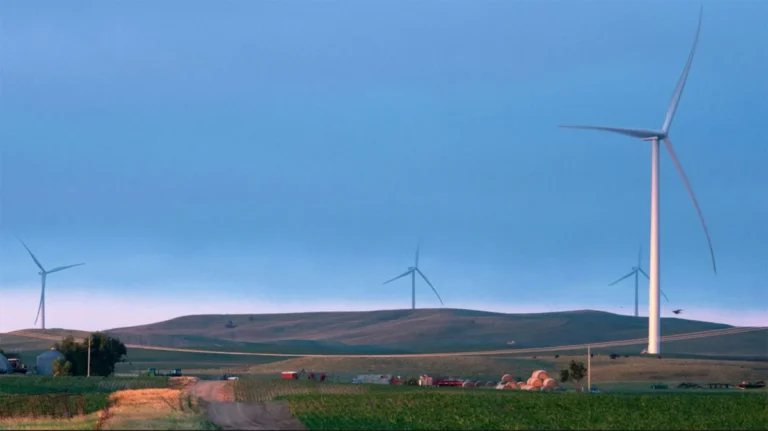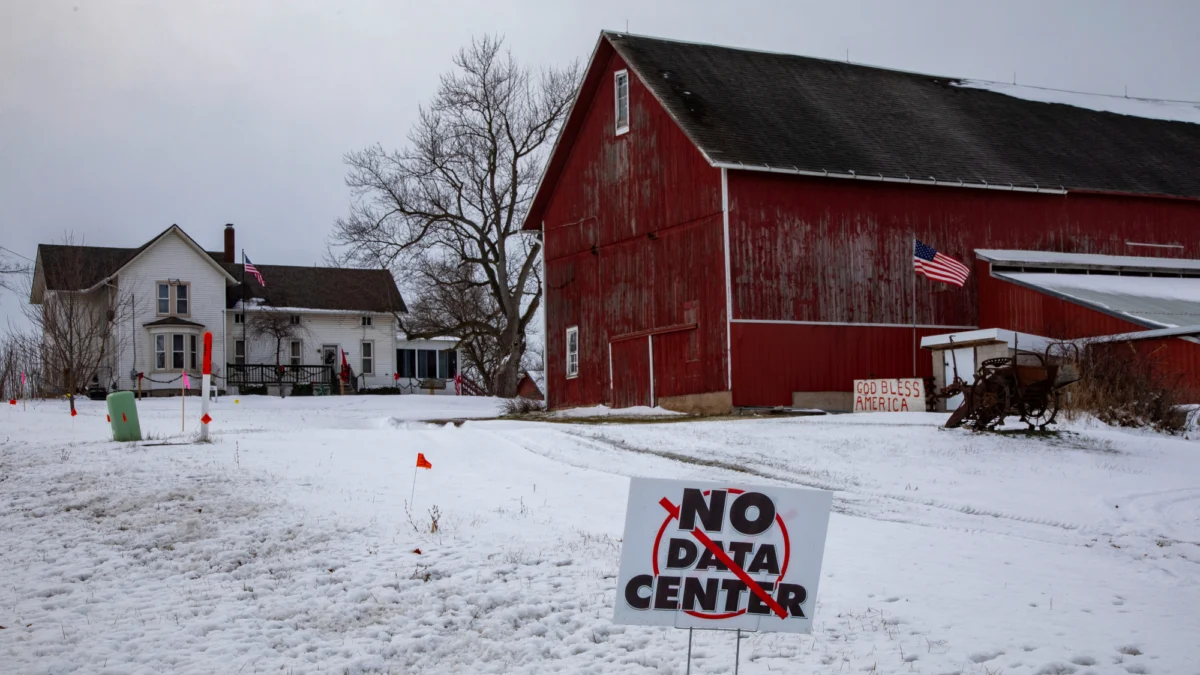
In the sprawling, quiet landscapes of rural Michigan, a new kind of protest is taking root. It is not defined by traditional ideological divides, but by a shared, visceral reaction to the physical encroachment of the digital age. As tech giants scramble to secure enough electricity to power the insatiable appetite of artificial intelligence, they have set their sights on farmland, small towns, and quiet suburbs. The result is a growing, cross-partisan movement that is rapidly reshaping the American political landscape, forcing candidates to choose sides between the “tech oligarchs” and the communities they occupy.
The Collision at the Testing Facility
The tension reached a fever pitch last week during a high-profile campaign stop in Michigan. As Donald Trump arrived at a General Motors vehicle-testing facility to deliver a keynote address, he was met with an unexpected cacophony. A contingent of local activists, brandishing bright yellow signs that read “Stop Data Centers,” drowned out the proceedings with rhythmic chants: “Data centers no, people pay the bill.”
The interruption was a stark signal that the “AI gold rush” is colliding with the reality of local infrastructure limitations. For Will Lawrence, a progressive Democratic congressional candidate in Michigan’s seventh district—the site of the GM plant—the disruption was not a nuisance, but a validation of his campaign’s core platform. Lawrence, a climate activist turned political hopeful, has centered his bid on the environmental and economic risks posed by hyperscale data centers. To him, the protesters represent a burgeoning, grassroots rebellion that transcends the typical left-right dichotomy.
Chronology of a Grassroots Rebellion
The rise of the anti-data center movement did not happen in a vacuum. It is the culmination of a rapid, often opaque development cycle that caught many rural communities off guard.
- Late 2024: The Michigan state legislature, with bipartisan support and the blessing of Governor Gretchen Whitmer, passed a suite of tax incentives designed to lure large-scale data center development to the state. The move was framed as an economic win, promising jobs and technological prestige.
- Late 2025: The first wave of proposals began to surface, with hyperscale projects targeted for Lansing, Mason, Howell Township, and Lyon Township. The secrecy surrounding these deals—often involving non-disclosure agreements (NDAs) signed between developers and local officials—began to leak into the public sphere.
- Winter 2025/2026: Residents, many of whom had never interacted with local planning commissions, began flooding township meetings. The common complaint: the massive facilities would skyrocket local energy costs, strain water resources, and degrade property values.
- Spring/Summer 2026: The movement matured from local town hall disputes to a state-wide political force. Candidates like Will Lawrence in Michigan and Melat Kiros in Colorado began building their entire electoral strategies around the issue, successfully tapping into the frustration of voters who felt betrayed by the political establishment.
Supporting Data: The Energy and Economic Squeeze
The anxiety fueling this movement is rooted in concrete, if often alarming, projections. AI models, particularly Large Language Models (LLMs), require massive amounts of electricity for training and inference. A single data center can consume as much power as a small city, and the localized impact on energy grids is profound.
Across the United States, residents are facing a dual threat: the fear that their utility bills will be subsidized by residential ratepayers to cover the massive upgrades required for tech infrastructure, and the physical pollution associated with “peaker plants”—gas turbines often deployed to ensure data centers maintain constant uptime.
In Memphis, Tennessee, the situation has become particularly acute. State Representative Justin J. Pearson has emerged as a vocal opponent of Elon Musk’s xAI data center. The facility relies on large-scale gas turbines to meet its energy demands, raising significant air quality concerns for the surrounding neighborhoods. The situation escalated to a federal level when the Department of Justice intervened in a lawsuit against the facility, arguing that the site should be exempt from certain Clean Air Act requirements. The justification? That the AI being powered by the facility—Grok—is deemed critical to national security and overseas military operations.
“That’s the logic,” Pearson remarked. “Violate the Clean Air Act, allow the pollution to kill American citizens because we’re killing people overseas with this technology.”
Official Responses and the "Tech Oligarchy" Narrative
The political establishment, including both centrist Democrats and some Republicans, has found itself increasingly caught in the crossfire. Michigan Governor Gretchen Whitmer, who previously enjoyed broad support for her economic development policies, faced significant backlash earlier this year after appearing on stage with OpenAI CEO Sam Altman. The optics of a sitting governor embracing the “face of AI” while local communities were fighting to keep the infrastructure out of their backyards proved to be a major political liability.
The tech companies, for their part, have largely maintained that data centers are necessary for the future of the American economy. However, their reliance on NDAs and behind-closed-doors negotiations has fostered a deep sense of distrust. Critics argue that the "secrecy" is a strategic choice to minimize the window for public mobilization.
“The ruling class is united behind this plan,” Lawrence noted during a recent panel. “They want to push these into our communities without a public debate, but people are starting to see the pattern. That’s a place that you can fight from.”
Implications: A Shift in the Electoral Map
The implications of this backlash are profound for the 2026 midterm elections and beyond. With candidates in at least 12 states now running on platforms that include a formal moratorium on new data center construction, the issue is moving from the local planning board to the governor’s mansion.
1. The Erosion of Party Lines
The "data center divide" is proving to be a rare issue that unites populist conservatives and progressives. Both sides share a skepticism of corporate power and a desire to protect local autonomy. In districts like Michigan’s seventh, this convergence is creating a new, volatile voting bloc that refuses to be categorized by traditional partisan talking points.
2. The Power of "Transparency" as a Wedge Issue
Candidates who win are those who frame the data center debate as a fight for democratic control. By highlighting the use of NDAs and the lack of public input, challengers like Melat Kiros in Colorado have successfully painted incumbents as puppets of tech interests. This transparency-first approach is proving to be a potent weapon, particularly in states with high levels of voter distrust.
3. The Future of AI Policy
The current pushback is likely just the beginning. As AI continues to scale, the tension between the global need for computing power and the local need for stable, clean, and affordable energy will only intensify. If current trends hold, the next generation of American politicians will be defined by their ability to navigate this conflict—or their failure to do so.
As Will Lawrence told his supporters on social media, the fury being directed at these facilities is not just about a specific plot of land or a specific power plant; it is about who holds the power in the age of AI. “We’re tapping into a bottom-up rebellion,” he said. “And it’s a fight that the tech giants—and the politicians who enable them—are clearly not prepared to win.”
The yellow signs in Michigan may be small, but they are a clear warning: the public is no longer content to simply pay the bill for the next technological revolution. They are now demanding a seat at the table, and they are willing to vote out anyone who tries to deny them that right.
About the Author