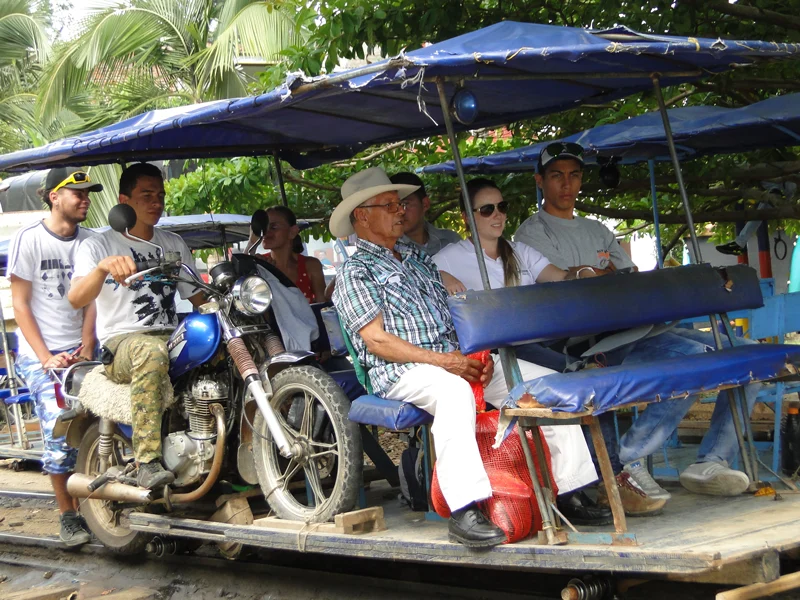
In the remote, verdant corridors of rural Colombia, where the state’s reach often fades into the dense foliage of the Andes, a unique form of transportation has emerged from the remnants of a bygone era. Known as motobalineras (or sometimes brujitas), these improvised vehicles represent a striking intersection of necessity, engineering, and survival. Built upon the rusted, abandoned skeletons of 19th-century railroad infrastructure, these motorized platforms have become the lifeline for communities long forgotten by the central government.
The Chronology of Collapse: From Steam to Silence
To understand the motobalinera, one must first understand the rise and fall of the Colombian rail system. The narrative began in the mid-19th century, an era of fervent modernization. Eager to connect the mountainous interior with the Caribbean coast and the Pacific, the Colombian government invested heavily in rail, seeing it as the primary engine for industrial growth and national integration.
By the mid-20th century, the network had reached its zenith. Trains groaned under the weight of coffee exports, manufactured goods, and passengers, serving as the literal veins of the country’s economy. However, as the 1970s and 80s dawned, a shift in global infrastructure priorities—combined with a lack of maintenance and the rise of the trucking industry—began to render the rail network obsolete.
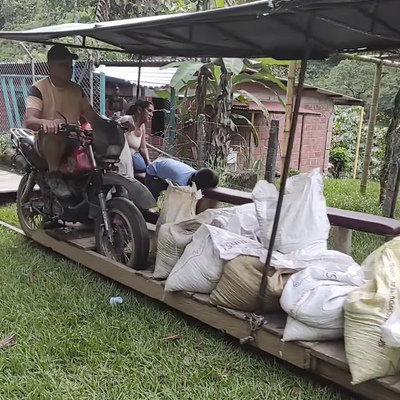
The death knell for the system rang in the early 1990s. Facing systemic corruption, massive debt, and intense competition from a burgeoning road network, the national rail company was liquidated. What followed was a period of profound disconnection. Towns that had sprouted specifically to service the railway were suddenly isolated, their primary connection to the outside world severed overnight. As the tracks rusted under the tropical sun, the rural communities they once served were left to fend for themselves.
Anatomy of the Motobalinera: Engineering Against the Odds
Nature eventually reclaimed much of the rail line, but the steel tracks—durable and persistent—remained. In the vacuum of transport, rural ingenuity took over. The motobalinera is a testament to the "hacker" culture born of necessity.
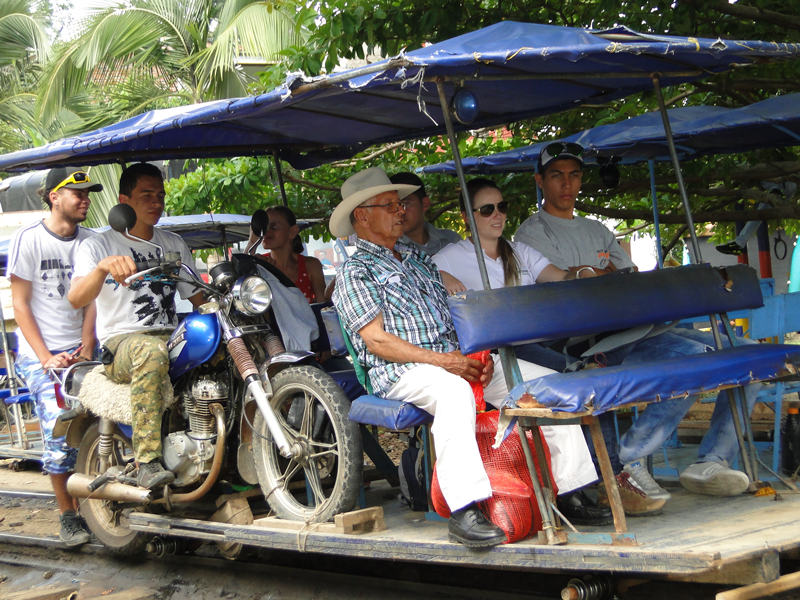
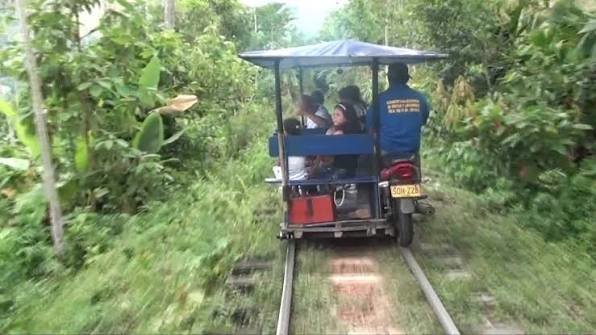
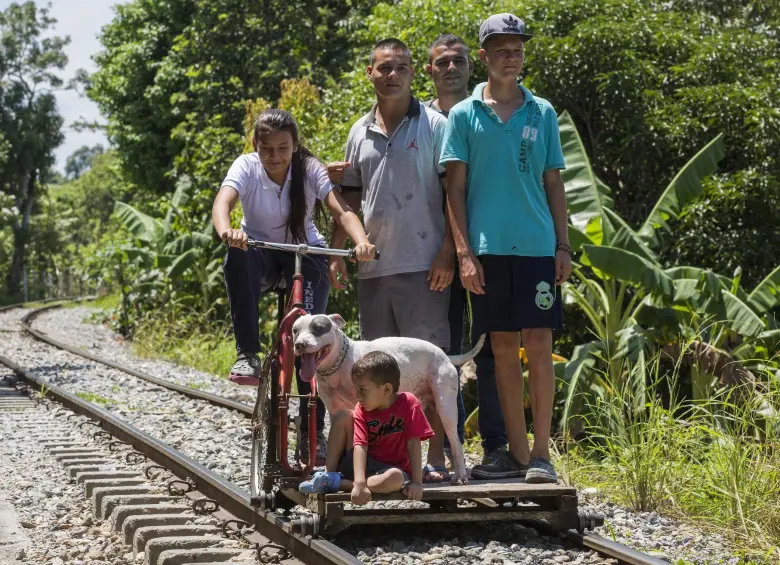
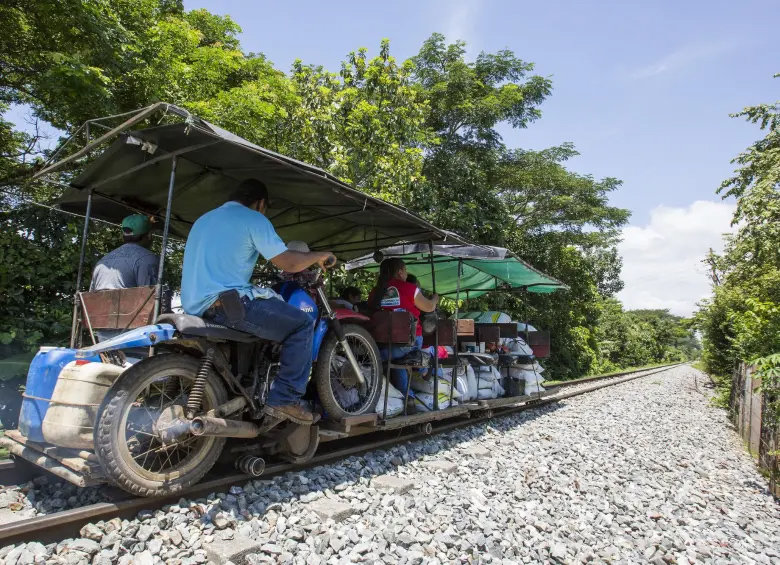
At its core, a motobalinera consists of a wooden or metal frame platform mounted atop ball-bearing wheels (the name balinera is derived from the Spanish word for ball bearing). The propulsion is provided by a standard motorcycle or, in more primitive iterations, a bicycle. The motorcycle is strapped to the frame, with its rear wheel modified or positioned to sit directly on the steel rail. By accelerating, the bike provides the torque required to propel the platform along the track.
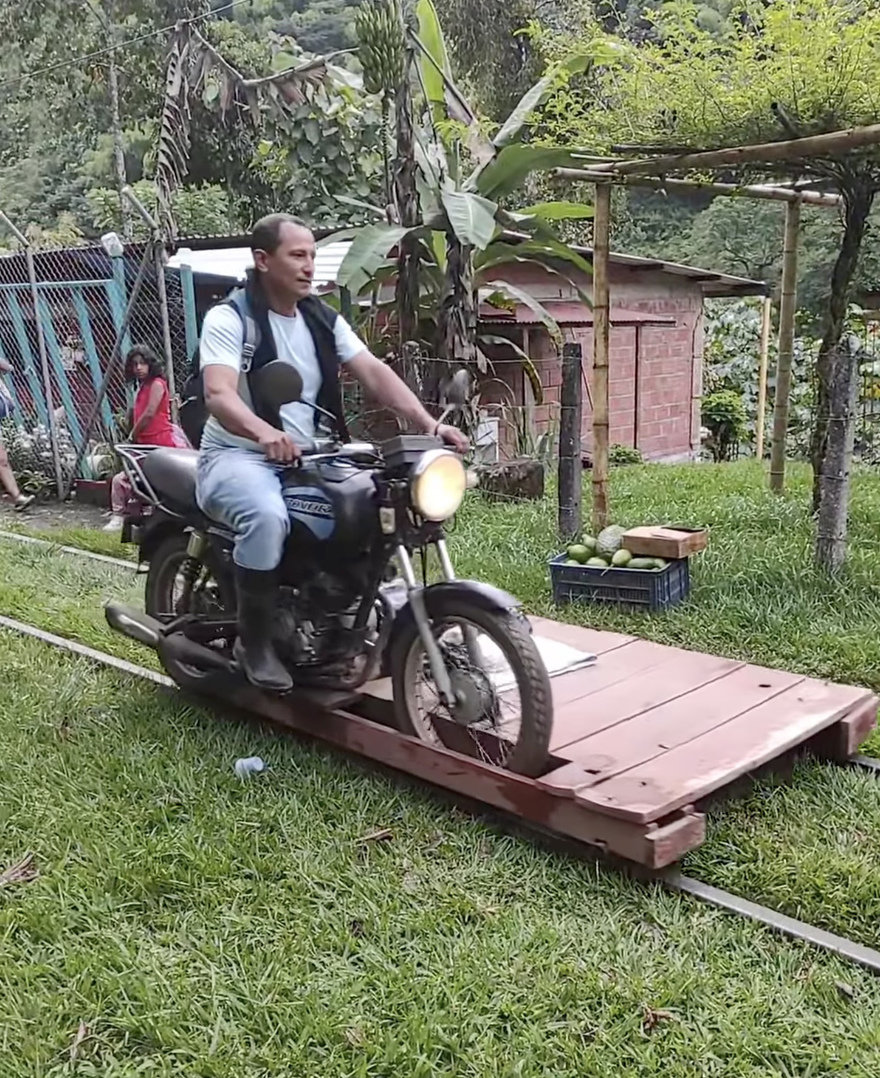
The design is deceptively sophisticated in its simplicity:
- Modularity: Because the tracks are narrow, the platforms are built to be lightweight. This is a crucial safety feature; when two motobalineras approach each other from opposite directions on a single track, the riders can physically lift the entire apparatus off the rails to allow the other to pass, then replace it and continue their journey.
- Versatility: These platforms are not merely for commuters. They are regularly adapted to haul heavy agricultural loads, including sacks of coffee, crates of livestock, and construction materials.
- Sustainability: By utilizing abandoned infrastructure rather than clearing new roads through the rainforest, these vehicles operate with a minimal carbon footprint, ironically providing a form of "green" transport that was never intended by the original rail engineers.
Supporting Data: The Socio-Economic Impact
While there is no formal national registry for motobalineras, local estimates suggest that thousands of residents across regions like the Magdalena Medio and the Antioquia department rely on them daily. For many, a trip to the nearest town—which might take several hours on foot or over treacherous, unpaved mountain trails—is reduced to a forty-minute ride on the rails.
Economically, the motobalinera lowers the "cost of distance." For small-scale farmers, the ability to transport goods to market cheaply means the difference between profit and poverty. A 2022 survey of local transport cooperatives in these regions indicated that households using rail-based transport platforms reported a 30% increase in monthly disposable income, attributed largely to the lower cost of moving goods compared to traditional truck hire, which often avoids these remote areas entirely.
The View from Bogota: Official Responses and Legal Limbo
The relationship between the Colombian government and the operators of motobalineras is complex and, at times, adversarial. From the perspective of the Ministry of Transportation, these vehicles are illegal. They operate on infrastructure that is, technically, state property, and they lack the safety certifications required for public transport.
Periodically, local authorities have threatened to dismantle the tracks or seize the platforms, citing safety concerns. The risk of derailment, the lack of braking systems on some platforms, and the potential for collisions are significant. However, these threats often trigger immediate pushback from local communities.
"If they take away our motobalineras, they take away our food," says a community leader in a remote village near Puerto Berrio. "The government didn’t bring us roads when they closed the trains. They shouldn’t be surprised we made our own."
The state’s response has shifted from outright hostility to a reluctant, pragmatic tolerance. In recent years, some regional governments have begun to explore the idea of "community rail management," where local groups are granted a semi-legal status to maintain segments of the track in exchange for safety compliance, though such agreements remain rare and localized.
Implications: A Lesson in Adaptive Infrastructure
The motobalinera is more than just a quirky local phenomenon; it is a profound critique of top-down development models. It illustrates a concept often discussed in urban planning circles: "informal infrastructure." When the state fails to provide essential services, the citizenry does not simply wait; they adapt, repurpose, and innovate.
1. The Resilience of Rural Communities
The survival of the motobalinera underscores the incredible resilience of rural Colombian communities. Despite decades of civil conflict and state neglect, these populations have maintained their connectivity through sheer force of will. The platforms serve as a symbol of local agency, proving that infrastructure is not merely concrete and steel, but the social bonds and economic networks that utilize them.
2. Infrastructure Repurposing
Globally, as nations move away from coal and heavy rail, the question of what to do with abandoned rail corridors becomes increasingly urgent. The motobalinera model offers a "bottom-up" approach to repurposing. Instead of spending millions on demolition or formal conversion, the Colombian experience shows that with minimal state intervention, these corridors can be turned into vital transit arteries for local populations.
3. Safety vs. Access
The central tension remains the conflict between standardized safety regulations and the immediate reality of human need. For a person living in a remote valley, the "unsafe" motobalinera is infinitely safer than the alternative: having no access to medical care, schooling, or markets. This forces a broader question for policymakers: Does the state have a duty to formalize and subsidize these efforts to make them safer, or does the very act of formalization destroy the low-cost, decentralized nature that makes them effective?
Conclusion: The Tracks Ahead
As Colombia continues to grapple with the legacy of its colonial-era rail systems and the challenges of a modernizing economy, the motobalinera stands as a vibrant, noisy, and occasionally dangerous monument to human ingenuity. These improvised machines are a reminder that the history of transportation is not always a linear progression from steam engines to bullet trains. Sometimes, it is a circular return to the basics: a wheel, a track, and a community that refuses to be left behind.
Whether the motobalineras will eventually be replaced by government-funded paved roads or if they will continue to rumble along the jungle floor for decades to come remains to be seen. But for now, as the sun sets over the Andes, the faint sound of a motorcycle engine echoing off the steel rails is the heartbeat of a region that has refused to let its history be silenced.
The motobalinera serves as a poignant reminder that in the absence of state-led progress, the people will forge their own path—one rail at a time.
About the Author