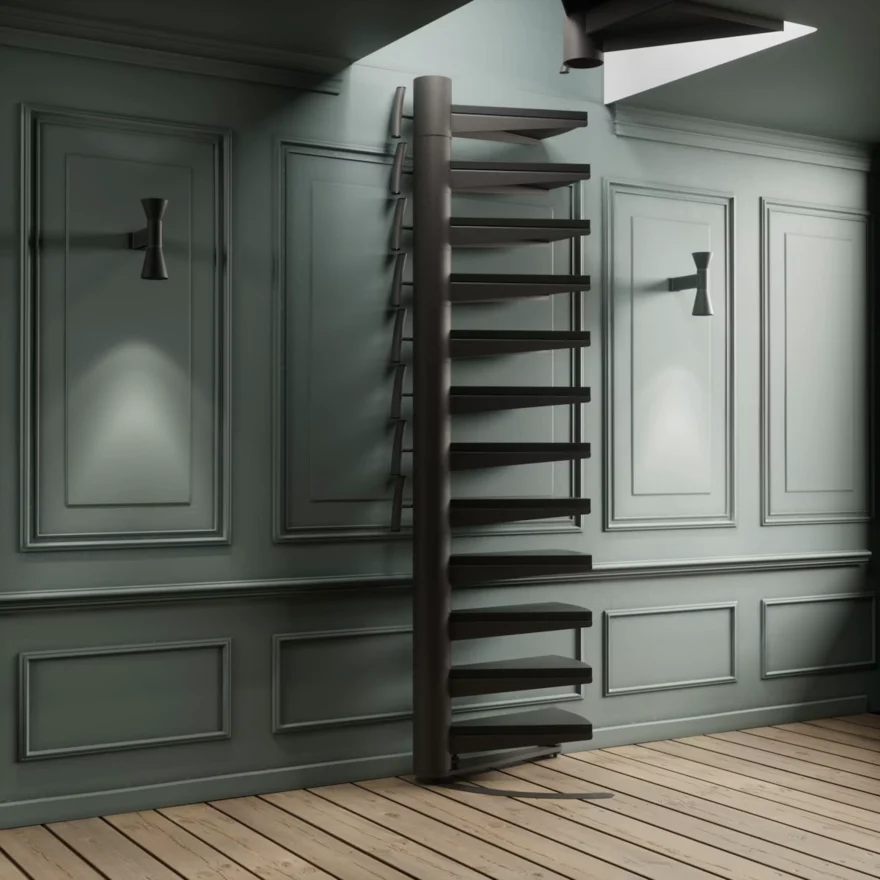
In the heart of the modern urban landscape, space has become the ultimate luxury. As real estate prices in global metropolitan centers continue their relentless climb, architects and homeowners are increasingly forced to reconsider the viability of cramped, unconventional living spaces. From converted attic studios to subterranean basement apartments, the challenge has always been the same: how to maximize utility without sacrificing the precious, limited square footage. Enter French design firm Manufactura, a company that has developed a patented, ingenious solution to this age-old architectural dilemma: the retractable spiral staircase.
Main Facts: Engineering the Impossible
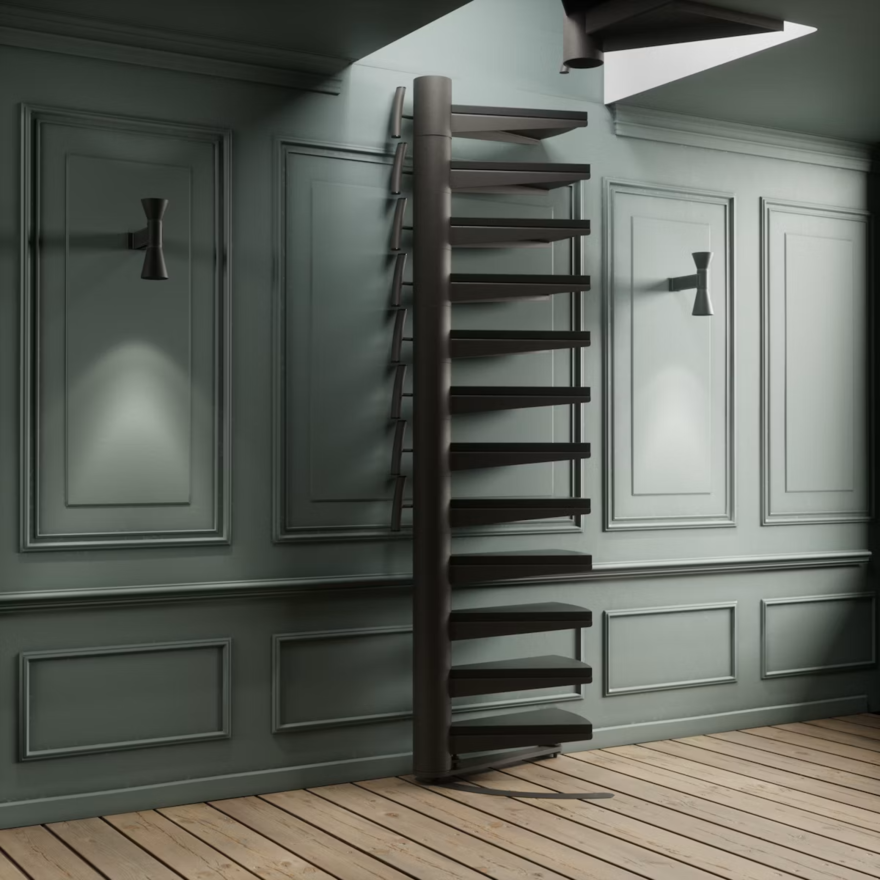
The core innovation behind Manufactura’s offering is not merely aesthetic, but fundamentally functional. The company designs and builds bespoke, custom-fit spiral staircases that can be deployed or retracted in a matter of seconds. Unlike traditional fixed staircases, which consume a permanent footprint regardless of whether they are in use, the Manufactura system functions as a dynamic architectural element.
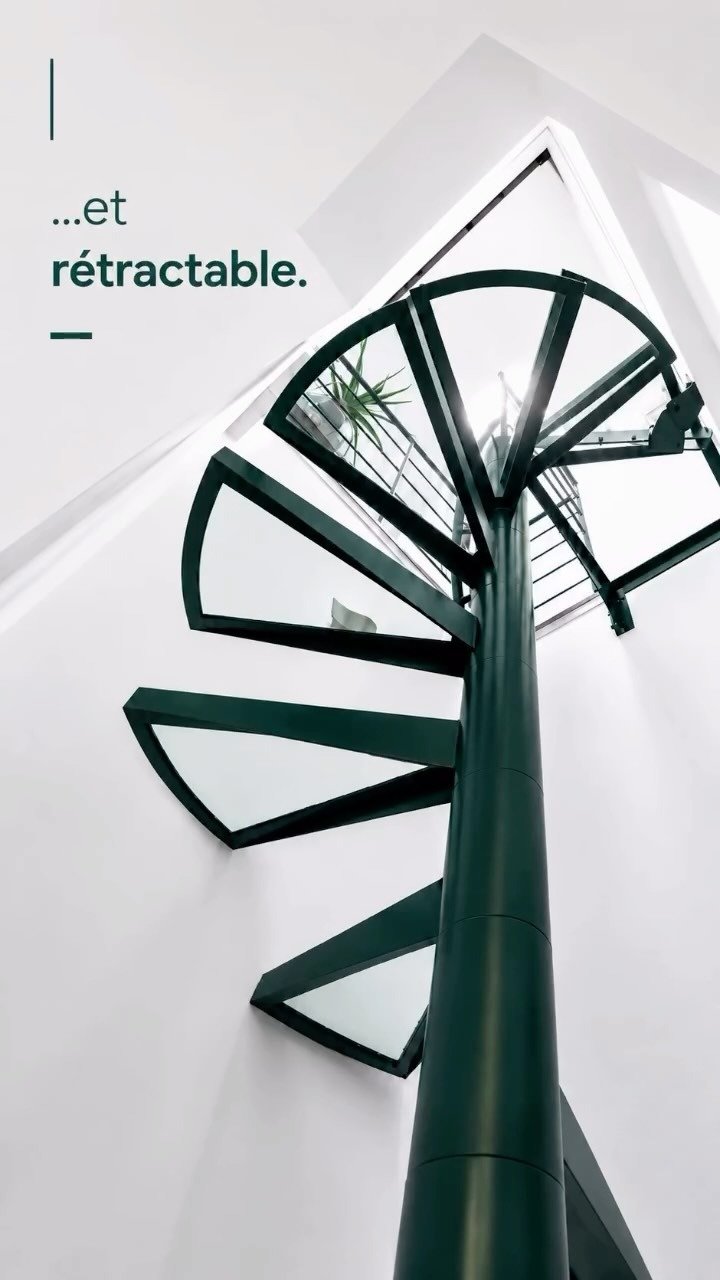
By utilizing a proprietary mechanism, these staircases provide seamless access to mezzanine levels, rooftops, or sunken basements. When not in use, the structure retracts, effectively vanishing from the living area. This allows homeowners to reclaim floor space that would otherwise be permanently obstructed by a fixed stairwell. Perhaps most importantly for those living in older buildings with narrow corridors, the system allows for the complete clearing of the stairwell, facilitating the movement of furniture and large appliances—a task often rendered impossible by traditional spiral staircase designs.
Chronology: The Evolution of Space-Saving Design
The journey of Manufactura began with a simple observation of the "lost spaces" found within historic French properties. Often, these homes possessed high ceilings or subterranean storage areas that remained underutilized simply because a standard staircase would have rendered the floor plan dysfunctional.
- Phase I: Conceptualization. The engineering team at Manufactura began experimenting with modular kinematics. The goal was to create a staircase that felt as sturdy as a fixed unit but possessed the fluidity of a mechanical device.
- Phase II: Prototyping. Early iterations focused on weight distribution and material integrity. The designers realized that to ensure long-term reliability, they would need to move away from heavy, cumbersome materials, opting instead for a blend of high-strength, lightweight alloys and precise industrial bearings.
- Phase III: Patenting and Refinement. After successfully prototyping a model that could support the weight of an adult while maintaining a smooth deployment cycle, the company secured a patent for their specific folding mechanism. This marked a turning point in their professional trajectory, shifting them from experimental designers to a recognized firm in the custom-staircase sector.
- Phase IV: Commercialization. Today, Manufactura operates on a bespoke model, working closely with clients to tailor each staircase to the specific dimensions and structural requirements of their unique living environments.
Supporting Data: The Physics of Efficiency
To understand the implications of Manufactura’s design, one must look at the geometric constraints of a traditional staircase. A standard spiral staircase typically occupies a circular footprint ranging from 1.2 to 1.5 meters in diameter. In a 20-square-meter studio apartment, this footprint can represent up to 10% of the total living area.
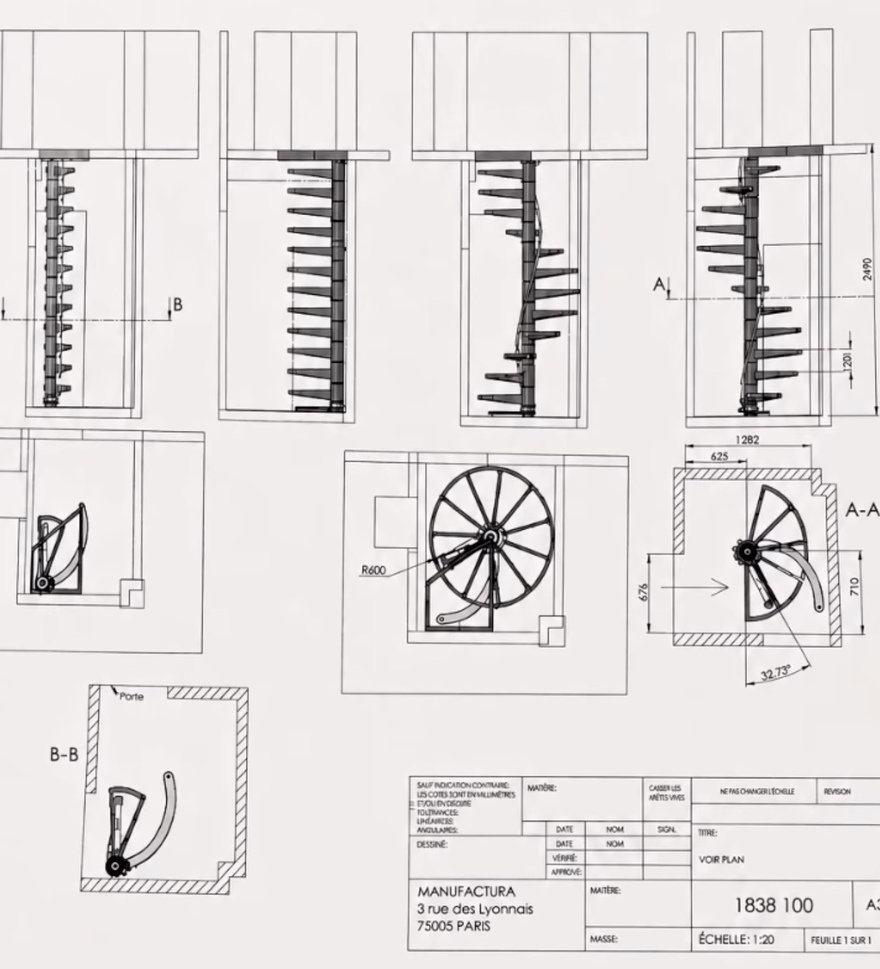
Manufactura’s system utilizes a telescoping and folding logic that effectively eliminates this "dead zone." By integrating a counterweight or hydraulic assist system, the stairs can be operated by a single person with minimal physical exertion.
Structural Integrity and Safety Standards
Safety is often the primary concern for consumers skeptical of "moving" furniture. Manufactura addresses this through rigorous adherence to European construction standards. Each staircase is fabricated using high-grade materials chosen for their tensile strength. The pivot points—the most critical components of the system—are engineered to withstand years of repetitive motion without developing structural play or instability.
Furthermore, because every unit is custom-made, the company performs a site-specific analysis of the load-bearing capacity of the floor and ceiling attachment points. This ensures that the dynamic load (the weight of the person climbing) and the static load (the staircase itself) are safely distributed across the building’s existing frame.
Official Responses and Industry Reception
The response from the architecture and design community has been largely enthusiastic. In an industry that often prioritizes form over function, Manufactura’s pragmatic approach to spatial constraints is being hailed as a triumph of industrial design.
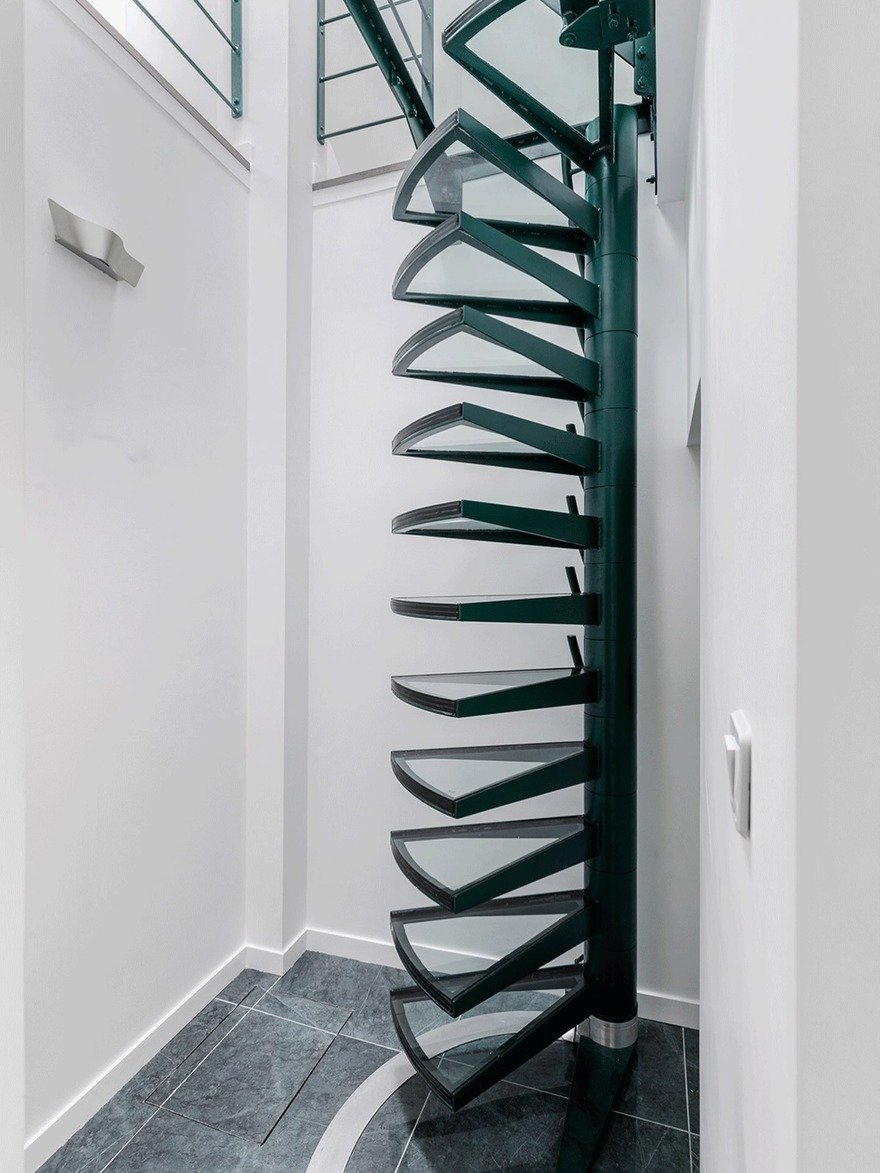
"What Manufactura has achieved is a marriage between high-end furniture design and civil engineering," says one industry analyst. "In the past, retractable ladders were the only solution for tight spaces, but they are often dangerous and inconvenient. By creating a staircase that is both visually appealing and genuinely safe for daily use, they have opened up possibilities for architects to utilize ‘dead’ square footage in ways that were previously discarded as impractical."
Manufactura’s representatives emphasize that their work is not merely about selling a product, but about changing the way people inhabit their homes. "Our staircase allows you to access all the living spaces that your accommodation offers, even the most cramped ones," the company notes in their official mission statement. "It unfolds and retracts in seconds. It offers a substantial space saving and allows you to clear your stairwell to move furniture through."
Implications for Future Urban Architecture
The implications of this technology are profound, particularly as global urbanization trends show no sign of reversing. As more people move into smaller, denser living environments, the demand for "transformer" furniture—items that change shape to suit the time of day or the task at hand—will only increase.
The Rise of the "Micro-Living" Movement
The "Micro-Living" movement has championed the idea that high-quality design can compensate for limited space. Manufactura’s spiral staircase fits perfectly into this philosophy. It enables a "vertical expansion" of a studio apartment, allowing for a sleeping loft or a private office space that can be "put away" when guests arrive or when the homeowner needs to maximize their floor area for daytime activities.
Sustainability and Adaptive Reuse
There is also a sustainability angle to consider. Many old buildings are currently being gutted and renovated for modern occupancy. Rather than demolishing these structures to build larger, more "efficient" ones, technology like the retractable staircase allows developers to adapt existing, historical footprints to modern needs. By making the most of every square inch, we reduce the need for new construction, effectively preserving the architectural heritage of our cities while meeting the needs of 21st-century residents.
Challenges and Future Considerations
Despite the success, the path forward is not without challenges. The primary barrier to mass adoption is cost. Because each staircase is a custom-engineered, one-off production, the price point is significantly higher than that of a mass-produced, fixed staircase from a hardware store. For the average renter, this may remain a prohibitive investment. However, as the company scales and potentially moves toward a more modular design approach, it is likely that these systems will become more accessible to a broader market.
Additionally, the integration of these systems into building codes remains a nuanced area. While the staircases are designed to meet safety requirements, local fire and building departments in various countries often have strict regulations regarding egress and permanent versus temporary fixtures. Manufactura’s ongoing engagement with regulatory bodies will be crucial in ensuring that these innovative designs become a standard, rather than an exception, in urban development.
Conclusion: A New Dimension for the Home
Manufactura has effectively demonstrated that the limitations of space are often a failure of imagination rather than a reality of physics. By reimagining the staircase as a dynamic, responsive element of the home, they have provided a blueprint for how we might live more comfortably in the cities of the future.
As we continue to navigate the complexities of urban growth, the ability to reclaim space—to make a room feel larger, to clear a corridor, and to seamlessly transition between different levels of a home—will be the defining characteristic of superior interior design. The retractable spiral staircase is more than just a piece of hardware; it is a vital tool for those who refuse to let the size of their apartment dictate the quality of their life. Whether it is a basement studio in Paris or a rooftop loft in London, Manufactura is helping residents climb to new heights, one retractable step at a time.
About the Author