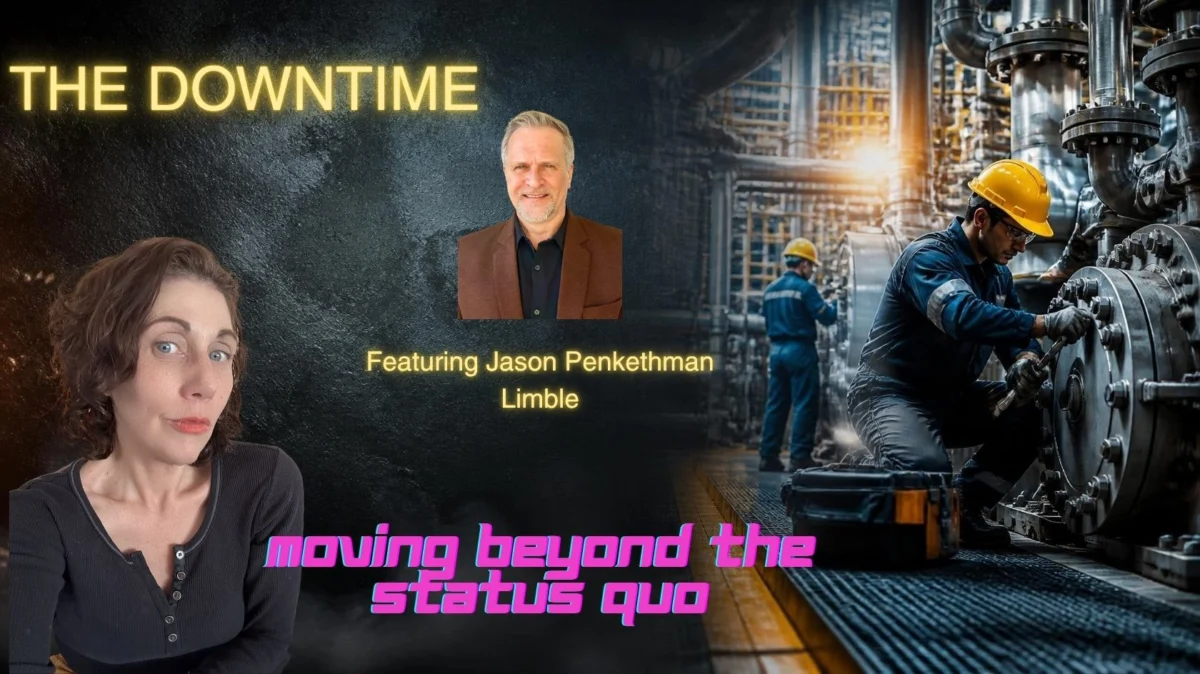
The industrial landscape is undergoing a profound metamorphosis, driven by the rapid integration of digital transformation into the factory floor. As manufacturing facilities grapple with increasing complexity and the relentless pressure to minimize downtime, the role of the maintenance professional has never been more critical. Providing a voice for this transformation, The Downtime podcast has returned for a new season, marking a strategic pivot in its format and leadership.
Hosted by Sheri Kasprzak, the podcast enters a new era, serving as a lighthouse for maintenance, reliability, and engineering professionals. The latest installment features a deep-dive conversation with Jason Penkethman, Chief Technology and Product Officer at Limble, focusing on the human-centric application of Computerized Maintenance Management Systems (CMMS).
Main Facts: A New Chapter for The Downtime
The return of The Downtime this summer is not merely a resumption of a broadcast schedule; it represents a fundamental restructuring of the show’s editorial approach. Longtime co-host Sheri Kasprzak now steps into the role of solo host, steering the program’s mission to explore the intersection of industrial technology and workforce development.
While the change in format is significant, the continuity of the show’s legacy is assured. Former co-host Sarah Wynn, a fixture of the show’s identity, remains part of the community ecosystem. She will continue to contribute as a guest host in future episodes, ensuring that the transition remains fluid while allowing the show to experiment with new thematic directions.
The premier episode of this new season sets a high bar, featuring an in-depth interview with Jason Penkethman of Limble. The discussion centers on the philosophy that technology should act as an extension of the technician’s skill set rather than a replacement for human intuition and expertise. By examining how modern CMMS platforms—specifically Limble’s suite of tools—can alleviate administrative friction, the episode provides a blueprint for how plants can transition from reactive to proactive maintenance models.
Chronology: The Trajectory of Industry 4.0 Advocacy
The history of The Downtime is one of evolution alongside the manufacturing sector itself. Since its inception, the podcast has documented the shift from traditional, paper-based maintenance logs to the high-tech, cloud-connected reality of the modern plant.
- Early Phase (Episodes 1-10): The podcast established its foundation by covering the basics of industrial efficiency, ranging from robotics and packaging to the logistical challenges of supply chain tariffs.
- Middle Phase (Episodes 11-30): The show began to lean heavily into the "digital transformation" narrative. Episodes focused on AI, machine learning, and the necessity of sustainable maintenance practices, documenting how firms were beginning to leverage data-driven decision-making.
- The Current Era (Episode 31-Present): With the recent transition in leadership, the focus has tightened. The show is moving toward granular, actionable advice for technicians and managers, moving beyond abstract "Industry 4.0" hype to address the day-to-day realities of maintenance work, such as safety, precision, and the "human-in-the-loop" philosophy.
Supporting Data: The Case for Modern CMMS
The urgency of the discussion between Kasprzak and Penkethman is backed by shifting industry trends. According to recent industrial data, maintenance departments are increasingly overwhelmed by the sheer volume of assets requiring attention.
The Efficiency Gap
Current industry benchmarks suggest that the average maintenance technician spends nearly 30% to 40% of their time on non-value-added tasks, such as searching for parts, updating outdated documentation, or traveling to locate assets.
The CMMS Impact
- Asset Lifecycle Management: By centralizing documentation, a robust CMMS like Limble can extend asset life by an estimated 15-20% through more rigorous adherence to preventive maintenance schedules.
- Downtime Reduction: Facilities utilizing integrated digital workflows report a significant decrease in "mean time to repair" (MTTR). By having immediate access to technical manuals and historical service logs, technicians can diagnose faults with higher accuracy on the first attempt.
- Knowledge Preservation: One of the most critical challenges in the industry is the "brain drain" caused by retiring veterans. A CMMS acts as a repository for institutional knowledge, ensuring that the specific nuances of equipment repair are digitized and accessible to new hires.
Official Perspectives: Tech Should Enhance, Not Replace
A central theme of the latest episode is the philosophical rejection of the "automation replaces humans" narrative. Jason Penkethman argues that the goal of a modern CMMS is to strip away the "administrative tax" that prevents skilled workers from doing what they do best: fixing things.
"Technology should enhance—not replace," Penkethman noted during the interview. He argues that when a technician is burdened with paperwork, they lose the ability to apply their creative problem-solving skills to complex machinery. By automating scheduling, inventory tracking, and work order assignment, the CMMS serves as a "force multiplier."
This perspective is highly relevant in an era where skilled labor shortages are reaching a breaking point. Instead of trying to find a "unicorn" technician who knows every machine, companies can use software to guide a standard technician through advanced repair processes, effectively democratizing high-level maintenance skill.
Implications for the Future of Industrial Operations
The implications of these discussions reach far beyond the podcast’s listening audience. As we look toward the future of manufacturing, the divide between "digitally-enabled" and "digitally-ignorant" plants will only grow wider.
Bridging the Skills Gap
The use of software to "empower" rather than "monitor" is a key strategy for workforce retention. Young technicians entering the workforce today are digital natives; they expect the same level of accessibility and intuitive interface in their workplace tools as they have in their personal devices. If a facility relies on legacy systems, they risk losing top-tier talent to competitors who offer a more modern, streamlined environment.
The Role of Institutional Knowledge
As discussed in the podcast, the "institutional knowledge" held by senior staff is the most valuable asset in any plant. Digital platforms ensure that this knowledge is not lost when a veteran technician retires. By capturing their workflows and troubleshooting tips within a CMMS, companies can effectively bottle experience and distribute it across the entire workforce.
The Cultural Shift
Perhaps the most significant implication is cultural. Shifting the maintenance mindset from "firefighting" (reactive) to "preventing" (proactive) requires more than just software—it requires a leadership philosophy that values the technician’s input. Kasprzak’s interviewing style facilitates this, consistently steering the conversation toward how leadership can foster environments where technology is embraced as a teammate, not a threat.
Engaging with the Community
For professionals in the field, The Downtime serves as more than just an audio program; it is a hub for community engagement. The podcast has integrated itself with the broader Plant Engineering ecosystem, including the Factory Reset LinkedIn newsletter.
This ecosystem approach is vital. By connecting the podcast to a wider network of industry news, research, and expert perspectives, The Downtime creates a holistic learning environment. Listeners are encouraged to follow the podcast on platforms like YouTube and SoundCloud, where they can access an extensive archive of past episodes—ranging from "The Sound of Sustainability" to "Dancing with the Robots"—providing a comprehensive library of industrial thought leadership.
Conclusion
The latest chapter of The Downtime reaffirms the podcast’s status as an essential resource for those shaping the future of manufacturing. By centering the conversation on the empowerment of the technician, Sheri Kasprzak and her guests are helping to demystify the complexities of digital transformation.
As Jason Penkethman aptly summarized, the future of industrial maintenance is not about replacing the human element with algorithms; it is about providing the human element with the tools to work with greater precision, confidence, and efficiency. Whether you are a plant manager struggling with unplanned downtime or a technician looking to streamline your daily workflow, The Downtime offers the insights and the, perhaps more importantly, the perspective needed to navigate the challenges of the modern factory floor.
To stay ahead of the curve, listeners are invited to join the conversation, engage with the Plant Engineering community on LinkedIn, and tune into the latest episodes as they continue to bridge the gap between traditional maintenance expertise and the cutting-edge of industrial technology.
About the Author