ODENSE, Denmark – September 16, 2024 – In an era where packaging increasingly serves as a critical touchpoint for brand communication and sustainability efforts, the humble corrugated cardboard box is undergoing a profound transformation. Once relegated to merely protecting goods during transit, it is now emerging as a powerful canvas for high-quality graphics and sophisticated branding. At the forefront of this evolution is Apex International, whose groundbreaking GTT 2.0 anilox technology is revolutionizing flexographic printing, promising unprecedented efficiency, cost savings, and environmental benefits for the corrugated industry.
The shift is monumental. What began with simple directives like "This Side Up" or "No Hooks" in the early days of flexography on corrugated has evolved into a sophisticated art form capable of delivering intricate designs and vibrant imagery. This transition is not merely aesthetic; it is driven by consumer demand for engaging packaging, brands’ need for differentiation, and a global imperative for more sustainable manufacturing processes. Apex’s GTT 2.0, with its patented Open Slalom Channel geometry, represents a significant leap forward, challenging the traditional honeycomb structure of anilox rolls and setting new benchmarks for ink transfer, print quality, and operational efficiency. Initial tests have revealed average ink consumption reductions of 18-20%, alongside substantial decreases in drying energy and CO2 emissions, positioning GTT 2.0 as a pivotal innovation for the future of packaging.
The Evolution of Corrugated Printing: From Utility to Marketing Powerhouse
The history of flexographic printing on corrugated cardboard is a testament to industrial pragmatism. For decades, corrugated packaging’s primary function was protection and identification. Early flexo presses were designed for speed and robustness, applying basic, single-colour graphics – typically logistics instructions, company logos, or simple product descriptions. The print quality was often secondary to the functional requirements of the box. Anilox rolls, essential components in flexography for transferring a precise and consistent layer of ink to the printing plate, typically featured a honeycomb cell structure, a design that served its purpose but often presented limitations in terms of ink consistency and finer detail.
Early Days: Simplicity and Functionality
In its nascent stages, flexography on corrugated was a workhorse technology. The focus was on utility, not aesthetics. Ink application was often heavy, and the resolution capabilities were modest. The primary goal was to ensure boxes were correctly oriented, handled appropriately, and identifiable. The cost-effectiveness and speed of flexo made it the ideal choice for mass-produced corrugated packaging, despite its perceived limitations in print quality compared to other printing methods like offset. This functional approach meant that the anilox technology, while critical, was not under immense pressure to deliver high-fidelity results.
The Modern Demand: Quality, Sustainability, and Efficiency
As consumer markets matured and brand competition intensified, packaging began to assume a more strategic role. The retail environment, particularly the rise of big-box stores and direct-to-consumer shipping, necessitated packaging that could not only protect but also attract, inform, and persuade. This spurred a demand for higher-quality graphics on corrugated, even on recycled liners, which are inherently more challenging to print on due to their varied surface characteristics. Concurrently, a global push for sustainability has placed immense pressure on manufacturers to reduce their environmental footprint, minimize waste, and improve energy efficiency across all production stages.
This confluence of factors — the burgeoning need for high-impact branding on packaging, the challenges of printing on recycled substrates, and the imperative for more sustainable practices — created an urgent demand for innovation within the flexographic printing sector. Traditional anilox technologies, while reliable, struggled to meet these new, elevated expectations without significant compromises in cost or quality. The industry was ripe for a breakthrough that could deliver superior print quality, greater efficiency, and a tangible reduction in environmental impact.
Apex’s GTT 2.0: A Paradigm Shift in Flexographic Technology
Recognizing this critical market need, Apex International embarked on a mission to redefine anilox technology. The result is GTT 2.0, a revolutionary anilox roll specifically engineered to meet the stringent demands of modern corrugated printing, particularly with water-based flexo inks. This innovation moves beyond incremental improvements, offering a fundamentally different approach to ink transfer that addresses long-standing challenges in the flexo industry.
Patented Design: Open Slalom Channel vs. Traditional Honeycomb
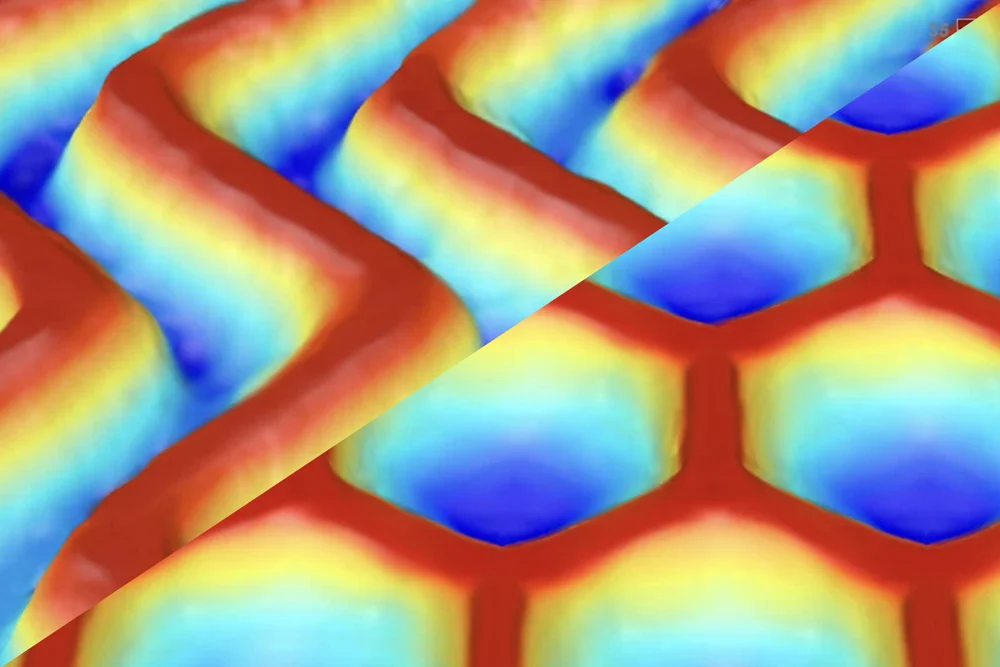
The core of GTT 2.0’s innovation lies in its patented, wave-shaped engraving patterns, known as the Open Slalom Channel geometry. This design represents a radical departure from the conventional honeycomb or hexagonal cell structures that have dominated anilox technology for decades. The traditional honeycomb cells, while effective at holding ink, can sometimes lead to inconsistent ink release, dot bridging, and limitations in achieving smooth, even solids and fine details, especially with water-based inks that have different flow characteristics.
The Open Slalom Channel, by contrast, is engineered to facilitate a smoother, more controlled flow of ink. Instead of isolated cells, GTT 2.0 features continuous, interconnected channels that guide the ink across the anilox surface and onto the printing plate with unparalleled precision. This unique geometry ensures that a smaller volume of ink is transferred, yet it spreads more effectively and evenly, resulting in higher coverage and denser colours with less ink. This improved ink flow is crucial for achieving vibrant, consistent results on challenging substrates like recycled liners, which often have varying absorption rates and surface textures.
Unveiling the Testing Phase: Collaboration with Dunapak
The development of GTT 2.0 was not confined to laboratory settings. Apex understood that real-world validation was paramount. This led to a significant collaboration with Dunapak, a prominent corrugated packaging group. Over an intensive eight-day period, the new GTT 2.0 anilox pattern was rigorously tested and compared against traditional anilox rolls on various printing tasks. This comprehensive testing regimen, conducted under typical production conditions, provided invaluable data and practical insights into the technology’s performance, durability, and overall impact on the printing process.
The extensive trials with Dunapak were instrumental in demonstrating GTT 2.0’s capabilities across a range of applications, from simple line work to more complex graphics. The results not only confirmed Apex’s hypotheses but also highlighted unexpected benefits, solidifying the technology’s potential to revolutionize the flexographic printing landscape.
Quantifiable Advantages: Driving Cost Savings and Environmental Stewardship
The outcomes of the testing phase and subsequent industry adoption have painted a clear picture of GTT 2.0’s transformative power. The technology delivers tangible, measurable benefits that directly impact the bottom line for printers and contribute significantly to environmental sustainability goals.
Dramatic Ink Reduction: A Core Economic Benefit
Perhaps the most striking result from the trials was the significant reduction in ink consumption. On average, GTT 2.0 achieved an impressive 18-20% reduction in the use of water-based flexo inks compared to traditional anilox rolls. This is not merely an incremental saving; it represents a substantial decrease in one of the most significant variable costs in flexographic printing. For high-volume corrugated printers, such a reduction translates into millions of dollars in annual savings, directly enhancing profitability and competitiveness. The precise control over ink transfer means less ink is wasted, and fewer ink changes are required, streamlining operations further.
Beyond Ink: Operational Efficiencies and Sustainability Gains
The benefits of GTT 2.0 extend far beyond just ink savings. The technology contributes to a holistic improvement in the printing process, leading to a cascade of operational efficiencies and environmental advantages:
- Reduced Drying Energy: With less ink applied to the substrate, less energy is required to dry the printed material. This directly lowers electricity consumption, which is a major operational cost, especially for high-speed presses.
- Faster Job Turnaround: Reduced ink volume and faster drying times can contribute to quicker job completions, increasing overall throughput and machine utilization.
- Extended Consumable Life: As detailed later, GTT 2.0 reduces wear on other critical components, extending their lifespan and lowering replacement costs.
- Enhanced Print Quality on Challenging Substrates: The improved ink transfer characteristics make it easier to achieve high-quality results on recycled corrugated liners, which are increasingly preferred for their sustainability credentials but can be difficult to print on consistently.
The Ripple Effect: Reduced Emissions and Energy Consumption
The combination of reduced ink consumption and lower drying energy requirements has a profound environmental impact. Less ink production means a smaller carbon footprint associated with manufacturing and transporting inks. More significantly, the decrease in energy consumption for drying directly translates to a notable reduction in CO2 emissions. For large-scale printing operations, this contribution to eco-friendly printing practices is substantial, helping companies meet their corporate social responsibility targets and adhere to increasingly stringent environmental regulations. This aligns perfectly with the global movement towards a circular economy and more sustainable industrial processes, making GTT 2.0 a key enabler for greener packaging production.
Enhancing Print Quality and Operational Excellence
While cost savings and environmental benefits are compelling, GTT 2.0 also delivers significant improvements in the core function of printing: the quality of the output and the efficiency of the press operation. The patented channel geometry is not just about saving ink; it’s about optimizing the entire ink transfer process.
Precision Ink Transfer: The Key to Flawless Graphics
The Open Slalom Channel design facilitates a more consistent and precise transfer of ink compared to traditional cell structures. This precision is critical for achieving high-definition graphics, sharp text, and smooth, uniform solid areas, even at higher press speeds. The continuous, wave-shaped channels ensure that ink is delivered uniformly across the entire printing plate, eliminating common issues like mottling or uneven colour density that can plague flexographic printing. This capability allows corrugated packaging to carry more sophisticated branding and marketing messages, transforming a functional box into an effective advertising medium.
Mitigating Common Flexo Challenges
GTT 2.0 specifically addresses several persistent challenges faced by flexo printers, leading to reduced downtime and improved operational stability:
- Less Cliché Wash-up: The improved control over screen dots and minimal dot bridging significantly reduces the need for frequent cliché cleaning. In traditional systems, ink can build up on the edges of clichés, leading to smudging and requiring press stops for cleaning. GTT 2.0’s design minimizes this ink build-up, ensuring cleaner prints for longer runs and thus reducing non-productive downtime.
- Reduced Ink Build-up on Cliché Edges: The precise ink delivery prevents excessive ink accumulation on the edges of the printing plates, which is a common cause of print defects and necessitates interruptions for cleaning. This leads to more consistent print quality throughout a job run.
- Minimal Dot Bridging: Dot bridging, where adjacent halftone dots merge due to excessive ink or pressure, is a significant problem in flexography, leading to loss of detail and muddy images. GTT 2.0’s optimized ink release minimizes dot bridging, ensuring sharper, clearer images and finer line work.
- Less Doctor Blade Wear: The unique channel geometry allows for effective ink transfer with lower doctor blade pressure. Reduced pressure translates directly into less friction and wear on the doctor blades, extending their lifespan. This not only saves on replacement costs for consumables but also reduces the frequency of blade changes, further contributing to increased uptime and productivity. The improved ink release also means the doctor blade works more efficiently, maintaining optimal ink film thickness without excessive force.
These improvements collectively streamline operations, enabling more consistent, higher-quality, and more efficient flexographic printing runs.
Industry Adoption and Financial Impact
The compelling benefits of GTT 2.0 have quickly resonated with leading players in the corrugated packaging industry, leading to rapid adoption and significant financial projections.
Early Success Stories: Glomma Papp Leads the Way
Initial tests for GTT 2.0 were conducted on a BOBST Master Flex machine, demonstrating its versatility across different press manufacturers. Subsequently, the technology underwent extensive trials in other major corrugated groups, including successful integration on Bobst 1600 and Martin machines. These trials consistently validated the positive outcomes observed with Dunapak, solidifying GTT 2.0’s reputation as a game-changer.
Among the early adopters, Glomma Papp in Sarpsborg, Norway, stands out. This forward-thinking company was one of the first to fully integrate GTT 2.0 across its entire fleet of flexographic machines. Glomma Papp now utilizes GTT 2.0 on its 6-colour Göpfert press and all three of its Martin machines, showcasing a strong commitment to leveraging cutting-edge technology for superior results and operational efficiency. Their experience provides a real-world testament to the technology’s effectiveness and reliability in a demanding production environment.
The Multi-Million Dollar Opportunity
The economic impact of GTT 2.0 is substantial, extending beyond individual press efficiencies to potential enterprise-wide savings. One major European corrugated group, with divisions across the continent, conducted a detailed calculation of the potential savings if they were to implement GTT 2.0 across all their factories. Their internal analysis projected an annual saving of approximately USD 5.5 million. This staggering figure underscores the profound financial leverage that GTT 2.0 offers. Such savings are derived from the cumulative effect of reduced ink consumption, lower energy costs for drying, extended consumable lifespans, and increased operational uptime across a large-scale printing operation. This financial incentive makes the adoption of GTT 2.0 a strategic business decision for any corrugated printer looking to enhance profitability and maintain a competitive edge.
Showcasing Innovation: From Drupa to Sign Print & Pack
Apex International has consistently leveraged major industry events to showcase the capabilities of GTT 2.0, reinforcing its commitment to innovation and educating the market on its benefits.
Drupa 2024: A Global Stage for GTT 2.0
At Drupa 2024, the world’s leading trade fair for print technologies, Apex presented an impressive display of GTT 2.0’s advantages. Their stand featured a corrugated box filled with various flexographic print samples on different liners, all produced using GTT 2.0 technology. These samples served as tangible proof points, documenting the superior print quality, vibrant colours, and precise detail achievable with the new anilox design. Visitors could visually compare the results and understand the clear benefits, making a strong case for the technology’s widespread adoption. The showcase at Drupa positioned GTT 2.0 as a significant development on the global stage, attracting attention from printers, brand owners, and industry analysts alike.
Connect with the Future: Sign Print & Pack 2024
For those in the Nordic region, a dedicated opportunity to learn more about GTT 2.0 and its implications is fast approaching. At the upcoming Sign Print & Pack exhibition in Odense, Denmark, on September 16-17, 2024, ScanTeco will be presenting a comprehensive overview of GTT 2.0. Visitors to Stand 3351 will have the chance to hear directly about all the advantages of this revolutionary anilox technology.
Beyond GTT 2.0, ScanTeco’s stand will also feature other exciting equipment, including SOMA flexographic printing presses and cutting machines, offering a broader perspective on integrated solutions for modern packaging production. This event provides a crucial platform for regional printers and packaging professionals to engage with the technology, ask questions, and explore how GTT 2.0 can enhance their operations, profitability, and sustainability efforts.
Implications for the Future of Packaging
The introduction and rapid adoption of Apex GTT 2.0 signify a pivotal moment for the corrugated packaging industry. Its impact extends beyond individual companies, promising to reshape market dynamics and redefine expectations for what corrugated can achieve.
Elevating Brand Presence on Corrugated
For brand owners, GTT 2.0 unlocks unprecedented possibilities for brand messaging and shelf appeal on corrugated packaging. No longer is corrugated limited to being merely a brown box; it can now become a vibrant, high-quality extension of a brand’s identity. This means more intricate graphics, richer colours, and sharper details can be consistently reproduced, enhancing the unboxing experience and elevating brand perception. In an increasingly competitive retail landscape, the ability to leverage every surface for branding, including secondary packaging, provides a significant advantage. This technology empowers brands to create more cohesive and impactful visual identities across all packaging touchpoints.
A Sustainable Path Forward for Flexo
From an environmental perspective, GTT 2.0 offers a concrete pathway for the flexographic industry to significantly reduce its ecological footprint. By drastically cutting ink consumption, lowering energy requirements, and reducing waste from frequent wash-ups and consumable replacements, the technology contributes directly to a more sustainable production model. This aligns perfectly with global environmental goals and consumer demand for eco-friendly products and packaging. GTT 2.0 positions flexography as an even more sustainable printing method, capable of meeting both economic and environmental objectives simultaneously. It fosters a circular economy approach by enabling high-quality printing on recycled materials while minimizing resource consumption.
In conclusion, Apex GTT 2.0 is more than just an anilox roll; it is a catalyst for change in the corrugated packaging industry. By addressing the critical needs for higher quality, greater efficiency, and enhanced sustainability, it is helping to transform corrugated cardboard from a simple transport medium into a sophisticated and powerful advertising platform. The quantifiable benefits, coupled with strong industry adoption and a clear vision for the future, firmly establish GTT 2.0 as a leading innovation poised to redefine the standards of flexographic printing for years to come.
About the Author