In an era defined by information saturation, the integrity of public opinion research relies heavily on the transparency of its underlying methodology. As societal debates—ranging from the death penalty to economic policy—shape the national discourse, the mechanisms by which organizations like the Pew Research Center capture the pulse of the American public have never been more critical. This report details the rigorous framework behind Wave 196 of the American Trends Panel (ATP), providing a comprehensive look at how data is collected, weighted, and validated to ensure a precise, representative reflection of the United States.
Main Facts: The Anatomy of Wave 196
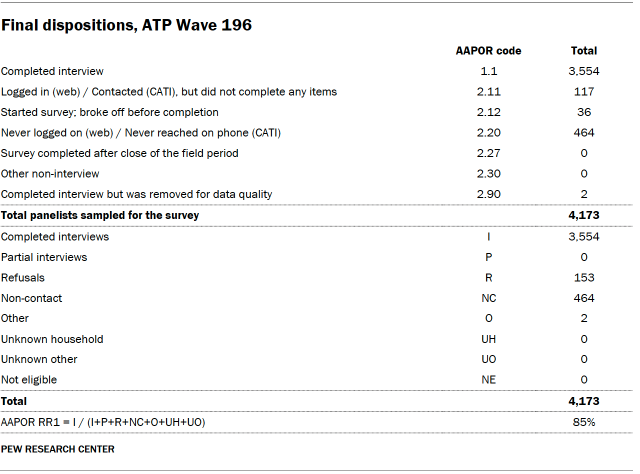
Wave 196 of the American Trends Panel stands as a testament to the complex logistical operations required for modern survey research. Conducted between July 6 and July 12, 2026, the study engaged a diverse, nationally representative sample of U.S. adults. Out of 4,173 individuals specifically sampled for this wave, 3,554 completed the survey, resulting in a commendable survey-level response rate of 85%.
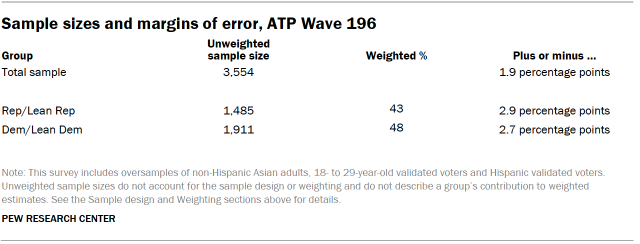
However, the headline figure of 85% is only one piece of a much larger puzzle. When accounting for the long-term attrition of the panel and non-response to initial recruitment efforts, the cumulative response rate sits at 3%. While this number may appear modest to the casual observer, it is a standard reality in modern, high-quality longitudinal studies. The margin of error for the full sample is calculated at plus or minus 1.9 percentage points, providing researchers and policymakers with a high degree of confidence in the resulting data.
To ensure that the voices of smaller demographic groups are not drowned out by broader trends, Pew Research Center employed strategic oversampling. By intentionally increasing the participation of non-Hispanic Asian adults, as well as validated voters within the 18–29 age bracket and the Hispanic community, the study achieves a granular level of accuracy that would be impossible with a strictly random, unweighted sample. These groups are subsequently weighted back to reflect their true proportions within the national population, ensuring the data remains balanced.
Chronology of Data Collection
The success of Wave 196 was rooted in a highly choreographed, multi-phase data collection protocol. The process began well before the survey went live, with meticulous preparation by the SSRS project team in consultation with Pew researchers.
Pre-Field Preparation (July 2 – July 5, 2026):
The groundwork for the live interviews was laid early. For those participating via telephone, pre-notification postcards were dispatched on July 2, setting the stage for the upcoming outreach. Simultaneously, the digital infrastructure underwent rigorous testing. Web survey interfaces were stress-tested across a variety of devices, including PCs, tablets, and smartphones, ensuring that the user experience remained consistent regardless of how a panelist accessed the survey.
The Soft Launch (July 6, 2026):
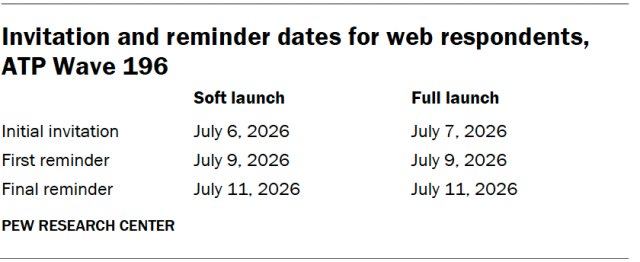
A "soft launch" was conducted to identify any potential logical bottlenecks. Sixty online panelists and a small group of telephone participants were invited to engage with the survey. This trial run allowed researchers to analyze preliminary data in SPSS, confirming that the internal logic, question randomization, and skip patterns were functioning flawlessly.
The Full Launch (July 7 – July 12, 2026):
Following the successful validation of the soft launch, the full-scale operation commenced. The majority of panelists received their invitations on July 7. Throughout the remainder of the field period, the team utilized a mix of email, SMS, and live telephone outreach. For web respondents, up to two reminders were sent to non-responders to bolster the response rate. For those participating via phone, trained SSRS interviewers were authorized to make up to six calls per respondent, maximizing the reach of the survey and ensuring that those less comfortable with digital tools were still represented.
Supporting Data: Quality Control and Weighting
The validity of any survey is only as strong as the quality of the data it collects. To maintain the highest standards, Pew Research Center applied stringent "data quality checks" to the raw responses.
Identifying Satisficing
"Satisficing"—a term used in survey research to describe respondents who provide the minimum effort required to finish a survey rather than engaging thoughtfully—is a constant threat to data integrity. To combat this, researchers monitored for patterns such as excessive non-response to individual items, or "straight-lining," where a respondent selects the same answer for every question in a series. During the processing of Wave 196, two respondents were identified as having provided insufficient data and were subsequently removed from the dataset.
The Weighting Architecture
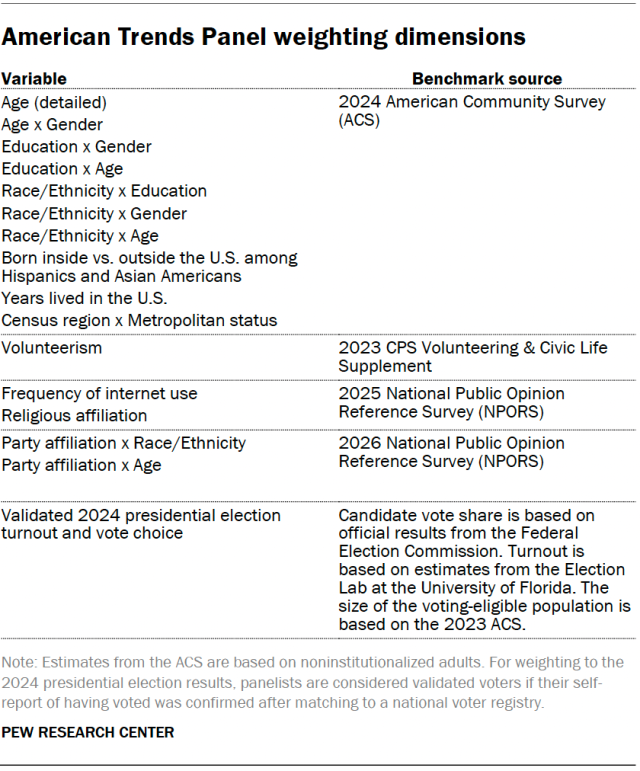
Weighting is the statistical process of correcting for imbalances. Because the ATP recruits from the U.S. Postal Service’s Computerized Delivery Sequence File (covering 90% to 98% of the population), it is already highly representative. However, the final weighting process is a multi-stage affair:
- Base Weights: These account for the initial probability of recruitment into the panel.
- Calibration: The weights are adjusted to match known population benchmarks, such as age, race, education, and geographic distribution.
- Trimming: To prevent individual respondents with extreme weights from skewing the results, weights are trimmed at the 1st and 99th percentiles, ensuring that no single response exerts undue influence on the final statistical conclusions.
Official Responses and Methodology Evolution
The American Trends Panel has not remained static since its inception. Recognizing the decline of landline telephone usage, the Center transitioned in 2018 to an address-based sampling (ABS) methodology. By sending physical mailers and pre-incentives to households, the ATP captures a more accurate cross-section of the modern U.S. population.
The use of tiered incentives—ranging from $5 to $15—is another strategic component of their methodology. By offering higher incentives to groups that are traditionally harder to reach, the Center minimizes non-response bias. This approach acknowledges that time is a valuable commodity, and financial recognition is an effective tool for maintaining long-term engagement across diverse socioeconomic strata.
Implications for Future Research
The rigor of the ATP Wave 196 methodology carries significant implications for the broader field of political and social science. By documenting their process with such granularity—from the exact dates of postcards to the specific software used for validation—the Pew Research Center provides a roadmap for other institutions.
The primary takeaway for the public is that modern, large-scale polling is a marriage of technology and human persistence. While the digital age allows for rapid data collection, the "human" element—address-based recruitment, live telephone interviews, and the careful curation of samples—remains the gold standard for accuracy.
As we look toward future waves of the ATP, the lessons learned from Wave 196 will continue to inform how the Center approaches the challenges of an increasingly mobile, fragmented, and privacy-conscious population. By prioritizing transparency and methodological flexibility, the Center ensures that even as the landscape of American life changes, the ability to accurately measure its heartbeat remains intact. In the shadow of the 2026 election cycle and beyond, this standard of research will remain a vital instrument in understanding the complexities of the American democratic experience.
About the Author